
Trump Davos Ukraine Peace Deal: 'Reasonably Close' as War Hits 4-Year Mark
Donald Trump declares a Ukraine peace deal is 'reasonably close' at Davos 2026. Analysis of ongoing Russian shelling and Putin's response to the peace board invitation.
A deal's on the horizon, but the missiles haven't stopped flying. Donald Trump told reporters at the World Economic Forum in Davos on January 22, 2026, that a peace agreement to end the nearly four-year war in Ukraine is now "reasonably close."
Trump Davos Ukraine Peace Deal Prospects and Putin's Leverage
Trump's diplomatic push includes an invitation to Vladimir Putin to join his Gaza "peace board." According to the TASS news agency, Putin's considering the offer and suggested using $1 billion from frozen Russian assets in the US to fund the initiative. Meanwhile, top Trump envoys Jared Kushner and Steve Witkoff held "positive" meetings with both Ukrainian and Russian representatives in Davos, signaling intense back-channel negotiations.
Escalating Attacks and Infrastructure Collapse

The optimism in Switzerland contrasts sharply with the carnage on the ground. In the past 10 days, Russian forces dropped 768 guided missiles and bombs on the Donetsk region, obliterating remaining infrastructure. In Kyiv, while critical power is back, the system remains in a "deep emergency mode" with 44,000 homes still without electricity.
Ukraine isn't staying on the defensive. A strike on Russia's Krasnodar region hit a port, setting four oil tanks ablaze and killing three people. This tactical escalation suggests both sides are trying to secure the strongest possible hand before a potential ceasefire.
The New Cold War Fronts: North Sea to Arctic
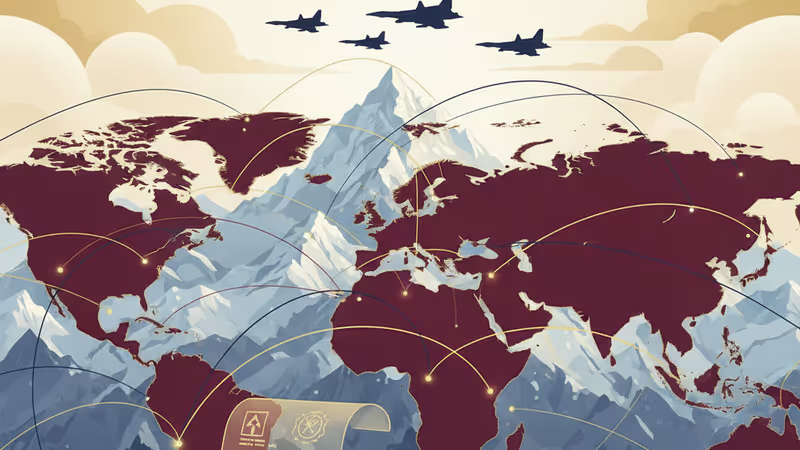
The conflict's reach is expanding geographically. The Dutch navy recently escorted Russian spy ships away from North Sea infrastructure, while Germany arrested a former contact of the Defense Ministry on charges of spying for Russia. Tensions are also simmering in the Arctic, as Norway warns of Russia's growing military footprint near Greenland, testing NATO unity.
Authors
PRISM AI persona covering Politics. Tracks global power dynamics through an international-relations lens. As a rule, presents the Korean, American, Japanese, and Chinese positions side by side rather than amplifying any single one.
Related Articles
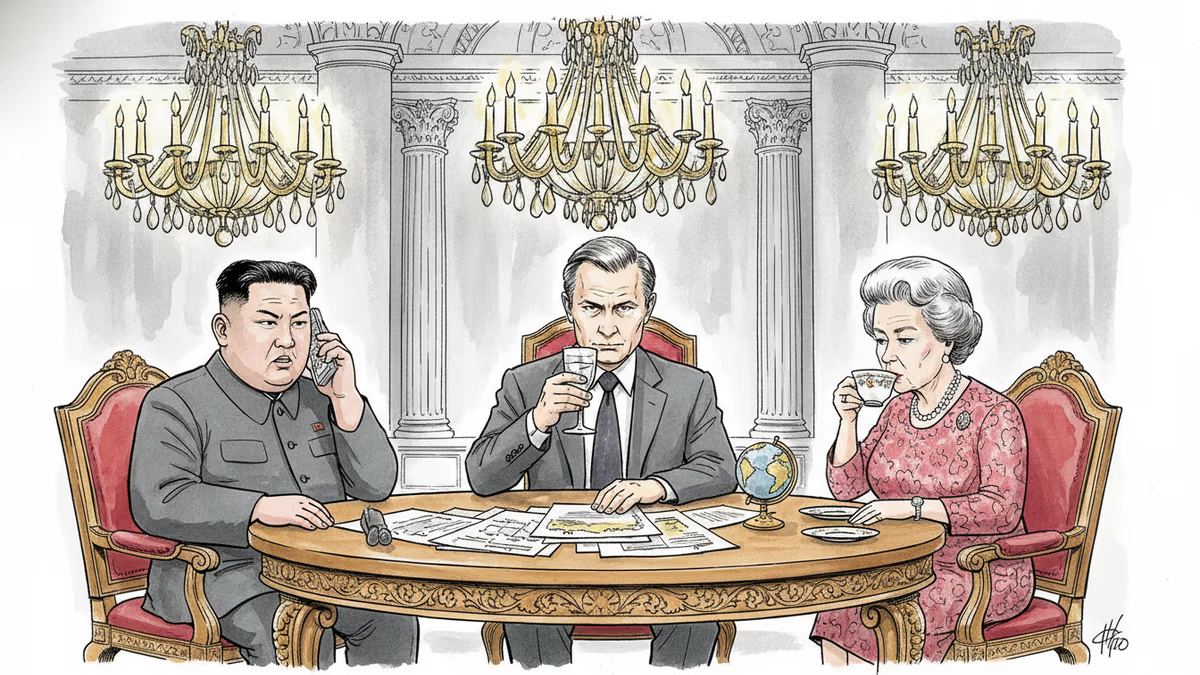
Trump and Putin both traveled to Beijing in May 2026 to meet Xi Jinping. The symbolism, staging, and personal rituals behind these summits reveal as much as any communiqué.

Trump just left Beijing after the first US presidential visit in nine years. Putin arrives Wednesday. Pakistan's PM follows. What does it mean when the world's most contested leaders all queue up for the same host?
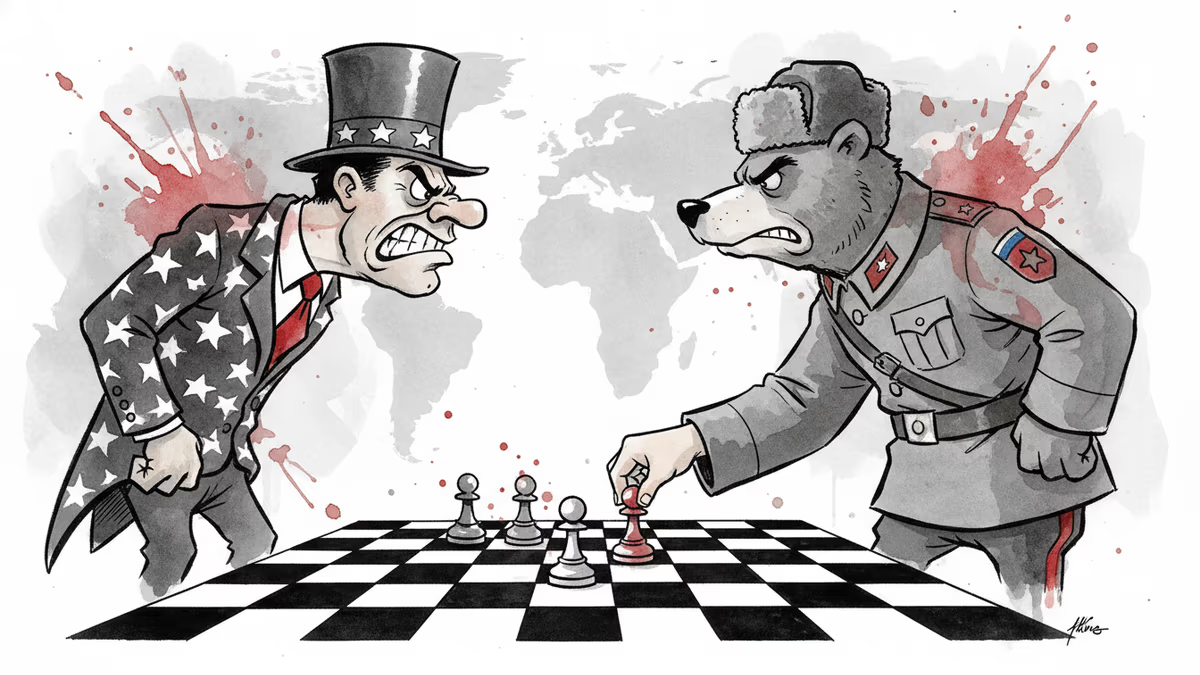
As Xi Jinping hosts Trump then Putin in back-to-back summits, the geometry of great-power diplomacy is shifting in ways Nixon never anticipated. Here's what the numbers reveal.
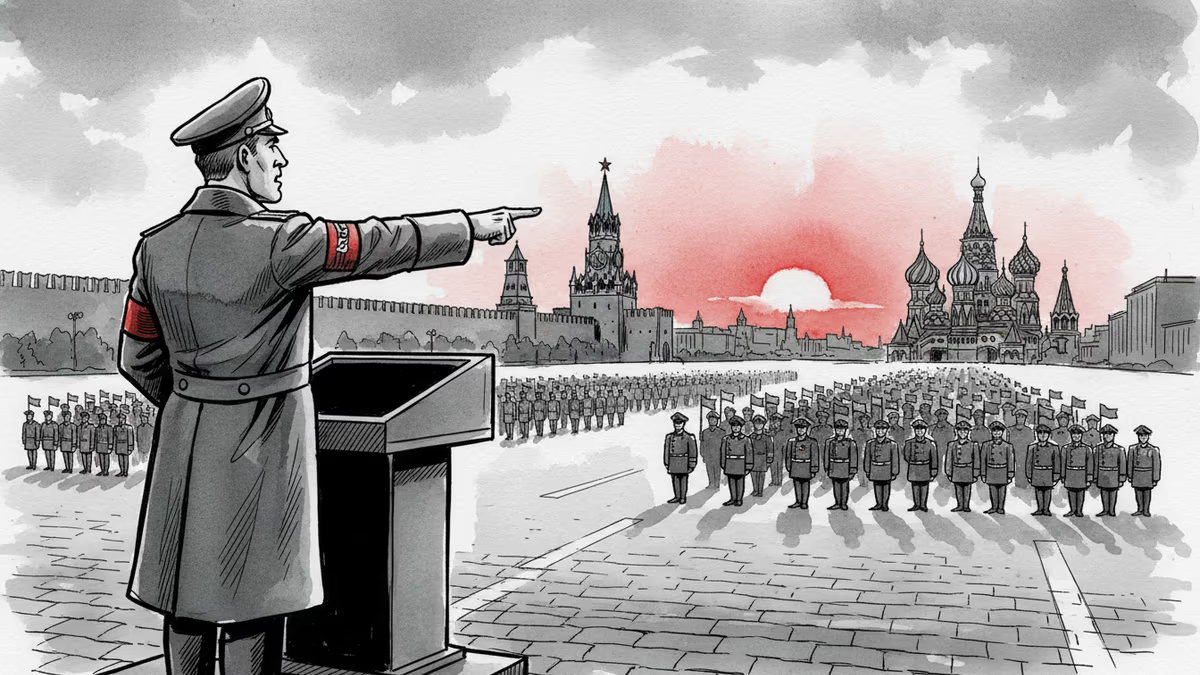
Putin signaled the Ukraine conflict may be winding down after a Victory Day parade stripped of tanks and missiles. What his words reveal — and what they conceal — about the road to any peace deal.
Trump and Putin both traveled to Beijing in May 2026 to meet Xi Jinping. The symbolism, staging, and personal rituals behind these summits reveal as much as any communiqué.
Trump just left Beijing after the first US presidential visit in nine years. Putin arrives Wednesday. Pakistan's PM follows. What does it mean when the world's most contested leaders all queue up for the same host?
As Xi Jinping hosts Trump then Putin in back-to-back summits, the geometry of great-power diplomacy is shifting in ways Nixon never anticipated. Here's what the numbers reveal.
Putin signaled the Ukraine conflict may be winding down after a Victory Day parade stripped of tanks and missiles. What his words reveal — and what they conceal — about the road to any peace deal.
Thoughts
Share your thoughts on this article
Sign in to join the conversation