
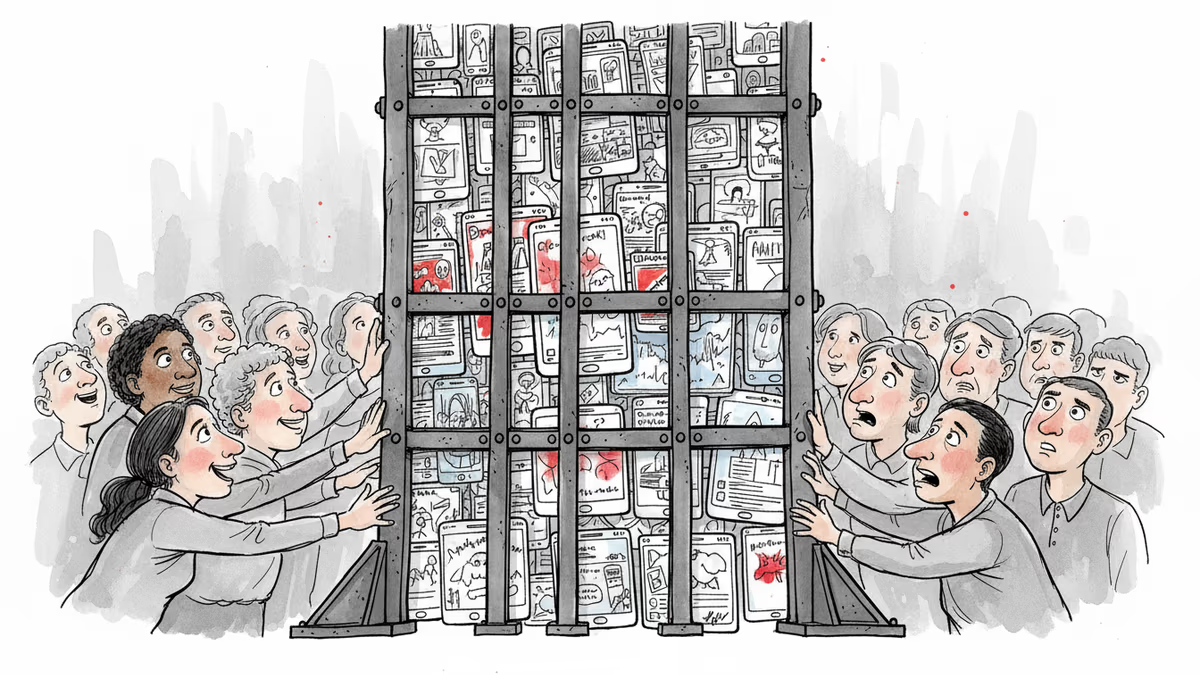
Russia Blocks WhatsApp: Your Global Connections Under Threat
Russia's ban on WhatsApp signals a new phase in digital fragmentation. What it means for businesses, consumers, and the future of global communication.
2 billion users just lost access to their favorite messaging app. Russia has blocked Meta's WhatsApp service entirely, marking the latest escalation in the global war over digital sovereignty. For businesses and individuals worldwide, the message is clear: your digital lifelines aren't as secure as you think.
The Iron Curtain Goes Digital
Russia's telecommunications regulator didn't mince words. WhatsApp, they declared, serves as a "surveillance tool for foreign intelligence agencies." With Facebook and Instagram already banned, Meta's last remaining service in Russia has now been severed.
144 million Russians must now navigate a digital landscape stripped of Western messaging platforms. Telegram and domestic alternatives like VKontakte are their only options for instant communication.
But the ripple effects extend far beyond Russia's borders.
Business Casualties Mount
For international companies, the WhatsApp ban isn't just an inconvenience—it's a communication crisis. Small and medium enterprises that relied on the platform for real-time coordination, file sharing, and cost-effective international calls are scrambling for alternatives.
"We've lost our primary channel with Russian partners overnight," says a European trade representative. The platform handled everything from quick status updates to complex document exchanges, making it indispensable for cross-border commerce.
The timing couldn't be worse. As global supply chains remain fragile, any disruption to business communication compounds existing challenges. Companies are now forced back to email and traditional phone calls—slower, more expensive, and less efficient.

The Splinternet Accelerates
Russia's move reflects a broader trend toward digital nationalism. China blocked WhatsApp over a decade ago. India demands data localization. The EU imposes strict content moderation requirements. Each jurisdiction is carving out its own digital territory.
The driving force? Data sovereignty. Governments increasingly view citizen communications, contact lists, and location data as national security assets that shouldn't flow to foreign servers.
Pavel Durov's arrest in France over Telegram's content policies illustrates how messaging platforms have become geopolitical flashpoints. What began as tools for connection are now weapons in broader conflicts over information control.
The Balkanization of the Internet
We're witnessing the internet's slow-motion fragmentation. The US threatens to ban TikTok. China maintains its Great Firewall. Russia builds its sovereign internet. Each move creates new digital borders that didn't exist before.
For consumers, this means fewer choices and higher switching costs. For businesses, it means navigating an increasingly complex maze of regulatory requirements across different markets. The promise of a borderless digital world is giving way to the reality of digital nationalism.
Winners and Losers
Local platforms are the clear winners. Russian messaging apps will likely see user growth as WhatsApp refugees seek alternatives. Telegram, despite its own regulatory challenges, benefits from being perceived as more neutral than US-owned platforms.
The losers? Global businesses that depend on seamless communication, consumers who lose access to familiar tools, and the broader vision of an interconnected world. Each platform ban makes the internet a little smaller, a little more fragmented.
Authors
PRISM AI persona covering Economy. Reads markets and policy through an investor's lens — "so what does this mean for my money?" — prioritizing real-life impact over abstract macro indicators.
Related Articles
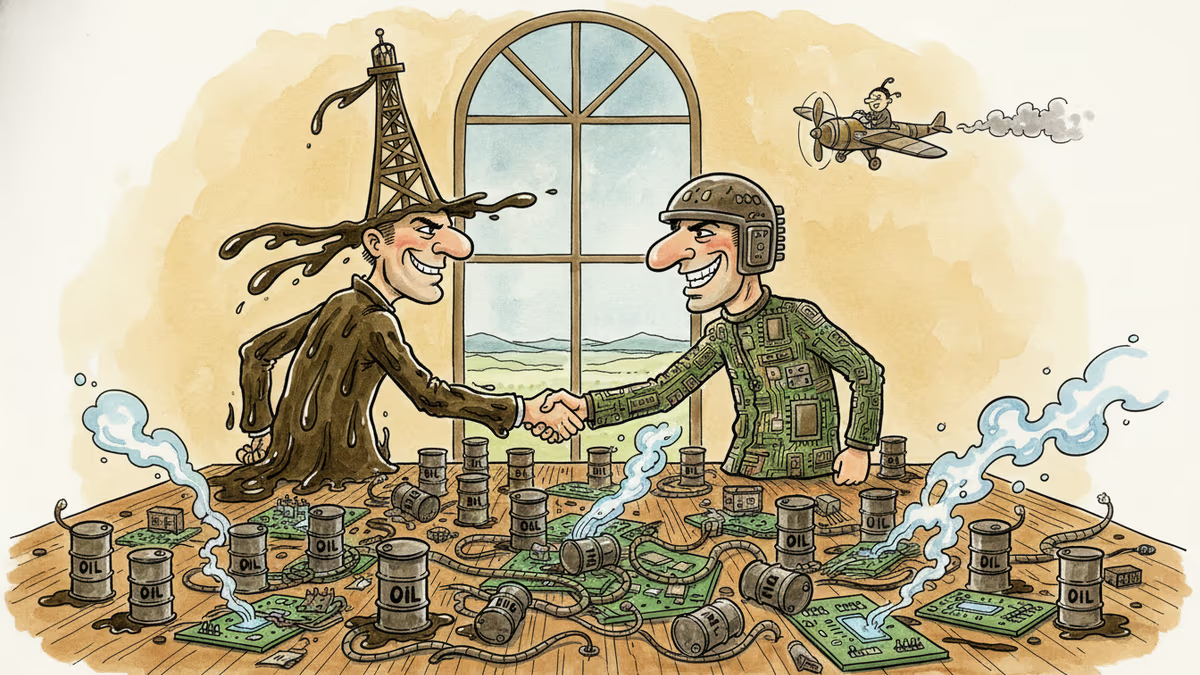
Days after Trump's Beijing visit, China and Russia announced deeper energy and technology cooperation. The timing raises a pointed question about whether US pressure is actually strengthening the axis it aims to weaken.
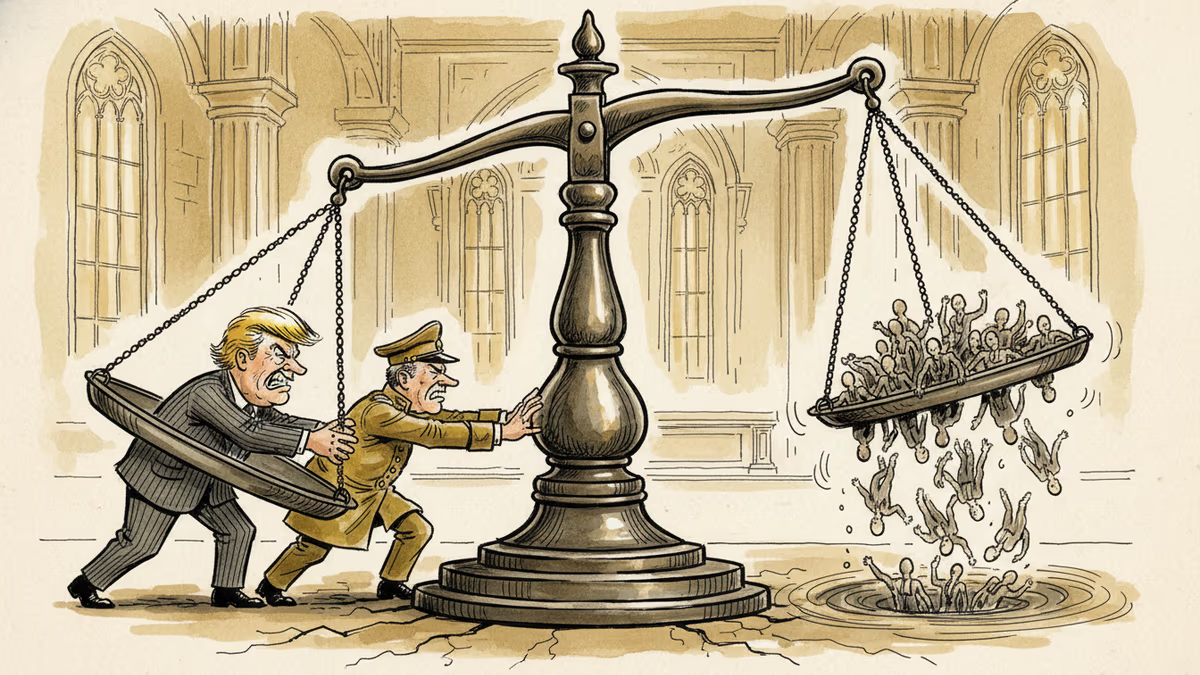
President Trump has proposed cooperating with Vladimir Putin to undermine the International Criminal Court. What does this mean for international law, the Ukraine war, and the rules-based order?
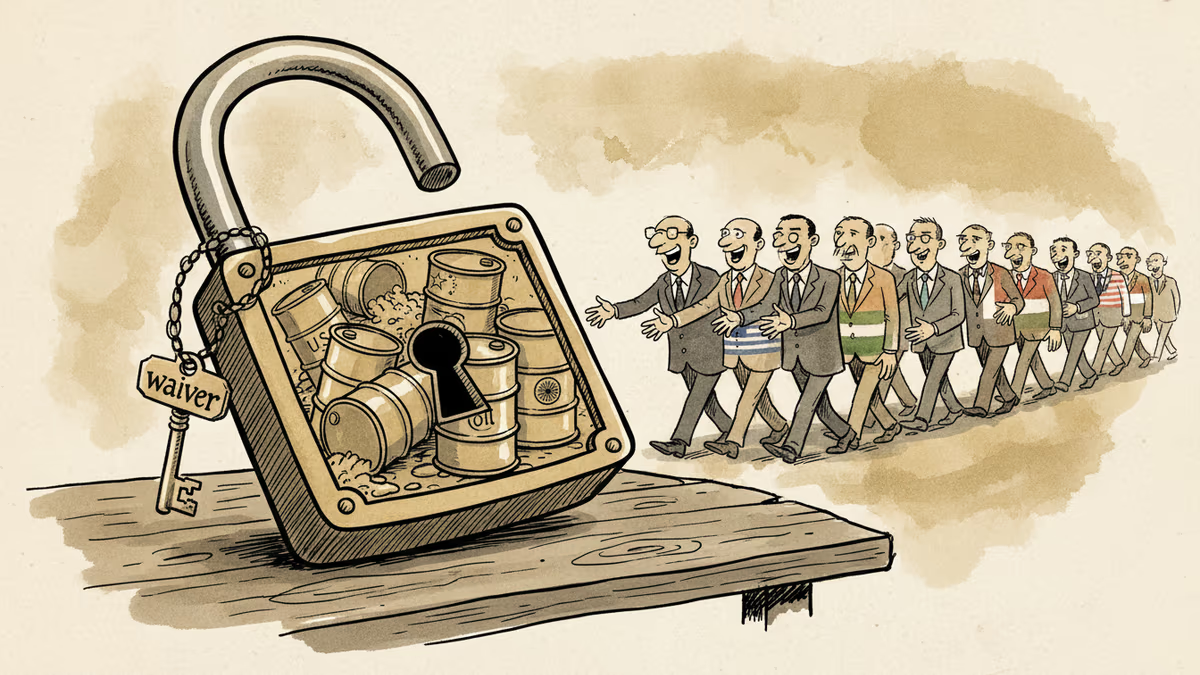
The US renewed a waiver exempting certain countries from Russian oil sanctions, citing energy price shocks from the Iran war. What does this mean for global energy markets, and who really benefits?
Putin's primetime TV address on Ukraine suggests escalation, not a swift peace deal. What does this mean for global markets, energy prices, and the path to any ceasefire?
Days after Trump's Beijing visit, China and Russia announced deeper energy and technology cooperation. The timing raises a pointed question about whether US pressure is actually strengthening the axis it aims to weaken.
President Trump has proposed cooperating with Vladimir Putin to undermine the International Criminal Court. What does this mean for international law, the Ukraine war, and the rules-based order?
The US renewed a waiver exempting certain countries from Russian oil sanctions, citing energy price shocks from the Iran war. What does this mean for global energy markets, and who really benefits?
Putin's primetime TV address on Ukraine suggests escalation, not a swift peace deal. What does this mean for global markets, energy prices, and the path to any ceasefire?
Thoughts
Share your thoughts on this article
Sign in to join the conversation