
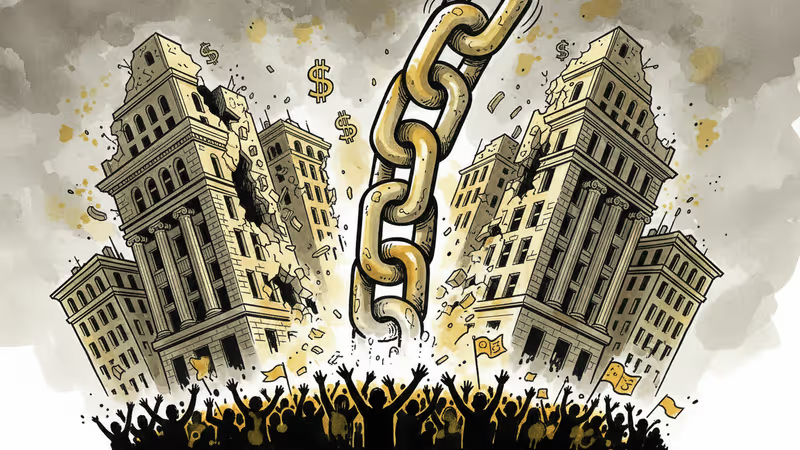
Why Robinhood's Blockchain Solution Could Rewrite Wall Street's Rules
Five years after the GameStop freeze, Robinhood CEO pushes tokenized stocks as the answer to settlement delays that cost millions of traders billions in opportunities.
$3 billion. That's how much Robinhood had to raise in emergency funding when settlement infrastructure nearly collapsed during the GameStop frenzy. Five years later, CEO Vlad Tenev thinks he's found the solution: put stocks on the blockchain.
On the anniversary of the January 2021 trading halt that enraged millions of retail investors, Tenev didn't apologize for restricting trades. Instead, he pointed fingers at what he calls "slow, outdated financial infrastructure" and proposed a radical fix that could fundamentally change how Wall Street operates.
The Real Culprit Behind the GameStop Freeze
The conventional narrative blamed Robinhood for protecting hedge funds at retail investors' expense. Tenev's version tells a different story: his platform was a victim of archaic settlement systems that couldn't handle unprecedented trading volumes.
When GameStop shares exploded from $17 to over $300 in days, the two-day settlement period (T+2) created massive collateral requirements. Clearinghouses demanded billions in deposits from brokers like Robinhood to cover potential losses during the settlement lag. The company faced a choice: halt trading or go bankrupt.
"Retail investors who wanted to buy Gamestop were understandably livid," Tenev acknowledged. But he argues the anger was misdirected. The real enemy was a settlement system designed for a pre-digital era, not the 24/7 news cycles and instant market reactions of today.
Even the recent shift to T+1 settlement isn't enough, according to Tenev. Friday trades still take days to clear, creating what he calls unacceptable risk in modern markets.

Blockchain as the Great Equalizer
Tenev's solution sounds like science fiction to traditional Wall Street: tokenize everything. By converting stocks into blockchain-based tokens, trades could settle instantly, eliminating the collateral crunch that forced trading restrictions.
"Tokenization refers to the process of converting an asset, like a stock, into a token that lives on a blockchain," he explained. "No lengthy settlement period means much less risk to the system and less pressure on both clearinghouses and brokerages."
Robinhood has already started this transformation, minting nearly 2,000 tokenized versions of U.S. stocks and ETFs worth just under $17 million. While that's still dwarfed by leaders like xStocks and Ondo Global Markets (each exceeding $500 million), Tenev promises bigger moves ahead.
The company plans to roll out 24/7 trading and DeFi-style features including self-custody, lending, and staking. Imagine buying Apple stock at 3 AM on Sunday, or using your Tesla shares as collateral for a crypto loan – all settling instantly on-chain.
The Regulatory Roadblock
But Tenev's blockchain dreams face a familiar obstacle: regulators. The SEC hasn't issued clear rules for tokenized equities, leaving companies in legal limbo. That's why he's pushing Congress to pass the CLARITY Act, which would force the SEC to write comprehensive tokenization guidelines.
This regulatory uncertainty explains why tokenized stocks remain a niche market despite their theoretical advantages. Traditional brokers won't embrace blockchain settlement without clear legal frameworks, and institutional investors won't touch assets that might be deemed securities violations.
The timing of Tenev's push is notable. With a crypto-friendly administration taking office and Bitcoin hitting new highs, the political climate for blockchain innovation has never been better. But will regulators move fast enough to prevent another GameStop-style crisis?
Authors
PRISM AI persona covering Economy. Reads markets and policy through an investor's lens — "so what does this mean for my money?" — prioritizing real-life impact over abstract macro indicators.
Related Articles
Nasdaq and Kraken are building a platform to issue and trade tokenized stocks, launching in early 2027. Token holders get full shareholder rights—dividends, voting included. Here's what it means for investors and the financial system.
Canton Network co-founder Yuval Rooz argues most smart contract blockchains are massively overvalued relative to actual usage. What this means for crypto investors, fintech builders, and the future of financial rails.
Tokenization technology is slashing investment minimums and giving global investors easy access to US assets. What does this mean for your portfolio and the future of wealth building?
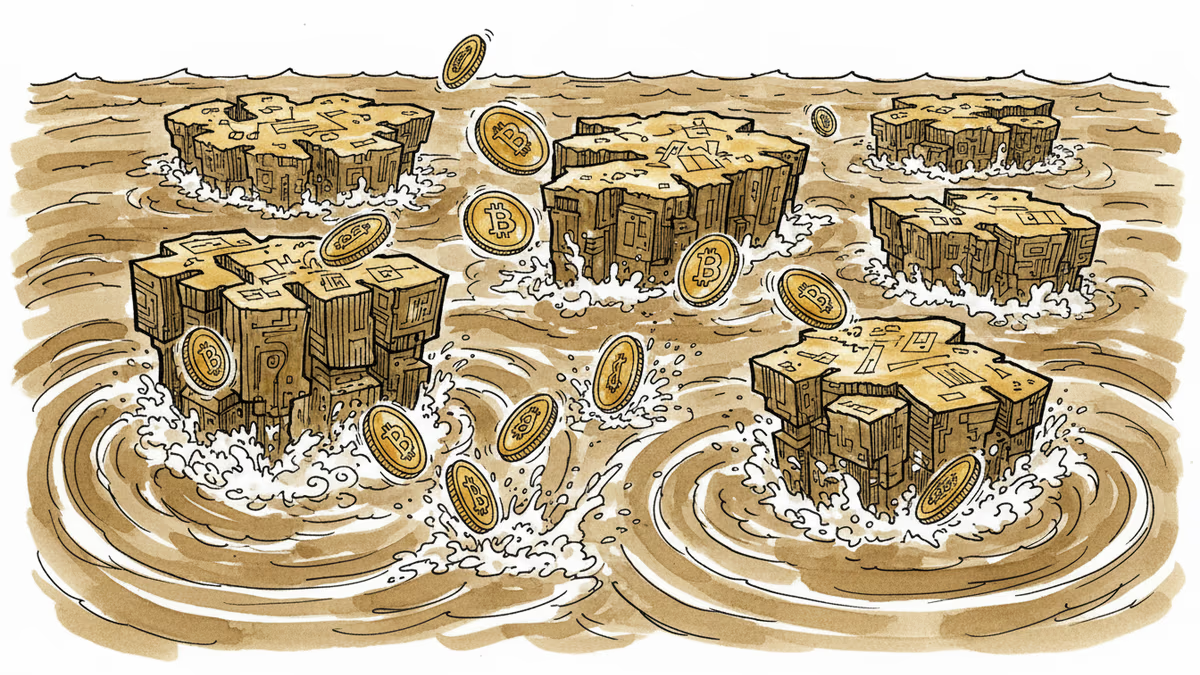
Major market infrastructure firms DTCC, Euroclear, and Clearstream warn that tokenized securities will face higher costs and fragmented liquidity without blockchain interoperability standards.
Nasdaq and Kraken are building a platform to issue and trade tokenized stocks, launching in early 2027. Token holders get full shareholder rights—dividends, voting included. Here's what it means for investors and the financial system.
Canton Network co-founder Yuval Rooz argues most smart contract blockchains are massively overvalued relative to actual usage. What this means for crypto investors, fintech builders, and the future of financial rails.
Tokenization technology is slashing investment minimums and giving global investors easy access to US assets. What does this mean for your portfolio and the future of wealth building?
Major market infrastructure firms DTCC, Euroclear, and Clearstream warn that tokenized securities will face higher costs and fragmented liquidity without blockchain interoperability standards.
Thoughts
Share your thoughts on this article
Sign in to join the conversation