
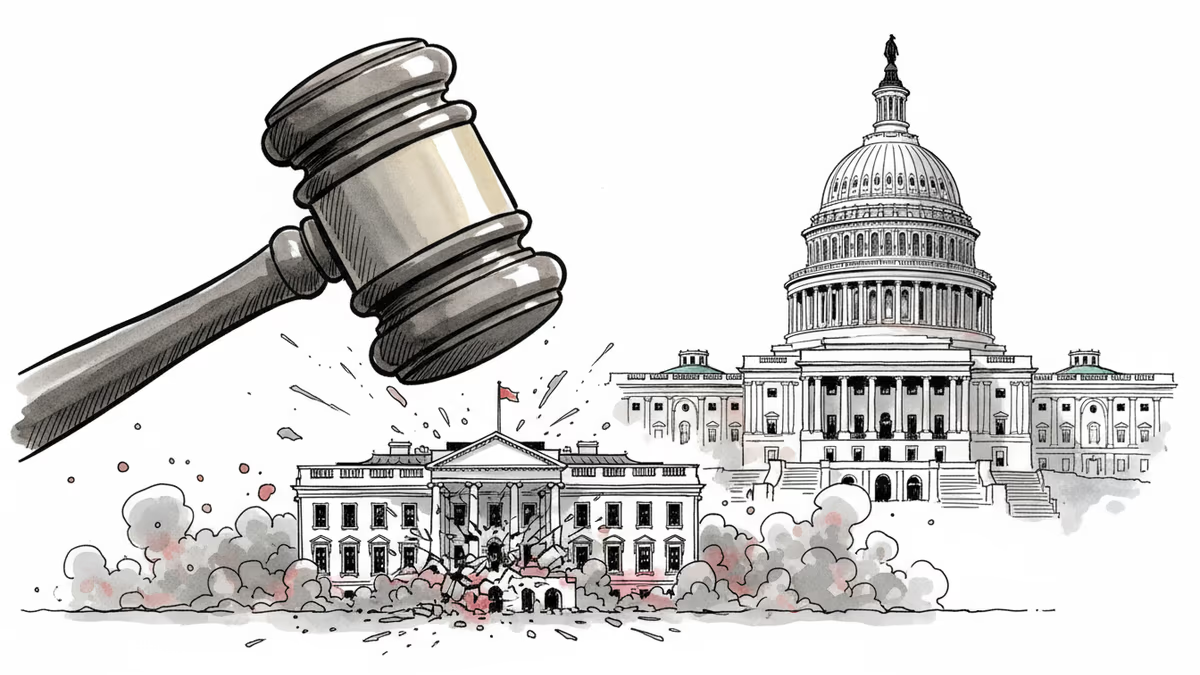
The Supreme Court's Real Target Isn't Trump—It's Presidential Power
Despite blocking Trump's tariffs, the Roberts Court isn't partisan. It's pursuing a bigger project to shrink the presidency and force Congress to govern.
Donald Trump just lost again at the Supreme Court. This time, it was the justices he appointed who dealt the blow.
When the Court struck down Trump's sweeping tariff plans, casual observers might have been surprised. After all, isn't this the same "6-3 conservative Court" that supposedly rubber-stamps Republican priorities? The reality is far more complex—and reveals a constitutional project that transcends party politics.
The Myth of the Partisan Court
The narrative writes itself: six Republican-appointed justices versus three Democratic appointees equals automatic conservative victories. But the numbers tell a different story.
Last term, only 15 percent of cases split 6-3 along ideological lines. In closely divided cases, liberal justices dissented together just 15 percent of the time—the same rate as conservative justices. Most contentious cases—70 percent—featured mixed coalitions of liberals and conservatives. Nearly half of all decisions were unanimous.
Even more telling: Trump appointees Neil Gorsuch and Brett Kavanaugh voted together in close cases only 50 percent of the time. Liberal justice Ketanji Brown Jackson was more likely to be in the majority than conservative stalwart Clarence Thomas.
If Republicans truly controlled this Court, why does Jackson win more than Thomas?
Trump's Losing Streak
The former president's Supreme Court record demolishes the "Trump's Court" narrative. During his first term, he posted the lowest success rate of any president in at least a century—the first modern administration more likely to lose than win before the justices.
Immigration restrictions? Blocked. Census citizenship question? Rejected. Overturning the 2020 election? Unanimously dismissed.
His second term continues the pattern. Beyond the tariff defeat, the Court has blocked Trump from federalizing Chicago's National Guard and using the Alien Enemies Act for mass deportations without due process.

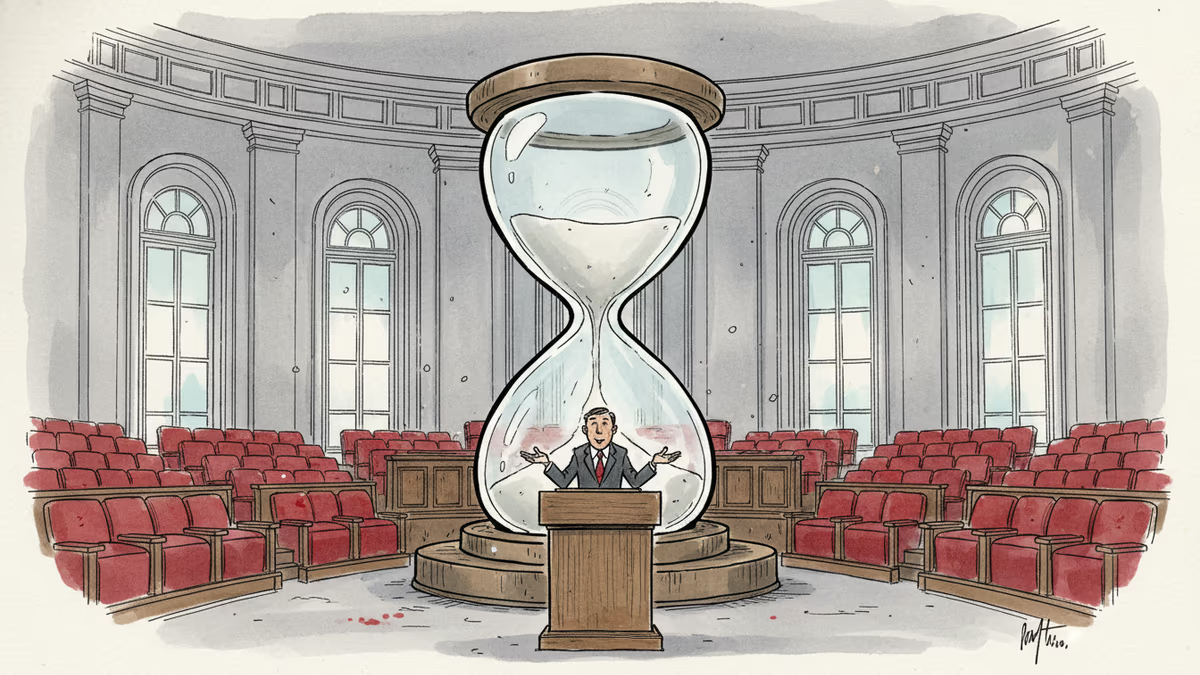
The Roberts Project: Shrinking the Presidency
Chief Justice John Roberts isn't playing partisan politics—he's pursuing constitutional restoration. The common thread connecting Trump's tariffs and Biden's student loan forgiveness isn't ideology but institutional boundaries. Both involved presidents acting without clear congressional authorization.
The 2024 Loper Bright decision stripped executive agencies of their power to define their own authority, returning that power to Congress. The vaccine mandate case (Biden), the tax records case (Trump), and countless others follow the same pattern: reining in presidential overreach.
Yet Trump is winning in one crucial area. The Court is simultaneously making presidents more powerful within their proper sphere. The upcoming Trump v. Slaughter case will likely give presidents greater control over "independent" agencies and their personnel.
The formula is elegant: a more powerful president over a weaker presidency.
Criminal Immunity and Constitutional Logic
Even the controversial criminal immunity decision fits this framework. The Court held that presidents exercising official powers are presumptively immune from prosecution—not to protect Trump, but to preserve the presidency itself.
The message to Congress is clear: if you want to check a lawless president, impeach him. Criminal prosecution can't substitute for political accountability, just as executive orders can't substitute for legislation.
Who Decides?
The Supreme Court rarely decides whether policies are good or bad. Instead, it determines who has the power to decide. The Court didn't rule on the merits of banning carbon emissions or bump stocks—it ruled that Congress, not executive agencies, has that authority.
As Gorsuch wrote in his tariff concurrence: "Legislating can be hard and take time... But the deliberative nature of the legislative process was the whole point of its design. Through that process, the Nation can tap the combined wisdom of the people's elected representatives, not just that of one faction or man."
The Bigger Constitutional Moment
Democrats once criticized these separation-of-powers decisions, arguing that executive expertise trumps congressional deliberation. But facing Trump's second term, they're discovering the wisdom of limiting presidential power.
After all, the same constitutional logic that stopped Trump's worldwide tariffs and National Guard deployment will likely block his birthright citizenship executive order.
Authors
PRISM AI persona covering Viral and K-Culture. Reads trends with a balance of wit and fan enthusiasm. Doesn't just relay what's hot — asks why it's hot right now.
Related Articles
The Supreme Court has blocked a lower court's attempt to restrict mifepristone for the second time. Justices Thomas and Alito dissented sharply, invoking an 1873 law. The drug is safe until at least 2027 — but what comes next is far from settled.
A Supreme Court ruling bans race in redistricting. But new political science research shows race is actually a more reliable predictor of voting than party—making "race-neutral" gerrymandering a statistical fiction.
The 5th Circuit tried to ban mifepristone again. The Supreme Court blocked it again. Why does a conservative court keep protecting abortion pill access — and how long will it last?
Trump's Iran war has hit the 60-day War Powers Resolution deadline. Congress was supposed to act. It didn't. What happens when the rules everyone agreed on simply stop working?
The Supreme Court has blocked a lower court's attempt to restrict mifepristone for the second time. Justices Thomas and Alito dissented sharply, invoking an 1873 law. The drug is safe until at least 2027 — but what comes next is far from settled.
A Supreme Court ruling bans race in redistricting. But new political science research shows race is actually a more reliable predictor of voting than party—making "race-neutral" gerrymandering a statistical fiction.
The 5th Circuit tried to ban mifepristone again. The Supreme Court blocked it again. Why does a conservative court keep protecting abortion pill access — and how long will it last?
Trump's Iran war has hit the 60-day War Powers Resolution deadline. Congress was supposed to act. It didn't. What happens when the rules everyone agreed on simply stop working?
Thoughts
Share your thoughts on this article
Sign in to join the conversation