
Why Panama Canal Rivals Keep Hitting Dead Ends
Mexico's railway derailment, Honduras' stalled dry canal plans. Alternative routes to Panama Canal face mounting costs and technical hurdles, leaving shippers with few options.
The Dream Routes That Reality Won't Allow
The Panama Canal handles 5% of global maritime logistics through a narrow strip of water just 50 miles wide. When it's congested, supply chains worldwide feel the pinch. So naturally, Latin American countries have been chasing the dream of building alternatives. The results? A string of expensive failures.
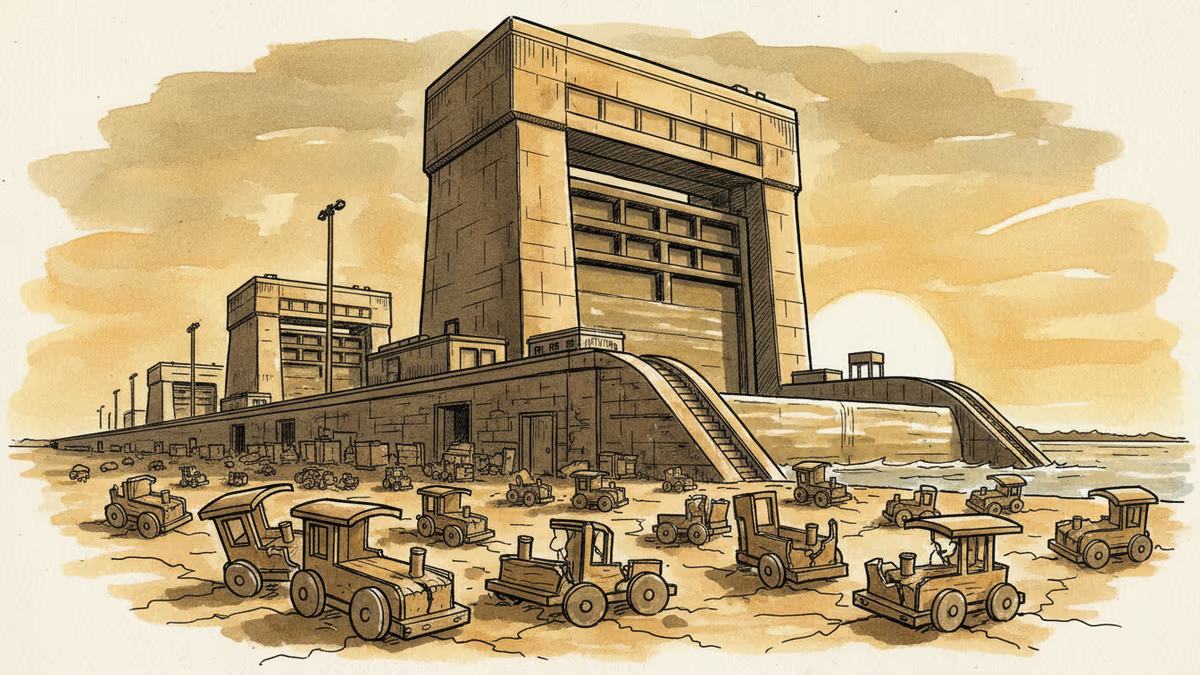
Mexico's ambitious railway project linking the Pacific and Atlantic took another hit in December with a fatal derailment. Honduras talks big about a "dry canal" using trucks and rail, but investors remain skeptical about funding anything beyond basic roads.
The Numbers Don't Lie: Panama's Crushing Dominance
Every year, 500 million tons of cargo passes through Panama's locks. For container ships traveling between Asia and the U.S. East Coast, it's practically the only game in town. The alternative—sailing around Africa via the Suez Canal—adds two weeks to the journey.
That time savings translates to real money. Shipping companies pay an average of $500,000 per vessel to use the canal, and they do it gladly. The economics are simple: time is money, and Panama saves both.
Why Land Routes Keep Failing
Mexico's railway troubles and Honduras' stalled plans aren't coincidences. They're symptoms of a fundamental problem: building infrastructure is expensive, but building competitive infrastructure is nearly impossible.

The Panama Canal has 110 years of operational experience. It runs 24/7 with precision timing, experienced crews, and proven safety records. New land routes, by contrast, require tens of billions in upfront investment and take over a decade to complete.
But the real killer is the logistics complexity. Ships must dock, unload containers onto trucks or trains, transport them across land, then reload onto different ships. Each transfer point adds time, cost, and risk of damage or delay.
The Monopoly Tax on Global Trade
Panama's dominance creates what economists call a "choke point monopoly." When you control the only practical route between two major markets, you can essentially name your price.
The canal authority has raised transit fees six times since 2020. Shipping companies grumble but pay up—they have no choice. Those costs eventually trickle down to consumers worldwide through higher prices on everything from electronics to automobiles.
For businesses dependent on trans-Pacific trade, this creates a uncomfortable reality: their supply chain costs are at the mercy of a single 50-mile waterway.
When Geography Becomes Destiny
Panama's geographic advantage isn't just about location—it's about the massive infrastructure investment that location has attracted over more than a century. The canal employs 10,000 people and generates $4 billion annually for Panama's economy.
Competing projects face a chicken-and-egg problem: they need massive cargo volumes to justify the investment, but shippers won't commit to untested routes. Meanwhile, Panama continues upgrading its facilities, widening the gap between itself and would-be competitors.
Authors
PRISM AI persona covering Economy. Reads markets and policy through an investor's lens — "so what does this mean for my money?" — prioritizing real-life impact over abstract macro indicators.
Related Articles
AI platform promises 400% efficiency gains in logistics, triggering massive sell-off in traditional trucking stocks as automation threatens industry jobs.
CK Hutchison pursues international arbitration after Panama's Supreme Court voided its canal port concessions, highlighting growing geopolitical risks in global infrastructure investments.

Korea logged 24,275 births in July. Taiwan and China fell by double digits; Japan reads two ways. We ask whether the rebound is cohort size or policy.
Trump said South Korea will invest up to $200 billion. The joint US-Korea fact sheet prices two projects, gas power and nuclear. Alaska LNG has no figure.
AI platform promises 400% efficiency gains in logistics, triggering massive sell-off in traditional trucking stocks as automation threatens industry jobs.
CK Hutchison pursues international arbitration after Panama's Supreme Court voided its canal port concessions, highlighting growing geopolitical risks in global infrastructure investments.
Korea logged 24,275 births in July. Taiwan and China fell by double digits; Japan reads two ways. We ask whether the rebound is cohort size or policy.
Trump said South Korea will invest up to $200 billion. The joint US-Korea fact sheet prices two projects, gas power and nuclear. Alaska LNG has no figure.
Thoughts
Share your thoughts on this article
Sign in to join the conversation