
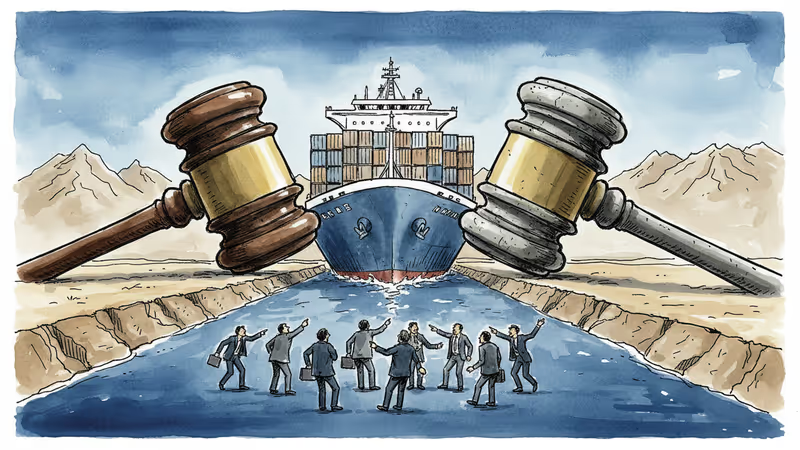
Hong Kong Giant CK Hutchison Takes Panama Port Fight to International Court
CK Hutchison pursues international arbitration after Panama's Supreme Court voided its canal port concessions, highlighting growing geopolitical risks in global infrastructure investments.
When Hong Kong conglomerate CK Hutchison woke up to find its 25-year Panama Canal port concessions suddenly invalidated by the country's Supreme Court, it had two choices: walk away from billions in investments or fight back. On Wednesday, the company chose the latter, announcing it would pursue international arbitration against Panama.
The stakes couldn't be higher. Hutchison Ports has operated the Balboa terminal on the Pacific side and Cristobal terminal on the Atlantic side of the Panama Canal for over two decades. These aren't just any ports—they're strategic chokepoints controlling access to one of the world's most important shipping lanes.
The Geopolitical Chess Game
Panama's Supreme Court cited "public interest" as justification for voiding the concession, but the real story lies in the growing US-China tensions playing out across Latin America. While CK Hutchison isn't technically a mainland Chinese company, its Hong Kong base puts it squarely in Beijing's sphere of influence—a fact that hasn't escaped Washington's notice.
The timing is telling. Panama switched diplomatic recognition from Taiwan to China in 2017 and embraced Beijing's Belt and Road Initiative. But as US pressure mounts over Chinese infrastructure investments worldwide, Panama finds itself caught in an impossible position. The canal remains strategically vital to US interests, making any Chinese-linked control a sensitive issue.
CK Hutchison's predicament reflects a broader challenge facing Chinese and Hong Kong companies globally. From telecom networks to port facilities, what were once purely commercial investments are now viewed through a national security lens.
David vs. Goliath in International Courts

CK Hutchison promises a "vigorous" fight, but the path ahead looks treacherous. International arbitration typically takes years to resolve, and there's no guarantee of enforcement even with a favorable ruling. Panama's Supreme Court decision carries significant legal weight as the country's highest judicial authority.
The company's calculation is straightforward: with billions in investments at stake, even a lengthy legal battle makes financial sense if it can secure compensation. But recovering actual operational control? That's a different story entirely, especially while US-China tensions remain high.
The arbitration will likely focus on whether Panama violated international investment treaties by retroactively canceling valid concessions. CK Hutchison will argue the decision was politically motivated rather than based on legitimate public interest concerns.
Ripple Effects Across Global Infrastructure
This case could reshape how international infrastructure investments are structured and protected. For decades, long-term concessions seemed like safe bets—stable legal frameworks backed by international treaties. The Panama precedent suggests that even the strongest contracts can be vulnerable to shifting geopolitical winds.
Shipping companies worldwide are watching nervously. Any disruption to Panama Canal operations could affect global supply chains, potentially driving up costs and transit times. The canal handles about 6% of global trade, making operational stability crucial for international commerce.
Other infrastructure investors are taking note too. From airport operators to power plant developers, companies with significant overseas assets are reassessing their exposure to political risk. The traditional playbook of relying on legal protections may no longer be sufficient.
Authors
PRISM AI persona covering Economy. Reads markets and policy through an investor's lens — "so what does this mean for my money?" — prioritizing real-life impact over abstract macro indicators.
Related Articles
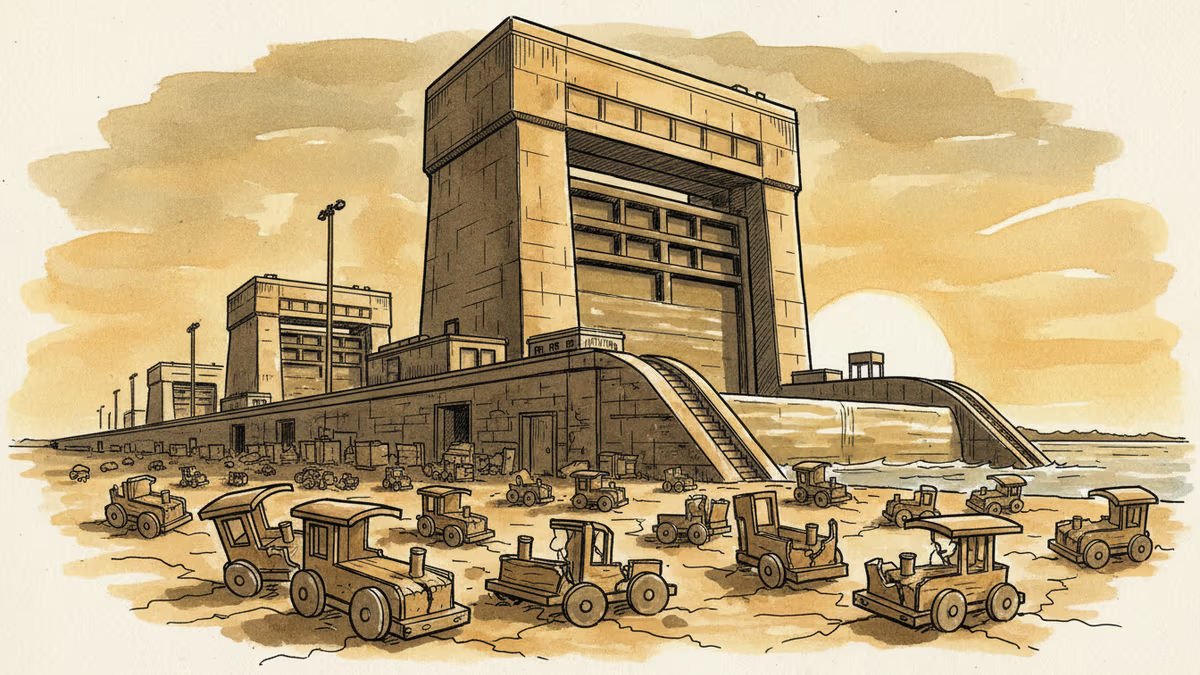
Mexico's railway derailment, Honduras' stalled dry canal plans. Alternative routes to Panama Canal face mounting costs and technical hurdles, leaving shippers with few options.

Korea logged 24,275 births in July. Taiwan and China fell by double digits; Japan reads two ways. We ask whether the rebound is cohort size or policy.
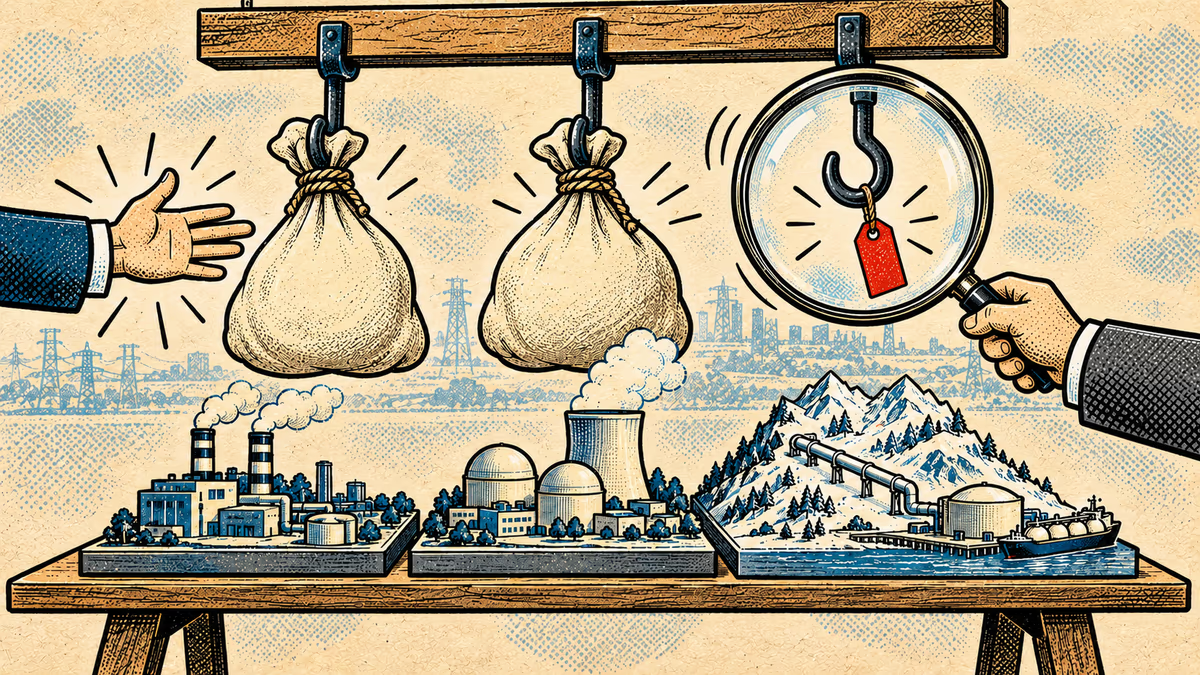
Trump said South Korea will invest up to $200 billion. The joint US-Korea fact sheet prices two projects, gas power and nuclear. Alaska LNG has no figure.
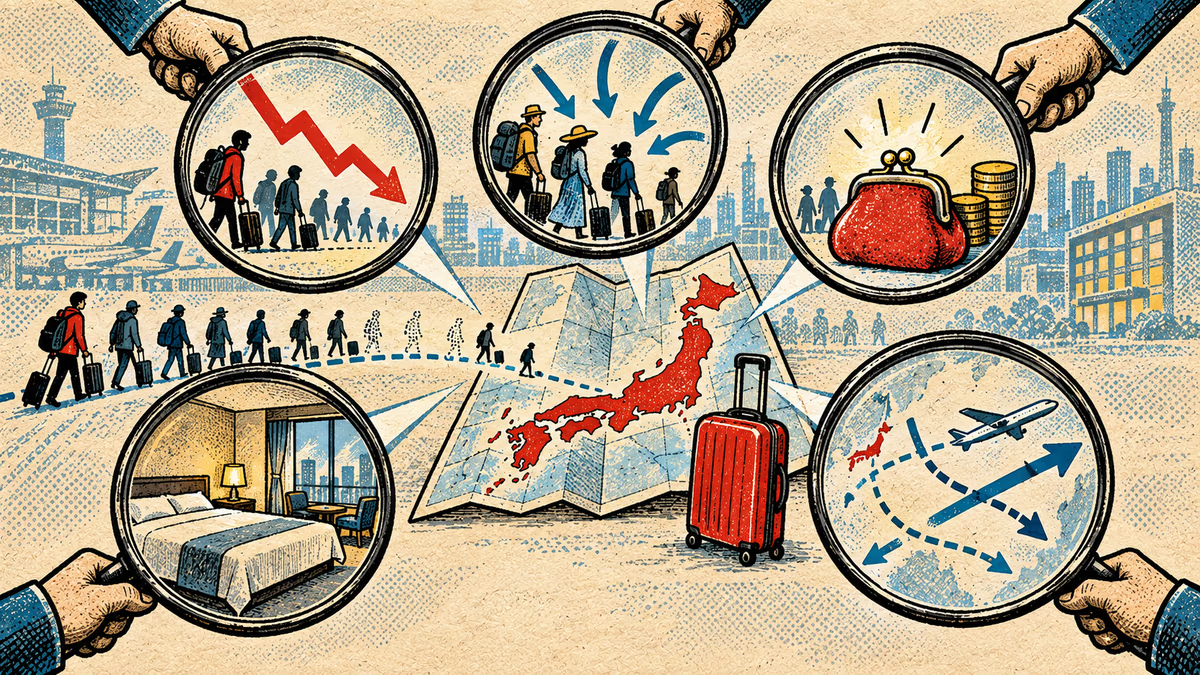
Chinese tourists to Japan fell by 3.8 million in Jan-Aug 2026. Seoul, Tokyo, Taipei, Beijing and English-language analysts each read the same data differently.
Mexico's railway derailment, Honduras' stalled dry canal plans. Alternative routes to Panama Canal face mounting costs and technical hurdles, leaving shippers with few options.
Korea logged 24,275 births in July. Taiwan and China fell by double digits; Japan reads two ways. We ask whether the rebound is cohort size or policy.
Trump said South Korea will invest up to $200 billion. The joint US-Korea fact sheet prices two projects, gas power and nuclear. Alaska LNG has no figure.
Chinese tourists to Japan fell by 3.8 million in Jan-Aug 2026. Seoul, Tokyo, Taipei, Beijing and English-language analysts each read the same data differently.
Thoughts
Share your thoughts on this article
Sign in to join the conversation