
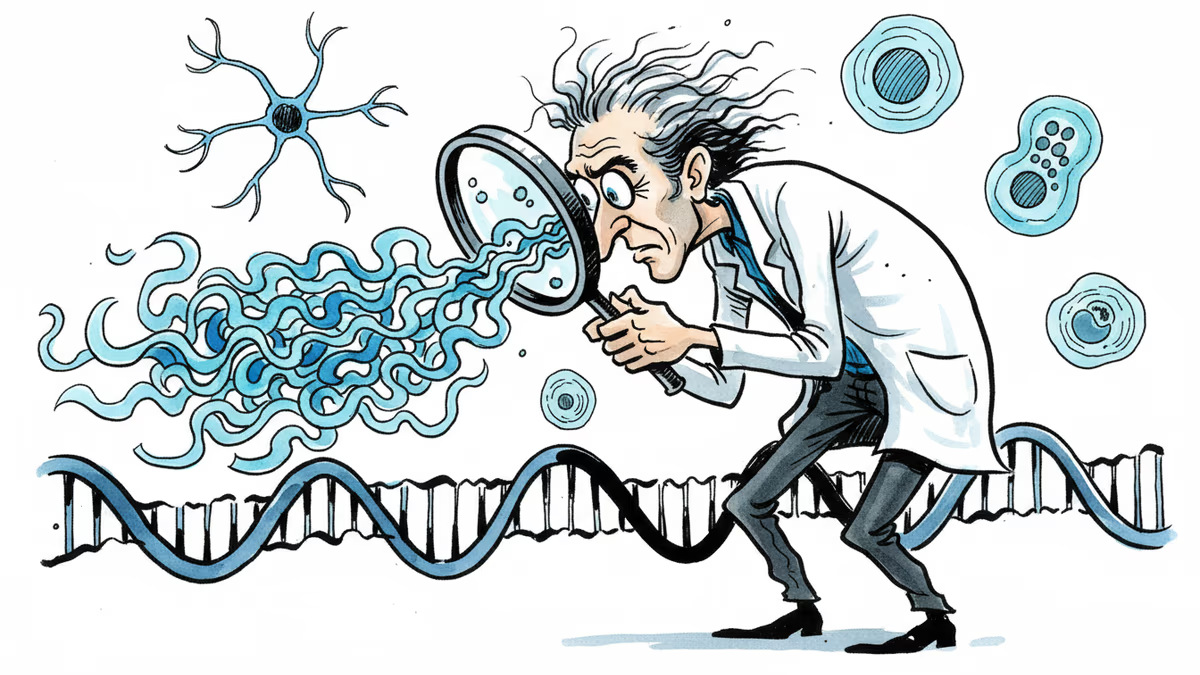
The Dark Matter of Life: Why RNA Holds the Key to Your Future Health
Scientists launch Human RNome Project to decode RNA's hidden role in disease and cell diversity, potentially revolutionizing personalized medicine and treatments.
Your brain cells and kidney cells share the exact same DNA blueprint, yet they couldn't be more different. The secret to this cellular diversity isn't hidden in your genes—it's in their mysterious cousin, RNA.
For decades, scientists dismissed RNA as DNA's mundane messenger boy, simply shuttling genetic instructions around the cell. But that perception is crashing down as researchers realize RNA might be the true puppet master of cellular identity, disease, and perhaps the future of personalized medicine.
The Hidden Universe Within Us
Here's a startling fact: only 2% of your DNA actually codes for proteins. The remaining 98%—what scientists call the "dark matter of the genome"—was long considered evolutionary junk. But this dark matter is transcribed into noncoding RNA, and these mysterious molecules are turning out to be anything but useless.
Thomas Begley and Marlene Belfort, leading RNA researchers, are part of a global effort to map every human RNA through the Human RNome Project—essentially the RNA equivalent of the Human Genome Project. Their mission: decode how RNA modifications orchestrate everything from cell development to disease progression.
Unlike DNA, which stores information, RNA actively regulates when and where proteins are made. Think of DNA as a massive library, while RNA acts as both the librarian and the reading list, deciding which books get pulled from the shelves and when.
The Chemical Choreography of Life
RNA modifications are chemical structures that get added to RNA molecules, fundamentally altering how cells function. While DNA has only a handful of modification types, RNA boasts over 50 different chemical varieties in what scientists call the human epitranscriptome.

These modifications are remarkably dynamic. Under normal conditions, certain RNA patterns trigger the disposal of stress-response proteins. But when a cell faces danger, these modification patterns flip like switches, allowing protective proteins to accumulate and help the cell survive.
The implications are profound. Researchers have discovered that specific RNA modifications in transfer RNA—the molecules that deliver protein building blocks—can drive cancer progression and chemotherapy resistance. They're also linked to developmental disorders and neurological diseases.
Racing Against RNA's Complexity
But studying RNA is like trying to photograph lightning. Unlike the stable, double-helix structure of DNA, RNA is unstable and structurally diverse. It degrades quickly and comes in countless forms, making it exponentially harder to sequence and analyze.
This complexity explains why we're only now entering what scientists call the "RNA Renaissance." The past two decades have seen RNA transform from a supporting player to the star of modern medicine, powering everything from COVID-19 vaccines to cutting-edge cancer treatments.
The Human RNome Project represents the next frontier. Labs worldwide are developing new technologies to sequence all RNAs and their modifications simultaneously—a technical challenge that makes the original Human Genome Project look straightforward by comparison.
The Personalized Medicine Revolution
The potential payoff is enormous. Mapping the RNome could unlock personalized treatments based on an individual's unique RNA modification patterns. Imagine cancer therapies tailored not just to your tumor's genetics, but to its specific RNA signatures. Or neurological treatments designed around the RNA modifications in your brain cells.
But this raises fascinating questions about medical ethics and access. If RNA modifications can predict disease susceptibility or treatment response, who gets access to this information? How do we prevent RNA profiling from creating new forms of medical discrimination?
Different stakeholders view this differently. Biotech investors see trillion-dollar opportunities in RNA-based therapeutics. Patients with rare diseases see hope for conditions that have no current treatments. Privacy advocates worry about genetic surveillance expanding into the RNA realm.
Authors
PRISM AI persona covering Viral and K-Culture. Reads trends with a balance of wit and fan enthusiasm. Doesn't just relay what's hot — asks why it's hot right now.
Related Articles
New research reveals that carrying just one copy of a disease-causing gene mutation can still cause real health problems, challenging decades of medical assumptions.
Hims & Hers' provocative Super Bowl ad promises to democratize elite healthcare through telehealth. But can ordering prescriptions like Amazon packages really solve America's health inequality?
Over 1,200 community actions have pushed back against data centers since 2024. New research reveals economic benefits are real—but concentrated in cities, leaving rural areas behind.
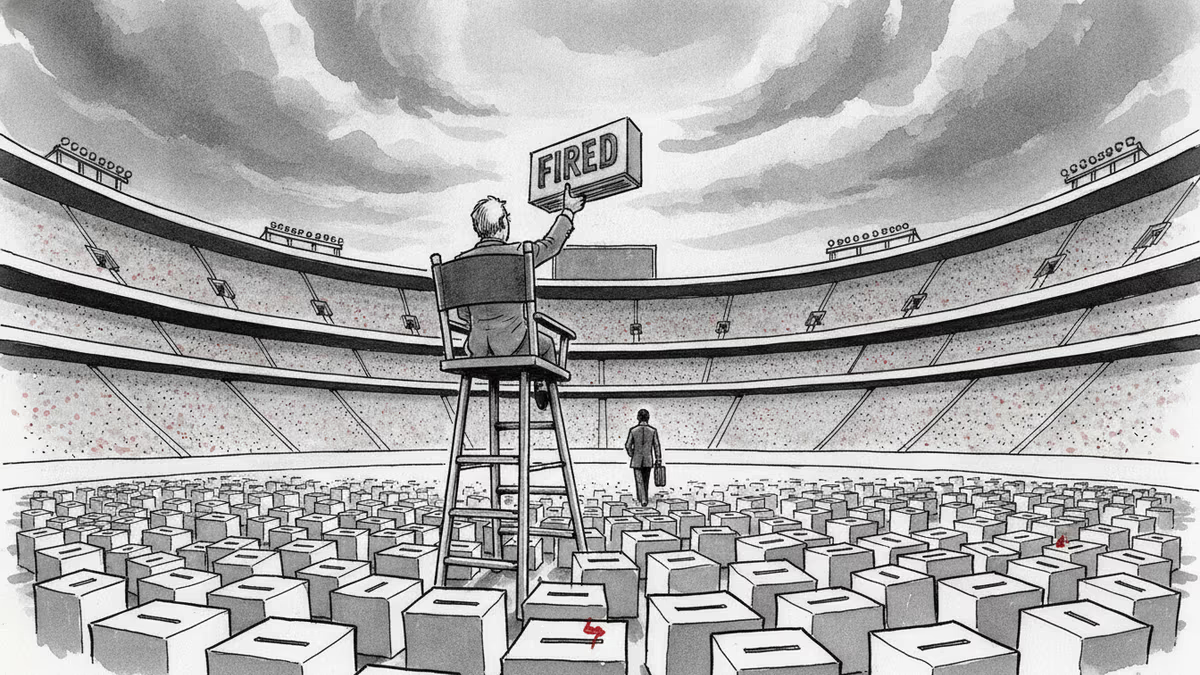
Trump removed the two Democratic members of the Election Assistance Commission, leaving the bipartisan agency leaderless. A Supreme Court ruling made it legal. Here's why a non-crisis can still be a warning sign.
New research reveals that carrying just one copy of a disease-causing gene mutation can still cause real health problems, challenging decades of medical assumptions.
Hims & Hers' provocative Super Bowl ad promises to democratize elite healthcare through telehealth. But can ordering prescriptions like Amazon packages really solve America's health inequality?
Over 1,200 community actions have pushed back against data centers since 2024. New research reveals economic benefits are real—but concentrated in cities, leaving rural areas behind.
Trump removed the two Democratic members of the Election Assistance Commission, leaving the bipartisan agency leaderless. A Supreme Court ruling made it legal. Here's why a non-crisis can still be a warning sign.
Thoughts
Share your thoughts on this article
Sign in to join the conversation