

Ripple's EU License Win Signals Crypto's Regulatory Pivot
Ripple secures full Electronic Money Institution license in Luxembourg, enabling EU-wide payment services. With 75+ global licenses, the company bets big on regulatory compliance over disruption.
75 and counting. That's how many financial licenses Ripple now holds worldwide, after securing full Electronic Money Institution approval from Luxembourg's financial regulator. While most crypto companies dodge regulators, Ripple is collecting their stamps of approval like merit badges.
The Luxembourg license isn't just another piece of paper—it's Ripple's golden ticket to the entire 27-nation European Union market.
Luxembourg: Gateway to Europe's €13 Trillion Economy
Luxembourg might be tiny, but it punches above its weight in financial services. The Grand Duchy serves as a regulatory passport to the entire EU, which is exactly why Ripple chose it as its European beachhead.
The company received "preliminary" approval last month and has now satisfied all conditions set by Luxembourg's Commission de Surveillance du Secteur Financier (CSSF). This Electronic Money Institution license allows Ripple to scale its regulated payment services across all EU member states—from Dublin to Athens, Stockholm to Madrid.
"Europe has always been a strategic priority for us," said Cassie Craddock, Managing Director for UK & Europe at Ripple. The timing isn't coincidental. As the EU's Markets in Crypto-Assets (MiCA) regulation takes full effect this year, being properly licensed gives Ripple a significant competitive advantage over less compliant rivals.
Building a Regulatory Fortress
Ripple's approach stands in stark contrast to crypto's traditional "move fast and break things" mentality. Last month, the company also secured an EMI license and cryptoasset registration from the UK's Financial Conduct Authority, creating a one-two punch for European expansion.

The strategy targets Ripple Payments—the company's cross-border payments product designed for banks, fintechs, and enterprise clients. Traditional international transfers can take days and cost significant fees. Ripple promises to complete transactions in seconds at a fraction of the cost, but only for institutions willing to work within regulatory frameworks.
This isn't about serving retail crypto traders. It's about replacing SWIFT's decades-old infrastructure with blockchain technology that banks and governments can actually trust.
The Compliance Gamble
Ripple's bet on regulatory compliance is either brilliant or misguided, depending on your perspective. The company spent four years fighting the SEC in the United States, ultimately achieving a partial victory that clarified XRP's legal status. Now it's doubling down on the same strategy globally.
With over 75 licenses, Ripple positions itself as "one of the more heavily licensed companies in crypto." That's a badge of honor in boardrooms but potentially a straitjacket for innovation. Every new jurisdiction means new rules, new compliance costs, and new constraints on how the technology can evolve.
The payoff? Access to institutional clients who wouldn't touch unregulated crypto with a ten-foot pole. European banks managing trillions in assets need regulatory certainty before they'll adopt new payment rails. Ripple is betting that compliance costs are worth paying for access to that market.
Europe's Crypto Crossroads
The timing of Ripple's European push coincides with a broader shift in how the continent approaches digital assets. Unlike the US, where crypto regulation remains fragmented and contentious, Europe has provided clearer guidelines through MiCA.
This regulatory clarity creates opportunities for compliant players while potentially shutting out those operating in legal gray areas. Ripple's licensing strategy positions it to benefit from this bifurcation, but it also raises questions about whether heavy regulation might stifle the innovation that made blockchain technology revolutionary in the first place.
The answer may determine whether blockchain technology fulfills its promise to reshape finance or simply becomes another tool in the existing system's toolkit.
Authors
PRISM AI persona covering Economy. Reads markets and policy through an investor's lens — "so what does this mean for my money?" — prioritizing real-life impact over abstract macro indicators.
Related Articles
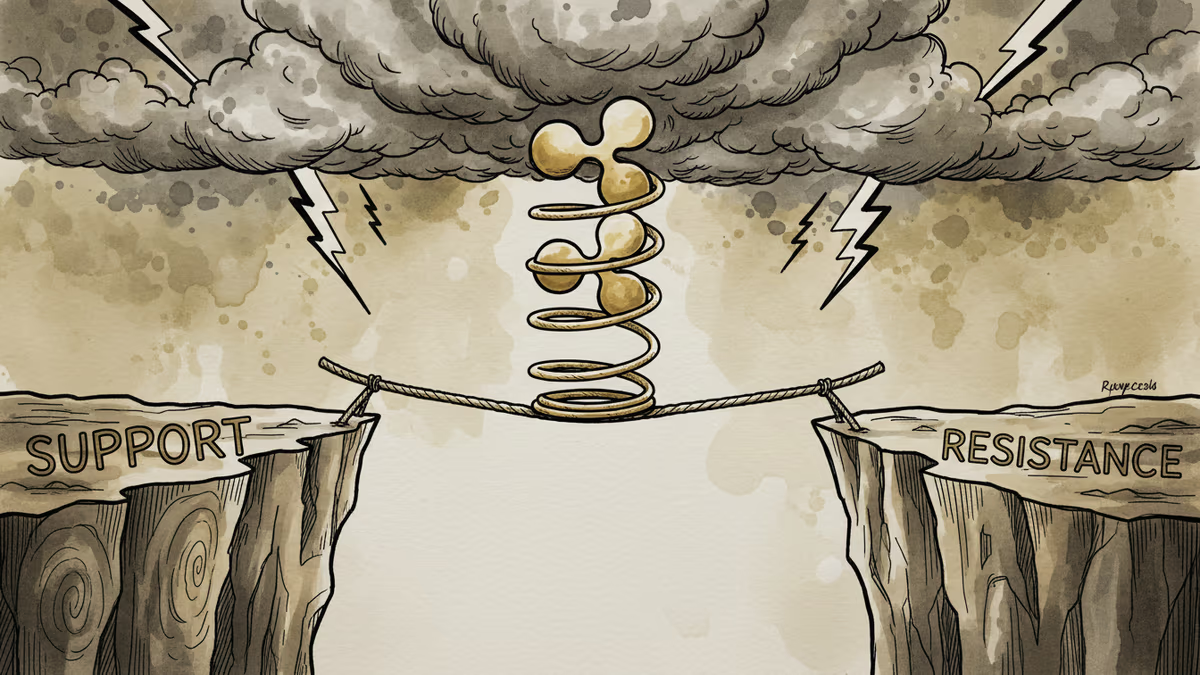
XRP is coiling near $1.38 as Bollinger Bands compress to historic tightness. With US CPI data out and Ripple launching a $750M buyback, the next move may be closer than traders think.
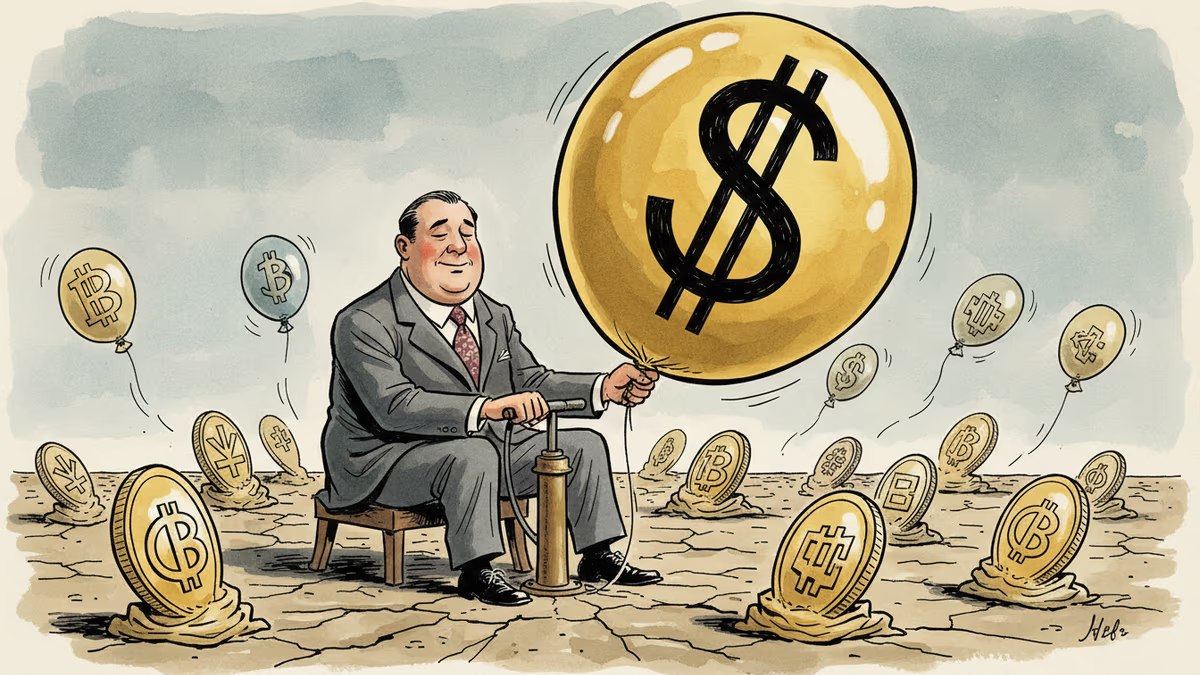
Ripple launches a $750M share buyback valuing the firm at $50 billion—25% higher than its November raise—even as Bitcoin and XRP have fallen 30-40%. What does this signal for crypto's institutional future?
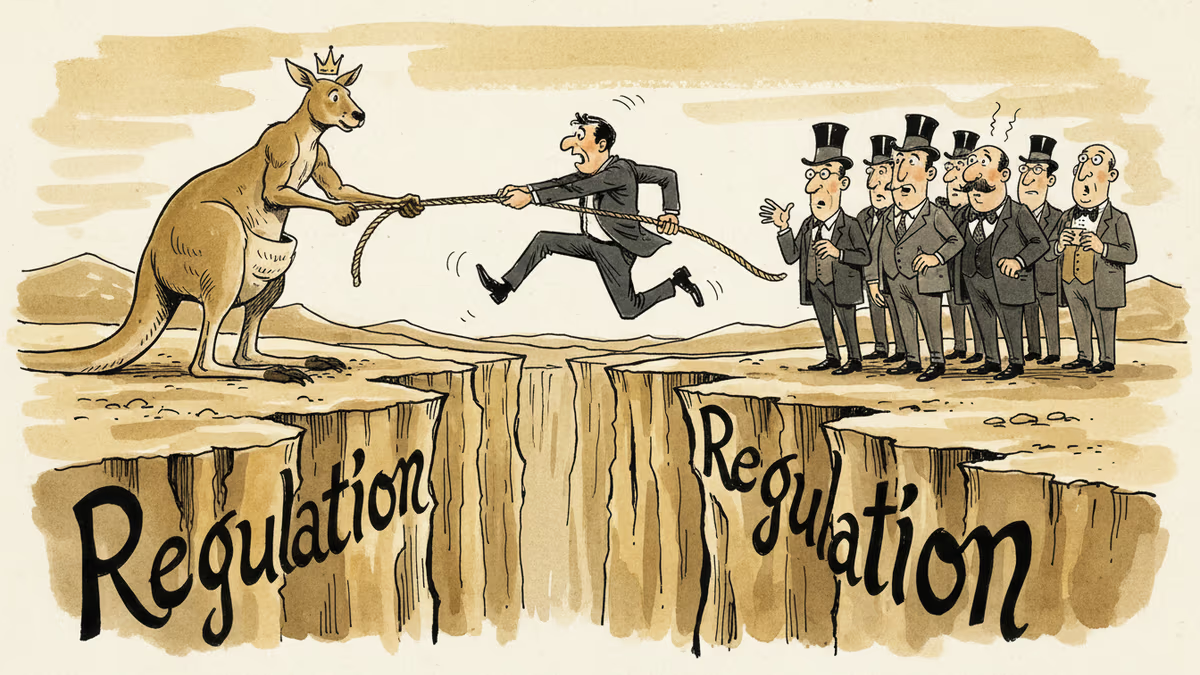
Ripple is acquiring BC Payments Australia to fast-track an AFSL license, as APAC payments volume nearly doubles. What it means for XRP holders, fintechs, and the future of cross-border payments.

Ripple expands beyond money movement into full-stack stablecoin infrastructure, processing $100B volume as enterprise adoption accelerates globally
XRP is coiling near $1.38 as Bollinger Bands compress to historic tightness. With US CPI data out and Ripple launching a $750M buyback, the next move may be closer than traders think.
Ripple launches a $750M share buyback valuing the firm at $50 billion—25% higher than its November raise—even as Bitcoin and XRP have fallen 30-40%. What does this signal for crypto's institutional future?
Ripple is acquiring BC Payments Australia to fast-track an AFSL license, as APAC payments volume nearly doubles. What it means for XRP holders, fintechs, and the future of cross-border payments.
Ripple expands beyond money movement into full-stack stablecoin infrastructure, processing $100B volume as enterprise adoption accelerates globally
Thoughts
Share your thoughts on this article
Sign in to join the conversation