
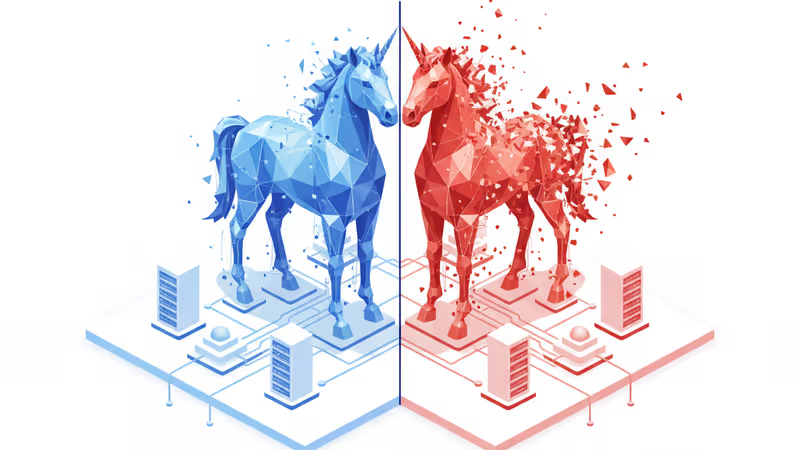
Resolve AI’s $1B ‘Synthetic Unicorn’ Deal: A Red Flag for AI Hype or the Future of AIOps?
Resolve AI's $1B valuation on just $4M ARR reveals a new VC playbook for AI. We analyze the 'synthetic unicorn' deal and the future of autonomous SREs.
The Lede: Beyond the Billion-Dollar Headline
A startup with just $4 million in revenue is now valued at $1 billion. On the surface, Resolve AI’s Series A, led by Lightspeed Venture Partners, looks like another case of peak AI froth. But look closer. This isn't just a funding story; it’s a masterclass in modern venture capital mechanics and a powerful signal about the next frontier of enterprise automation: the death of manual IT firefighting. For executives, this deal is a critical case study in how financial engineering is shaping the AI landscape and a preview of the 'autonomous co-worker' set to radically transform technical operations.
Why It Matters: The Autonomous Enterprise is Here
The core promise of Resolve AI—an autonomous Site Reliability Engineer (SRE)—is to eliminate the most expensive and stressful part of running modern software: human intervention during a crisis. As companies migrate to complex, distributed cloud architectures, their systems have become too vast for human teams to manage effectively. The result is costly downtime, engineer burnout, and a constant, reactive state of emergency.
So what? This matters because we are shifting from AI as an assistant (a 'co-pilot') to AI as an autonomous agent. Success for Resolve AI would have profound second-order effects:
- Radical Cost Reduction: Elite SREs command salaries upwards of $200,000. An autonomous system that can do the work of an entire team offers an undeniable ROI, fundamentally changing opex models for tech companies.
- Redefined Technical Roles: The job of an SRE will evolve from a hands-on-keyboard troubleshooter to a supervisor of AI systems. The focus will shift from reacting to outages to proactively training and refining the AI that prevents them.
- Increased Innovation Velocity: By automating maintenance, engineering talent is freed from the Sisyphean task of 'keeping the lights on' and can focus exclusively on building products and features that drive revenue.

The Analysis: Pedigree, Precedent, and Financial Engineering
To understand this deal, you need to look at three things: the founders, the market, and the money. The founders, Spiros Xanthos and Mayank Agarwal, are not first-timers. Their previous startup, Omnition, was acquired by Splunk, making them a known quantity with deep domain expertise in observability—a massive credibility signal for investors. They aren't just selling a dream; they're selling a dream backed by a proven track record.
The market, known as AIOps (AI for IT Operations), is littered with tools from giants like Datadog, Splunk, and Dynatrace that help engineers find problems. Resolve AI’s disruptive claim is to autonomously fix them. This is the holy grail of the entire sector.
But the most telling detail is the deal structure itself. The $1 billion headline is a 'synthetic' valuation. The multi-tranched investment means Lightspeed bought in at different price points, resulting in a lower, more realistic 'blended' valuation. This is a new VC playbook for the AI era: secure a stake in a category-defining company, grant it the powerful marketing halo of 'unicorn' status, but build in downside protection in case the hype outpaces reality. The 250x ARR multiple ($1B valuation / $4M revenue) is not a reflection of current performance, but a high-stakes bet on market capture and team execution.
PRISM's Take: The Pressure of a Paper Crown
While the founders' pedigree is impeccable and the problem they're solving is immense, the valuation structure is a canary in the coal mine for the current AI investment climate. It reveals a market where VCs are willing to pay any price for entry into a hot deal, but are simultaneously creating complex financial instruments to hedge their bets. Resolve AI now bears the heavy crown of a unicorn, with all the associated pressures to grow into its headline valuation.
The technology is the future, but the valuation is a product of market mania. The real test for Resolve AI won't be raising its next round; it will be proving its autonomous agent can withstand the chaotic, unpredictable reality of a Fortune 500 company's production environment. Lightspeed bought a ticket to a potential revolution, but the multi-tranche deal is their insurance policy in case it's just a spectacular show.
Authors
Related Articles
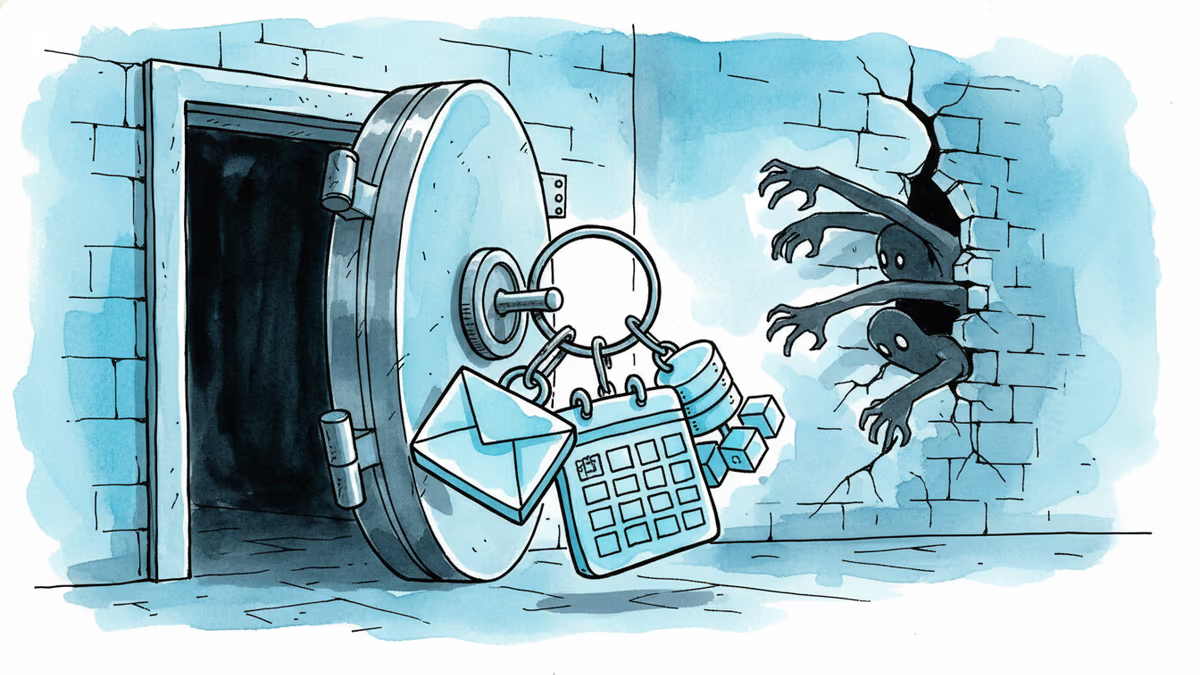
A critical vulnerability in Starlette—downloaded 325 million times per week—puts millions of AI agent servers at risk, exposing stored credentials for email, databases, and third-party services.

A small but growing group of developers has gone all-in on AI coding agents like Claude Code and OpenClaw. History suggests the rest of us won't be far behind.
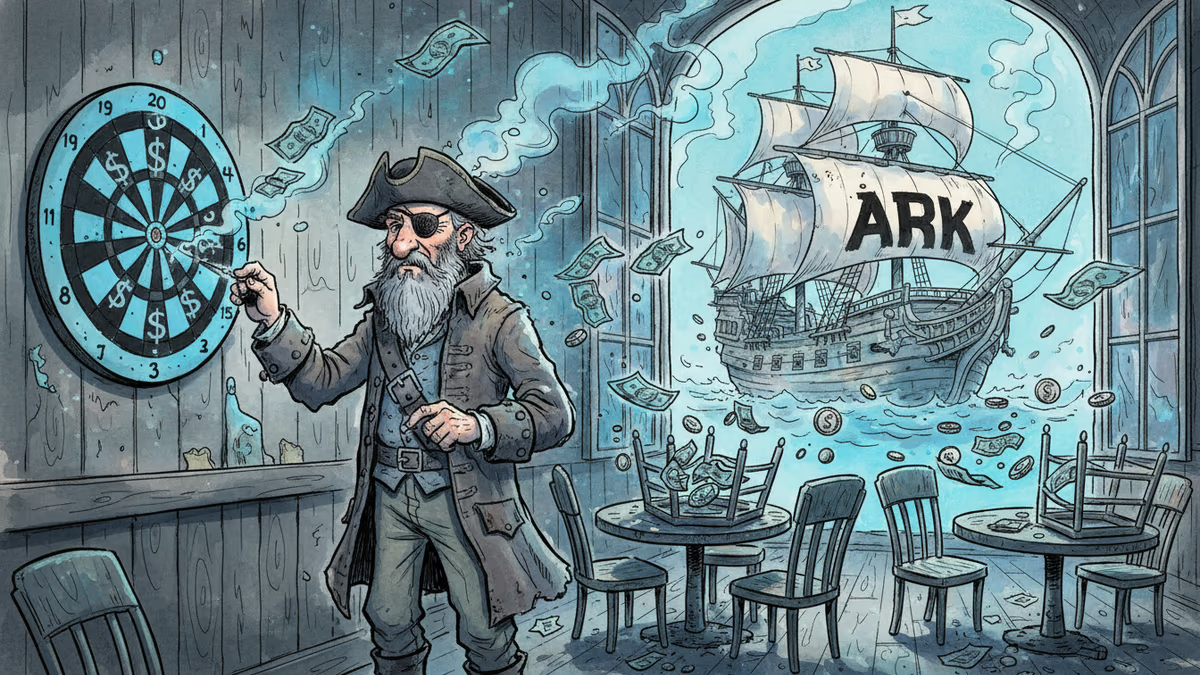
Lucra Sports CEO Dylan Robbins landed Cathie Wood's ARK Invest as a Series B lead without building AI. The story behind his unconventional fundraising playbook.

SolarSquare is raising $55-60M at a $450-500M valuation, more than doubling its worth in 18 months. Here's what's driving investor conviction in India's residential solar market.
A critical vulnerability in Starlette—downloaded 325 million times per week—puts millions of AI agent servers at risk, exposing stored credentials for email, databases, and third-party services.
A small but growing group of developers has gone all-in on AI coding agents like Claude Code and OpenClaw. History suggests the rest of us won't be far behind.
Lucra Sports CEO Dylan Robbins landed Cathie Wood's ARK Invest as a Series B lead without building AI. The story behind his unconventional fundraising playbook.
SolarSquare is raising $55-60M at a $450-500M valuation, more than doubling its worth in 18 months. Here's what's driving investor conviction in India's residential solar market.
Thoughts
Share your thoughts on this article
Sign in to join the conversation