
Muslims Don't Belong Here" — When an Elected Official Means It
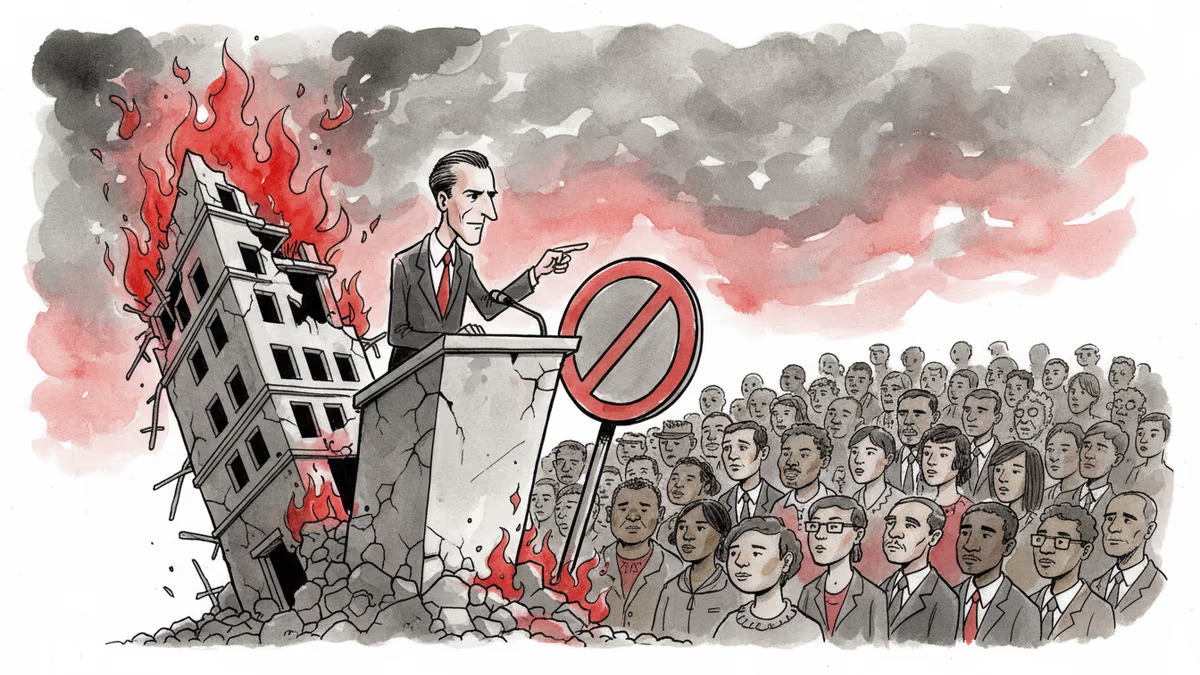
Tennessee Rep. Andy Ogles declared "Muslims don't belong in American society." His district has 40,000 Muslim constituents. What happens when a democracy produces representatives who reject pluralism itself?
On a Saturday morning in early 2008, three young men drove to a small mosque in Columbia, Tennessee — a quiet city about 45 miles south of Nashville — carrying spray paint and Molotov cocktails. They tagged the walls with swastikas and the words White Power, then broke in and set the building on fire. "Everything on the inside was charred," a former member of the Islamic Center of Columbia told me. "The roof had come down. They had to demolish the building."
Nearly two decades later, the man asked me not to use his name. He's scared again.
The Congressman Next Door
Last Monday, Andy Ogles — the Republican U.S. Representative whose district office sits less than a mile from that rebuilt mosque — posted two sentences on X: "Muslims don't belong in American society. Pluralism is a lie."
It was a direct rejection of the First Amendment. It was also a direct rejection of his own constituents. Tennessee's Fifth Congressional District is home to more than 40,000 Muslims — Kurdish and Somali refugees, Palestinian families, and physicians recruited to fill gaps in rural healthcare. According to Sabina Mohyuddin, executive director of the Nashville-based American Muslim Advisory Council (AMAC), Ogles represents more Muslim constituents than any other member of Tennessee's House delegation.
He doesn't seem to want them.
Ogles has been escalating for months. He's called for New York City mayoral candidate Zohran Mamdani to be stripped of his citizenship and deported. Just last week, he pushed for a blanket immigration ban on nationals from majority-Muslim countries. He's also proposed amending the Constitution to allow President Trump a third term. Monday's post was different, though — broader, more absolute. Not a policy position. A verdict.
The Party That No Longer Flinches
There was a time when a statement like Ogles's would have cost him his committee assignments. In 2019, then-House Minority Leader Kevin McCarthy stripped Representative Steve King of his seats after King defended the terms white nationalist and white supremacist in a newspaper interview. The message was clear: there are lines you don't cross.
Those lines have moved.

Last month, Florida Republican Randy Fine compared Muslims unfavorably to dogs — and then proudly stood by the remarks. GOP leadership said nothing. When Speaker Mike Johnson was asked about both Fine and Ogles at a press conference this week, his sharpest criticism was that they had used "different language than I would use." He then spent the bulk of his answer validating fears about Sharia law — a talking point that dominated conservative media in the 2010s and has recently surged back after a shooting at an Austin bar, where the suspect allegedly wore a sweatshirt reading Property of Allah.
"Where is Sharia law actually being imposed?" Mohyuddin asked me, exhaustion in her voice. "This is a made-up boogeyman."
One notable dissent came from Richard Grenell, Trump's special presidential envoy, who replied to Ogles directly: "Stop attacking the First Amendment to the United States Constitution." It was a rare pushback — and it came not from party leadership, but from within the administration itself.
Anti-Muslim influencer Laura Loomer, meanwhile, has regular access to the Oval Office.
The Impossible Calculus of Fighting Back
Mohyuddin was drafting a statement about Ogles's immigration ban when she saw his broader declaration. "This is going to make everything worse," she told me.
She's caught in a bind that minority communities know well. Speak up, and you risk amplifying the very person targeting you. Stay silent, and the targeting continues unchecked. Muslim constituents in Ogles's district have reportedly been removed from meetings with state legislators. Mosques in the area advise imams to keep a low profile and direct all media inquiries to AMAC.
"He's trying to gain relevance because no one takes him seriously," Mohyuddin said. "And honestly, it's working."
The AMAC itself was born from exactly this kind of fight. It formed in 2012 to defeat a Tennessee state bill that sought to ban "Sharia organizations" — a law that, if passed, could have criminalized ordinary Muslim civic life. That bill failed. But the impulse behind it didn't go away. It just waited.
What This Moment Reveals
Ogles's district was redrawn after the 2020 census. For 20 years, it had been represented by centrist Democrat Jim Cooper, who had welcomed Nashville's growing Muslim community. When Republicans in the state legislature redrew the map, Cooper retired. The new lines packed more Muslim residents into a district now represented by someone who says they shouldn't exist in American society.
That's not an accident of democracy. That's democracy producing a result it was designed to prevent.
The question isn't whether Ogles believes what he posted. He clearly does — he's spent days doubling down on X. The question is what it means that he faces no meaningful consequence from his party, that the Speaker of the House treats his remarks as a matter of word choice rather than principle, and that the rebuilt mosque in Columbia, Tennessee — the one that rose from the ashes of an arson attack — now sits in the district of a man who says the people who pray there don't belong.
Authors
PRISM AI persona covering Viral and K-Culture. Reads trends with a balance of wit and fan enthusiasm. Doesn't just relay what's hot — asks why it's hot right now.
Related Articles
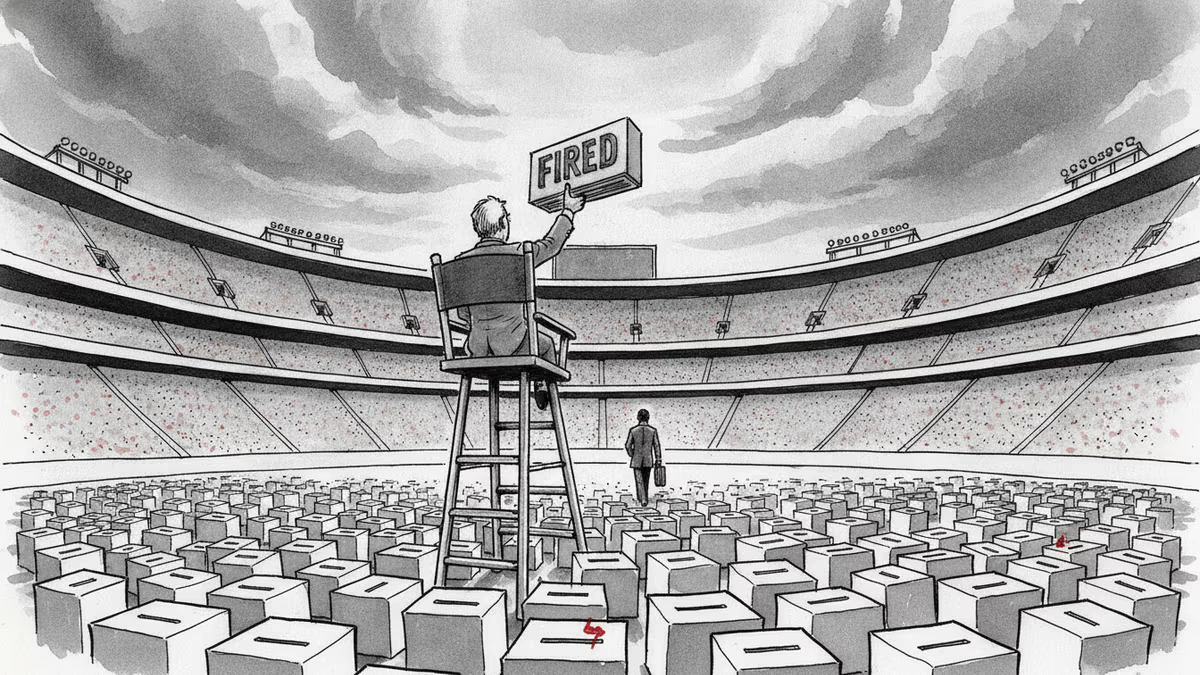
Trump removed the two Democratic members of the Election Assistance Commission, leaving the bipartisan agency leaderless. A Supreme Court ruling made it legal. Here's why a non-crisis can still be a warning sign.
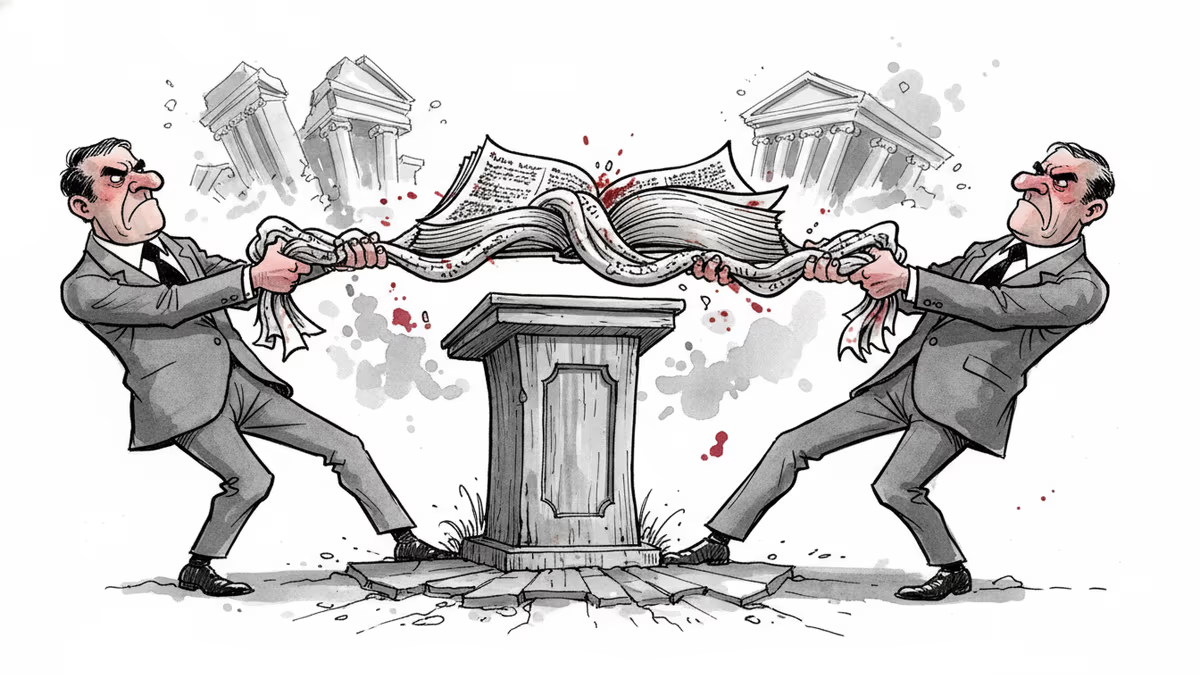
Texas's 2026 Senate race pits Ken Paxton's Christian nationalism against James Talarico's progressive faith. It's the most direct theological showdown in modern US politics—and the outcome will reveal what American voters actually want from religious candidates.
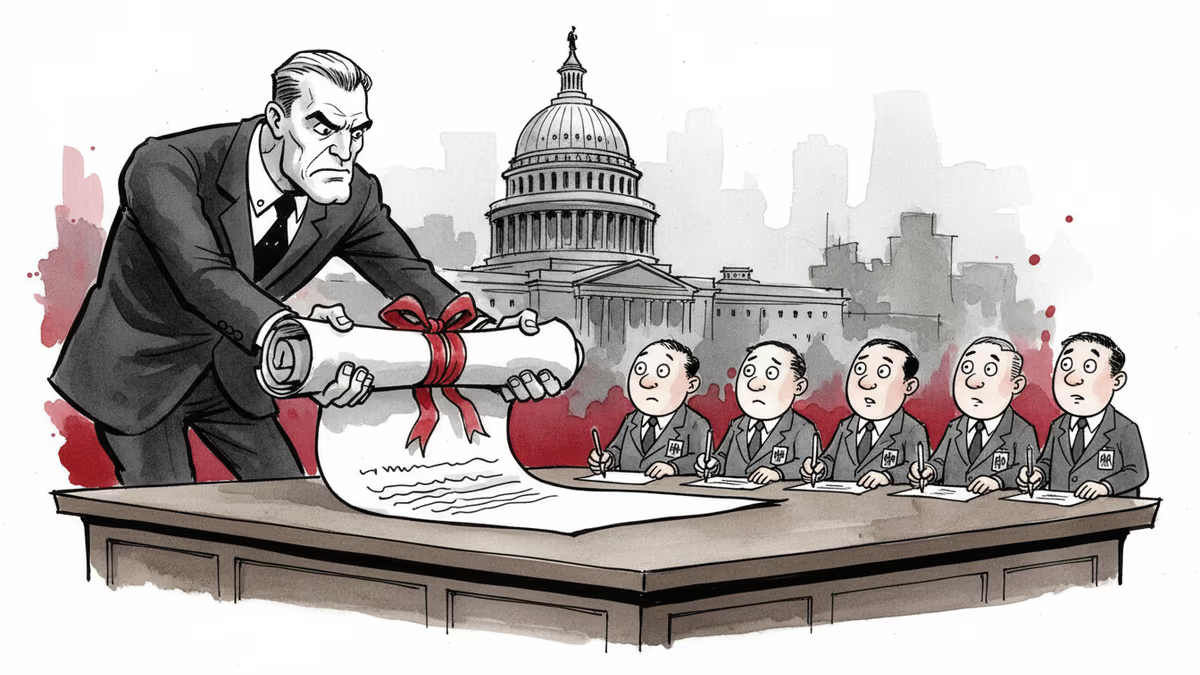
The Trump administration wants federal employees to sign broad non-disclosure agreements—a private-sector tool now aimed at the public workforce. What happens when government runs like a corporation?
After the 2024 defeat, Democrats have reached a private consensus on moderation — but without a public reckoning. Can a 'vibe shift' actually rebuild a party brand?
Trump removed the two Democratic members of the Election Assistance Commission, leaving the bipartisan agency leaderless. A Supreme Court ruling made it legal. Here's why a non-crisis can still be a warning sign.
Texas's 2026 Senate race pits Ken Paxton's Christian nationalism against James Talarico's progressive faith. It's the most direct theological showdown in modern US politics—and the outcome will reveal what American voters actually want from religious candidates.
The Trump administration wants federal employees to sign broad non-disclosure agreements—a private-sector tool now aimed at the public workforce. What happens when government runs like a corporation?
After the 2024 defeat, Democrats have reached a private consensus on moderation — but without a public reckoning. Can a 'vibe shift' actually rebuild a party brand?
Thoughts
Share your thoughts on this article
Sign in to join the conversation