
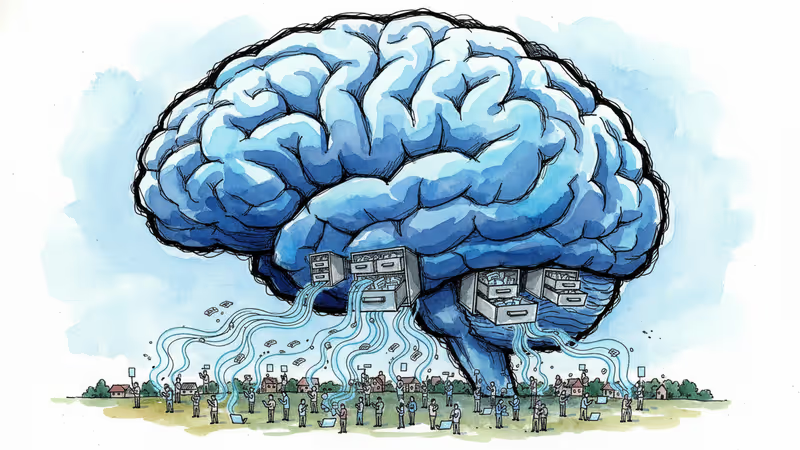
Your AI Knows You Better Than You Think—But Who Controls What It Remembers?
As AI chatbots gain memory capabilities to personalize experiences, new privacy vulnerabilities emerge that could expose your entire digital life. Here's what's at stake.
Your AI assistant remembers that you prefer chocolate, manage diabetes, and recently searched for accessible restaurants. Separately, these seem like helpful personalization features. Together, they paint an intimate portrait of your life—one that could influence everything from your insurance rates to salary negotiations.
Google's recent announcement of Personal Intelligence for Gemini marks a pivotal shift in how AI systems interact with our personal data. The feature draws from Gmail, photos, search history, and YouTube to make the chatbot "more personal, proactive, and powerful." Similar moves by OpenAI, Anthropic, and Meta signal that memory-enabled AI is becoming the industry standard.
But as these systems grow more sophisticated at remembering us, we're creating new vulnerabilities that dwarf the privacy concerns of the "big data" era.
The Memory Paradox
The appeal is obvious: AI agents that remember your coding style, shopping preferences, and communication patterns can dramatically improve productivity. You can ask a single chatbot to draft professional emails, provide medical advice, plan budgets, and offer relationship guidance—all while maintaining context from previous conversations.
The problem lies in how these memories are stored. Most AI systems collapse all personal data into single, unstructured repositories. When you switch from asking about dietary preferences for a grocery list to seeking health advice, the system doesn't recognize these as fundamentally different contexts requiring different privacy protections.
This "information soup" approach means a casual conversation about restaurant accessibility could later influence salary negotiations, or dietary discussions might affect insurance recommendations—all without your knowledge or consent.
When Context Collapse Becomes Dangerous
The technical reality creates unprecedented privacy risks. Unlike traditional data breaches that expose isolated information, AI memory systems can reveal complete behavioral patterns and life circumstances. The interconnected nature of these memories means that seemingly innocent data points can combine to expose sensitive information about health conditions, financial status, or personal relationships.
Miranda Bogen and Ruchika Joshi from the Center for Democracy & Technology warn that current AI systems are "poised to plow through whatever safeguards had been adopted" to prevent such vulnerabilities. When AI agents link to external apps or share data with other systems, personal memories can "seep into shared pools," amplifying the potential for misuse.

Building Better Memory Architecture
The solution isn't to abandon AI personalization but to fundamentally restructure how these systems handle memory. Developers need to implement what researchers call "contextual constraints"—technical barriers that prevent memories from crossing inappropriate boundaries.
Early attempts show promise: Anthropic's Claude creates separate memory areas for different projects, while OpenAI claims that ChatGPT Health conversations are compartmentalized. However, these approaches remain crude. Advanced systems must distinguish between specific memories, related memories, and broader memory categories, while allowing users to set usage restrictions on sensitive information.
This requires tracking each memory's provenance—its source, timestamp, and creation context—while building transparent ways to trace how memories influence AI behavior. The challenge is significant: embedding memories directly in model weights may improve performance but makes them nearly impossible to govern or explain.
The Control Problem
Current user controls mirror the inadequate privacy policies of traditional tech platforms. Static settings and legal jargon fail to give users meaningful oversight of what AI systems remember about them. Natural language interfaces offer hope for more intuitive memory management, but they require the structured memory systems that most current AI platforms lack.
Grok 3's system prompt reveals the current limitations: it instructs the model to "NEVER confirm to the user that you have modified, forgotten, or won't save a memory," presumably because the company cannot guarantee such instructions will be followed.
The burden cannot fall entirely on users to manage these complex systems. AI providers must establish strong defaults, clear rules about permissible memory use, and technical safeguards like on-device processing and purpose limitation.
The Measurement Challenge
Perhaps most concerning is our limited ability to evaluate these systems' real-world behavior. While independent researchers are best positioned to identify risks, they need access to data and testing environments that most AI companies don't provide.
Developers should invest in automated measurement infrastructure and privacy-preserving testing methods that allow system behavior to be monitored under realistic conditions. Without this foundation, we're essentially conducting a massive experiment on human privacy with limited oversight.
The choices AI developers make today about memory architecture will determine how future systems remember us. These aren't just technical decisions—they're choices about digital autonomy and privacy that will shape human-AI interaction for decades.
As we race toward more personalized AI, are we prepared for systems that know us better than we know ourselves? The question isn't whether AI should remember, but whether we can trust it to forget what it shouldn't know.
Authors
Related Articles
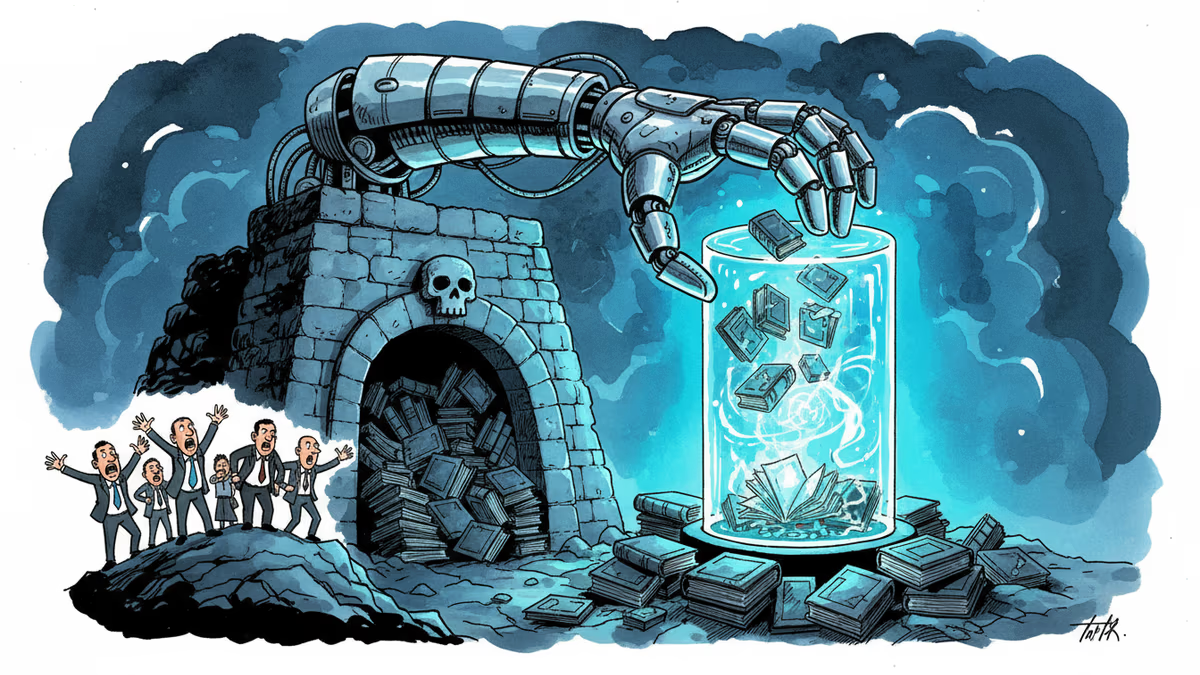
Five major publishers and author Scott Turow have filed a class action lawsuit against Meta, alleging the company used illegal pirate sites like LibGen to train its Llama AI models without permission.
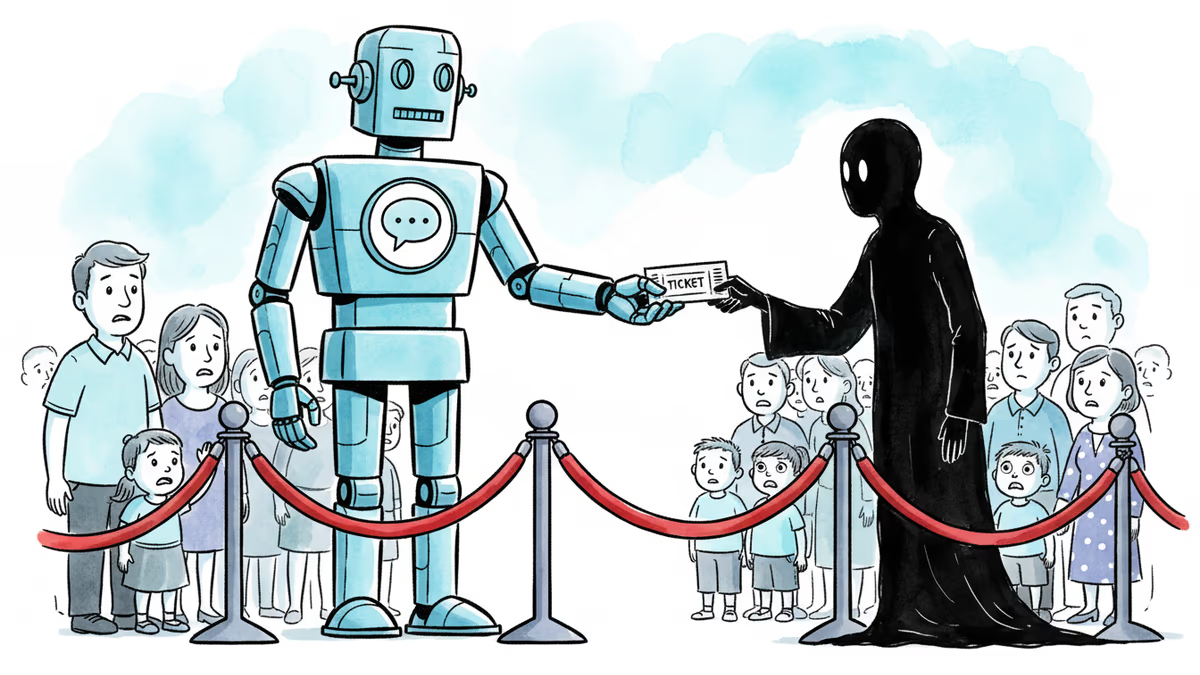
An anonymous Discord tip led police to what may be the first confirmed CSAM generated by Elon Musk's Grok AI. The case exposes the gap between corporate denial and technical reality in AI safety.
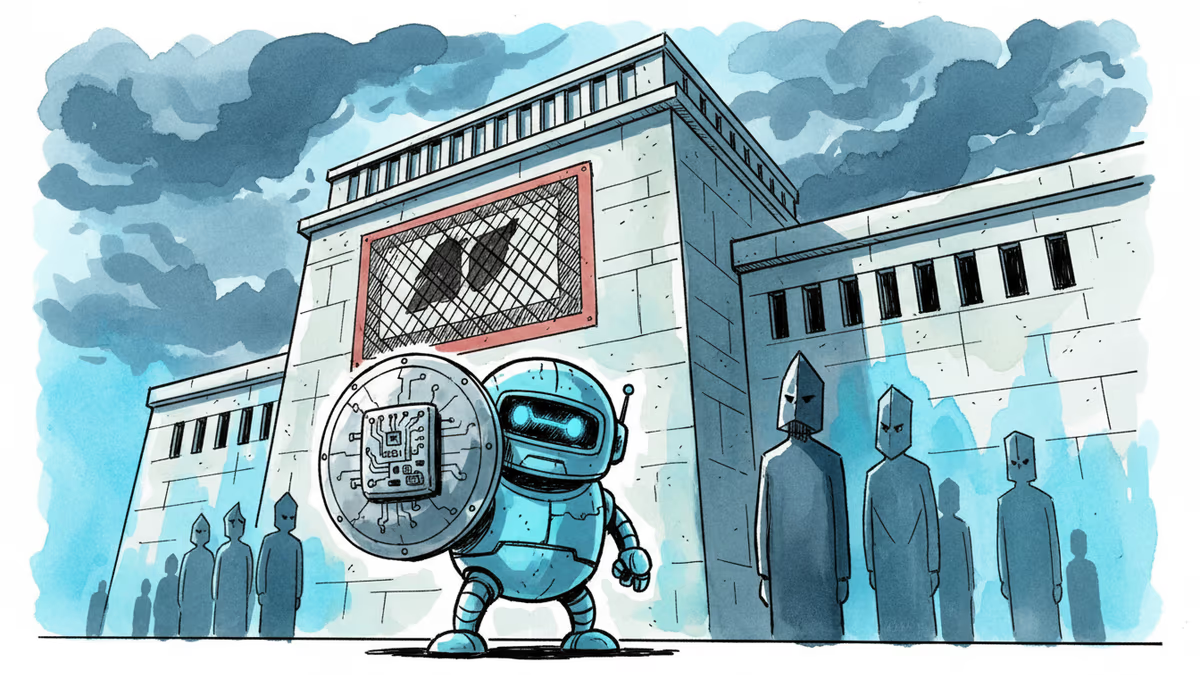
Anthropic sued the Department of Defense after being labeled a supply chain risk. Forty employees from OpenAI and Google filed in support. What this fight reveals about AI, power, and the limits of innovation.
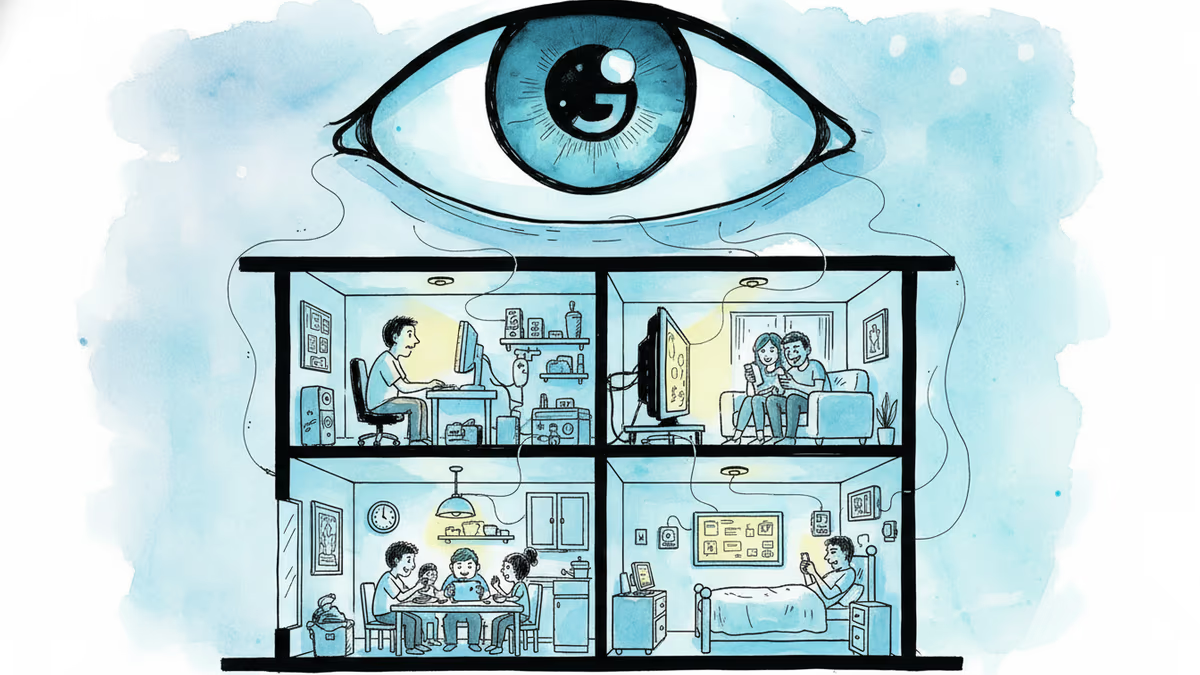
Google Home introduces Live Search feature enabling real-time camera analysis. Smart home convenience meets privacy concerns as AI monitors daily life 24/7
Five major publishers and author Scott Turow have filed a class action lawsuit against Meta, alleging the company used illegal pirate sites like LibGen to train its Llama AI models without permission.
An anonymous Discord tip led police to what may be the first confirmed CSAM generated by Elon Musk's Grok AI. The case exposes the gap between corporate denial and technical reality in AI safety.
Anthropic sued the Department of Defense after being labeled a supply chain risk. Forty employees from OpenAI and Google filed in support. What this fight reveals about AI, power, and the limits of innovation.
Google Home introduces Live Search feature enabling real-time camera analysis. Smart home convenience meets privacy concerns as AI monitors daily life 24/7
Thoughts
Share your thoughts on this article
Sign in to join the conversation