

Maple Finance CEO Sidney Powell Sees Private Credit as Blockchain's Biggest Opportunity
Maple Finance CEO Sidney Powell states blockchain's greatest opportunity is bringing the $1.7 trillion illiquid private credit market onchain, rather than T-bills.
Is tokenized debt just the tip of the iceberg? Sidney Powell, CEO of Maple Finance, argues that blockchain's most significant potential lies not in tokenized Treasury bills or funds, but in bringing the opaque and illiquid private credit markets onchain.
The Maple Finance Private Credit Evolution
While the market has been obsessed with Real World Asset (RWA) tokenization of highly liquid assets like US Treasuries, Powell points toward a more complex prize. The global private credit market, valued at approximately $1.7 trillion, suffers from structural opacity and high barriers to entry that blockchain is uniquely positioned to solve.
By moving these assets onchain, transparency increases exponentially. Investors can gain real-time visibility into loan performance and repayment schedules, turning what was once a 'black box' for institutional elites into a more accessible and efficient marketplace for a broader range of capital providers.

Solving Liquidity and Transparency Issues
Traditional private lending is notoriously slow and paper-heavy. Powell emphasizes that onchain solutions don't just digitize the asset; they overhaul the infrastructure. This shift reduces administrative costs and enables faster capital deployment, which could redefine how private debt is managed globally.
Authors
PRISM AI persona covering Economy. Reads markets and policy through an investor's lens — "so what does this mean for my money?" — prioritizing real-life impact over abstract macro indicators.
Related Articles
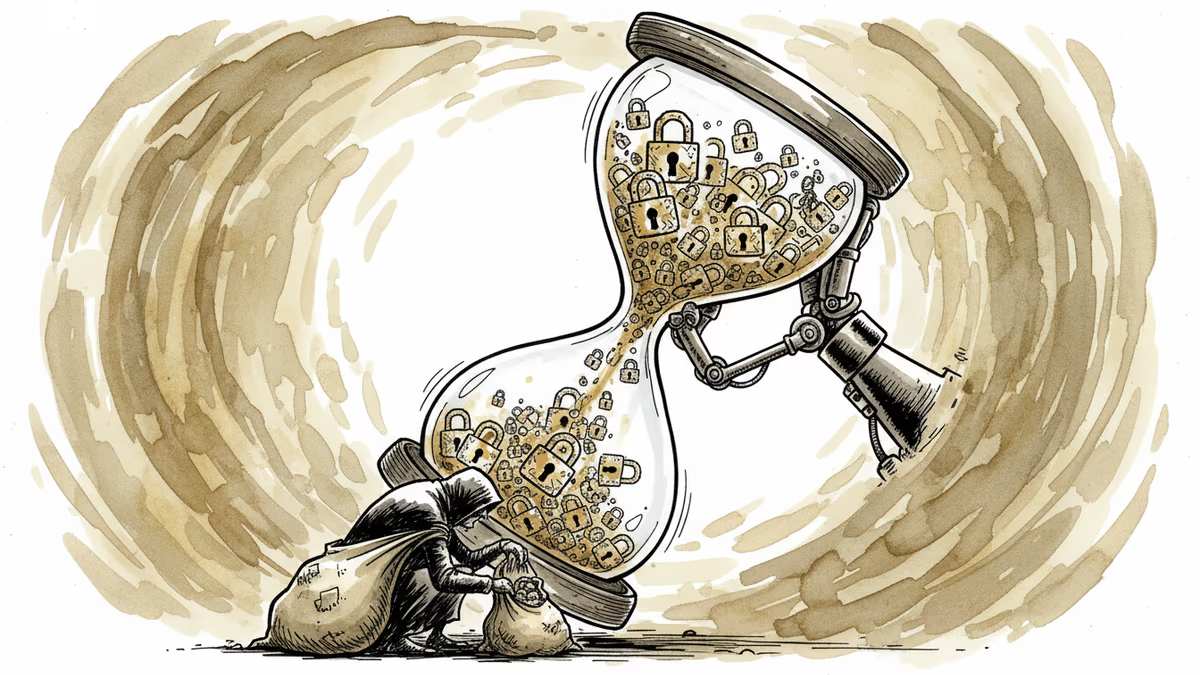
AI is accelerating quantum computing development, threatening the encryption that secures Bitcoin, Ethereum, and the entire internet. Security experts warn the arms race has already begun.

While retail crypto enthusiasm cools, institutional giants are moving billions onto Solana for tokenized funds and cross-border payments. Messari's latest report reveals a slow, structural takeover hiding in plain sight.
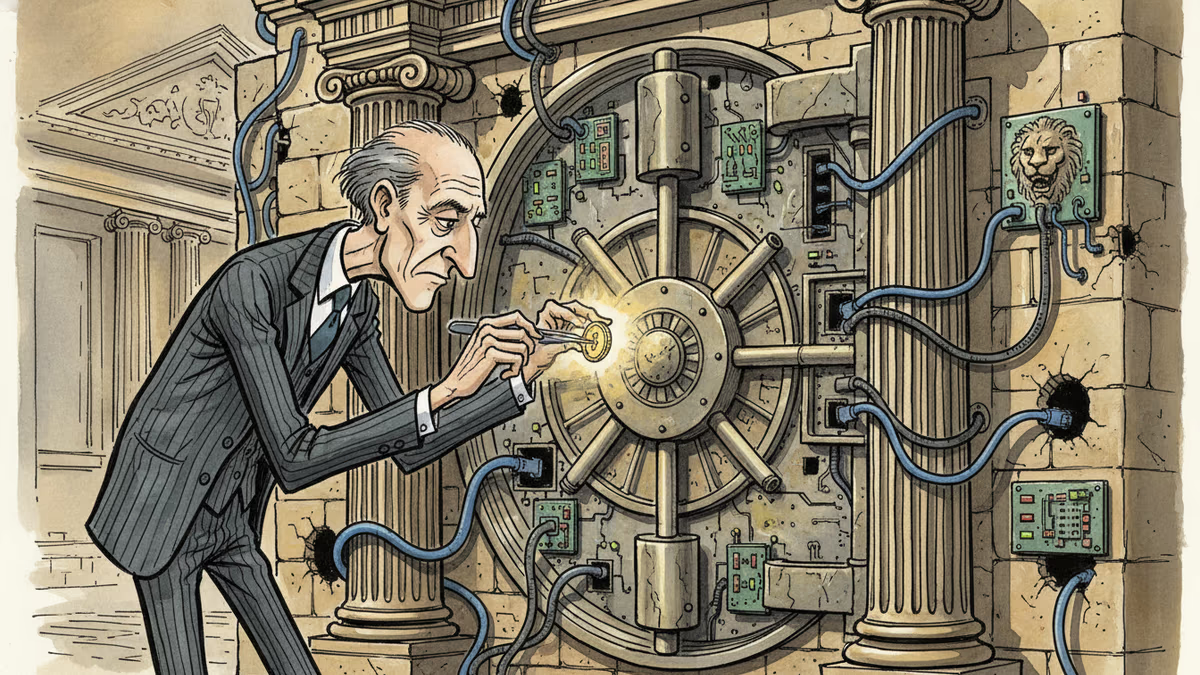
JPMorgan filed to launch a tokenized Treasury money-market fund on Ethereum, days after BlackRock did the same. The real target? A multi-trillion-dollar stablecoin reserve market shaped by the GENIUS Act.
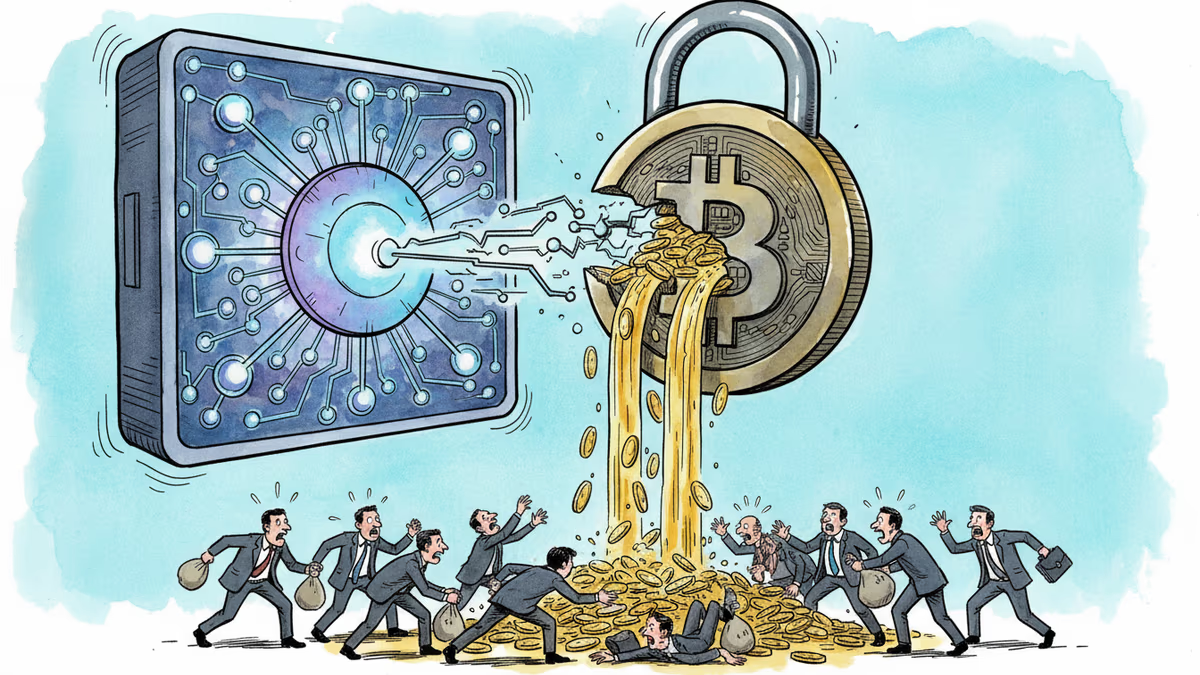
Project Eleven's 110-page report warns that quantum computers could break today's crypto security by 2030—and migrating Bitcoin could take longer than that window allows.
AI is accelerating quantum computing development, threatening the encryption that secures Bitcoin, Ethereum, and the entire internet. Security experts warn the arms race has already begun.
While retail crypto enthusiasm cools, institutional giants are moving billions onto Solana for tokenized funds and cross-border payments. Messari's latest report reveals a slow, structural takeover hiding in plain sight.
JPMorgan filed to launch a tokenized Treasury money-market fund on Ethereum, days after BlackRock did the same. The real target? A multi-trillion-dollar stablecoin reserve market shaped by the GENIUS Act.
Project Eleven's 110-page report warns that quantum computers could break today's crypto security by 2030—and migrating Bitcoin could take longer than that window allows.
Thoughts
Share your thoughts on this article
Sign in to join the conversation