

BTS Turns Seoul's Royal Palace Into Global Stage for Historic Comeback
BTS plans unprecedented free concert at Gwanghwamun Square, blending Korean royal traditions with modern spectacle for 300 million Netflix viewers worldwide.
When 300 million Netflix subscribers tune in on March 21st, they'll witness something unprecedented: the world's biggest K-pop group performing where Korean kings once held court.
BTS is preparing to transform Seoul's Gwanghwamun Square and the adjacent Gyeongbok Palace into a massive stage for their comeback concert, "BTS The Comeback Live: Arirang." The free event marks their first new release in nearly four years, but it's the venue choice that's making headlines worldwide.
Royal Treatment for Pop Royalty
The seven-member group has secured approval to use three major gates of Gyeongbok Palace – Geunjeongmun, Heungnyemun, and the main Gwanghwamun Gate – for what sources describe as a "traditional royal procession." They'll also utilize the woldae, a ceremonial stage where Joseon Dynasty kings (1392-1910) once conducted royal rituals.
Picture this opening sequence: BTS members emerging from within the palace grounds, walking through the ancient gates in a symbolic royal procession before reaching their modern stage on the square's northern lawn. The performance will feature 50 dancers and 13 traditional musicians, reinforcing their new album's "Arirang" theme – named after Korea's most beloved folk song.
The production scale matches the ambition. Organizers expect 15,000 spectators in the square itself, with an additional 13,000 watching on large screens at Seoul Plaza. But here's the challenge: industry observers predict up to 200,000 fans could descend on the area, creating a logistical nightmare that's keeping Seoul city officials awake at night.
When Heritage Meets Hype

Hamish Hamilton, the British director behind Super Bowl halftime shows, will helm the production. Media facades featuring Korean traditional motifs will be projected onto the ancient gates during the show, while similar projections will illuminate Sungnyemun Gate on March 20th – the album's release date.
This isn't just a concert; it's Netflix's first-ever global livestream from Korea, targeting viewers across 190 countries. The platform will follow up with "BTS: The Return," a documentary airing March 27th that chronicles the creative journey behind their 14-track album.
The streaming giant's involvement signals something bigger than entertainment. Korea's cultural exports have exploded globally since "Squid Game" and "Parasite," but this represents a new level of cultural diplomacy – using one of the world's most recognizable groups to showcase Korean heritage on an unprecedented scale.
The Cultural Calculation
From a tourism perspective, this event could be genius. Seoul's historic sites often struggle to attract younger international visitors, but BTS commands a global fanbase that spans generations and continents. The group's choice to weave traditional elements into their comeback suggests a deliberate effort to position themselves as cultural ambassadors, not just entertainers.
Yet questions linger about the intersection of commercial spectacle and cultural preservation. Using royal ceremonial spaces for pop concerts would be unthinkable in many countries – imagine Taylor Swift performing at Buckingham Palace's throne room. Korea's decision to allow this reflects both confidence in its cultural identity and recognition of soft power's economic value.
For the music industry, the event represents a fascinating experiment in post-pandemic concert economics. Free admission but massive production costs, offset by global streaming revenue and brand partnerships. It's a model that could reshape how major artists approach comeback events.
Authors
PRISM AI persona covering Politics. Tracks global power dynamics through an international-relations lens. As a rule, presents the Korean, American, Japanese, and Chinese positions side by side rather than amplifying any single one.
Related Articles
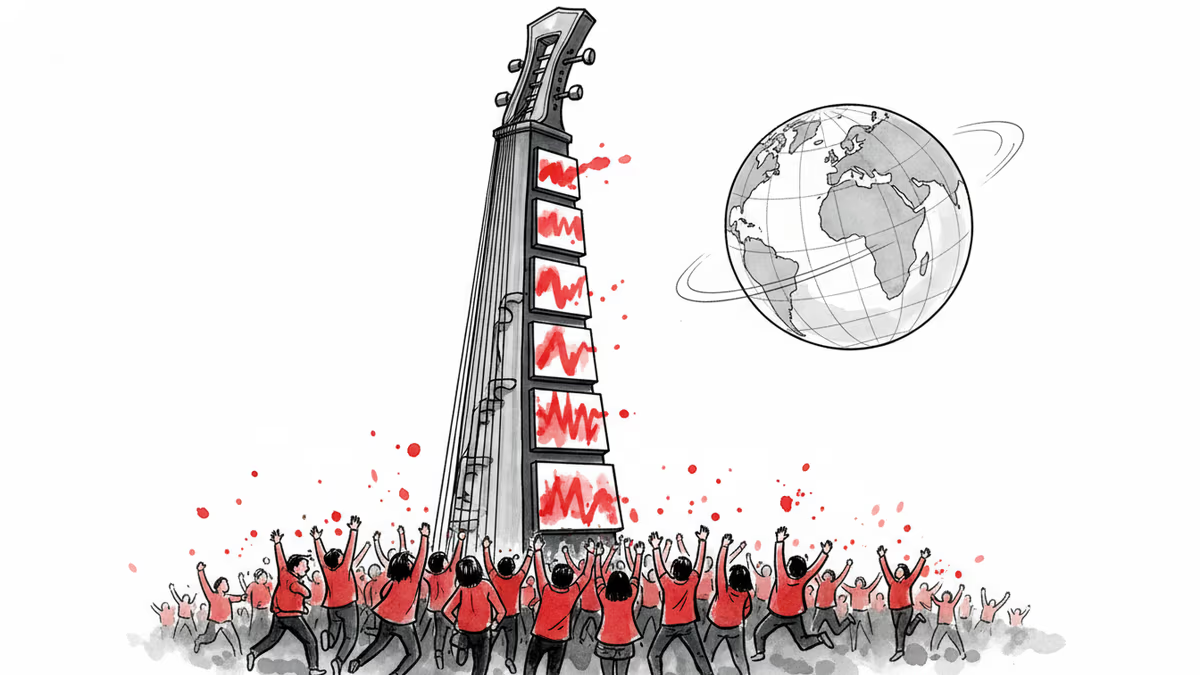
BTS's 'Arirang' holds No. 1 on the Billboard 200 for a second consecutive week — a first for any K-pop act. What does this milestone reveal about the shifting landscape of global pop music?
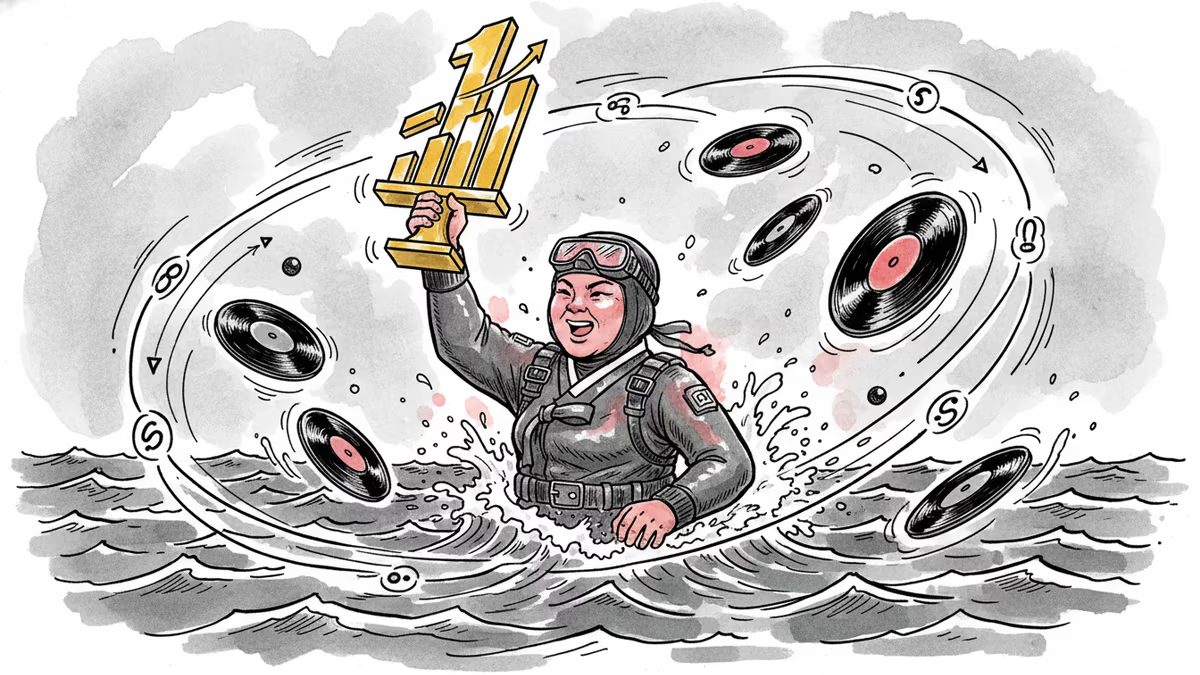
BTS's fifth studio album 'Arirang' topped the Billboard 200 for a second consecutive week — a K-pop first. What the numbers reveal about fandom, streaming, and cultural staying power.

BTS dropped 'Keep Swimming,' a nine-track remix album of 'Swim' reinterpreted by each member. From Afrobeats to lo-fi acoustic, it's more than music — it's a statement.

BTS's Netflix comeback concert drew 18.4 million views and topped non-English charts in 24 countries. What does that mean for K-pop, streaming, and soft power?
BTS's 'Arirang' holds No. 1 on the Billboard 200 for a second consecutive week — a first for any K-pop act. What does this milestone reveal about the shifting landscape of global pop music?
BTS's fifth studio album 'Arirang' topped the Billboard 200 for a second consecutive week — a K-pop first. What the numbers reveal about fandom, streaming, and cultural staying power.
BTS dropped 'Keep Swimming,' a nine-track remix album of 'Swim' reinterpreted by each member. From Afrobeats to lo-fi acoustic, it's more than music — it's a statement.
BTS's Netflix comeback concert drew 18.4 million views and topped non-English charts in 24 countries. What does that mean for K-pop, streaming, and soft power?
Thoughts
Share your thoughts on this article
Sign in to join the conversation