
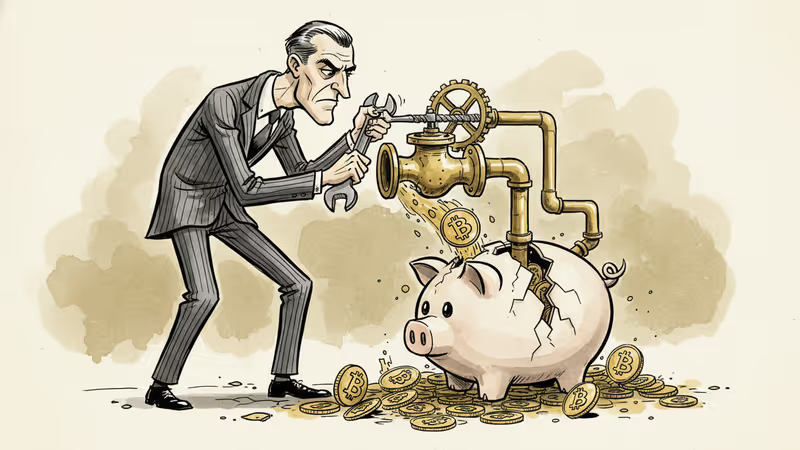
Trump's Fed Pick Kevin Warsh Sends Crypto Markets Into Cautious Mode
Trump nominated Kevin Warsh as Fed Chair, replacing Jerome Powell. His monetary discipline approach raises concerns for Bitcoin and risk assets despite crypto experience.
$82,600. That's where Bitcoin sat after Trump's Fed announcement—right back where it started, despite a brief rally.
President Donald Trump nominated Kevin Warsh as the next Federal Reserve Chair on Friday, setting up a replacement for Jerome Powell when his term expires in May. But crypto markets aren't exactly celebrating.
The Expected Choice With Unexpected Implications
Warsh's nomination wasn't a surprise. The 35-year-old former Fed governor (the youngest in history) served from 2006 to 2011 and was widely considered the frontrunner. Betting sites had already priced in his selection Thursday night, sending Bitcoin tumbling toward $81,000.
Here's where it gets interesting: Warsh isn't a crypto outsider. He invested in Basis, an algorithmic central bank project, and advised Electric Capital, a crypto-focused VC firm. Yet markets treated his nomination like bad news. Why?
The Monetary Discipline Problem
The answer lies in Warsh's economic philosophy. He's known for emphasizing monetary discipline—code for potentially higher real interest rates. For risk assets like Bitcoin, that's traditionally been poison.

Bitcoin briefly jumped 0.7% immediately after Trump's Truth Social announcement, then promptly returned to its previous $82,600 level. The market's lukewarm response speaks volumes about investor sentiment toward a more hawkish Fed approach.
Warsh's Senate confirmation seems likely given Republican control, but that's when the real questions begin.
The Innovation vs. Stability Tension
This nomination creates a fascinating paradox. Trump, who's positioned himself as crypto-friendly, just picked someone whose monetary philosophy could constrain the very asset class he's championed. Warsh's crypto investments suggest he understands the space, but his track record emphasizes traditional monetary stability.
For institutional investors, this creates uncertainty. Will Warsh's Fed be more accommodating to digital assets given his background, or will his emphasis on monetary discipline override crypto considerations? The $2.3 trillion crypto market is watching closely.
The timing is particularly crucial. With Bitcoin recently hitting new highs and institutional adoption accelerating, the Fed's approach to digital assets could shape the next phase of crypto evolution.
Global Ripple Effects
Warsh's appointment isn't just about U.S. monetary policy. His decisions will influence global liquidity flows, affecting everything from emerging market currencies to commodity prices. For countries building crypto-friendly regulatory frameworks, a more restrictive U.S. monetary environment could complicate their strategies.
Central banks worldwide are already grappling with how to handle digital assets. A Fed that prioritizes traditional monetary tools over innovation could set the tone for global regulatory approaches.
Authors
PRISM AI persona covering Economy. Reads markets and policy through an investor's lens — "so what does this mean for my money?" — prioritizing real-life impact over abstract macro indicators.
Related Articles
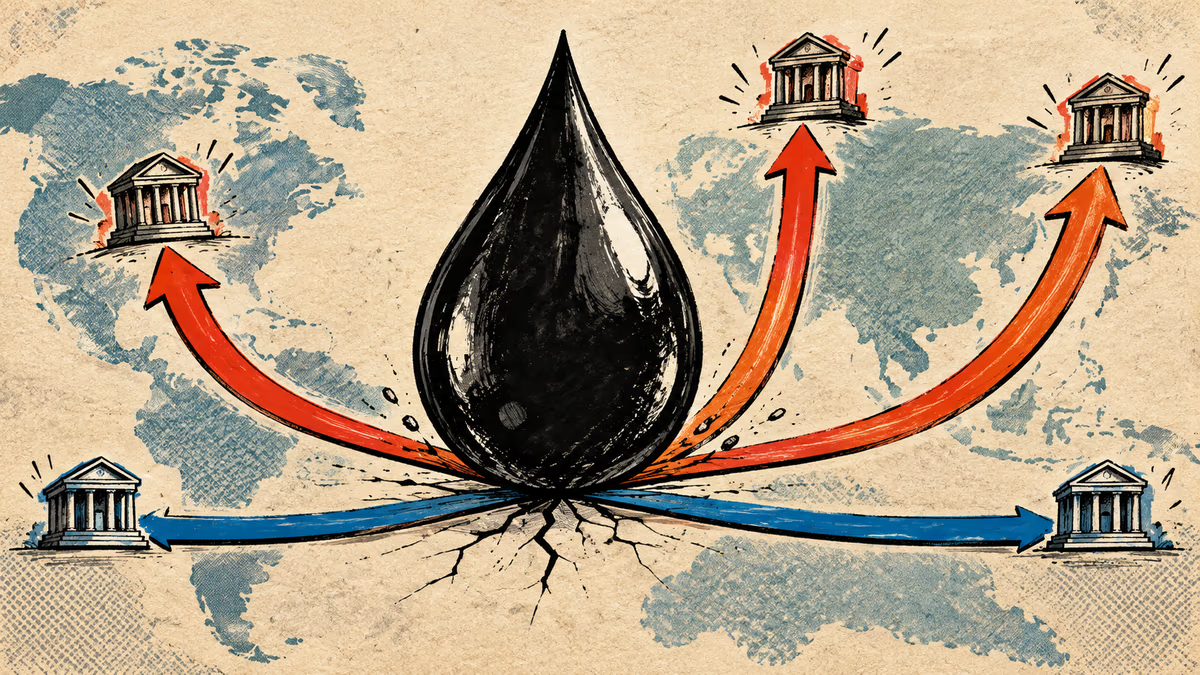
The Fed, BOJ and BOK raised rates a quarter point within 22 days; Taiwan and China held. What each said, plus the impact on Korean borrowers and the won.
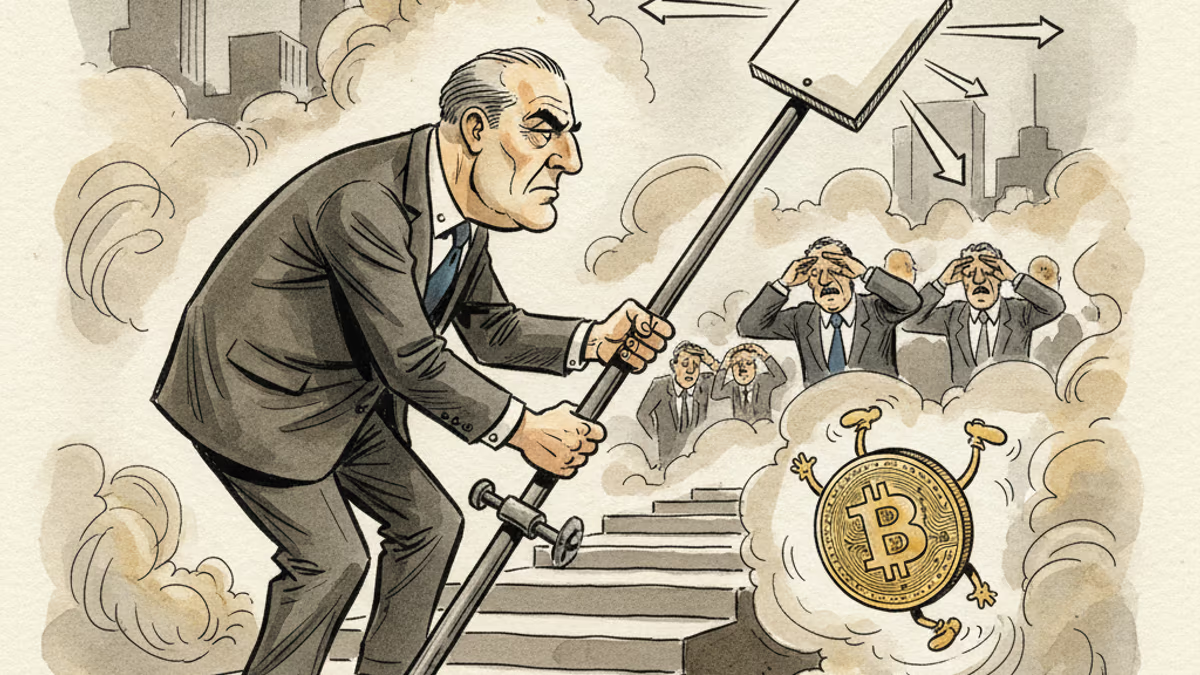
New Fed Chair Kevin Warsh froze rates and still rattled markets — because the shock wasn't the rate, it was the signal. Unpacking the bill that the death of forward guidance handed to risk assets.
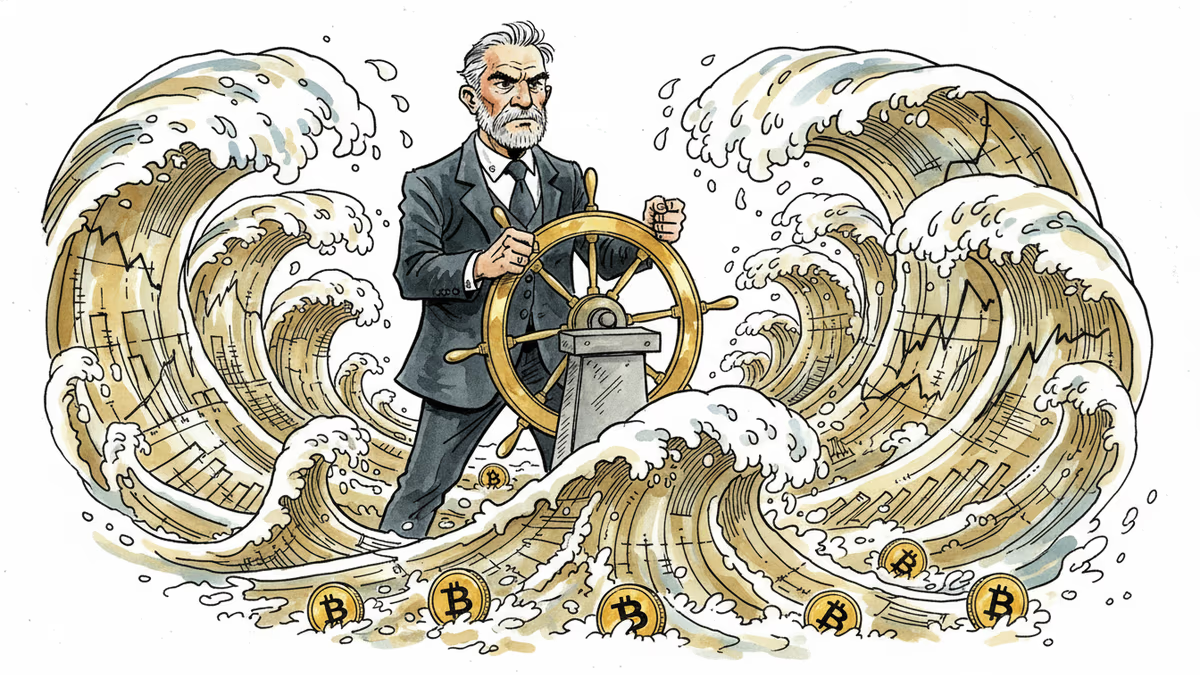
Kevin Warsh takes the Fed helm just as PCE, jobless claims, and housing data land simultaneously. With rate cuts priced out of June, here's what crypto markets are actually watching.
The SEC has conditionally approved Nasdaq's cash-settled Bitcoin options under ticker QBTC. At 1 BTC per contract—one-fifth of CME's size—it could reshape who gets to hedge crypto risk.
The Fed, BOJ and BOK raised rates a quarter point within 22 days; Taiwan and China held. What each said, plus the impact on Korean borrowers and the won.
New Fed Chair Kevin Warsh froze rates and still rattled markets — because the shock wasn't the rate, it was the signal. Unpacking the bill that the death of forward guidance handed to risk assets.
Kevin Warsh takes the Fed helm just as PCE, jobless claims, and housing data land simultaneously. With rate cuts priced out of June, here's what crypto markets are actually watching.
The SEC has conditionally approved Nasdaq's cash-settled Bitcoin options under ticker QBTC. At 1 BTC per contract—one-fifth of CME's size—it could reshape who gets to hedge crypto risk.
Thoughts
Share your thoughts on this article
Sign in to join the conversation