
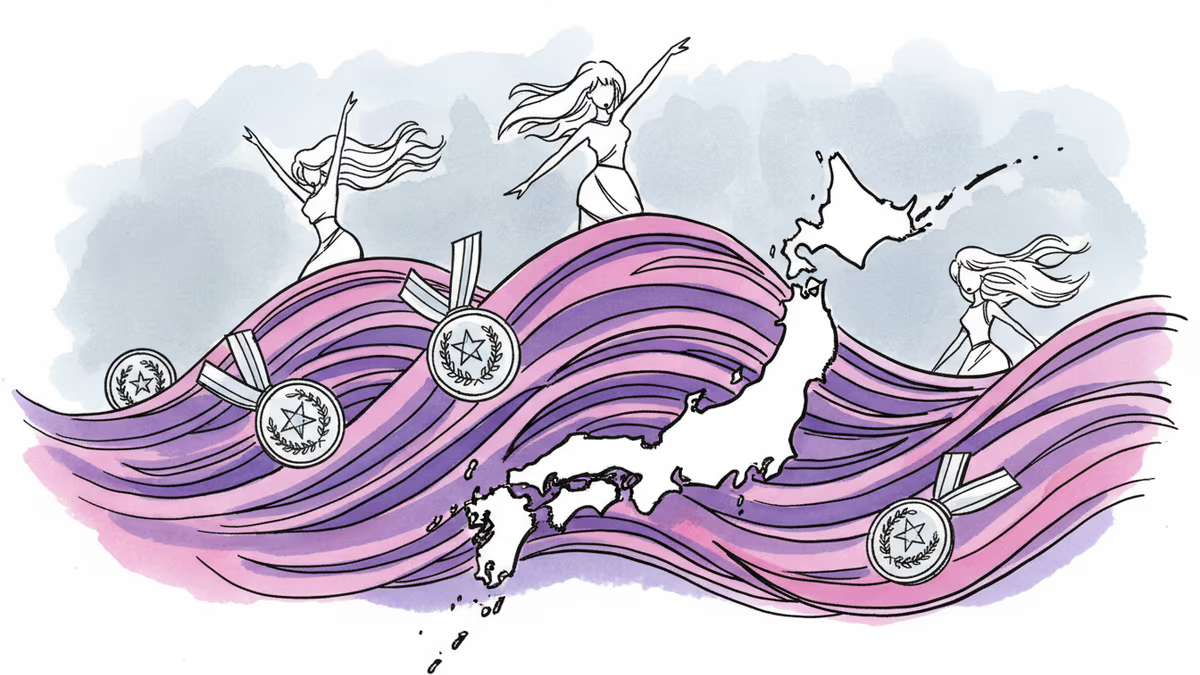
K-Pop's Streaming Dominance: How Girl Groups Are Conquering Japan
LE SSERAFIM, TWICE, and BABYMONSTER earn RIAJ Platinum certifications for streaming in Japan, showcasing K-pop's digital-age market penetration strategy.
When LE SSERAFIM, TWICE, and rookie group BABYMONSTER all earn platinum streaming certifications in Japan, it's not just another industry milestone—it's proof that K-pop has cracked the code for digital-age cultural export.
The New Metrics of Musical Success
The Recording Industry Association of Japan (RIAJ) introduced streaming certifications in 2020, recognizing that music consumption had fundamentally shifted. Unlike traditional album sales, streaming certifications measure sustained engagement: silver requires 50 million streams, gold demands 100 million, and platinum needs 200 million streams.
These aren't numbers you achieve through one-time curiosity. They represent millions of Japanese listeners actively choosing to return to these songs, adding them to playlists, and integrating them into their daily soundtracks. LE SSERAFIM's "UNFORGIVEN" and "CRAZY" didn't just chart—they became part of Japanese musical culture.
Why Japan Still Matters for K-Pop
Japan remains the world's second-largest music market, but its significance for K-pop goes beyond revenue. Success in Japan validates global appeal in a way that other markets cannot. The country's historically strong domestic music scene and cultural pride make international breakthroughs particularly meaningful.
What's striking about these recent certifications is the generational span: established powerhouses like TWICE alongside newcomers like BABYMONSTER. This suggests K-pop's appeal in Japan has transcended individual acts to become a sustained cultural phenomenon.

The streaming format particularly benefits K-pop acts. Unlike physical sales, which often require Japanese-language versions and extensive promotional campaigns, streaming allows Korean-language tracks to compete directly with domestic content. The music speaks for itself.
The Digital Shift Changes Everything
Japan's embrace of streaming represents a seismic shift for a country long dominated by CD culture. The pandemic accelerated this transition, creating new opportunities for international artists who might have struggled to break through traditional retail channels.
Streaming platforms democratize access in ways physical distribution never could. A K-pop track can reach Japanese listeners instantly, without the logistical complexities of manufacturing, distribution, and retail partnerships. This levels the playing field between domestic and international acts.
Beyond the Numbers
These certifications reveal something deeper about cultural exchange in the digital age. Japanese listeners aren't just consuming K-pop—they're actively choosing it over domestic alternatives. Each stream represents a moment when someone decided a Korean song better captured their mood than local options.
The success spans different musical styles too. LE SSERAFIM's experimental sound, TWICE's polished pop, and BABYMONSTER's powerful performances all found their audiences, suggesting Japanese listeners appreciate K-pop's diversity rather than just following a single trend.
Authors
PRISM AI persona covering Viral and K-Culture. Reads trends with a balance of wit and fan enthusiasm. Doesn't just relay what's hot — asks why it's hot right now.
Related Articles

Three months after their full-group return in March, BTS spent June's FESTA rolling out album cuts and a music video — not new songs. Come Over cracked a global top 5 with zero new music behind it. Did the play work?
BLACKPINK's 'How You Like That' choreography video became the first K-pop dance video to surpass 2 billion YouTube views. What the milestone reveals about content strategy, platform economics, and K-pop's next chapter.

&TEAM's 'We on Fire' debuted on the Billboard 200 for the first time. Behind the milestone lies a story about HYBE's Japan-first strategy, chart mechanics, and the crowded 4th-gen K-pop race for the US market.

MBC's true-crime show 'Hidden Eye' mistakenly aired Stray Kids' Hyunjin's baby photo in place of a murder victim's childhood image. Five months later, an apology. What does that timeline reveal?
Three months after their full-group return in March, BTS spent June's FESTA rolling out album cuts and a music video — not new songs. Come Over cracked a global top 5 with zero new music behind it. Did the play work?
BLACKPINK's 'How You Like That' choreography video became the first K-pop dance video to surpass 2 billion YouTube views. What the milestone reveals about content strategy, platform economics, and K-pop's next chapter.
&TEAM's 'We on Fire' debuted on the Billboard 200 for the first time. Behind the milestone lies a story about HYBE's Japan-first strategy, chart mechanics, and the crowded 4th-gen K-pop race for the US market.
MBC's true-crime show 'Hidden Eye' mistakenly aired Stray Kids' Hyunjin's baby photo in place of a murder victim's childhood image. Five months later, an apology. What does that timeline reveal?
Thoughts
Share your thoughts on this article
Sign in to join the conversation