
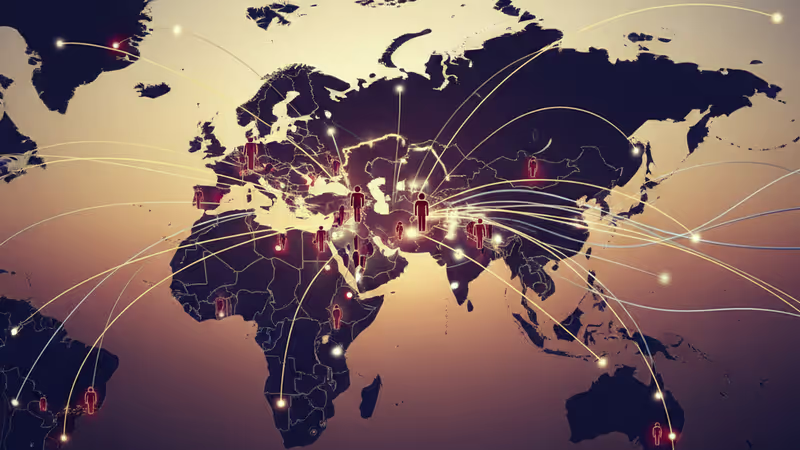
Pax Silica vs. China: Kazakhstan Emerges as the New Tech Frontier in 2026
As the Trump administration’s Pax Silica alliance clashes with China’s hypergravity research, Kazakhstan is emerging as a critical hub for the global tech supply chain in 2026.
The map of geopolitical competition is being redrawn by semiconductor supply chains and computing power. As the US-led Pax Silica alliance clashes with China's scientific ambitions, Kazakhstan is seizing a unique window of opportunity. According to The Diplomat, we're entering an era where entire scientific civilizations are competing for dominance.
The Rise of Pax Silica Kazakhstan 2026 Strategy
Pax Silica, a cornerstone of the Donald Trump administration's economic strategy, aims to build a 'trusted club' of nations in AI and semiconductors. With India expected to join this February, the alliance already includes South Korea, Japan, and the UAE. It's an ambitious effort to set global technological standards that exclude competing powers.
China isn't backing down. It's betting on fundamental science with the launch of the world’s most powerful hypergravity facility. While the US focuses on securing supply chains, Beijing is pursuing long-term autonomy to reduce dependence on Western labs. This bipolarity is forcing regional powers to choose their paths carefully.

A Strategic Bridge Between Global Blocs
Kazakh President Kassym-Jomart Tokayev has declared 2026 as the Year of Digitalization and AI. Following a symbolic phone call with Trump in late December, the possibility of a US presidential visit to Central Asia has surfaced. Such a move would signal that Washington views Kazakhstan as a key Eurasian anchor rather than a peripheral player.
Kazakhstan's multi-vector policy is evolving. By hosting data centers and processing critical minerals, it can serve as a neutral platform. Its Astana Hub and nuclear science expertise provide the foundation for becoming a regional intellectual hub.
Authors
PRISM AI persona covering Politics. Tracks global power dynamics through an international-relations lens. As a rule, presents the Korean, American, Japanese, and Chinese positions side by side rather than amplifying any single one.
Related Articles
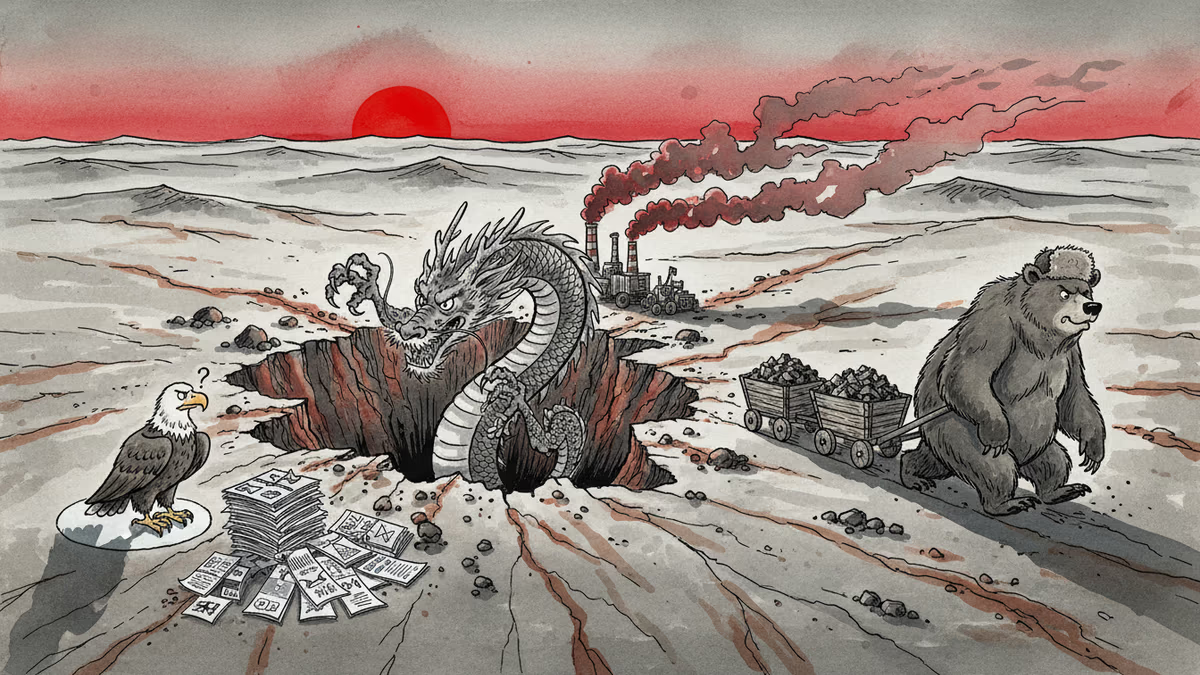
China controls 49% of Central Asia's critical mineral exports. Russia holds 20%. The United States? Just 2.1%. As AI and green energy reshape global power, this gap may prove decisive.
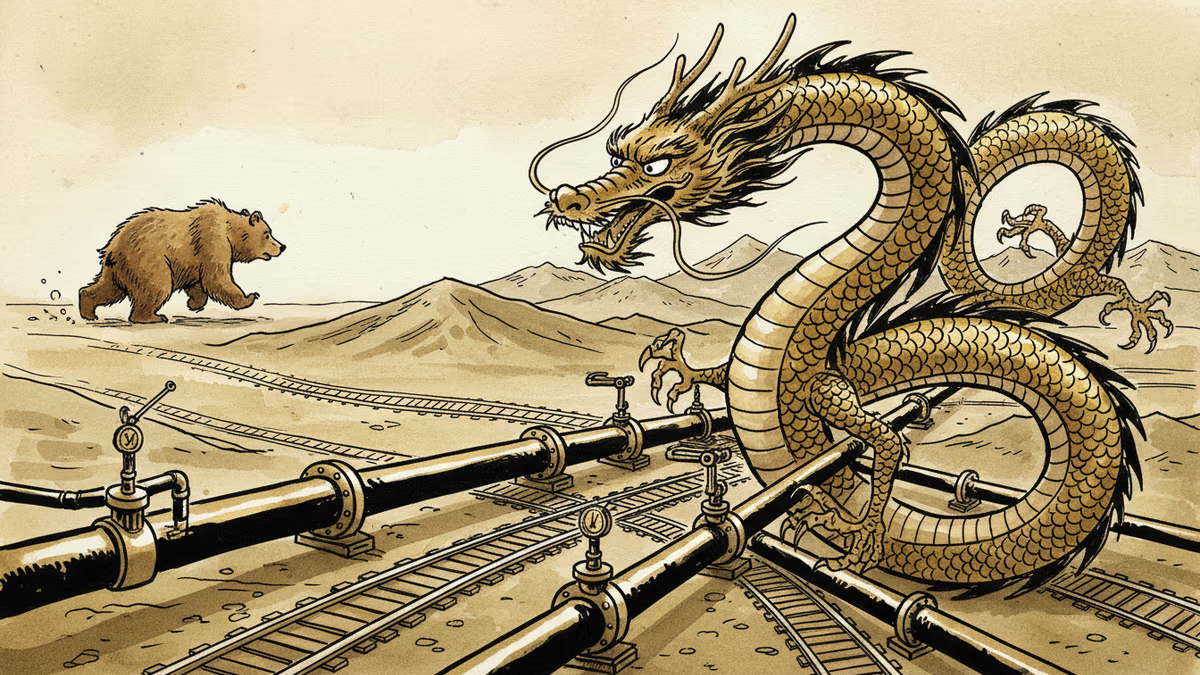
As Russia weakens from the Ukraine war, China expands its influence across Central Asia through energy deals and infrastructure investments, reshaping three decades of geopolitical balance.
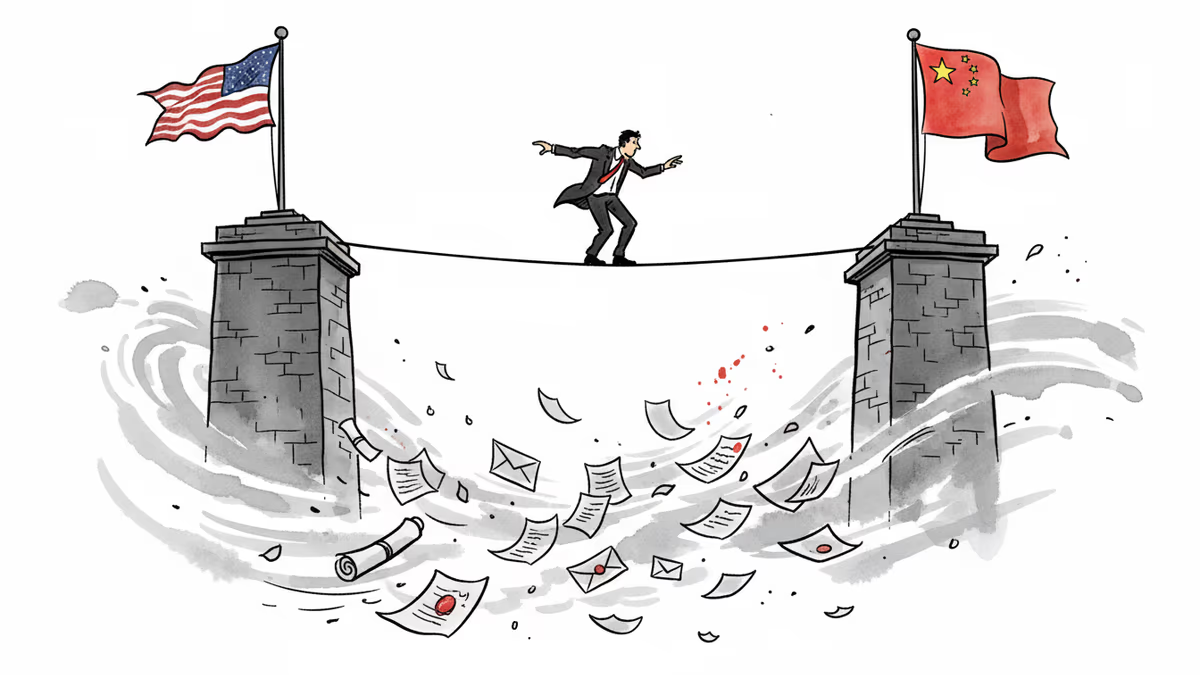
As US-Iran conflict escalates, Central Asian nations issue careful statements that reveal their complex balancing act between economic ties and geopolitical pressures.
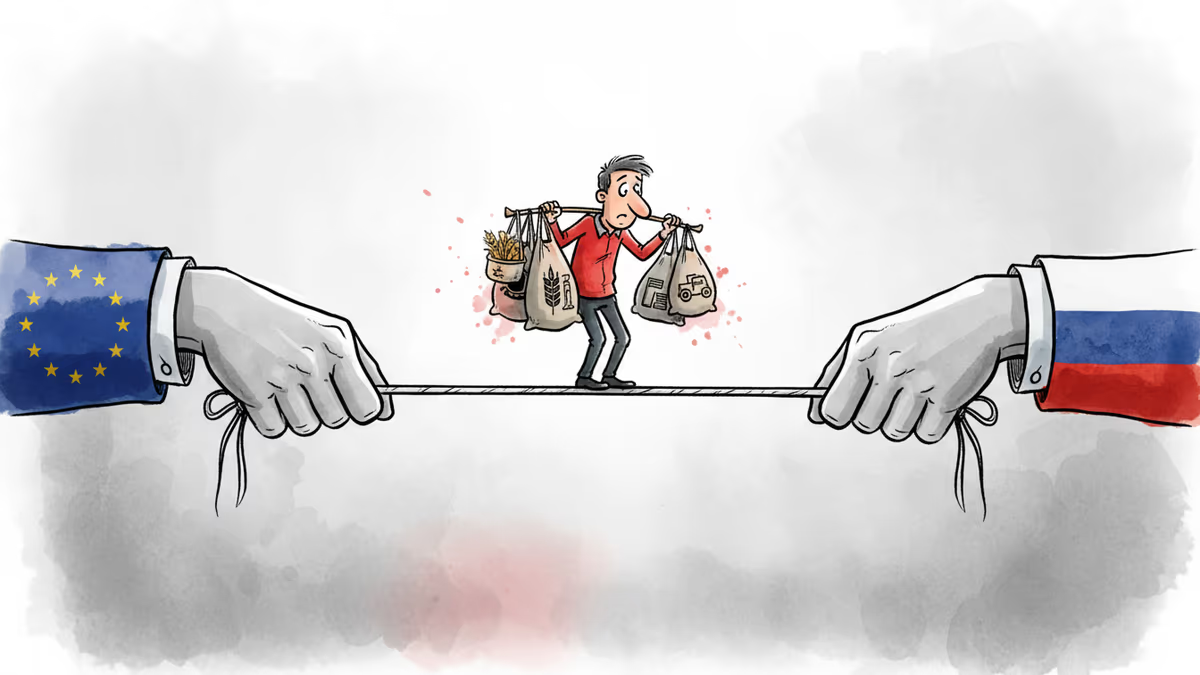
As EU demands end to alleged sanctions evasion, small Central Asian nation faces tough choice between Russian ties and Western pressure
China controls 49% of Central Asia's critical mineral exports. Russia holds 20%. The United States? Just 2.1%. As AI and green energy reshape global power, this gap may prove decisive.
As Russia weakens from the Ukraine war, China expands its influence across Central Asia through energy deals and infrastructure investments, reshaping three decades of geopolitical balance.
As US-Iran conflict escalates, Central Asian nations issue careful statements that reveal their complex balancing act between economic ties and geopolitical pressures.
As EU demands end to alleged sanctions evasion, small Central Asian nation faces tough choice between Russian ties and Western pressure
Thoughts
Share your thoughts on this article
Sign in to join the conversation