
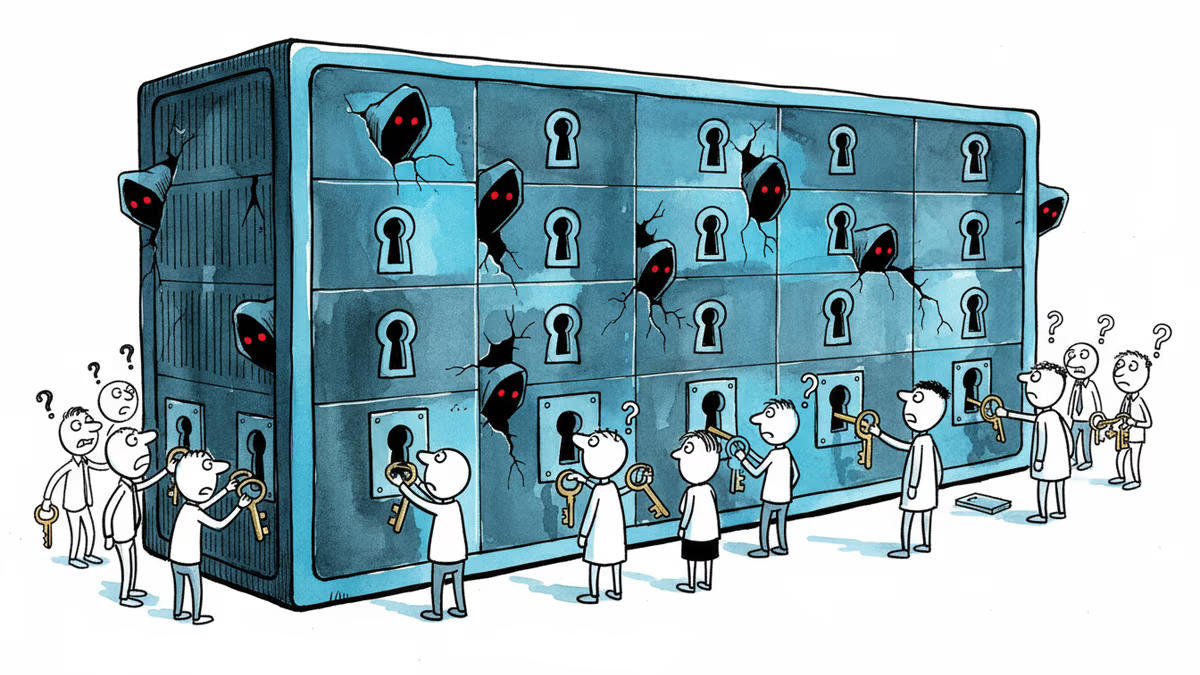
The Zero-Knowledge Promise That Isn't Really Zero
94 million Americans trust password managers with their most sensitive data based on 'zero knowledge' promises. New research reveals these assurances aren't as bulletproof as claimed.
When 94 Million People Bet Wrong
It started as a niche tool for tech geeks. Fifteen years later, password managers have become the digital equivalent of a safety deposit box for 36% of American adults. Inside these virtual vaults: pension logins, cryptocurrency wallets, payment cards, and the keys to our entire digital lives.
Every major password manager—Bitwarden, Dashlane, LastPass, and the rest—has built their reputation on one powerful promise: "zero knowledge." Translation: even if hackers breach our servers, even if rogue employees turn malicious, your data remains locked away from everyone. Including us.
That promise is starting to crack.
The Marketing vs. Reality Gap
LastPass boldly states that "no one can access the data stored in your LastPass vault, except you (not even LastPass)." Dashlane assures users that "malicious actors can't steal the information, even if Dashlane's servers are compromised." Bitwarden goes further: "not even the team at Bitwarden can read your data (even if we wanted to)."
These aren't just technical specifications—they're marketing promises that have convinced millions to consolidate their most sensitive information into single points of failure. But recent security research reveals that "zero knowledge" isn't quite as zero as advertised.
The reality? Server-side implementations still have vulnerabilities. Master passwords remain the weakest link, with 60% of users choosing predictable combinations. And for nation-state hackers with unlimited resources and time, even encrypted vaults become solvable puzzles.

The LastPass Wake-Up Call
The 2022 LastPass breach should have been a reality check. Despite their "zero knowledge" architecture, hackers made off with encrypted password vaults belonging to millions of users. While the company maintained that the stolen data remained unreadable, security experts pointed out a uncomfortable truth: given enough time and computing power, even encrypted data can be cracked.
The incident highlighted the gap between theoretical security and practical protection. "Zero knowledge" protects against casual data breaches, but it's not a magic shield against determined adversaries.
The Consumer's Dilemma
For average users, the choice remains stark: rely on password managers with imperfect "zero knowledge" protection, or continue the dangerous practice of reusing the same password across multiple sites. Most security experts still recommend the former, but with important caveats.
The problem isn't that password managers are unsafe—it's that they've oversold their safety. When companies promise "zero knowledge," users hear "zero risk." That gap in understanding creates dangerous complacency.
Beyond the Marketing Speak
The password manager industry needs a more honest conversation about risk. "Zero knowledge" is a technical implementation, not a guarantee of invulnerability. Users deserve to understand both the benefits and the limitations of the tools protecting their digital lives.
Some companies are starting to acknowledge this. They're implementing additional security layers, encouraging hardware security keys, and being more transparent about potential attack vectors. But the "zero knowledge" marketing language persists.
Authors
Related Articles
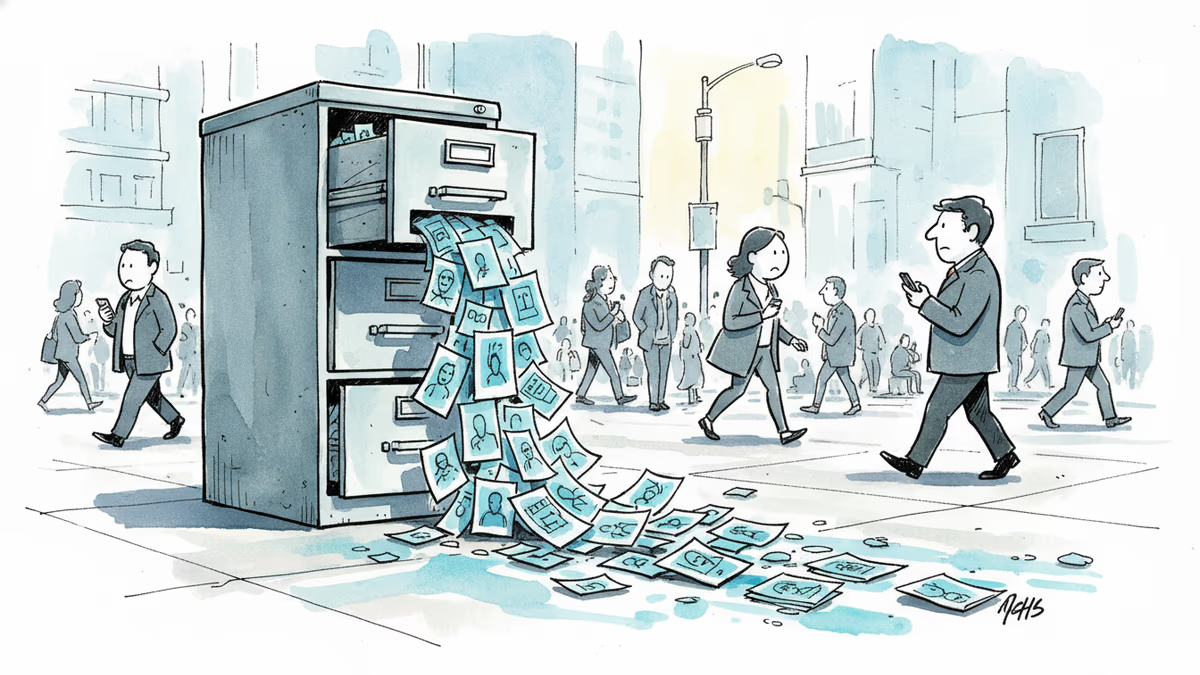
UK Visa Portal, a private immigration service mistaken for an official government site, has been exposing passport scans and selfies of over 100,000 applicants. The breach remains unpatched.
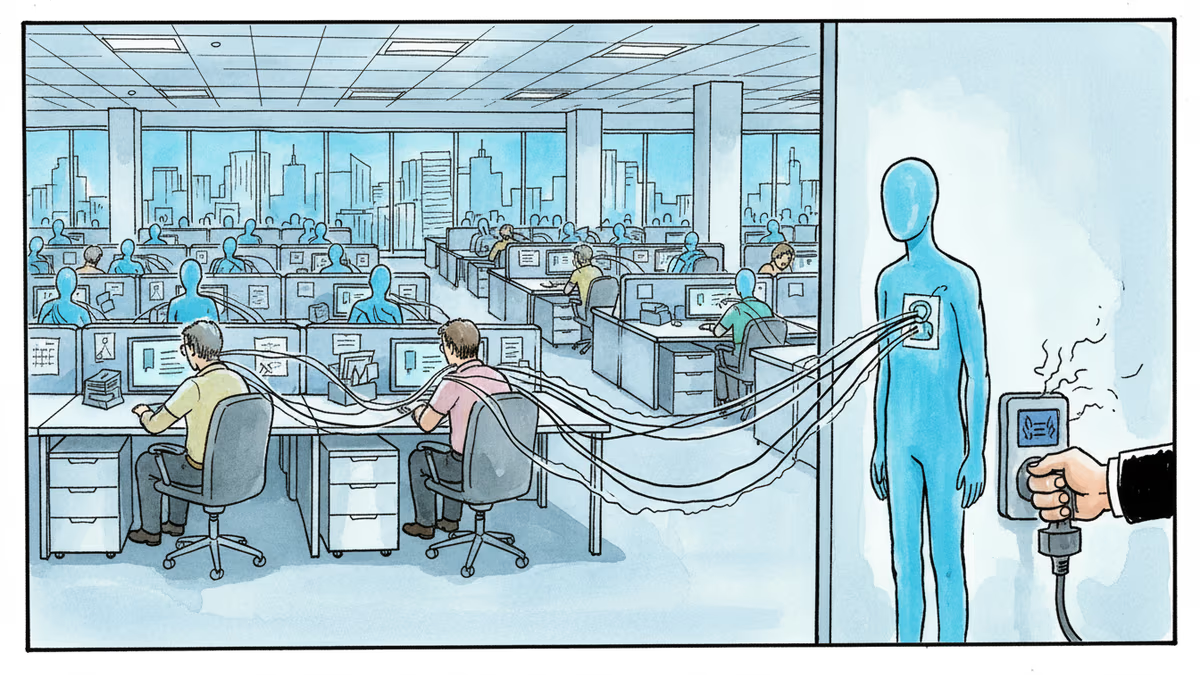
Okta CEO Todd McKinnon on why AI agents need identity management, the SaaSpocalypse threat, and why the kill switch might be the most important button in enterprise tech.
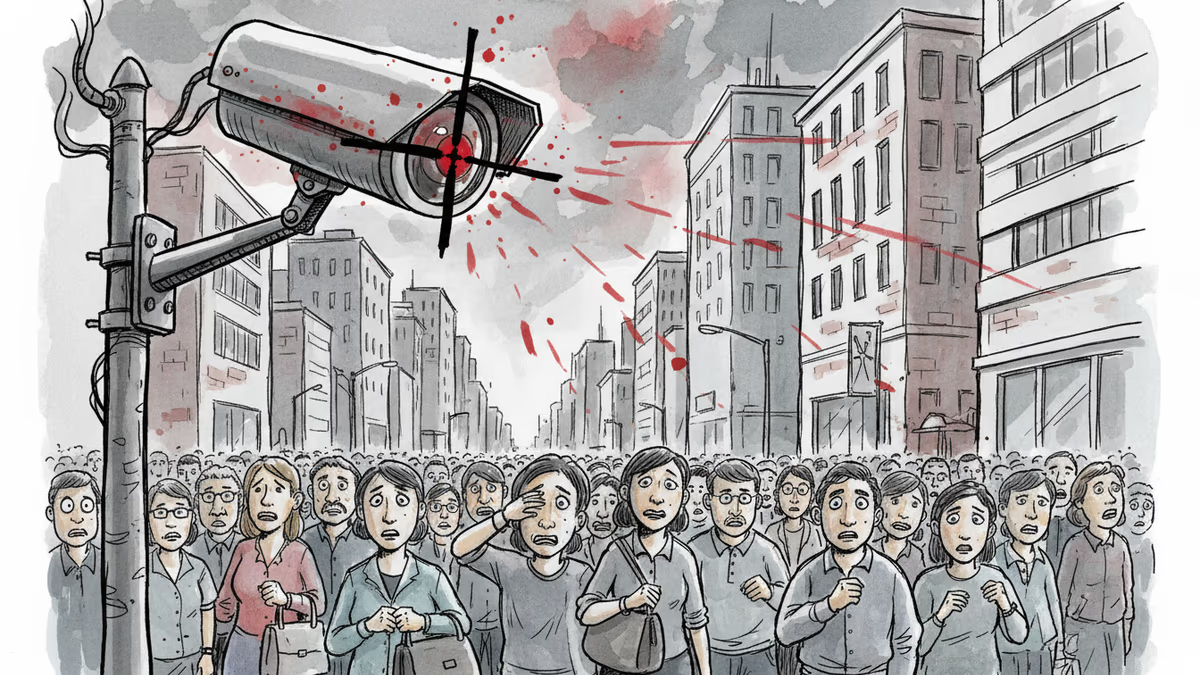
Iran and Israel are hacking civilian security cameras for military reconnaissance. How consumer surveillance devices became weapons of war.
A security researcher discovered he could access 7,000 DJI robot vacuums and peek into strangers' homes. This Valentine's Day revelation exposes the hidden privacy risks of our smart home obsession.
UK Visa Portal, a private immigration service mistaken for an official government site, has been exposing passport scans and selfies of over 100,000 applicants. The breach remains unpatched.
Okta CEO Todd McKinnon on why AI agents need identity management, the SaaSpocalypse threat, and why the kill switch might be the most important button in enterprise tech.
Iran and Israel are hacking civilian security cameras for military reconnaissance. How consumer surveillance devices became weapons of war.
A security researcher discovered he could access 7,000 DJI robot vacuums and peek into strangers' homes. This Valentine's Day revelation exposes the hidden privacy risks of our smart home obsession.
Thoughts
Share your thoughts on this article
Sign in to join the conversation