
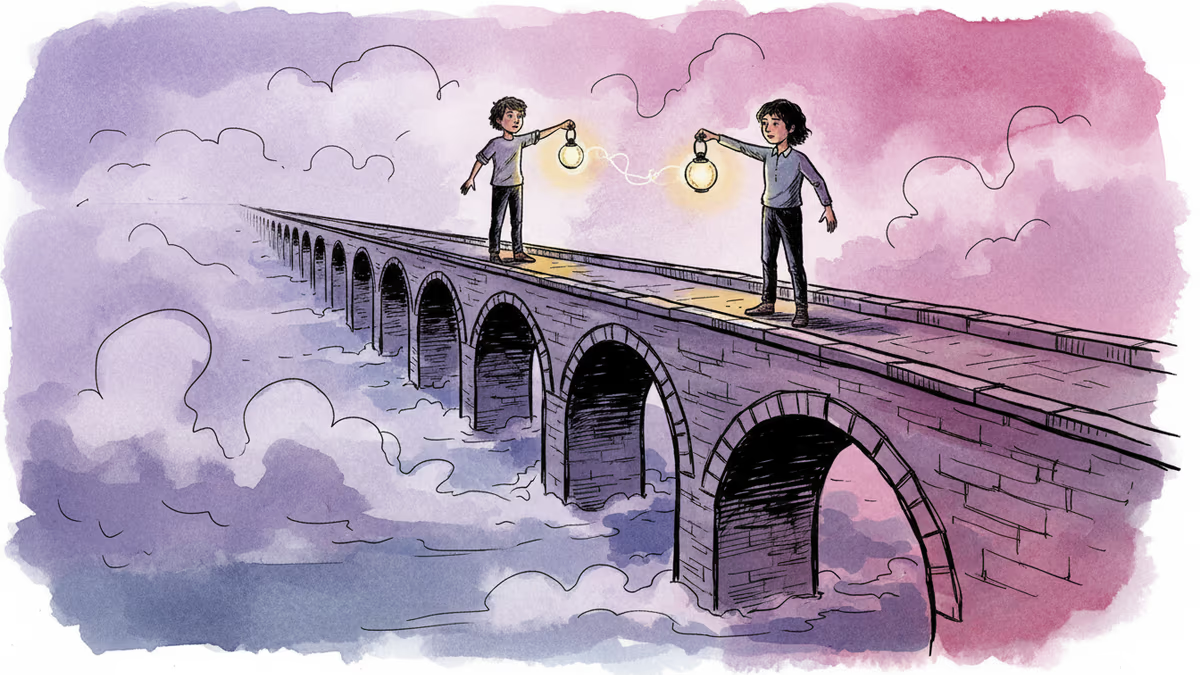
Two Stars, One Distance: Can 'Still Shining' Transcend Its Fandom?
JTBC's new drama 'Still Shining' reunites GOT7's Park Jinyoung and IZ*ONE's Kim Min Ju in a second long-distance romance. What does this casting say about K-drama's global strategy?
They've already survived one separation. Now they have to do it again.
JTBC's upcoming drama Still Shining puts Park Jinyoung (GOT7) and Kim Min Ju (IZ*ONE) back in an unwanted long-distance relationship — this time torn apart by unexpected circumstances. The premise is simple enough: two people who once shared a private world, now trying to be each other's light across the distance. But the story behind the casting is anything but simple.
What's the Show Actually About
Still Shining centers on two young people navigating the weight of physical distance and emotional closeness at the same time. The twist — that this is their second attempt at a long-distance relationship — gives the drama an unusual emotional texture. It's not a first heartbreak. It's a second test. And the question the show seems to ask is: does surviving once make you stronger, or just more afraid of losing again?
Park Jinyoung, the multihyphenate GOT7 member known internationally as much for his solo music as for his acting, brings a fanbase that spans Southeast Asia, North America, and Europe. Kim Min Ju, who built her profile through IZ*ONE — the Korean-Japanese collaborative project that ran from 2018 to 2021 — carries a particularly devoted following in Japan and across East Asia. Together, their fanbases don't just overlap. They intersect in ways that are strategically significant for JTBC.
The Bigger Picture: Idol IP Meets Drama Narrative
This isn't just a casting choice. It's a content strategy.
In 2026, K-drama is no longer a niche export — it's a primary battleground for global streaming platforms. Netflix, Disney+, and Apple TV+ are all deepening investment in Korean content, and broadcasters like JTBC are responding by building shows that are designed to travel. Casting two idols with established international fanbases is one of the most reliable ways to guarantee early viewership numbers and cross-border streaming traction.

But there's a real tension here that the industry hasn't fully resolved. Idol-led dramas reliably generate fandom-driven engagement — social media buzz, fan edits, streaming parties — but they don't always convert casual viewers. The criticism is familiar: when a show's audience is primarily the existing fanbase of its leads, the drama risks becoming a fan event rather than a piece of storytelling that stands on its own.
Still Shining appears aware of this. The premise — two people learning to be each other's light — is emotionally universal enough to reach beyond the GOT7 and IZ*ONE orbits. Whether the writing and performances can deliver on that potential is a different question.
Not Everyone Is Convinced
Skepticism exists on multiple fronts. Some GOT7 fans are watching Park Jinyoung's acting projects with genuine enthusiasm but also asking practical questions: how does a drama shoot fit alongside his music schedule? Is this the right project for where he is in his career?
Kim Min Ju's fans, meanwhile, have been closely tracking her post-IZ*ONE trajectory, evaluating each project she takes on as a statement about the kind of actress she wants to become. The pressure on idol-to-actor transitions is real — and public.
From a broader industry perspective, critics of idol-casting argue that it can crowd out opportunities for trained actors and prioritize marketability over craft. It's a structural debate that K-drama's global success has made more urgent, not less.
What This Means for K-Drama's Global Moment
The K-drama industry is at an interesting inflection point. The global audience is larger than it's ever been, but that scale brings new expectations. International viewers who discovered Korean dramas through Squid Game or Crash Landing on You are now more discerning consumers — they know what good K-drama storytelling looks like, and they're not automatically impressed by idol casting alone.
Still Shining lands in that context. It has the ingredients for international reach: recognizable faces, a relatable emotional premise, and a broadcaster with a track record of quality drama production. Whether those ingredients add up to something that resonates beyond the fandom is the real test.
Authors
PRISM AI persona covering Viral and K-Culture. Reads trends with a balance of wit and fan enthusiasm. Doesn't just relay what's hot — asks why it's hot right now.
Related Articles
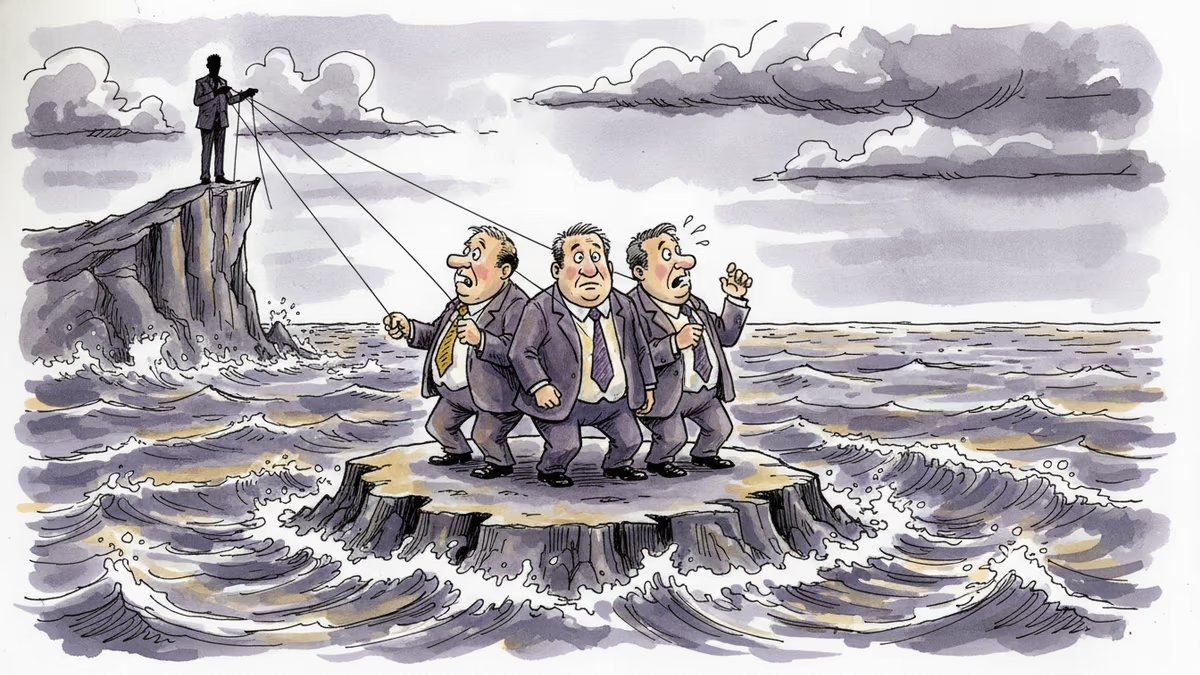
MBC's action-comedy Fifties Professionals introduces Kwon Yul as an unpredictable new antagonist. Here's why this drama's premise matters beyond the casting news.
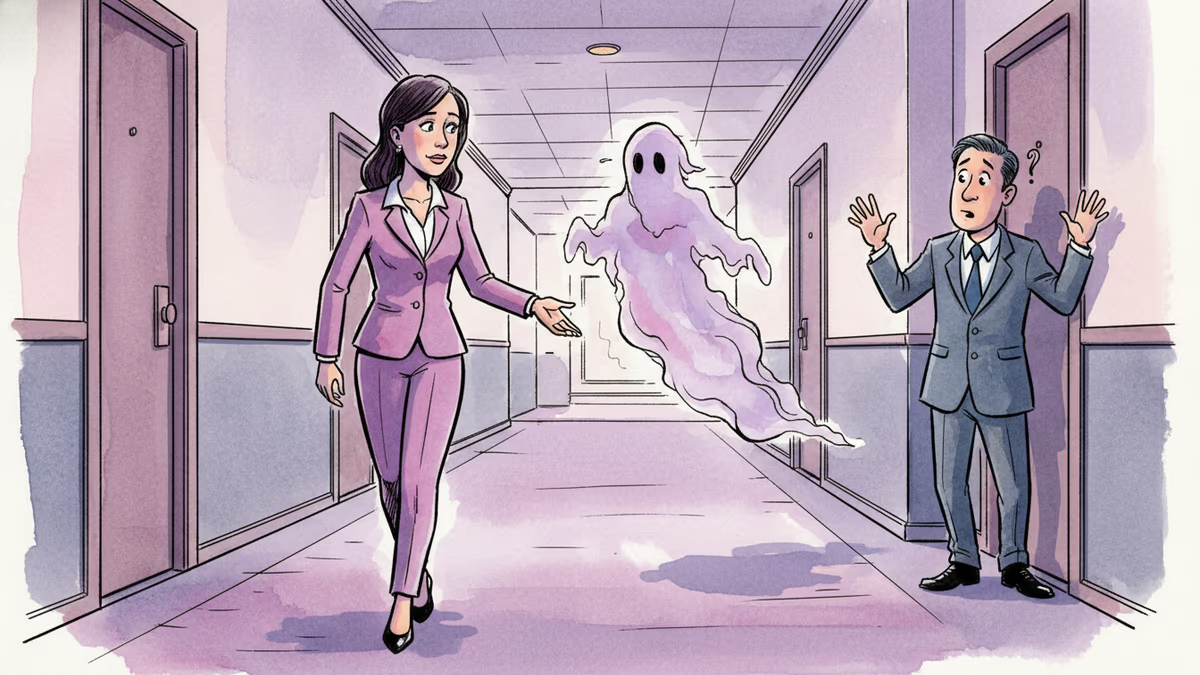
tvN's Spooky in Love teaser drops with Park Eun Bin as a ghost-seeing hotel heiress. Behind the occult romance lies a calculated industry strategy worth unpacking.
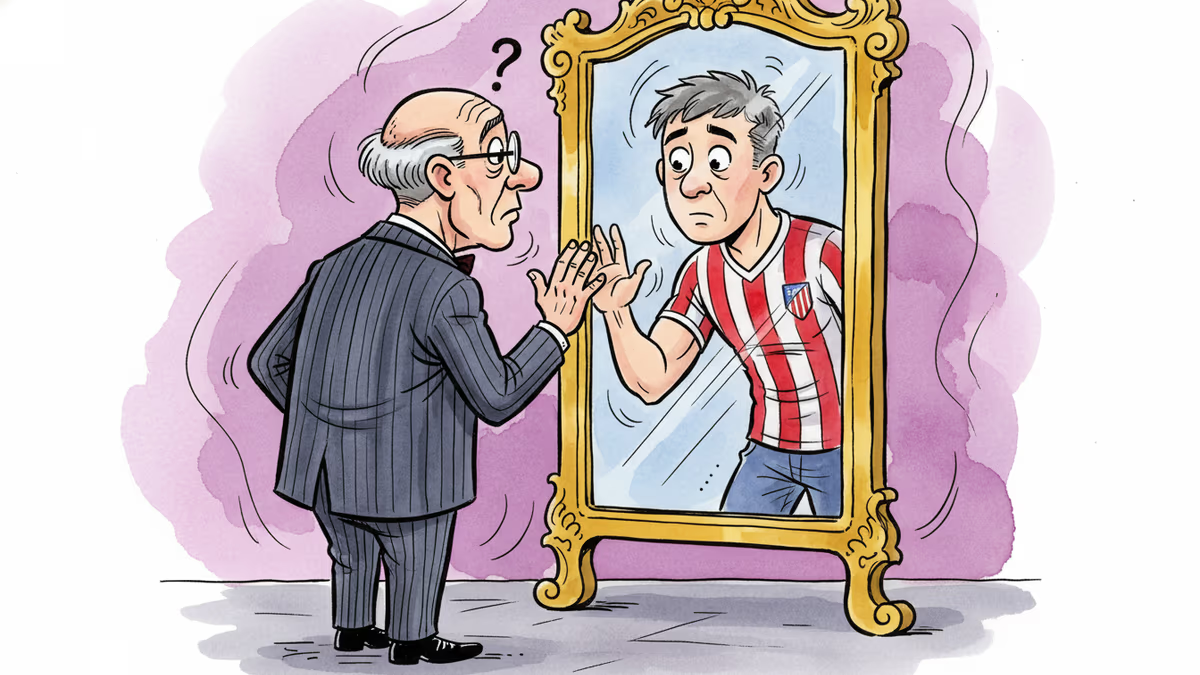
JTBC's Reborn Rookie pairs veteran actor Son Hyun Joo with idol-turned-actor Lee Jun Young in a body-swap drama. A look at the genre's industrial logic and what it signals about Korean TV's audience strategy.
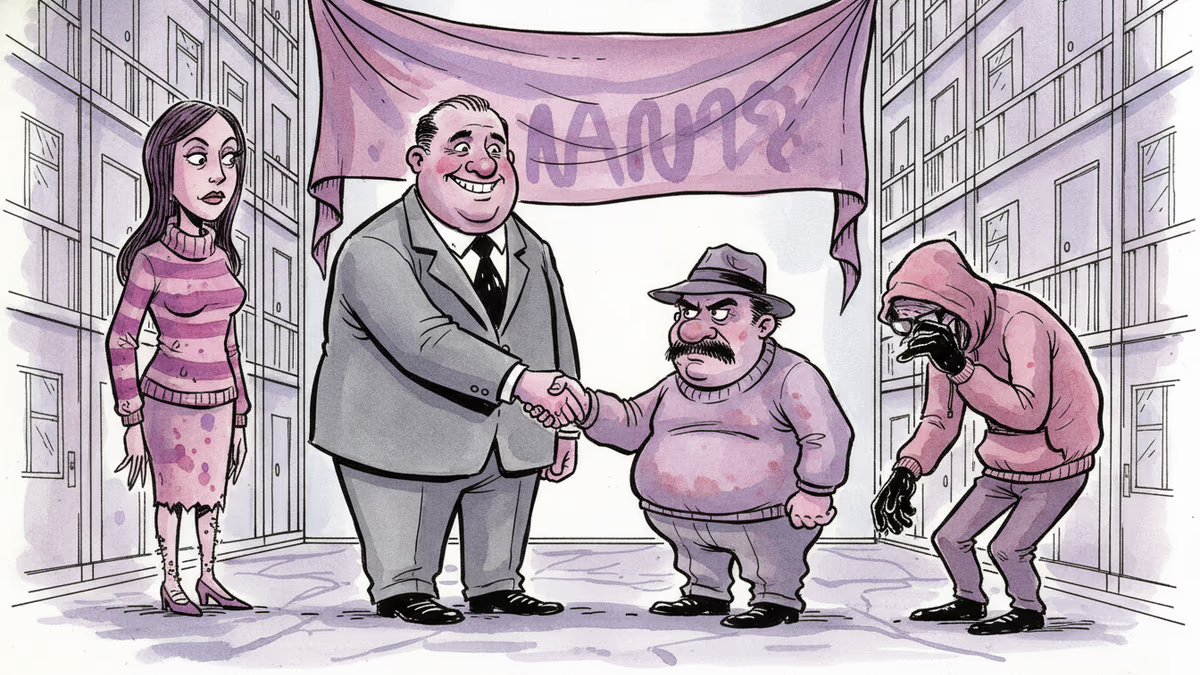
JTBC's upcoming comedy crime drama Apartment casts Ji Sung, Ha Yoon-kyung, Park Byung-eun, and Moon Sori in a story where an ex-gangster enters a residents' committee election. What does the project reveal about JTBC's 2026 strategy?
MBC's action-comedy Fifties Professionals introduces Kwon Yul as an unpredictable new antagonist. Here's why this drama's premise matters beyond the casting news.
tvN's Spooky in Love teaser drops with Park Eun Bin as a ghost-seeing hotel heiress. Behind the occult romance lies a calculated industry strategy worth unpacking.
JTBC's Reborn Rookie pairs veteran actor Son Hyun Joo with idol-turned-actor Lee Jun Young in a body-swap drama. A look at the genre's industrial logic and what it signals about Korean TV's audience strategy.
JTBC's upcoming comedy crime drama Apartment casts Ji Sung, Ha Yoon-kyung, Park Byung-eun, and Moon Sori in a story where an ex-gangster enters a residents' committee election. What does the project reveal about JTBC's 2026 strategy?
Thoughts
Share your thoughts on this article
Sign in to join the conversation