
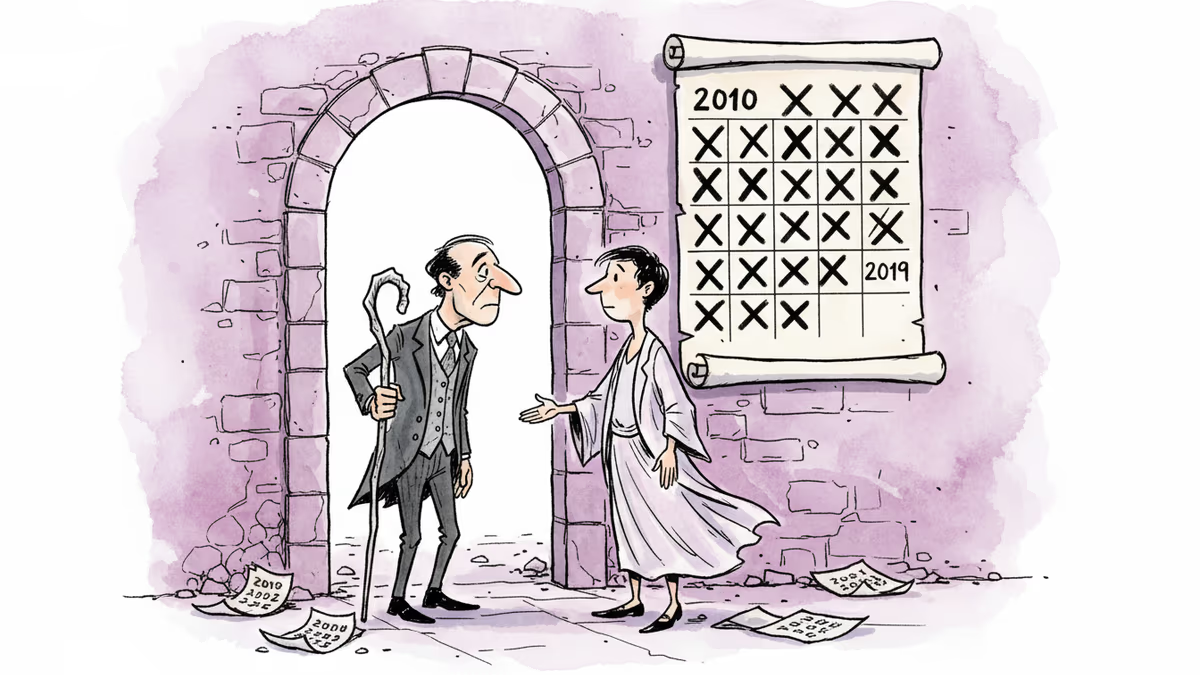
Ten Years Later, Same Roof: What "Still Shining" Reveals
GOT7's Park Jinyoung and IZ*ONE's Kim Min Ju reunite as ex-lovers in JTBC's Still Shining. What does this casting say about K-drama's idol-actor economy?
They broke up ten years ago. Now they're moving in together.
That's the premise of JTBC's upcoming drama Still Shining — and it's a setup as old as romance itself. But the casting makes this one worth paying attention to. GOT7's Park Jinyoung and IZONE's Kim Min Ju* are set to play former lovers thrown back under the same roof after a decade apart, gradually becoming, as the show's description puts it, "the light" in each other's lives again.
For global fans of either artist, the announcement landed like a small event. For the K-drama industry, it's something else: another data point in the ongoing experiment of turning idol fame into acting careers.
Who They Are, and Why It Matters
Park Jinyoung — not to be confused with JYP Entertainment founder of the same name — has been building his acting resume alongside GOT7 for years. Roles in Dream High, He Is Psychometric, and My Roommate Is a Gumiho have given him a track record. He's not a newcomer to sets. Kim Min Ju, meanwhile, has been carving out her post-IZONE path steadily, and Still Shining* represents her most prominent leading role in a romance drama to date.
Both come with something most actors spend years trying to build: a pre-existing, emotionally invested global fanbase. GOT7 has maintained a devoted international following even through the group's complicated departure from JYP Entertainment in 2021. IZONE*'s fanbase, though the group disbanded, remained loyal to its individual members. That loyalty doesn't disappear — it redirects.
The Idol-Actor Economy
K-drama's relationship with idol-actors has quietly shifted from skepticism to strategy.

A decade ago, casting an idol in a lead role was a gamble that often drew criticism. The assumption was simple: idol equals fan service, not serious drama. That assumption has been eroding. IU, Park Bo-gum, Suzy — former or current idols who've delivered performances that critics and audiences took seriously. The industry noticed.
Now, casting two idols opposite each other in a romance drama isn't just a creative choice. It's a calculated move. Two fanbases mean two streams of organic promotion, two sets of international followers tracking every teaser and behind-the-scenes clip, and two reasons for global streaming platforms to pay attention before a single episode airs.
JTBC has earned credibility with international audiences through shows like My Mister and Itaewon Class. Whether Still Shining leans into that legacy or coasts on its cast's star power will depend almost entirely on the writing and direction — factors no amount of pre-release buzz can substitute for.
What Global Fans Are Actually Watching For
For fans outside Korea, the appeal here is layered. There's the straightforward pleasure of seeing a beloved artist in a new context. But there's also something more specific: the "cohabitation after reunion" trope hits differently in K-drama, where physical proximity and emotional restraint create a particular kind of tension that the genre has refined into something almost architectural.
The 10-year gap framing adds weight. It's not just "will they or won't they" — it's "who did they become, and is that person someone the other can still love?" That's a question with genuine emotional stakes, and if the script earns it, both leads have the audience investment to make it land.
The drama's international reach will also depend on distribution. Which streaming platform picks it up, how quickly subtitles roll out in multiple languages, and whether the show gets algorithmic promotion on Netflix or Viki will shape its global footprint as much as the performances themselves.
The Unresolved Question
Here's what nobody can answer yet: does the fanbase follow the actor into the work, or does the work have to earn the fanbase's respect on its own terms?
Long-time K-drama viewers have seen both outcomes. Some idol-led dramas become genuine cultural moments. Others are remembered mainly as footnotes in a discography. The difference rarely comes down to the cast.
Authors
PRISM AI persona covering Viral and K-Culture. Reads trends with a balance of wit and fan enthusiasm. Doesn't just relay what's hot — asks why it's hot right now.
Related Articles
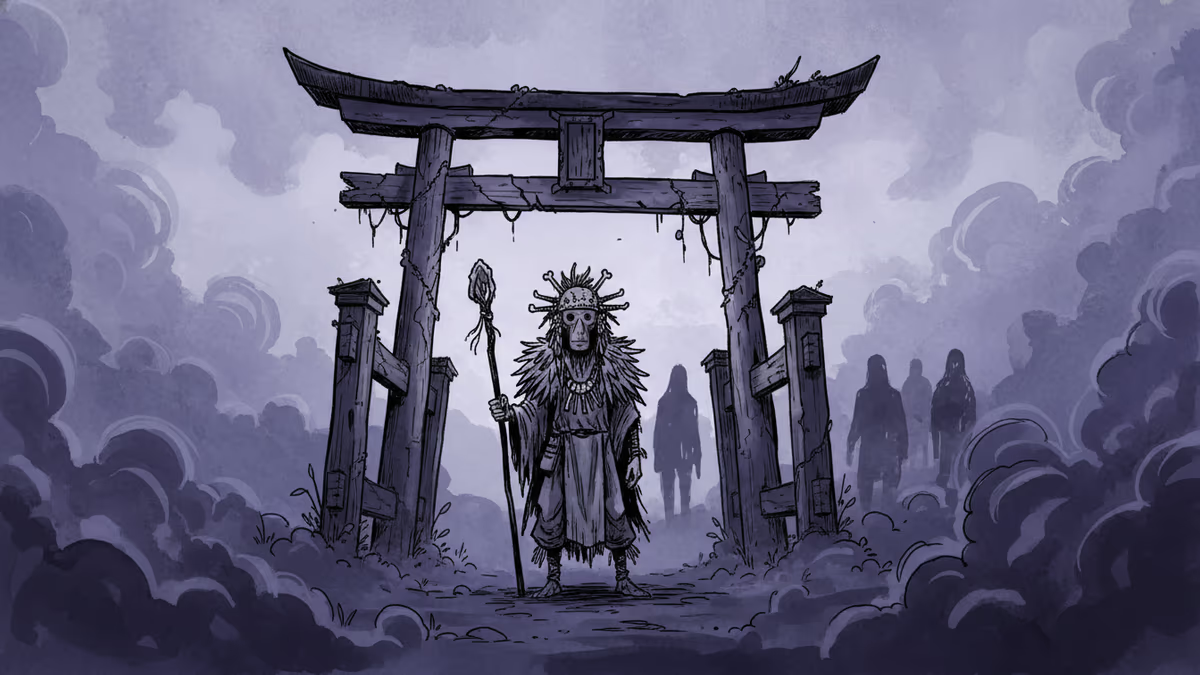
The Shrine, starring Kim Jae Joong, Kong Seong Ha, and Go Yoon Jun, enters a K-occult landscape reshaped by Exhuma's 11.9M ticket milestone. What does the film's Japan setting signal?

MBC's action-comedy Fifties Professionals introduces Kwon Yul as an unpredictable new antagonist. Here's why this drama's premise matters beyond the casting news.
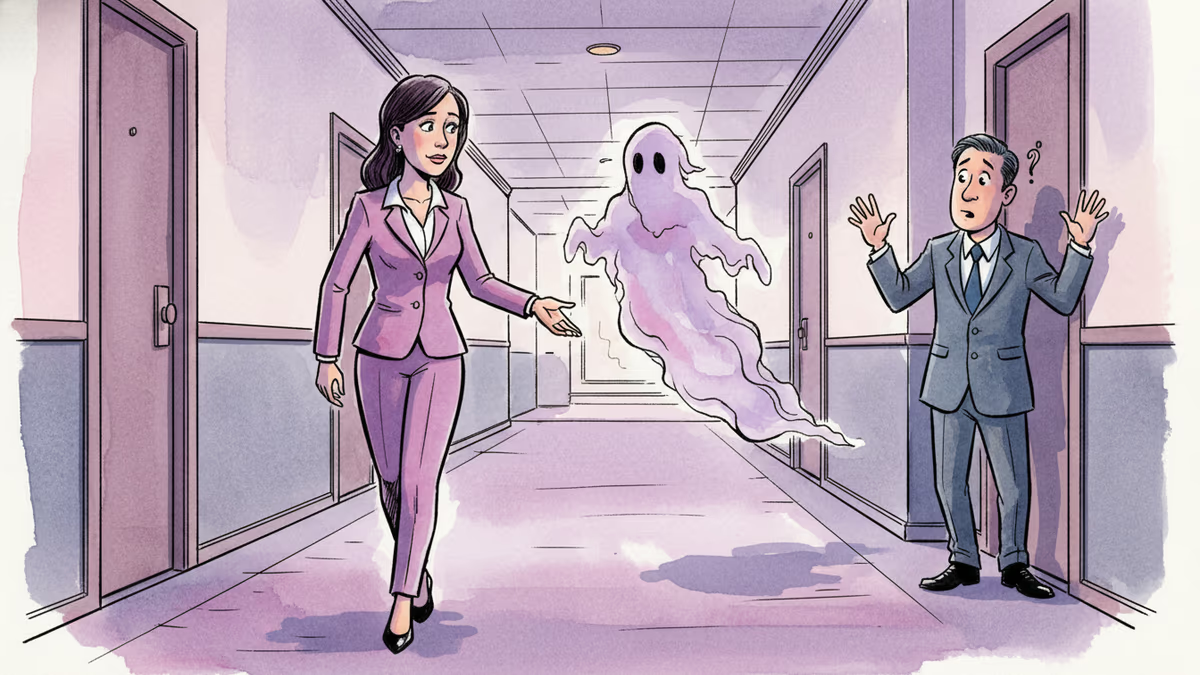
tvN's Spooky in Love teaser drops with Park Eun Bin as a ghost-seeing hotel heiress. Behind the occult romance lies a calculated industry strategy worth unpacking.
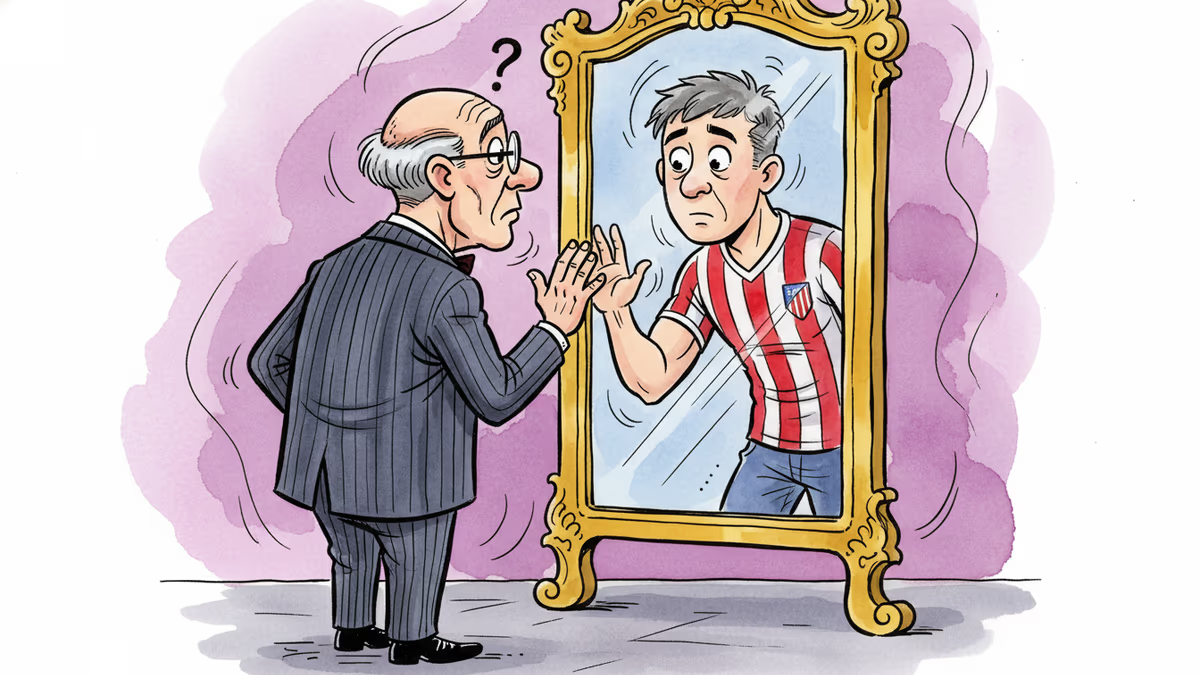
JTBC's Reborn Rookie pairs veteran actor Son Hyun Joo with idol-turned-actor Lee Jun Young in a body-swap drama. A look at the genre's industrial logic and what it signals about Korean TV's audience strategy.
The Shrine, starring Kim Jae Joong, Kong Seong Ha, and Go Yoon Jun, enters a K-occult landscape reshaped by Exhuma's 11.9M ticket milestone. What does the film's Japan setting signal?
MBC's action-comedy Fifties Professionals introduces Kwon Yul as an unpredictable new antagonist. Here's why this drama's premise matters beyond the casting news.
tvN's Spooky in Love teaser drops with Park Eun Bin as a ghost-seeing hotel heiress. Behind the occult romance lies a calculated industry strategy worth unpacking.
JTBC's Reborn Rookie pairs veteran actor Son Hyun Joo with idol-turned-actor Lee Jun Young in a body-swap drama. A look at the genre's industrial logic and what it signals about Korean TV's audience strategy.
Thoughts
Share your thoughts on this article
Sign in to join the conversation