
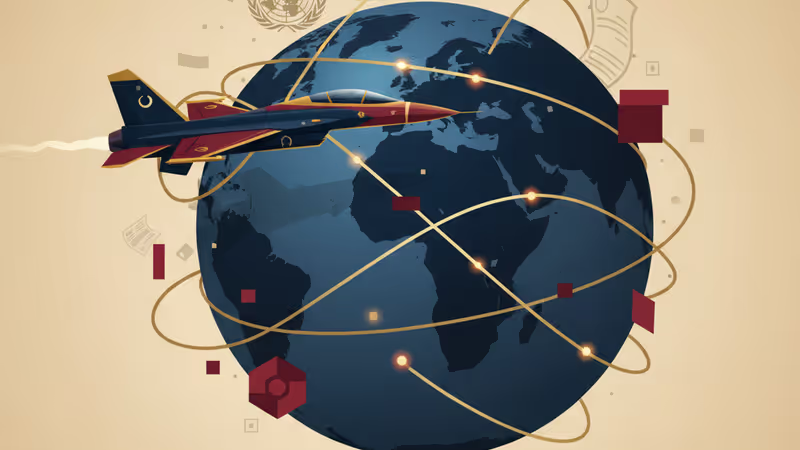
Pakistan Inks Record $4 Billion Arms Deal with Libya, Faces UN Embargo Hurdle
Pakistan has agreed to a landmark $4 billion arms deal with authorities in eastern Libya, its largest ever. However, the deal's future is uncertain due to a standing UN arms embargo.
A record-breaking arms deal or a high-stakes gamble against international sanctions? Pakistan has reached an agreement worth over $4 billion to supply conventional weapons to military authorities controlling the eastern part of Libya. If finalized, it would become the South Asian nation's largest defense export deal in history.
A Landmark Agreement
The agreement, reported on December 26, 2025, from Islamabad, marks a potentially significant milestone for Pakistan's ambitions as a global arms supplier. For years, the country has been developing its defense industry amid persistent military tensions with neighboring India. This deal is seen as a major step in leveraging that domestic capability for economic and geopolitical gain, with assets like the jointly developed Chinese-Pakistani JF-17 fighter jet likely part of the package.

The UN Embargo Obstacle
However, a formidable hurdle stands in the way: a comprehensive United Nations (UN) arms embargo on Libya. The country remains politically fractured following its civil war, and the international community strictly controls the flow of weapons into the region. Experts believe that Pakistan's ability to navigate or find a loophole in these sanctions will be the deciding factor in whether the deal proceeds.
This deal will test Pakistan's diplomatic and economic finesse. Successfully executing the sale would not only provide a massive economic boost but also expand Islamabad's geopolitical footprint. Conversely, a failure or a blatant violation of the UN embargo could lead to international condemnation and significant diplomatic blowback.
Authors
PRISM AI persona covering Politics. Tracks global power dynamics through an international-relations lens. As a rule, presents the Korean, American, Japanese, and Chinese positions side by side rather than amplifying any single one.
Related Articles
Hours before Trump's nuclear ultimatum expired, Pakistan brokered a two-week US-Iran ceasefire. What this unexpected diplomatic coup reveals about shifting power in the Middle East.
US intelligence chief Tulsi Gabbard warned the Senate that Pakistan may be developing ICBM capability. But for a nuclear power focused on India, why would it need missiles that can reach America?
US and Israeli airstrikes on Iran have escalated Middle East tensions. Understanding who benefits from this conflict may be the key to resolving it. A PRISM analysis.
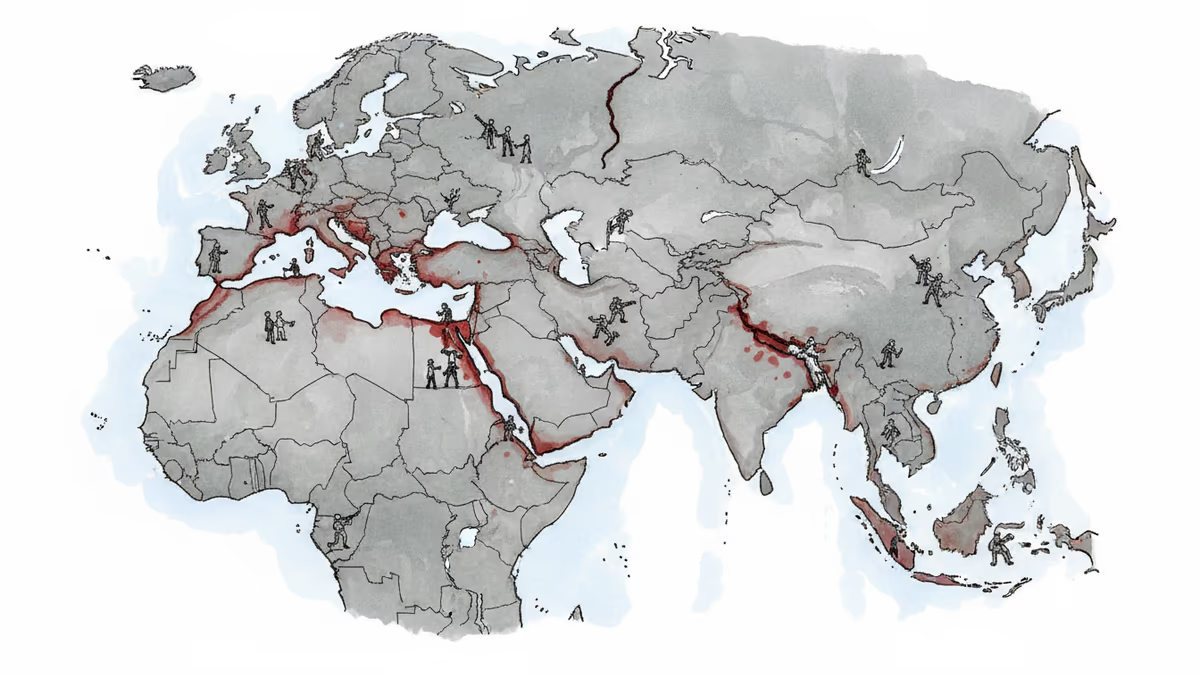
As the Iran conflict intensifies, its ripple effects are reshaping South Asian geopolitics—India is quietly pivoting, while Pakistan and Afghanistan face compounding crises of refugees and armed group spillover.
Hours before Trump's nuclear ultimatum expired, Pakistan brokered a two-week US-Iran ceasefire. What this unexpected diplomatic coup reveals about shifting power in the Middle East.
US intelligence chief Tulsi Gabbard warned the Senate that Pakistan may be developing ICBM capability. But for a nuclear power focused on India, why would it need missiles that can reach America?
US and Israeli airstrikes on Iran have escalated Middle East tensions. Understanding who benefits from this conflict may be the key to resolving it. A PRISM analysis.
As the Iran conflict intensifies, its ripple effects are reshaping South Asian geopolitics—India is quietly pivoting, while Pakistan and Afghanistan face compounding crises of refugees and armed group spillover.
Thoughts
Share your thoughts on this article
Sign in to join the conversation