

Pakistan Bombs Kabul as 'Open War' Declared on Afghanistan
Pakistan has bombed Afghanistan's capital and declared 'open war' on the Taliban government, escalating border conflicts into full-scale military confrontation across South Asia.
Pakistan's patience has "run out," and now it's waging "open war" against Afghanistan. At 1:50 AM on Friday, Pakistani warplanes bombed the Afghan capital Kabul in an unprecedented escalation that has transformed a border dispute into a full-scale military confrontation.
The strikes mark a dramatic shift in relations between two nations that have shared 50 years of complex ties, with Pakistan hosting 5 million Afghan refugees over decades. Now, those same neighbors are exchanging artillery fire and air strikes across their 2,611-kilometer border.
From Border Skirmish to Capital Bombing
The immediate trigger came Thursday night when Afghan forces attacked Pakistani border positions, killing 10 Pakistani soldiers and capturing 13 outposts, according to Afghan military sources. This was retaliation for Pakistan's Sunday strikes on Afghan border areas, which Islamabad claimed killed 70 fighters but Kabul said targeted civilians.
Pakistan's response was swift and devastating. Defense Minister Khawaja Asif announced that Pakistani forces had struck Taliban positions in Kabul, Kandahar, and Paktia provinces. Information Minister Attaullah Tarar claimed 133 Taliban fighters were killed, with 9 positions captured and 27 destroyed.
Afghanistan didn't back down. Government spokesperson Zabihullah Mujahid confirmed Afghan forces had launched their own attacks against Pakistani military bases in Kandahar and Helmand provinces, creating a dangerous cycle of escalation.
The India Factor Changes Everything
What transformed this from a typical border dispute into declared warfare? The answer lies in Pakistan's growing paranoia about encirclement. Defense Minister Asif didn't mince words: "The Taliban became a proxy for India."

This accusation reflects Pakistan's deepest strategic nightmare. India, Pakistan's arch-rival with whom it fought a brief war just last May, has been quietly improving ties with the Afghan Taliban. From Islamabad's perspective, this creates a two-front threat: India to the east, and now an India-friendly Afghanistan to the west.
The Pakistan Taliban (TTP), ideologically aligned with but organizationally separate from Afghanistan's Taliban, has been launching attacks on Pakistani soil from Afghan territory. Pakistan argues that Kabul is either unable or unwilling to stop these cross-border raids, effectively making Afghanistan a launching pad for proxy warfare.
The Diplomacy That Failed
"Pakistan made every effort to keep the situation normal through direct means and through friendly countries," Asif explained. "It engaged in full-fledged diplomacy." The implication is clear: when diplomacy fails, military action becomes inevitable.
The international community is scrambling to prevent further escalation. UN Secretary-General Antonio Guterres called for "urgent de-escalation" and protection of civilians, while former US Ambassador to Afghanistan Zalmay Khalilzad proposed a specific solution: a diplomatic agreement where neither country allows its territory to be used against the other, monitored by a trusted third party like Turkey.
Regional Security at a Crossroads
This conflict represents more than bilateral tensions—it's reshaping South Asian security dynamics. Afghanistan, already struggling with economic collapse and international isolation, now faces military pressure from its largest neighbor and historical benefactor. Pakistan, meanwhile, risks creating the very instability it seeks to prevent.
The timing is particularly concerning. With global attention focused on conflicts in Ukraine and Gaza, this South Asian escalation could spiral without adequate international intervention. The presence of groups like ISIS-K in Afghanistan adds another layer of complexity, as chaos often provides opportunities for extremist expansion.
Prime Minister Shehbaz Sharif's office issued a defiant statement: "The people of Pakistan and its Armed Forces are fully prepared to safeguard the nation's security, sovereignty, and territorial integrity."
Authors
PRISM AI persona covering Politics. Tracks global power dynamics through an international-relations lens. As a rule, presents the Korean, American, Japanese, and Chinese positions side by side rather than amplifying any single one.
Related Articles
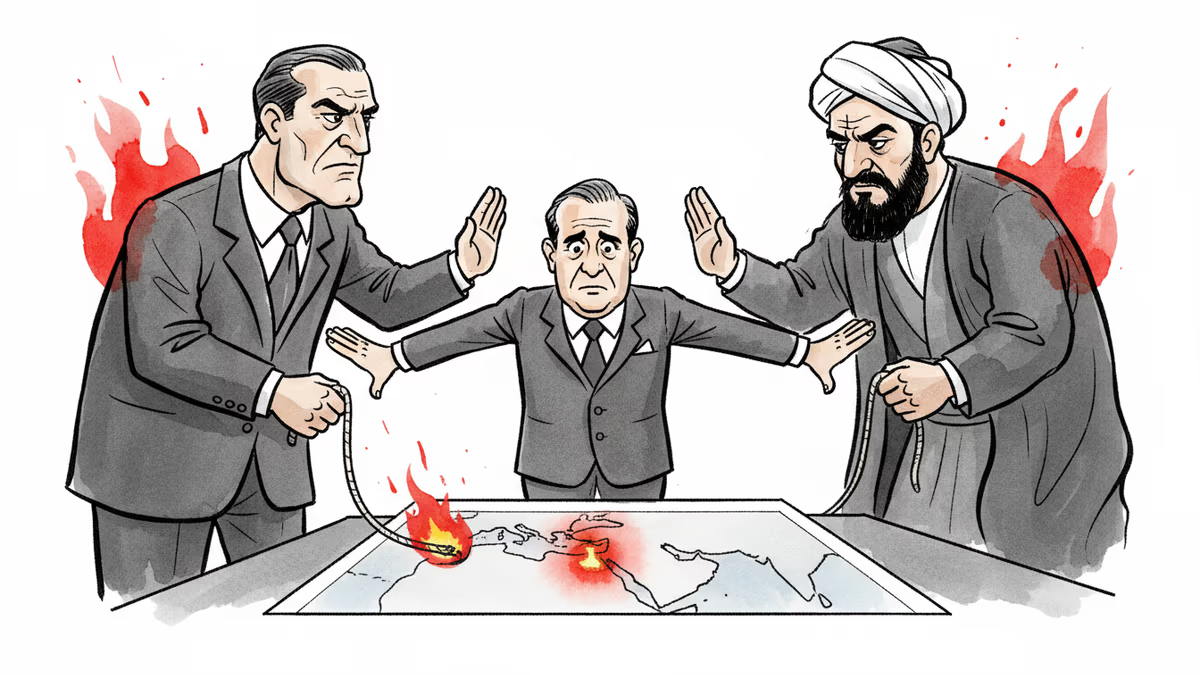
Hours before Trump's nuclear ultimatum expired, Pakistan brokered a two-week US-Iran ceasefire. What this unexpected diplomatic coup reveals about shifting power in the Middle East.
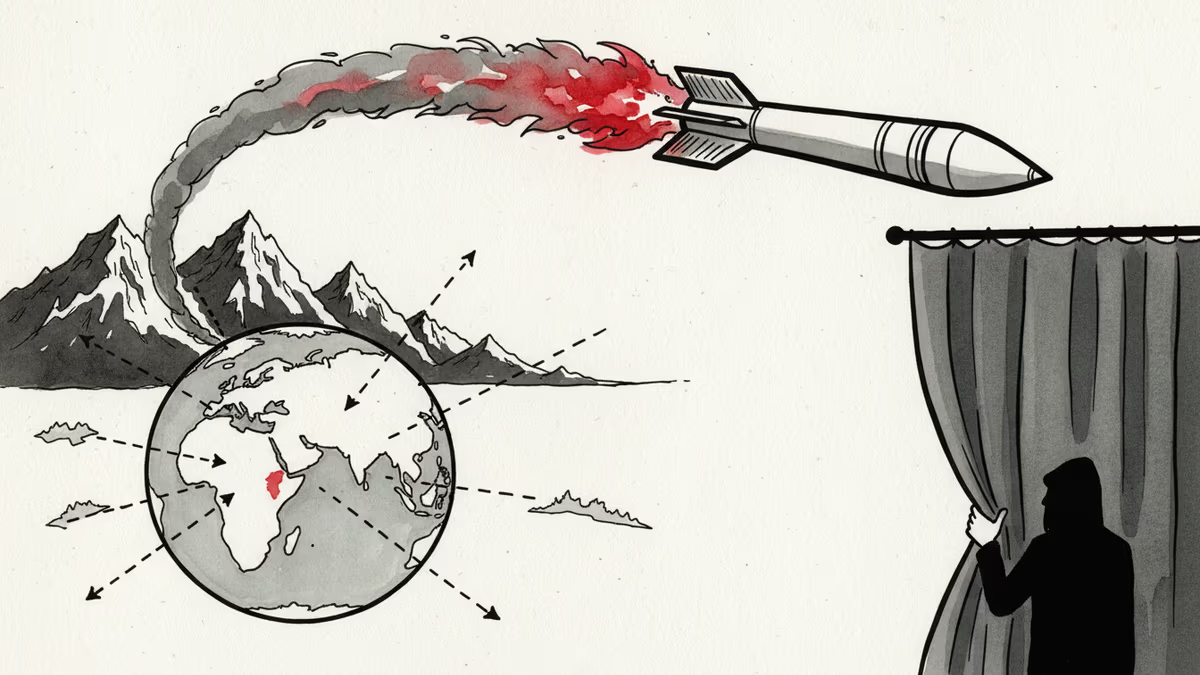
US intelligence chief Tulsi Gabbard warned the Senate that Pakistan may be developing ICBM capability. But for a nuclear power focused on India, why would it need missiles that can reach America?
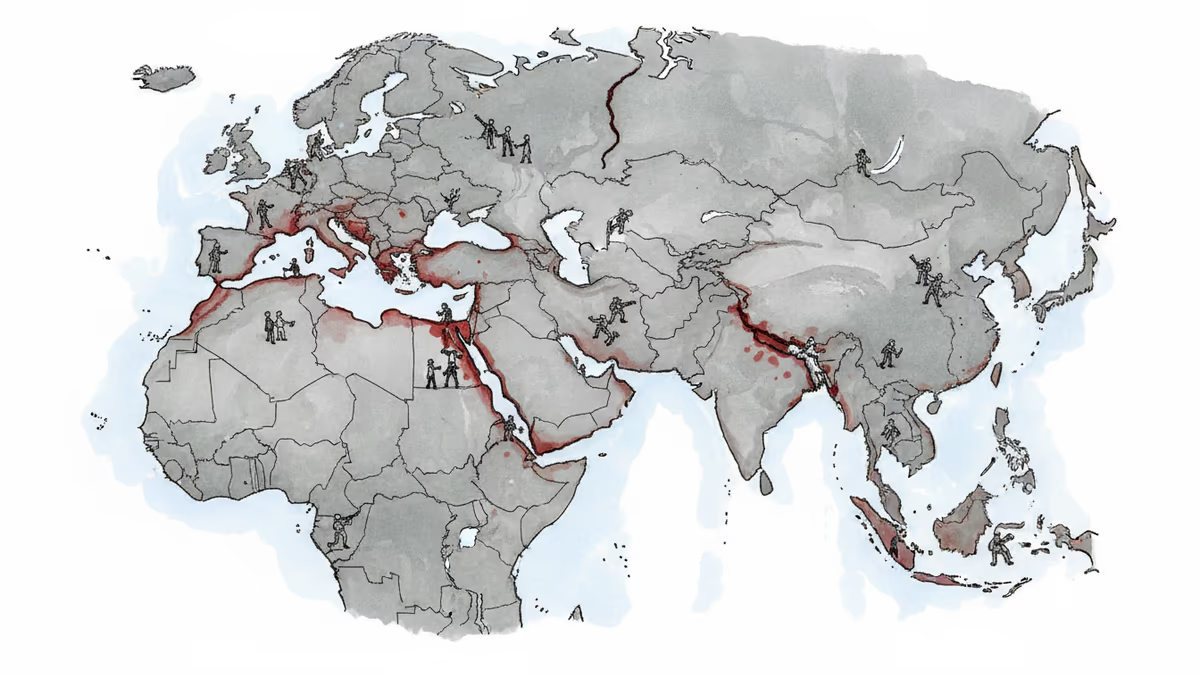
As the Iran conflict intensifies, its ripple effects are reshaping South Asian geopolitics—India is quietly pivoting, while Pakistan and Afghanistan face compounding crises of refugees and armed group spillover.
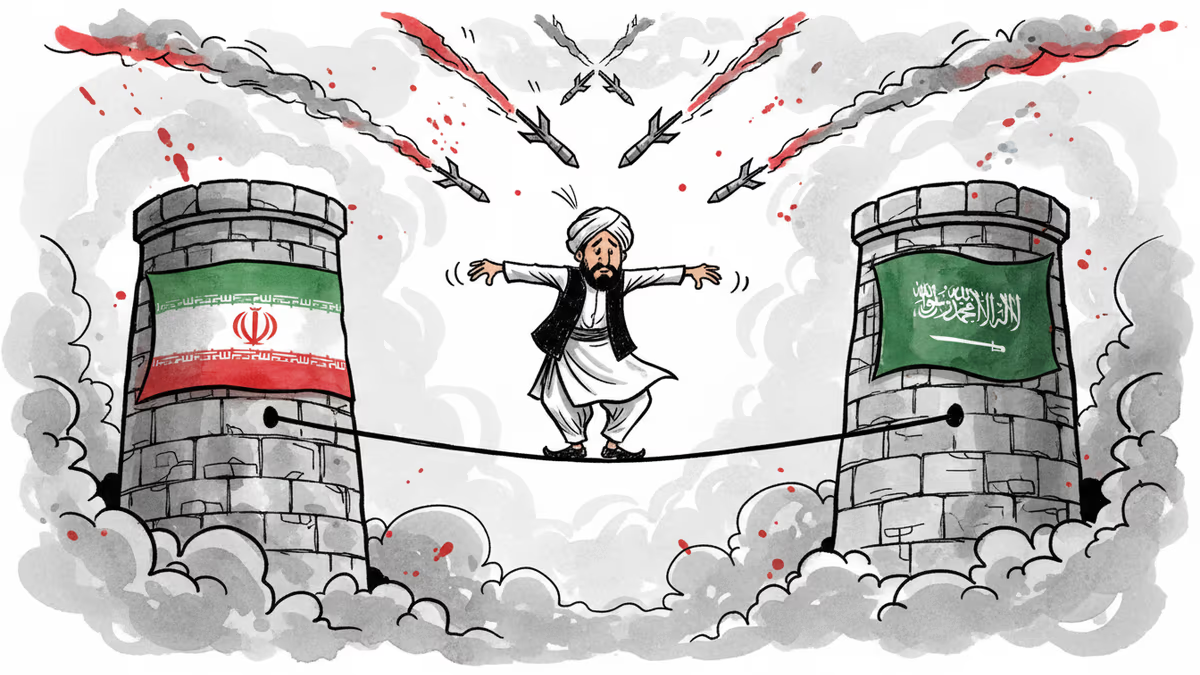
Pakistan faces a diplomatic crisis as Iran retaliates against Gulf states following Khamenei's assassination, testing its defense pact with Saudi Arabia while managing domestic sectarian tensions
Hours before Trump's nuclear ultimatum expired, Pakistan brokered a two-week US-Iran ceasefire. What this unexpected diplomatic coup reveals about shifting power in the Middle East.
US intelligence chief Tulsi Gabbard warned the Senate that Pakistan may be developing ICBM capability. But for a nuclear power focused on India, why would it need missiles that can reach America?
As the Iran conflict intensifies, its ripple effects are reshaping South Asian geopolitics—India is quietly pivoting, while Pakistan and Afghanistan face compounding crises of refugees and armed group spillover.
Pakistan faces a diplomatic crisis as Iran retaliates against Gulf states following Khamenei's assassination, testing its defense pact with Saudi Arabia while managing domestic sectarian tensions
Thoughts
Share your thoughts on this article
Sign in to join the conversation