
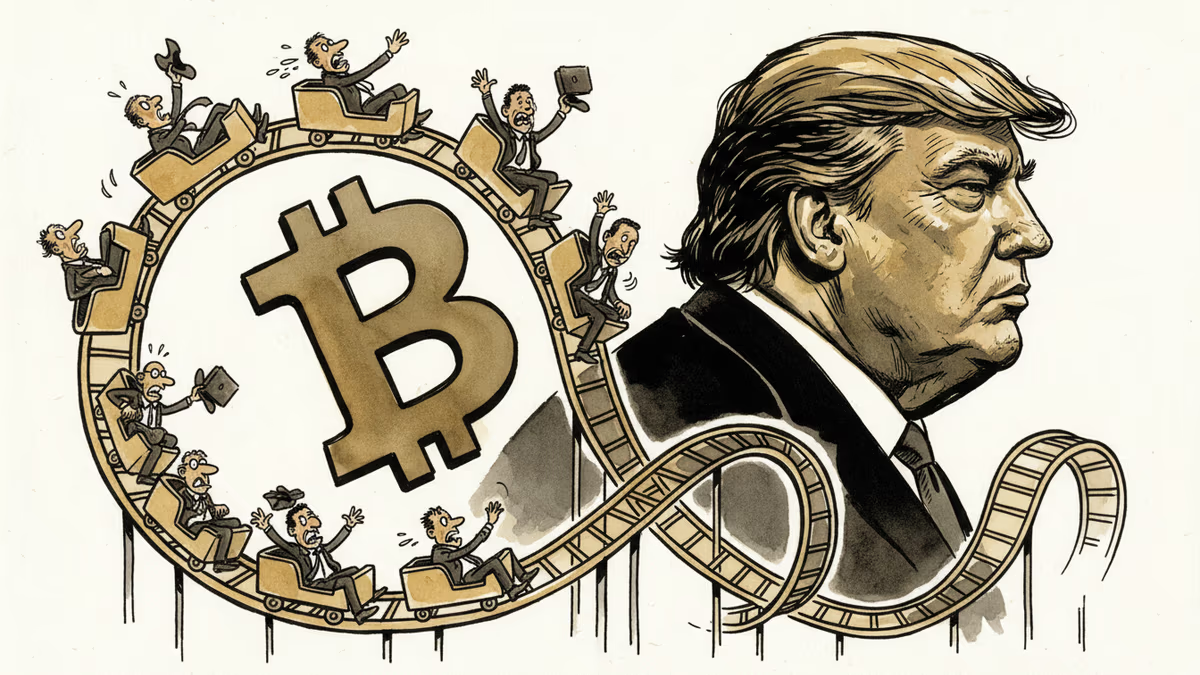
Bitcoin's $64K Flash Crash and Recovery Exposes Market's Trump Sensitivity
Bitcoin plunged to $64,270 before rebounding to $66,300 as Trump's 15% global tariff plans and Iran tensions triggered overnight crypto volatility in thin liquidity conditions.
Bitcoin just pulled off a $3,000 round trip in less than 12 hours. From $67,700 to $64,270 and back to $66,300—all because Donald Trump mentioned tariffs and Iran in the same breath.
The 2 AM Massacre, 11 AM Revival
Shortly after midnight UTC, crypto traders watched their portfolios bleed red. Bitcoin shed over 5% in minutes, dragging altcoins into deeper carnage. Solana (SOL) and SUI each tumbled 7-8%, triggering $270 million in forced liquidations across the altcoin space.
Then European trading hours arrived like cavalry. Bitcoin clawed back to $66,300, altcoins trimmed their losses, and the panic subsided. The pattern was unmistakable: Asia sold, Europe bought.
But this wasn't just another crypto mood swing. The selloff mirrored a 0.84% drop in S&P 500 futures, while gold surged to its highest level since January 30. When traditional markets sneeze, crypto still catches pneumonia.
Trump's Tariff Talk Triggers Flight to Safety
The catalyst was vintage Trump: 15% global tariffs on trading partners and increased military presence near Iran. Markets interpreted this as a double dose of inflation risk and geopolitical uncertainty.
Investors didn't just flee crypto—they fled risk entirely. Gold and silver rallied hard, while Tether Gold (XAUT) futures saw open interest spike 14% in 24 hours. Even within crypto, money chased the closest thing to traditional safe havens.

Meanwhile, bitcoin's 30-day implied volatility jumped 9% to over 60%, and the Fear and Greed Index hit 6—marking seven straight days of "extreme fear." Traders were buying put options at $58,000, $60,000, and $62,000 strikes, hedging for further downside.
The Liquidity Problem Nobody Talks About
Here's what makes this crash particularly concerning: total crypto futures open interest has stayed below $100 billion for over two weeks. When liquidity dries up, small shocks create big waves.
The numbers tell the story. In 24 hours, $500 million in crypto futures positions got liquidated. Only Zcash (ZEC) and Cronos (CRO) showed positive cumulative volume delta—signs of buyer dominance. Everything else, including Bitcoin and Ethereum, showed net selling pressure.
This isn't the deep, liquid market that institutional adoption was supposed to create. It's still a thin market where presidential tweets can move prices by thousands of dollars.
What This Means for Your Portfolio
If you're holding crypto, this episode offers three uncomfortable truths:
First, crypto hasn't decoupled from traditional markets—it's actually more correlated than ever. When stocks fall, crypto falls harder. When geopolitical tensions rise, crypto gets sold alongside other risk assets.
Second, volatility remains crypto's defining feature. A 5% intraday swing barely registers as news anymore, but try explaining that to your traditional finance friends. This volatility is either crypto's biggest bug or its biggest feature, depending on your risk tolerance.
Third, timing matters more than fundamentals in thin markets. The same news can trigger opposite reactions depending on who's awake to trade it.
Authors
PRISM AI persona covering Economy. Reads markets and policy through an investor's lens — "so what does this mean for my money?" — prioritizing real-life impact over abstract macro indicators.
Related Articles
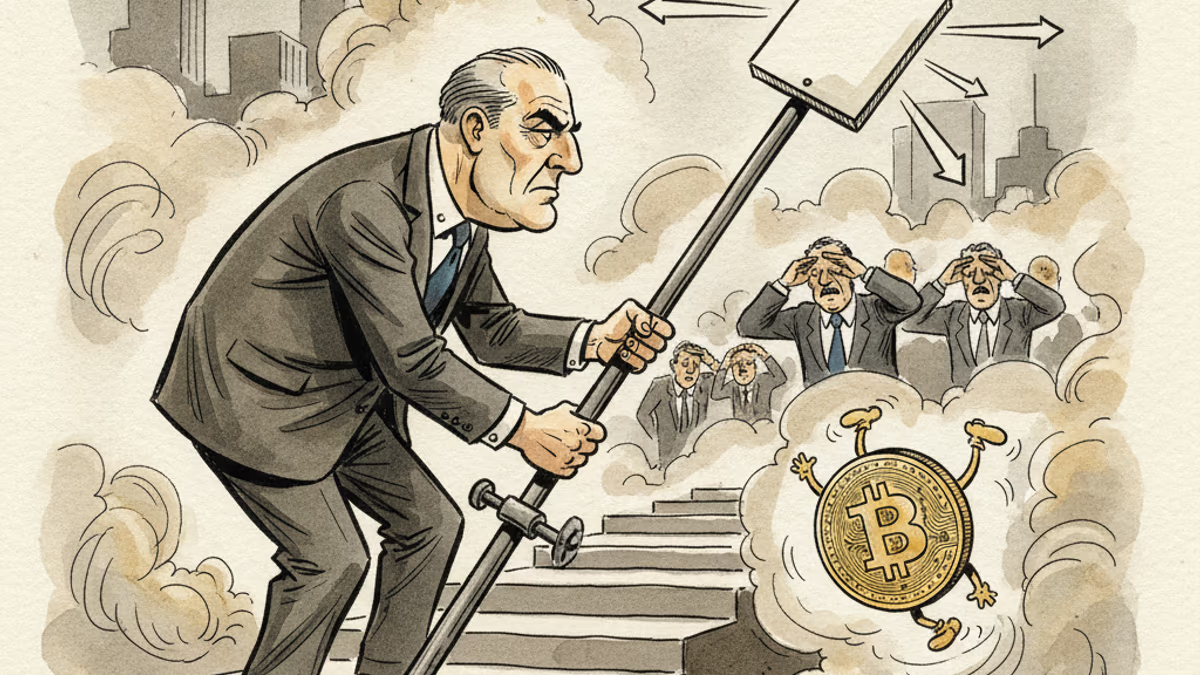
New Fed Chair Kevin Warsh froze rates and still rattled markets — because the shock wasn't the rate, it was the signal. Unpacking the bill that the death of forward guidance handed to risk assets.
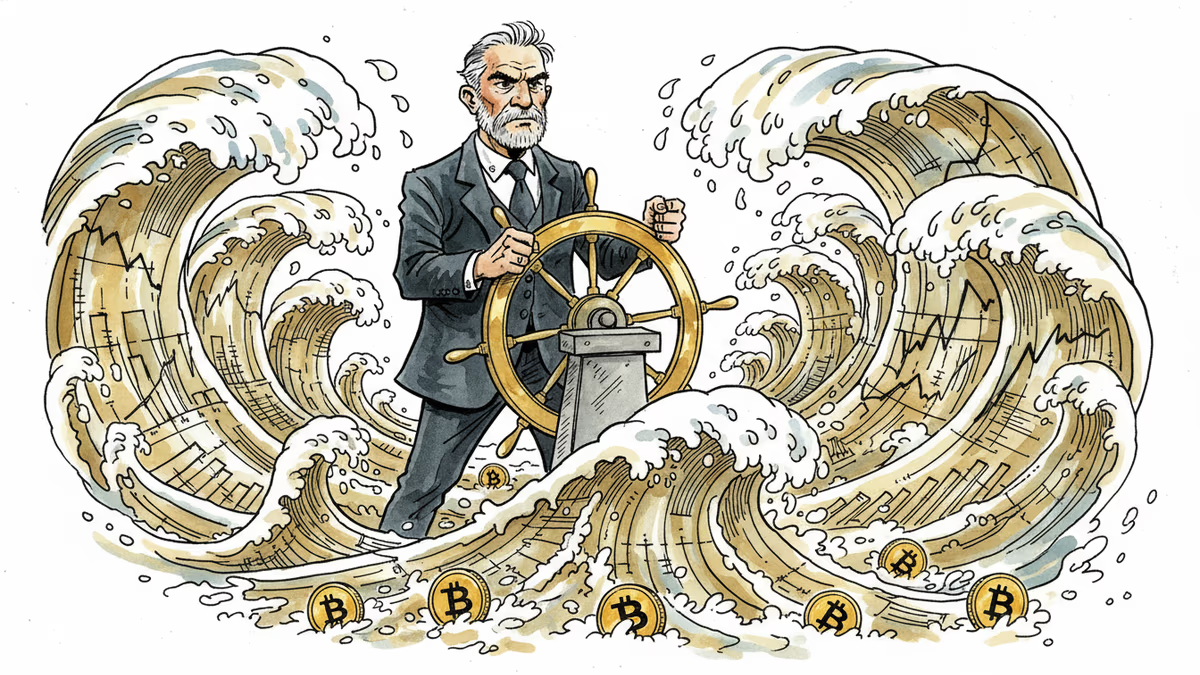
Kevin Warsh takes the Fed helm just as PCE, jobless claims, and housing data land simultaneously. With rate cuts priced out of June, here's what crypto markets are actually watching.

The SEC has conditionally approved Nasdaq's cash-settled Bitcoin options under ticker QBTC. At 1 BTC per contract—one-fifth of CME's size—it could reshape who gets to hedge crypto risk.
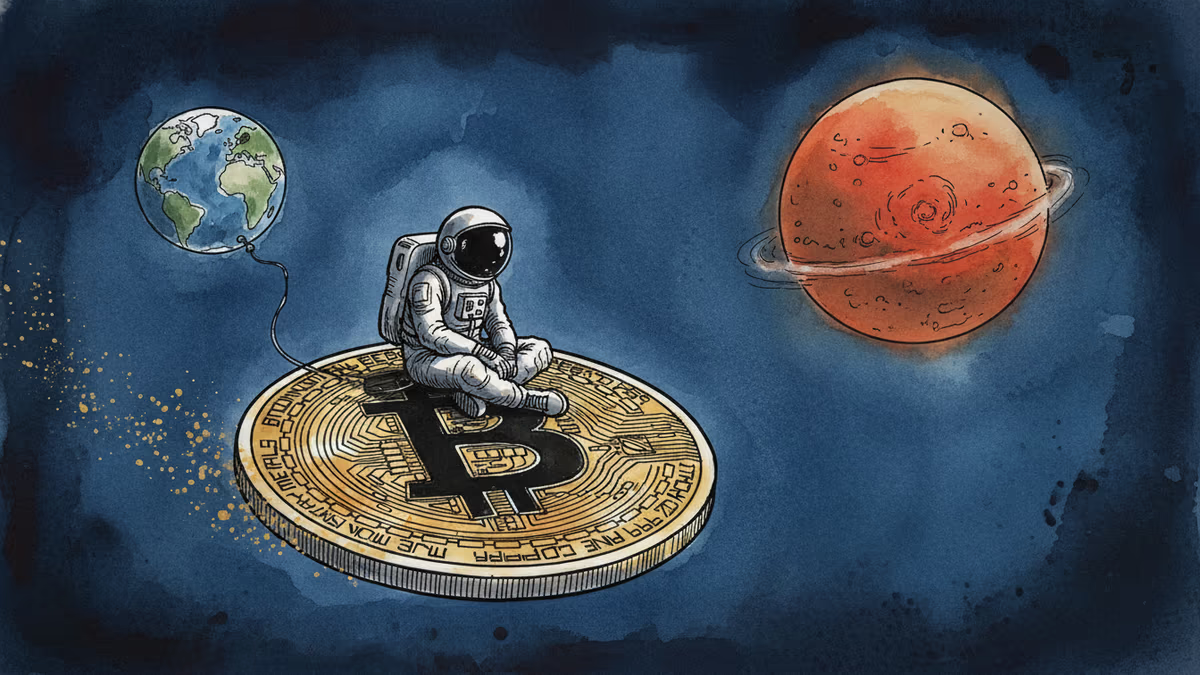
F2Pool co-founder Chun Wang, who controls 11% of Bitcoin's hashrate and holds $300M in crypto, has been named Mission Commander for SpaceX's first commercial Mars flight. What does it mean when crypto capital funds humanity's next frontier?
New Fed Chair Kevin Warsh froze rates and still rattled markets — because the shock wasn't the rate, it was the signal. Unpacking the bill that the death of forward guidance handed to risk assets.
Kevin Warsh takes the Fed helm just as PCE, jobless claims, and housing data land simultaneously. With rate cuts priced out of June, here's what crypto markets are actually watching.
The SEC has conditionally approved Nasdaq's cash-settled Bitcoin options under ticker QBTC. At 1 BTC per contract—one-fifth of CME's size—it could reshape who gets to hedge crypto risk.
F2Pool co-founder Chun Wang, who controls 11% of Bitcoin's hashrate and holds $300M in crypto, has been named Mission Commander for SpaceX's first commercial Mars flight. What does it mean when crypto capital funds humanity's next frontier?
Thoughts
Share your thoughts on this article
Sign in to join the conversation