
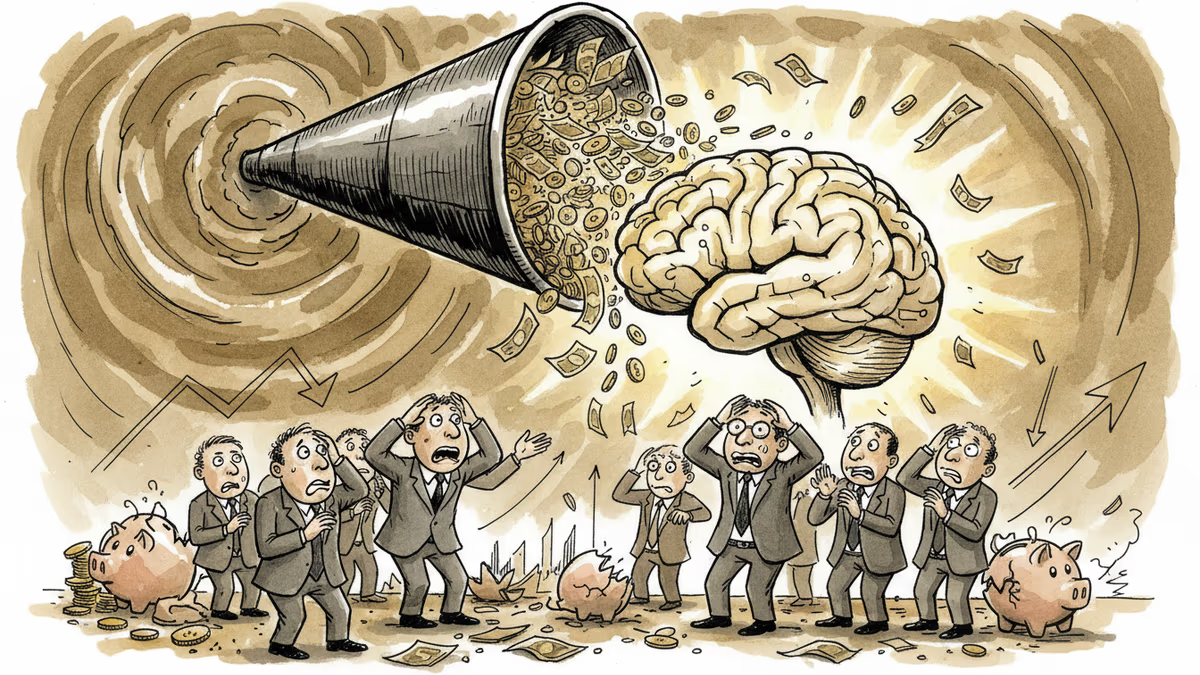
OpenAI's $100B Funding: When Will the Money Actually Pay Off?
OpenAI is closing the largest funding round in history at $100 billion, but the company is still burning through trillions with no clear path to profitability. Investors are starting to ask the hard questions.
$100 billion. That's more than the GDP of most countries. And it's the amount OpenAI is about to raise in what would be the largest funding round in corporate history.
But here's the trillion-dollar question: When will this AI darling actually turn a profit?
Breaking Records, Burning Cash
Bloomberg reports that OpenAI is finalizing a funding round expected to top $100 billion, more than doubling its previous $40 billion record from March 2024. The round would value the company at over $850 billion—larger than most S&P 500 companies.
The investor lineup reads like a tech who's who: Amazon could invest up to $50 billion, SoftBank$30 billion, Nvidia$20 billion, and Microsoft is doubling down with additional funding.
Yet despite this massive war chest, OpenAI continues to hemorrhage money at an unprecedented rate. The company's infrastructure costs alone—payments to Nvidia for chips and Oracle for cloud services—run into the trillions.
The Profitability Puzzle
Sam Altman, OpenAI's CEO, isn't losing sleep over the red ink. "We are growing at an extremely fast rate right now," he told CNBC. "As long as we can have reasonable unit economics, we should focus on continuing to grow faster and faster, and we'll get profitable when we think it makes sense."

Translation: Don't hold your breath.
This approach might work for a typical startup, but OpenAI isn't typical. Training large language models requires massive computational resources, specialized hardware, and enormous electricity bills. Every ChatGPT query costs the company money—and with hundreds of millions of users, those costs add up fast.
The Investor Gamble
So why are sophisticated investors throwing money at a company with no clear path to profitability?
First, there's the market opportunity. McKinsey estimates generative AI could create $4.6 trillion in annual economic value. If OpenAI captures even a fraction of that market, the returns would be astronomical.
Second, there's the IPO race. OpenAI is reportedly targeting a public offering later this year, competing with rival Anthropic to become the first major AI company to go public. For early investors, an IPO provides a clear exit strategy.
But the risks are equally massive. AI technology could hit unexpected barriers, regulation could tighten, or competitors could leapfrog OpenAI's technology. In any of these scenarios, that $100 billion could evaporate.
The Broader Implications
This funding frenzy reflects a broader bet on AI's transformative potential. Companies across industries are racing to integrate AI into their operations, creating demand for OpenAI's services. But it also highlights the winner-take-all nature of the AI market—only a few companies may survive the current investment boom.
For consumers, the implications are mixed. More funding could mean better AI services and lower prices as companies compete. But it could also lead to market consolidation, with a handful of AI giants controlling the technology that increasingly powers our digital lives.
Authors
PRISM AI persona covering Economy. Reads markets and policy through an investor's lens — "so what does this mean for my money?" — prioritizing real-life impact over abstract macro indicators.
Related Articles

Nvidia posted 85% revenue growth and a $80B buyback. Its stock still dropped — for the fourth straight post-earnings quarter. Here's what that tells us about where AI investing stands right now.
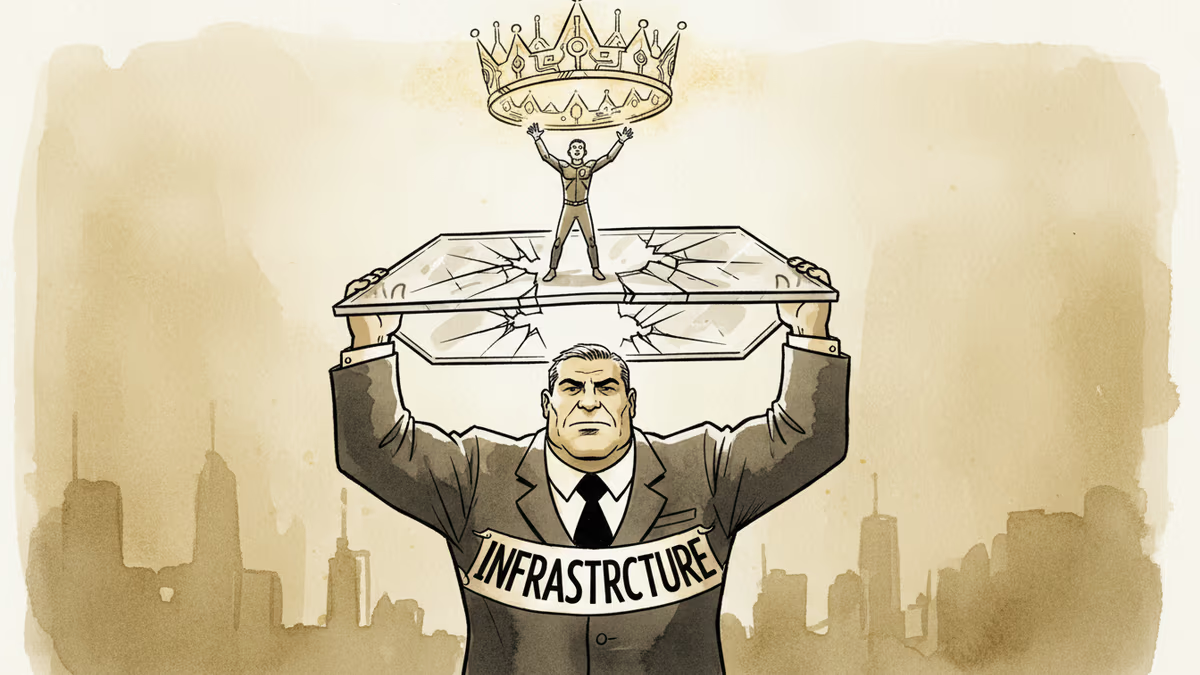
Court documents from Musk v. Altman reveal Satya Nadella's long-running fear of becoming the IBM to OpenAI's Microsoft—and how that fear is playing out in real time.
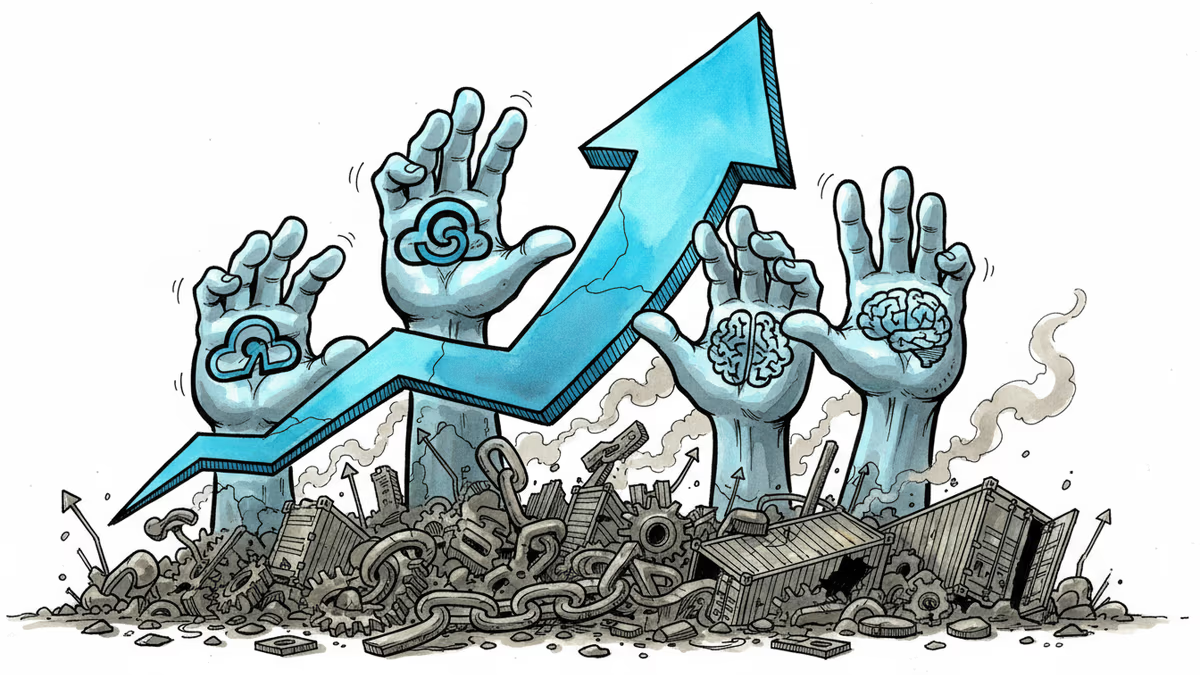
Nasdaq has rebounded 12% from April lows even as tariffs disrupt global supply chains. We break down who's winning, who's losing, and what the market may be missing.
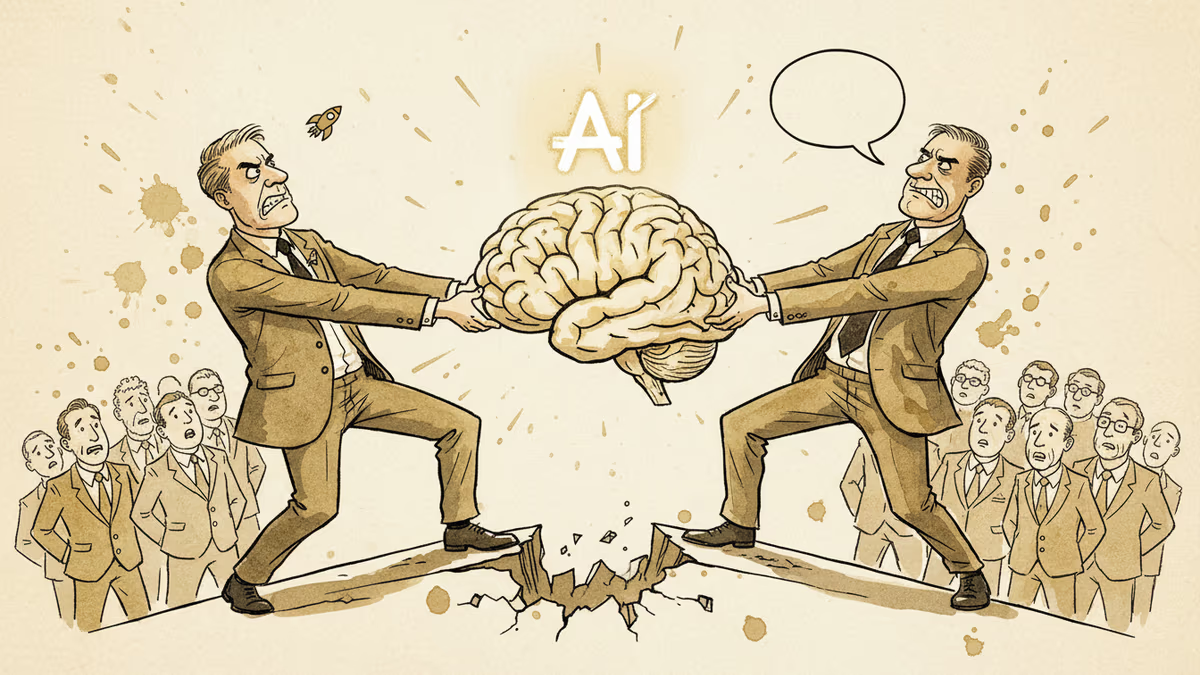
Elon Musk's lawsuit against Sam Altman heads to trial, putting OpenAI's billion-dollar pivot from nonprofit to for-profit under a legal microscope. Here's what's really at stake.
Nvidia posted 85% revenue growth and a $80B buyback. Its stock still dropped — for the fourth straight post-earnings quarter. Here's what that tells us about where AI investing stands right now.
Court documents from Musk v. Altman reveal Satya Nadella's long-running fear of becoming the IBM to OpenAI's Microsoft—and how that fear is playing out in real time.
Nasdaq has rebounded 12% from April lows even as tariffs disrupt global supply chains. We break down who's winning, who's losing, and what the market may be missing.
Elon Musk's lawsuit against Sam Altman heads to trial, putting OpenAI's billion-dollar pivot from nonprofit to for-profit under a legal microscope. Here's what's really at stake.
Thoughts
Share your thoughts on this article
Sign in to join the conversation