

OnlyFans' $5.5B Sale Could Reshape the Creator Economy
OnlyFans pursues a $5.5 billion sale to Architect Capital, potentially transforming how creator platforms operate and monetize content in the digital economy.
$5.5 billion. That's what OnlyFans could be worth when it sells to investment firm Architect Capital. But this isn't just another tech acquisition—it's a potential inflection point for the entire creator economy.
The adult content platform that redefined how creators monetize their work is now itself becoming a commodity. And the implications stretch far beyond subscription-based content.
The Money Behind the Deal
The numbers tell a story of remarkable growth and strategic positioning. Architect Capital would assume a 60% stake through a structure of $3.5 billion in equity and $2 billion in debt. For billionaire owner Leonid Radvinsky, who acquired majority control from founder Tim Stokely in 2018, this represents the ultimate "cash out" moment.
What makes this deal particularly intriguing is Architect's background. Launched in 2021 as an asset-based lender focused on early-stage startups, the firm is making a bold leap into content platforms. This suggests they see OnlyFans not as a niche adult site, but as a proven model for direct creator-to-consumer monetization.
The platform's 20% commission rate—significantly lower than YouTube's45% or traditional media's take—has created a sustainable ecosystem where creators retain most of their earnings. This creator-friendly approach has generated enough revenue to support a multi-billion dollar valuation.
What This Means for Platform Capitalism
OnlyFans' success has already influenced mainstream platforms. Twitter launched creator subscriptions, Instagram introduced paid content features, and TikTok expanded its creator fund. A new ownership structure could accelerate this trend or fundamentally alter it.

The platform has faced persistent legal challenges, including lawsuits alleging it profits from abusive content. New ownership might bring operational changes aimed at addressing these concerns—or prioritizing different metrics entirely.
Remember when OnlyFans announced it would ban adult content in 2021, only to reverse course after creator backlash? That episode revealed how dependent the platform is on its creator community. Any new owner will need to balance profitability with creator retention.
The Broader Creator Economy Shift
This sale comes as creator platforms face increasing scrutiny over revenue sharing, content moderation, and creator rights. OnlyFans' model—direct payments from fans to creators—represents one answer to these challenges.
But it also raises questions about platform sustainability. If creators can monetize directly, what value do platforms actually provide? OnlyFans offers payment processing, content hosting, and audience discovery. Whether that's worth a 20% cut in an increasingly competitive market remains to be seen.
The involvement of a financial firm like Architect suggests institutional investors view creator platforms as mature, predictable revenue streams rather than speculative tech plays. This could lead to more conservative management focused on steady returns rather than explosive growth.
Regulatory and Cultural Implications
The sale occurs amid growing regulatory attention on platform business models. European authorities are scrutinizing revenue-sharing practices, while U.S. lawmakers debate creator rights legislation. New ownership might position OnlyFans differently in these conversations.
Culturally, the platform has already shifted perceptions about sex work and digital entrepreneurship. A $5.5 billion valuation legitimizes what many still consider a controversial business model. This could influence how other platforms approach adult content and creator autonomy.
The answer may determine whether the creator economy represents genuine economic empowerment or simply a new form of platform dependency.
Authors
Related Articles
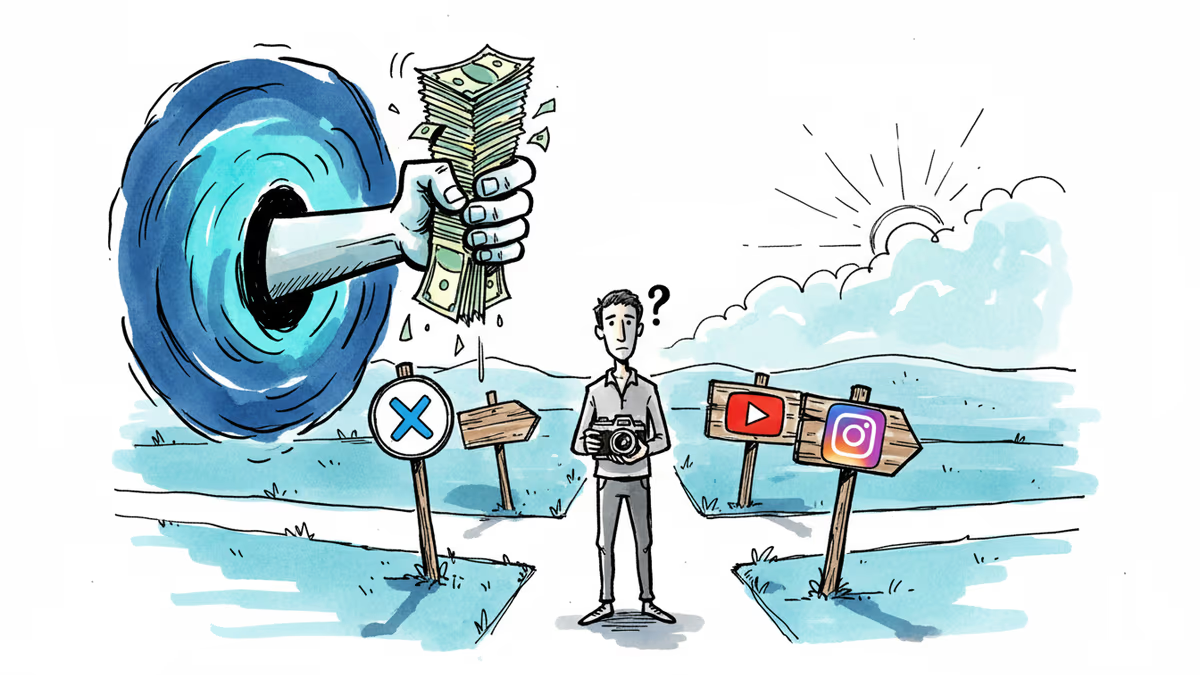
Meta's new Creator Fast Track program offers up to $3,000/month guaranteed pay to lure creators from TikTok, YouTube, and Instagram. After paying out $3B in 2025, what's the real play here?
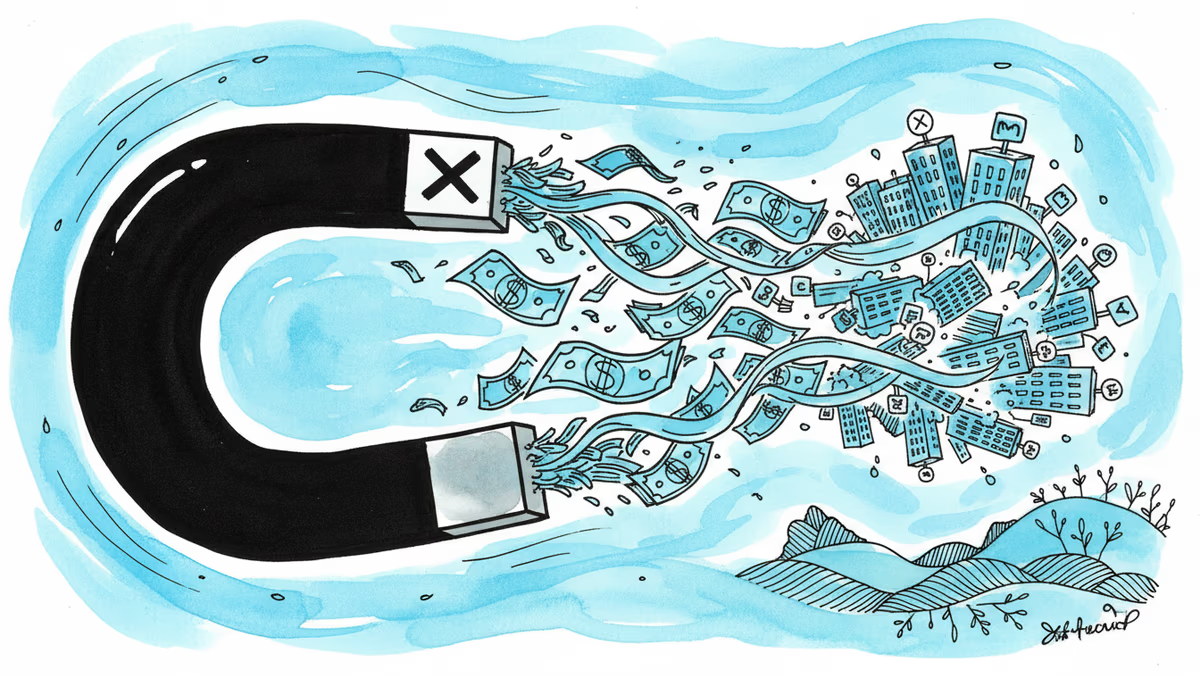
Elon Musk's X revamped its creator monetization with exclusive threads, new paywalls, and partnership labels. It's not just feature updates — it's a bid to reshape the creator economy.
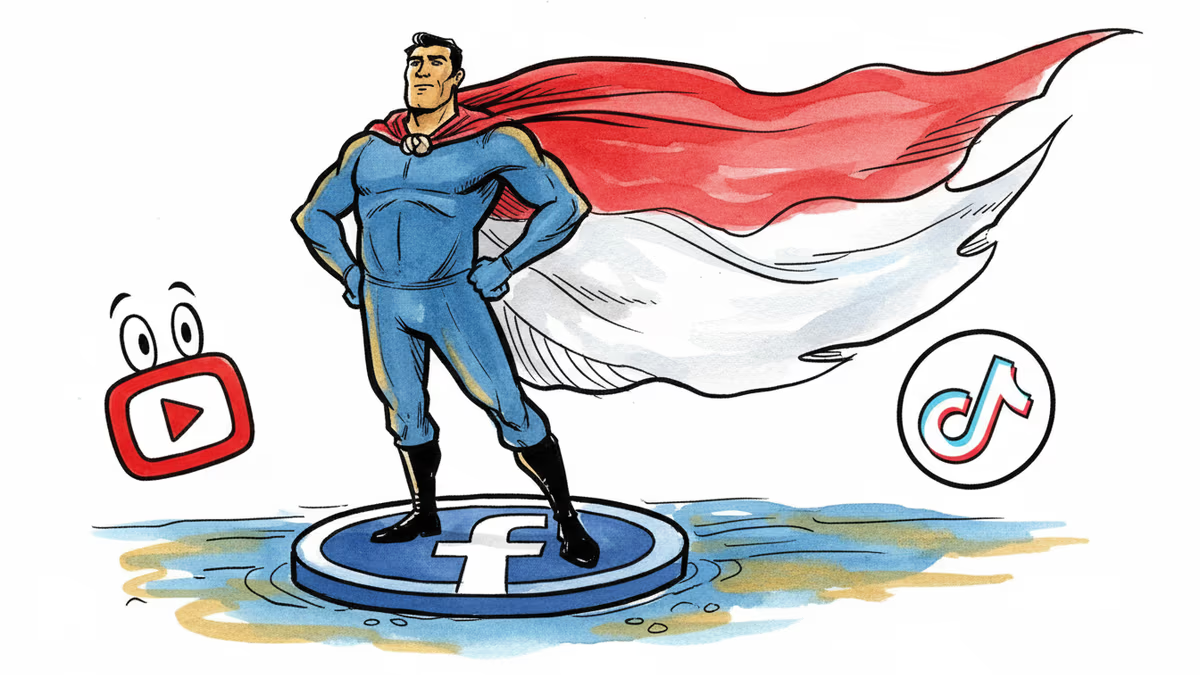
Facebook's creator program exploded from 2.7M to 12M users in one year, with Indonesian creators leading the charge. How did a forgotten platform suddenly compete with YouTube and TikTok?
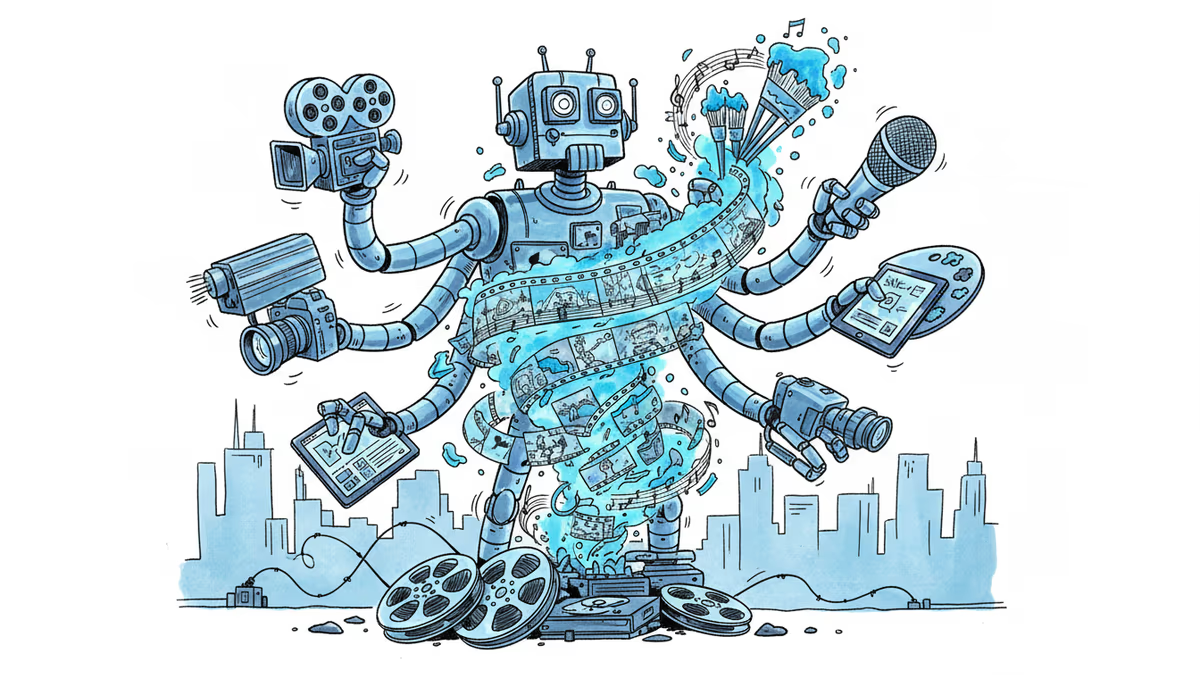
ByteDance unveils Seedance 2.0, a multimodal AI video generator combining text, images, video, and audio. How will this impact content creators and the media landscape?
Meta's new Creator Fast Track program offers up to $3,000/month guaranteed pay to lure creators from TikTok, YouTube, and Instagram. After paying out $3B in 2025, what's the real play here?
Elon Musk's X revamped its creator monetization with exclusive threads, new paywalls, and partnership labels. It's not just feature updates — it's a bid to reshape the creator economy.
Facebook's creator program exploded from 2.7M to 12M users in one year, with Indonesian creators leading the charge. How did a forgotten platform suddenly compete with YouTube and TikTok?
ByteDance unveils Seedance 2.0, a multimodal AI video generator combining text, images, video, and audio. How will this impact content creators and the media landscape?
Thoughts
Share your thoughts on this article
Sign in to join the conversation