

Apple’s Fee Barrier Wins: Setapp Mobile to Shut Down in EU by February 2026
Setapp Mobile is shutting down in the EU by February 16, 2026. Discover why Apple's complex fee structure and the DMA's limitations led to MacPaw's decision.
Is the alternative app store dream in the EU dying? Setapp Mobile, one of the most promising marketplaces born from the Digital Markets Act (DMA), just announced its surrender. The platform will officially sunset its mobile operations on February 16, 2026, marking a significant blow to app ecosystem competition.
Complex Business Terms Cripple Growth
According to reports from TechCrunch, MacPaw decided to pull the plug due to "still-evolving and complex business terms." Despite the DMA's goal of opening up iOS, Apple's revised fee structure created a financial landscape where third-party stores struggle to breathe. Specifically, the Core Technology Fee—charging developers €0.50 per first annual install—makes the $9.99 monthly subscription model unsustainable for a curated marketplace like Setapp.

| Feature | Setapp Mobile (iOS) | Setapp Desktop (Mac) |
|---|---|---|
| Status | Shutting down Feb 2026 | Continuing operations |
| Target Region | EU member states | Global |
| Impacted by CTF | Yes | No |
The Survival of the Fittest in the EU
While Setapp Mobile exits, other giants like the Epic Games Store and open-source projects like AltStore continue to operate. However, Setapp's departure highlights that regulatory wins don't always translate into commercial viability. For smaller developers, the risk of unpredictable fee hikes by Apple remains a terrifying barrier to entry.
Authors
Related Articles

MacPaw announces the sunset of Setapp Mobile on February 16, 2026, citing complex business terms. Discover how Apple's DMA policies are impacting alternative app markets.
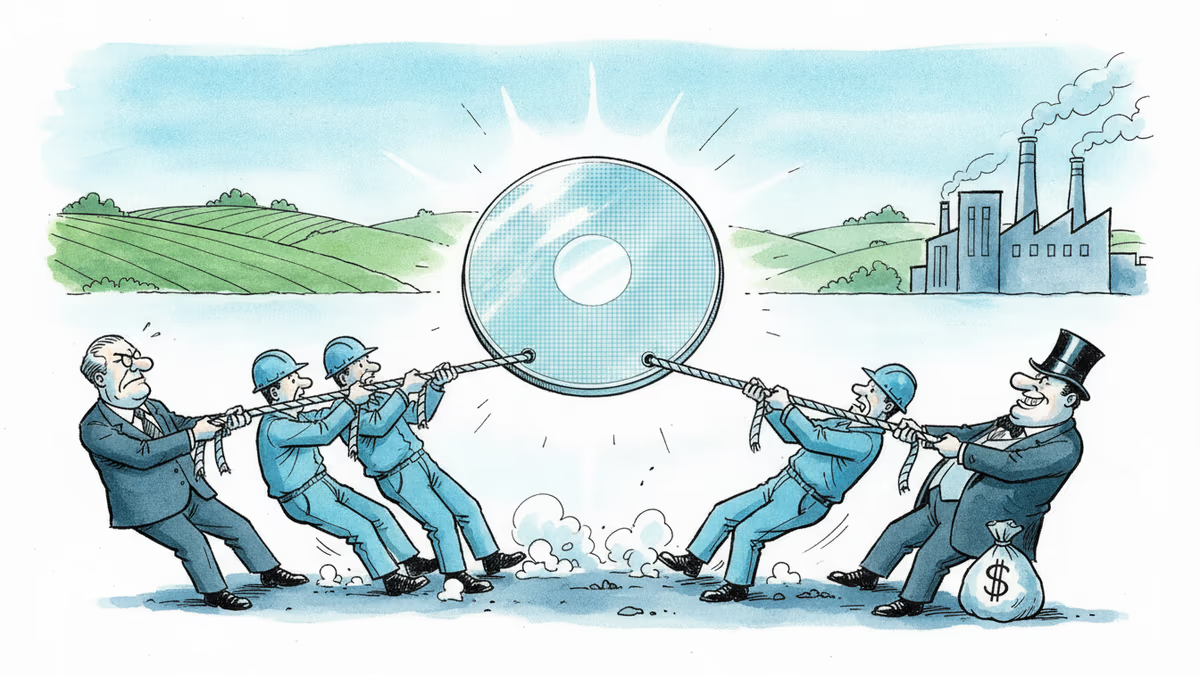
Samsung Electronics' union branch revealed that 84% of survey respondents oppose the government's roughly $290 billion (₩400 trillion) semiconductor megaproject in Gwangju. Government, management, the union and shareholders are all reading the same national project in sharply different ways.
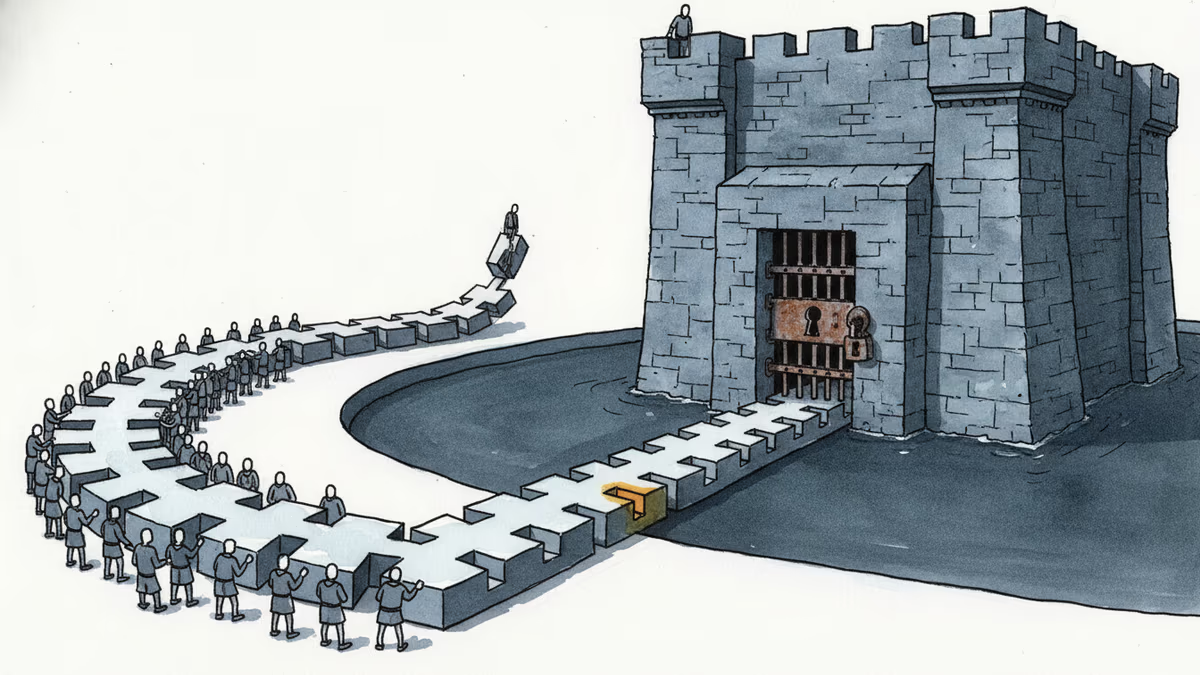
Nvidia shipped roughly a billion RISC-V cores in 2024, then announced it would run CUDA on the open standard. We break down how royalty-free instruction sets and open software stacks are trying to route around CUDA's lock-in. Part 2 of the Semiconductor Sovereignty series.
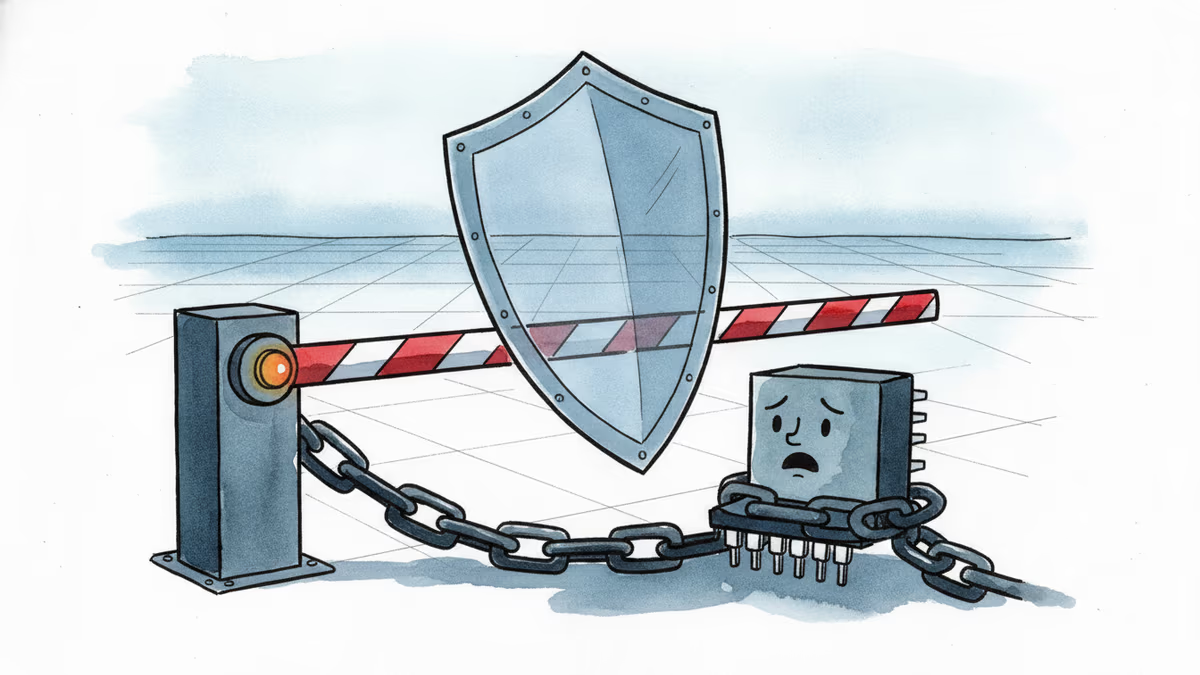
US AI-chip export controls split into three layers in the first half of 2026 — January easing, a May crackdown on circumvention, and a pending bill. Nvidia erased China from its guidance and still posted a record $81.6 billion quarter. A look at the export policy that both shields and cages it.
MacPaw announces the sunset of Setapp Mobile on February 16, 2026, citing complex business terms. Discover how Apple's DMA policies are impacting alternative app markets.
Samsung Electronics' union branch revealed that 84% of survey respondents oppose the government's roughly $290 billion (₩400 trillion) semiconductor megaproject in Gwangju. Government, management, the union and shareholders are all reading the same national project in sharply different ways.
Nvidia shipped roughly a billion RISC-V cores in 2024, then announced it would run CUDA on the open standard. We break down how royalty-free instruction sets and open software stacks are trying to route around CUDA's lock-in. Part 2 of the Semiconductor Sovereignty series.
US AI-chip export controls split into three layers in the first half of 2026 — January easing, a May crackdown on circumvention, and a pending bill. Nvidia erased China from its guidance and still posted a record $81.6 billion quarter. A look at the export policy that both shields and cages it.
Thoughts
Share your thoughts on this article
Sign in to join the conversation