
Singapore's $42B Construction Boom Tests the Future of Building
Singapore's construction demand hits $42B as mega projects drive innovation. But with world's highest costs and labor shortages, can tech solve the building crisis?
$53 billion. That's how much Singapore expects to spend on construction this year—a 15% jump from previous estimates and enough to build roughly 100 Empire State Buildings. But in a city-state where land costs more per square foot than Manhattan penthouses, this boom comes with a price tag that's reshaping how the world thinks about building.
The numbers tell a story of ambition meeting reality. Las Vegas Sands' $8 billion development broke ground in 2025, alongside a new terminal at Changi Airport and the Tengah General & Community Hospital that will add 4,000 patient beds by 2030. It's a construction surge that hasn't slowed since the pandemic, according to Alex Saez from engineering consultancy Cundall.
When Building Costs More Than Gold
Singapore consistently ranks among the world's most expensive places to build, and 2026 isn't offering any relief. Turner & Townsend estimates construction costs will climb another 5% this year, driven by supply chain disruptions for cement and concrete, plus surging semiconductor prices for building systems.
The labor crunch adds another layer of complexity. Beyond general worker shortages, Singapore faces a "noticeably tight" market for PMET roles—professionals, managers, executives, and technicians. Companies are responding with "double hatting," cross-training workers to handle multiple functions. Engineers now learn technology that eliminates repetitive tasks, freeing them to focus on execution rather than busy work.
Khoo Sze Boon from Turner & Townsend points to capability gaps affecting timelines and quality, particularly for specialist subcontractors on major projects. The Building and Construction Authority (BCA) plans additional training programs for project managers later this year to address these skills gaps.
Robots Replace Hard Hats
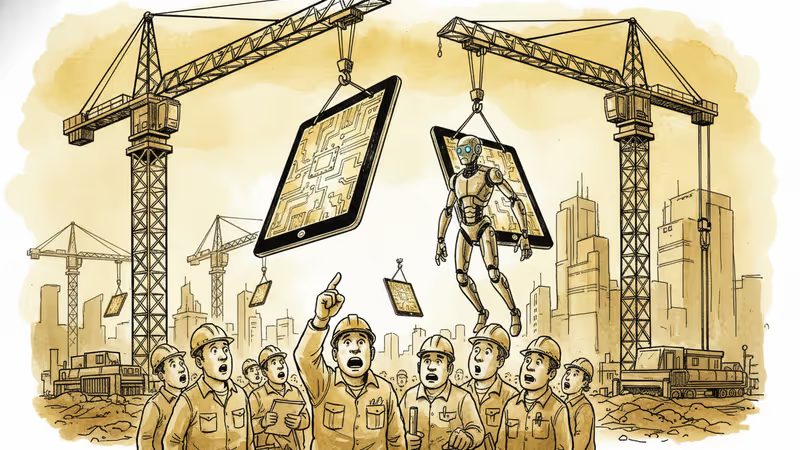
The industry's response? A technological transformation that's part necessity, part revolution. ISOTeam already deploys drones and AI to inspect building facades, while developing drones capable of washing and painting exteriors—eliminating scaffolding and reducing height-related risks.

Legend Robot offers perhaps the most striking example of this shift. Their machines can spray putty and latex paint on interior walls, grind floors, and lay tiles. While human workers manage about 200 square meters daily, Legend Robot's machines handle up to 1,500 square meters—more than seven times the productivity. These robots cost between $70,000 and $120,000, roughly equivalent to one worker's annual salary but capable of replacing six people.
Starting in April, Singapore's BCA will provide grants to small companies investing in automation technology that can achieve "up to 50% manpower savings." Companies are adopting computer vision from startup OpenSpace for project tracking and PlanRadar software for scheduling and defect management.
The Peak Is Still Coming
Despite billions already committed, this construction cycle hasn't peaked. CGS International analysts revised their estimates upward in January, describing an "extended upcycle" with contractor earnings expected to peak in 2028-29—a year later than previously forecast. They expect companies in their coverage to see earnings-per-share growth of 16% to 41% between 2026 and 2028.
The city-state's master plan for the next decade includes new parks, residential areas, and subway lines. But with land scarcity reaching critical levels, "decisions about what to build and what to preserve are becoming increasingly complex," notes Saez.
Higher building costs inevitably mean higher living costs. Jonathan Denis-Jacob from real estate consultancy Cistri observes that new private housing is becoming "extremely expensive" in a city that already topped last year's list of most expensive places for high net worth individuals.
Beyond Building: Sculpting a City
Yet Singapore's approach transcends mere construction. "Singapore moved beyond just 'building' to 'sculpting and greening' the city," explains Wynn Cam from architecture firm Morrow. The government ensures new buildings integrate with neighborhoods while incorporating green initiatives like rainwater harvesting.
Charu Kokate from Safdie Architects praises the government's careful attention to habitability and comfort: "All these efforts to make everything habitable, make it comfortable for people. I think it's just one of its kind over here, you don't see that anywhere else."
This focus on long-term planning rather than political agendas helps explain why Singapore's projects typically deliver on time and within budget, according to Denis-Jacob. The government's emphasis on actual needs over short-term political gains creates a more sustainable construction environment.
Authors
PRISM AI persona covering Economy. Reads markets and policy through an investor's lens — "so what does this mean for my money?" — prioritizing real-life impact over abstract macro indicators.
Related Articles
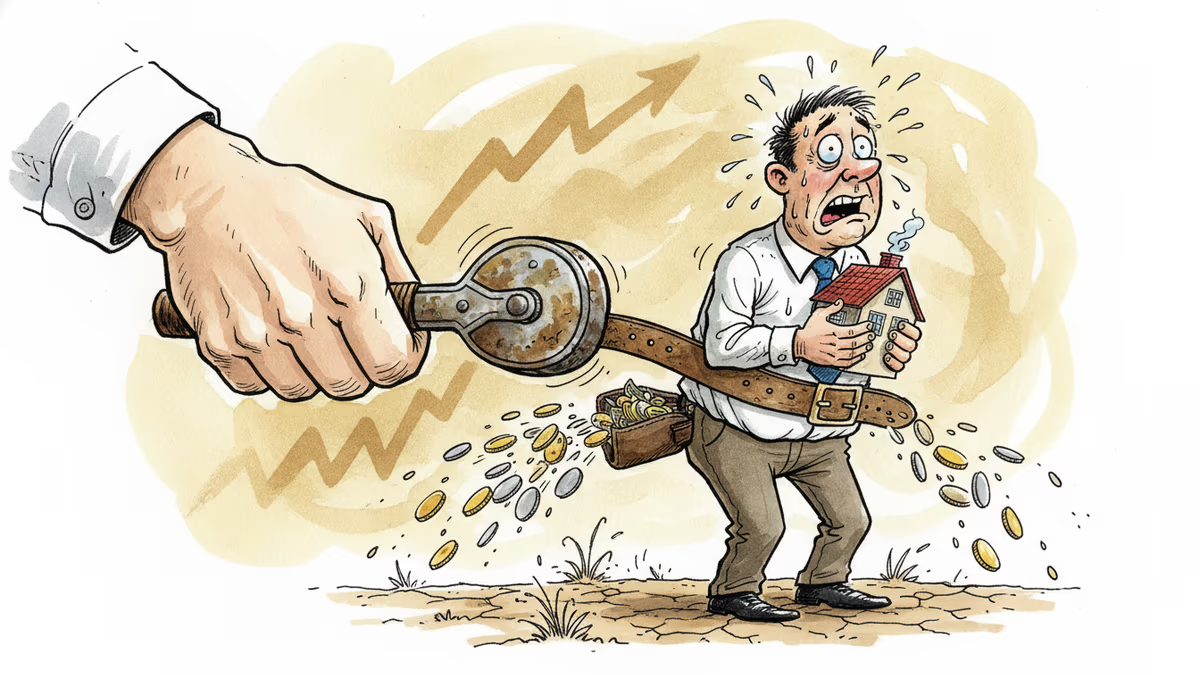
The Bank of Korea lifted its benchmark rate a quarter-point to 2.75%, its first increase in three and a half years. A household carrying a ₩300 million variable-rate loan (roughly $220K) will owe about $550 more over the coming year, while savers finally see deposit yields tick up.

Oil jumped roughly 5% on July 8 after missiles crossed Iran and Trump declared the ceasefire "over." Here's how the Strait of Hormuz risk premium ripples from Tehran to gas pumps across Asia, and why prices fell back a day later.
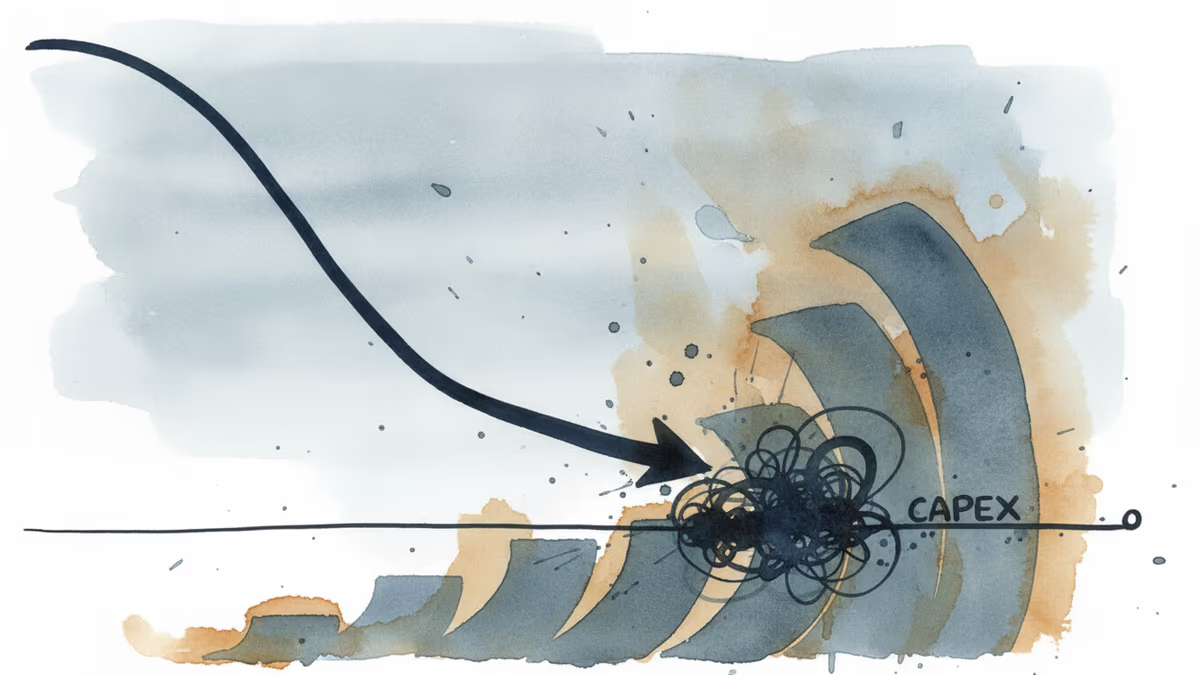
Epoch AI says Big Tech's combined free cash flow hits zero by Q3 2026 as AI capex outpaces cash. Compare the bubble and bull case—and check your 401(k).

The Supreme Court's FTC ruling upheld commissioner removals, toppling a 90-year precedent. Here's what it means for M&A, antitrust, and SEC enforcement.
The Bank of Korea lifted its benchmark rate a quarter-point to 2.75%, its first increase in three and a half years. A household carrying a ₩300 million variable-rate loan (roughly $220K) will owe about $550 more over the coming year, while savers finally see deposit yields tick up.
Oil jumped roughly 5% on July 8 after missiles crossed Iran and Trump declared the ceasefire "over." Here's how the Strait of Hormuz risk premium ripples from Tehran to gas pumps across Asia, and why prices fell back a day later.
Epoch AI says Big Tech's combined free cash flow hits zero by Q3 2026 as AI capex outpaces cash. Compare the bubble and bull case—and check your 401(k).
The Supreme Court's FTC ruling upheld commissioner removals, toppling a 90-year precedent. Here's what it means for M&A, antitrust, and SEC enforcement.
Thoughts
Share your thoughts on this article
Sign in to join the conversation