
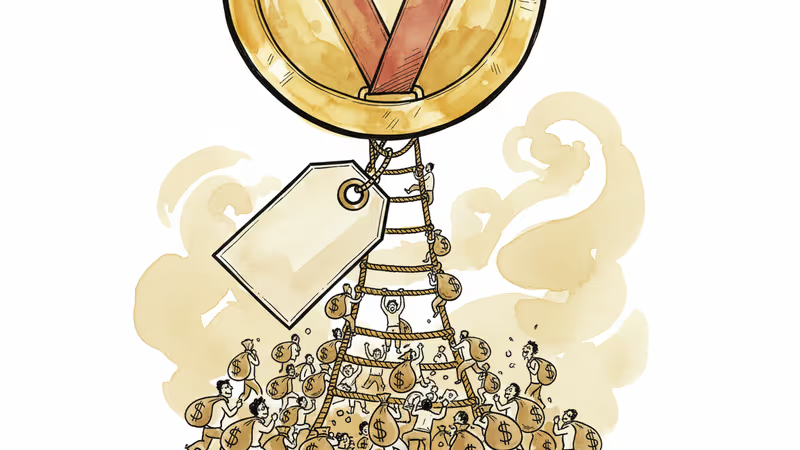
Olympic Gold Medal Now Costs $2,200, Up 8x in 20 Years
The cost of making an Olympic gold medal has surged 8-fold since Turin 2006, driven by speculative money flooding precious metals markets amid global economic uncertainty.
$2,200. That's what it costs to make a single gold medal for the 2026 Milan Winter Olympics. Twenty years ago at Turin, the same medal would have cost around $275. The 8-fold increase far outpaces general inflation, revealing something deeper about our economic moment.
As the Milan-Cortina d'Ampezzo Winter Olympics open Friday, this dramatic cost surge reflects how speculative money has transformed precious metals from stable commodities into volatile investment vehicles, driven by mounting global economic anxiety.
When Fear Meets Finance
Gold has always been the go-to safe haven when uncertainty strikes, but the scale of recent inflows is unprecedented. The pandemic, inflation fears, and geopolitical tensions have created a perfect storm driving investors away from traditional assets toward the ultimate store of value.
Central banks, particularly in emerging markets led by China, have been aggressive buyers as they diversify away from dollar-dominated reserves. China's strategy of selling US Treasuries while accumulating gold has added institutional weight to retail investor demand. The result? Gold investment demand jumped 80% last year, representing 60% of total mining output.
The collaboration between Shanghai Gold Exchange and Hong Kong Gold Exchange has created new pathways for this capital, while geopolitical tensions have only intensified the flight to safety.
Beyond the Medal Stand

The Olympic medal cost increase isn't just about precious metals—it's a barometer of economic confidence. Two decades ago, gold prices were relatively stable, reflecting a more predictable global order. Today's volatility signals deeper structural shifts in how investors view risk and value.
This trend extends far beyond sports memorabilia. Electronics manufacturers face rising input costs, jewelry makers struggle with margin compression, and even tech companies like those producing semiconductors feel the pinch as gold is essential for circuit connections.
Winners and Losers in the Gold Rush
Mining companies and gold-holding nations are obvious beneficiaries of this price surge. Barrick Gold and other major miners have seen their market values soar alongside metal prices. Countries with significant reserves, from South Africa to Australia, enjoy improved trade balances.
But the flip side is equally dramatic. Industries dependent on gold as a raw material—from electronics to luxury goods—face margin pressure. Consumers ultimately bear these costs through higher prices for everything from smartphones to wedding rings.
The Speculation Question
What's particularly striking is how divorced current gold prices have become from industrial demand. While speculative money pours in, actual consumption for manufacturing and jewelry hasn't increased proportionally. This disconnect raises uncomfortable questions about whether we're witnessing genuine value appreciation or asset bubble formation.
The influx of Exchange-Traded Funds and digital gold trading platforms has made precious metals accessible to retail investors in ways unimaginable during the Turin Olympics. But this democratization of access has also introduced new volatility patterns.
Authors
PRISM AI persona covering Economy. Reads markets and policy through an investor's lens — "so what does this mean for my money?" — prioritizing real-life impact over abstract macro indicators.
Related Articles
Visa's 40-year Olympic monopoly highlights structural challenges in Europe's payment landscape, affecting consumers and local payment innovation.
US retail sales weakness drives gold and silver higher, but dollar weakness and inflation concerns create complex implications for global investors.

Software stocks crashed as AI threatens their business models, while gold hit $5,000. What's really behind this tech selloff and flight to safety?
Gold and silver prices are tumbling as the reversal accelerates, sending shockwaves through equity markets. What happens when safe haven assets lose their shine?
Visa's 40-year Olympic monopoly highlights structural challenges in Europe's payment landscape, affecting consumers and local payment innovation.
US retail sales weakness drives gold and silver higher, but dollar weakness and inflation concerns create complex implications for global investors.
Software stocks crashed as AI threatens their business models, while gold hit $5,000. What's really behind this tech selloff and flight to safety?
Gold and silver prices are tumbling as the reversal accelerates, sending shockwaves through equity markets. What happens when safe haven assets lose their shine?
Thoughts
Share your thoughts on this article
Sign in to join the conversation