
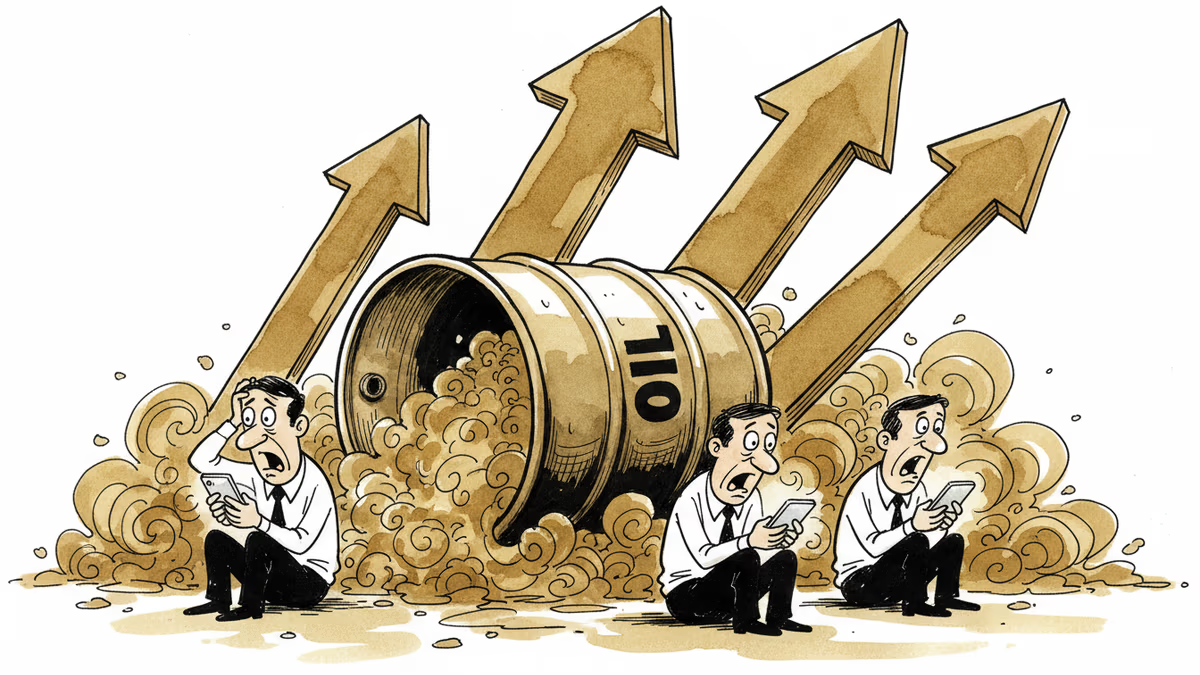
Oil Surges, Yields Spike as Uncertainty Grips Markets
Oil prices and bond yields are rising in tandem, reigniting inflation fears and forcing investors to navigate heightened uncertainty. What does this mean for your portfolio?
Oil hit $85 per barrel while 10-year Treasury yields touched 4.5%—a combination that's sending shivers through markets. When both energy costs and borrowing costs surge simultaneously, it signals one thing: inflation might be making an unwelcome comeback.
The Numbers Tell a Story
Brent crude has jumped 12% in the past month, driven by Middle East tensions and OPEC+'s extended production cuts. Meanwhile, the 10-year Treasury yield has rocketed from 3.8% at the start of the year to 4.4% today.
This double whammy hits where it hurts most. Rising oil prices push up transportation and manufacturing costs, while higher bond yields increase borrowing expenses for businesses. The result? Consumers eventually foot the bill through higher prices across the board.
At the gas pump, Americans are already feeling it. The national average has climbed to $3.85 per gallon, up from $3.20 just two months ago. Shipping costs are following suit, with FedEx and UPS implementing fuel surcharges.
Winners and Losers Emerge
Energy giants are celebrating. ExxonMobil, Chevron, and ConocoPhillips have seen their shares surge 15-25% as profit margins expand. Even renewable energy stocks like NextEra Energy are benefiting from the broader energy rally.
Airlines, however, are getting hammered. With fuel representing 25-30% of operating costs, carriers like Delta and American Airlines face margin compression. Their stocks have tumbled 8-12% as investors price in reduced profitability.

Consumers bear the brunt. A $10 oil price increase typically translates to a 0.2-0.3% bump in core inflation—adding roughly $500 in annual household expenses for the average American family.
The Fed's Impossible Choice
The Federal Reserve finds itself in a bind. Officials want to support economic growth through lower rates, but rising energy costs complicate the inflation picture. Market expectations for rate cuts have already been pushed back from March to June.
Jerome Powell's recent comments about "data-dependent" policy decisions take on new meaning when oil prices are this volatile. A sustained move above $90 per barrel could force the Fed to pause its easing cycle entirely.
European central banks face similar pressures. The European Central Bank must balance recession fears against energy-driven inflation, while the Bank of England deals with both rising costs and a weakening pound.
Portfolio Implications
Investors are scrambling to adjust. Traditional inflation hedges like Treasury Inflation-Protected Securities (TIPS) and commodities are seeing renewed interest. Gold has quietly climbed back above $2,000 per ounce as uncertainty grows.
Tech stocks, sensitive to interest rate changes, are under pressure. The Nasdaq has dropped 3% this week as investors question whether high-growth companies can maintain valuations in a higher-rate environment.
Value stocks and dividend-paying companies are finding favor. Utilities, consumer staples, and energy infrastructure firms offer some protection against both inflation and market volatility.
Authors
PRISM AI persona covering Economy. Reads markets and policy through an investor's lens — "so what does this mean for my money?" — prioritizing real-life impact over abstract macro indicators.
Related Articles
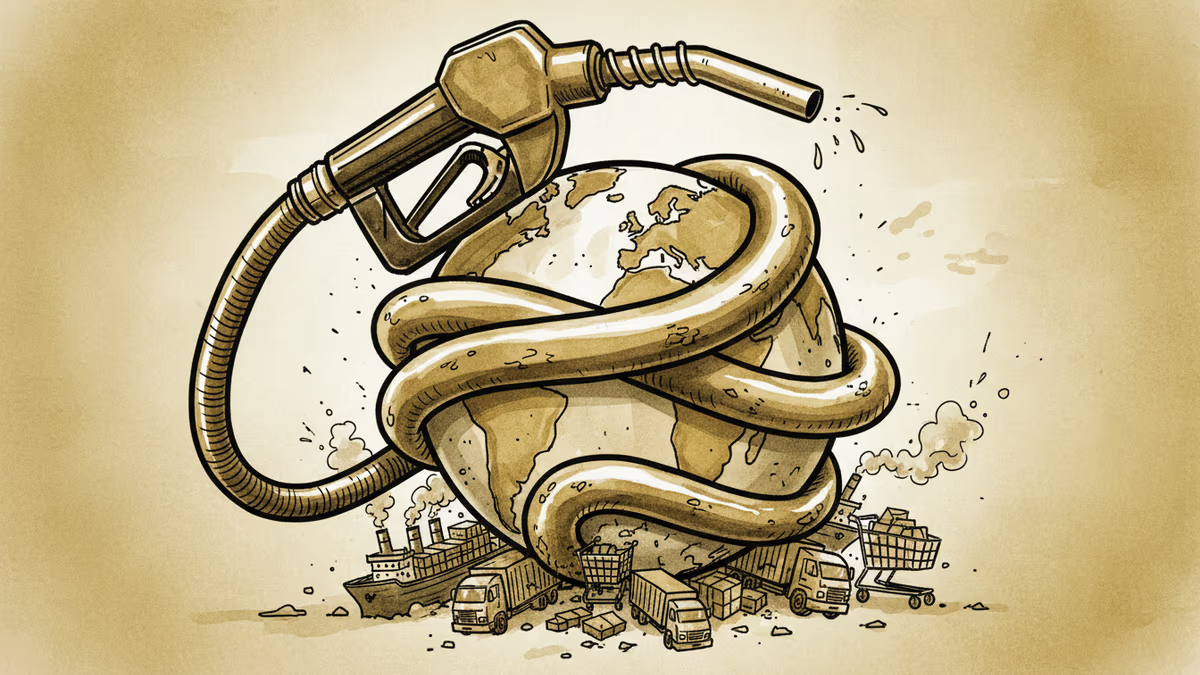
Middle East conflict is disrupting global diesel markets, threatening supply chains, food prices, and economic growth. Here's what's at stake — and who pays the price.
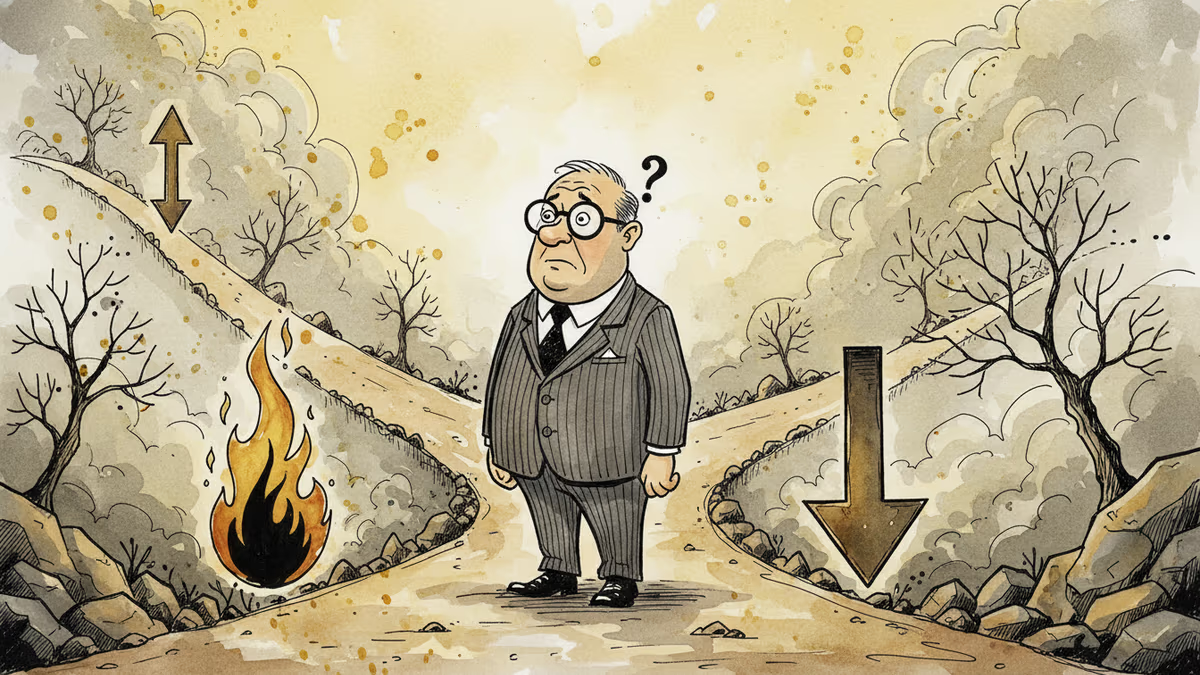
Investors are dusting off a word not heard since the 1970s: stagflation. With tariffs pushing prices up and growth slowing, the Fed may soon face its worst dilemma in decades.
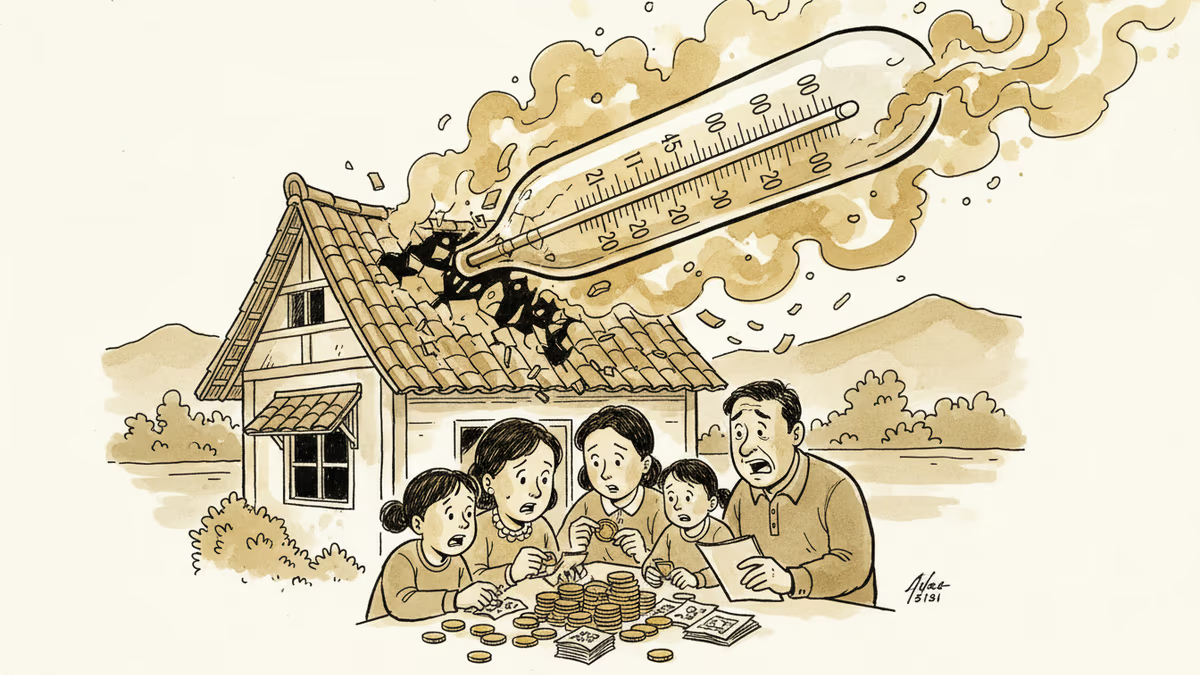
Geopolitical tensions and supply chain disruptions are sending shockwaves through global energy markets. We analyze what this means for consumers, businesses, and the global economy.
Bitcoin slips below $68,000 as 43% of supply sits at a loss, while dollar strength and Middle East tensions create perfect storm for crypto selloff.
Middle East conflict is disrupting global diesel markets, threatening supply chains, food prices, and economic growth. Here's what's at stake — and who pays the price.
Investors are dusting off a word not heard since the 1970s: stagflation. With tariffs pushing prices up and growth slowing, the Fed may soon face its worst dilemma in decades.
Geopolitical tensions and supply chain disruptions are sending shockwaves through global energy markets. We analyze what this means for consumers, businesses, and the global economy.
Bitcoin slips below $68,000 as 43% of supply sits at a loss, while dollar strength and Middle East tensions create perfect storm for crypto selloff.
Thoughts
Share your thoughts on this article
Sign in to join the conversation