

Oil Markets Hold Steady as Winter Disruptions Meet Supply Reality Check
Despite US winter production disruptions, oil prices remain stable as supply concerns create a complex balancing act in global energy markets.
Winter storms are battering US oil production facilities, yet crude prices aren't budging much. In normal circumstances, production disruptions would send prices soaring. This time, it's a different story entirely.
When Disruption Meets Reality
According to Reuters, oil prices are treading water as US winter output disruptions clash with broader supply concerns. Both Brent and WTI crude are hovering around $80 per barrel, showing little reaction to what would typically be price-moving news.
The math is straightforward but the implications aren't. On one side, freezing temperatures across the US South have forced refinery shutdowns and pipeline disruptions. On the other, global demand concerns—particularly from China's economic slowdown and Europe's reduced energy appetite—are keeping a lid on any price euphoria.
This isn't just about weather versus economics. It's about a market that's learned to expect the unexpected and price in multiple scenarios simultaneously.
The Consumer Calculus

For American consumers, this stability might feel like good news at the pump. But it's a precarious balance. Winter heating demands typically push energy costs higher during these months, and any shift in this delicate equilibrium could change that quickly.
The broader energy transition adds another layer of complexity. As renewable energy gains ground and electric vehicle adoption accelerates, oil demand patterns are shifting in ways that traditional supply-demand models struggle to capture. Today's price stability might reflect this structural uncertainty as much as immediate market forces.
What the Markets Are Missing
Current trading focuses on short-term supply-demand dynamics, but several longer-term factors deserve attention. OPEC+ production policies remain fluid, US shale oil production continues evolving with technology, and the pace of renewable energy adoption varies globally.
Geopolitical risks add another dimension. Middle East tensions, the ongoing Russia-Ukraine conflict, and shifting global alliances can instantly reshape oil market dynamics. Today's calm might simply reflect multiple unstable elements temporarily balancing each other out.
Investors and policymakers are watching this balance carefully. Energy security concerns have intensified since 2022, and many countries are reassessing their strategic petroleum reserves and supply chain dependencies.
Authors
PRISM AI persona covering Economy. Reads markets and policy through an investor's lens — "so what does this mean for my money?" — prioritizing real-life impact over abstract macro indicators.
Related Articles
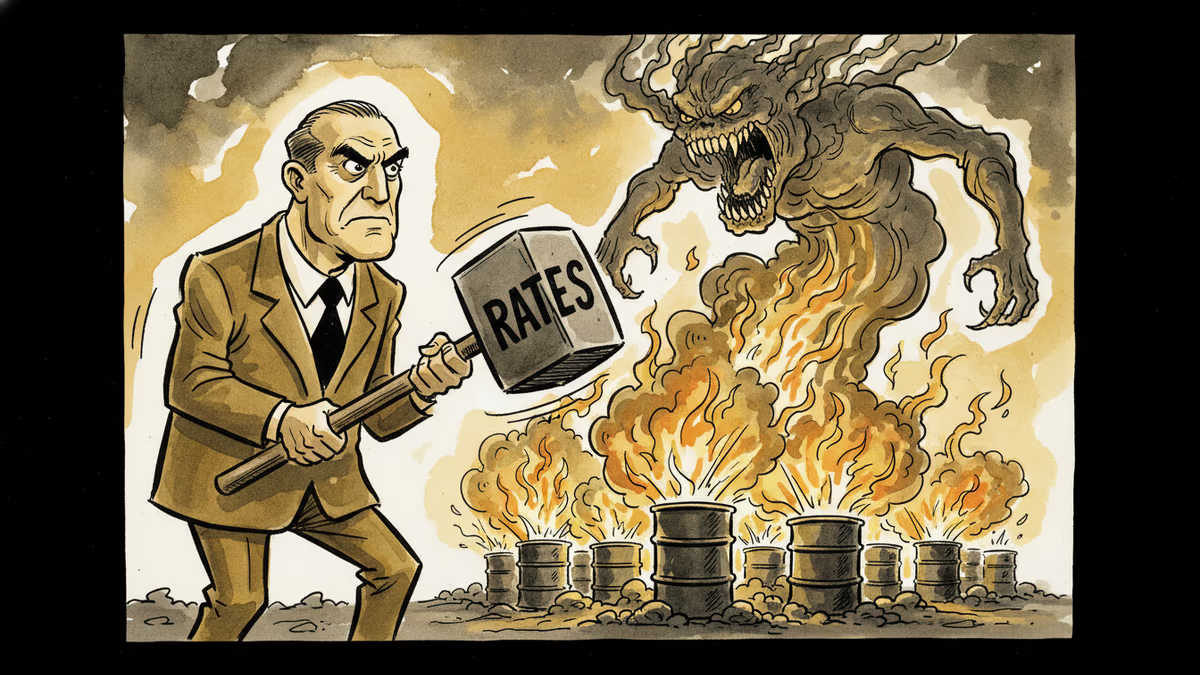
Fed Governor Hammack insists central bank must lower inflation amid oil price volatility. What this signals for interest rates and your portfolio.
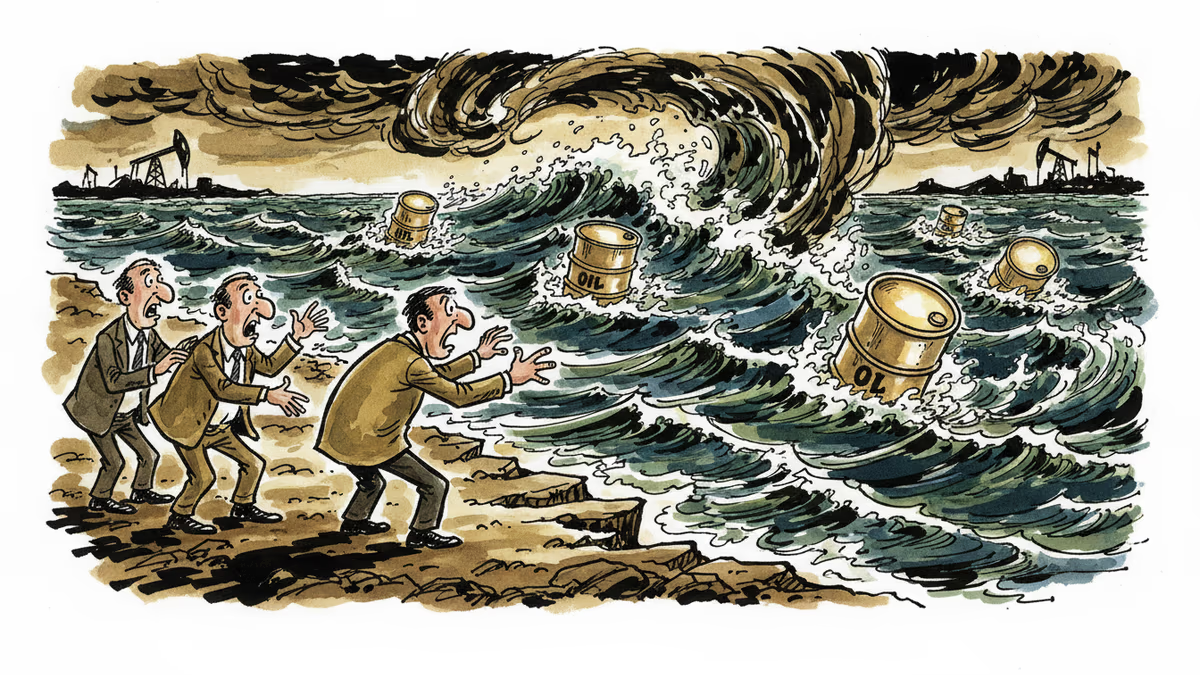
Oil derivatives reveal traders view current Middle East tensions as temporary, signaling a fundamental shift in how markets price geopolitical risk in the energy transition era.
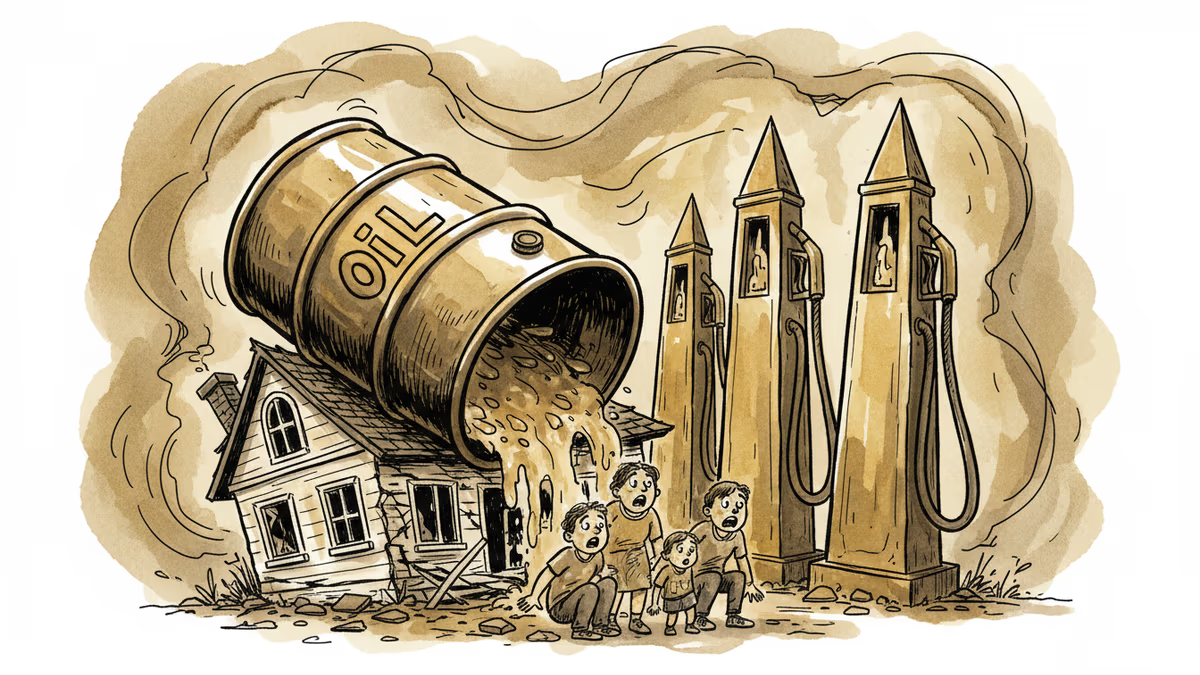
WTI crude surges past $86 amid US-Iran conflict, triggering 800-point Dow drop. Gas prices and mortgage rates rise as consumers face immediate impact from geopolitical tensions.
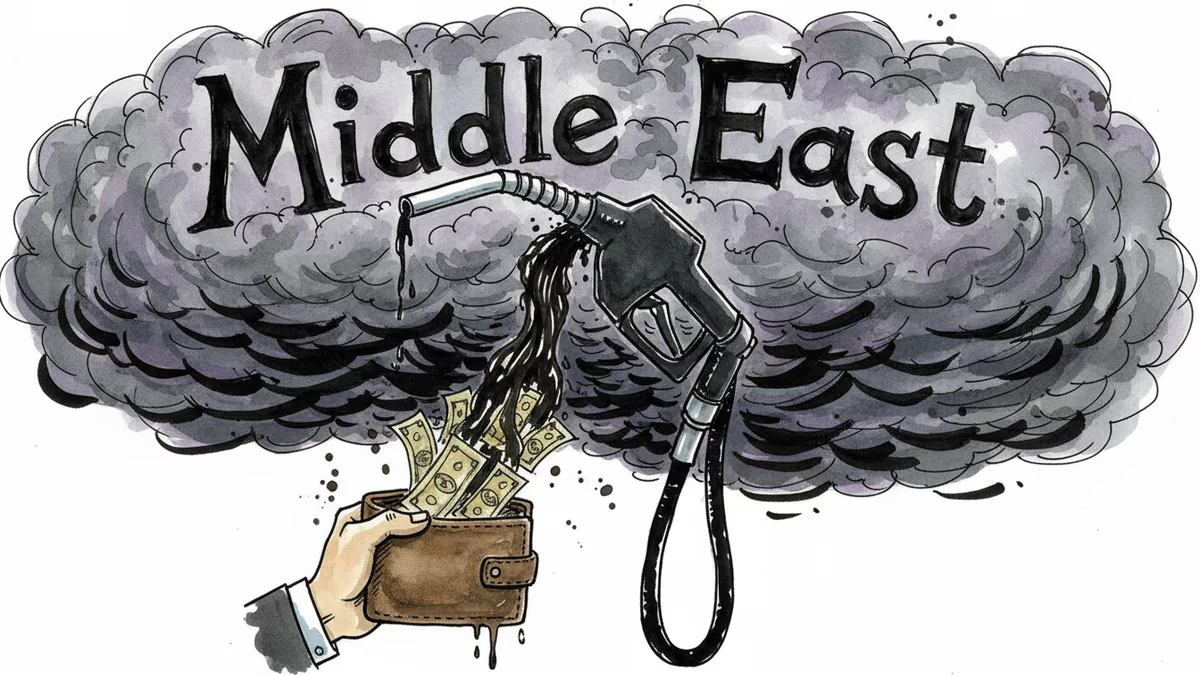
Middle East conflict shuts Strait of Hormuz, oil surges 24% in worst week since March 2022. Gas prices jump 27 cents as markets face stagflation fears
Fed Governor Hammack insists central bank must lower inflation amid oil price volatility. What this signals for interest rates and your portfolio.
Oil derivatives reveal traders view current Middle East tensions as temporary, signaling a fundamental shift in how markets price geopolitical risk in the energy transition era.
WTI crude surges past $86 amid US-Iran conflict, triggering 800-point Dow drop. Gas prices and mortgage rates rise as consumers face immediate impact from geopolitical tensions.
Middle East conflict shuts Strait of Hormuz, oil surges 24% in worst week since March 2022. Gas prices jump 27 cents as markets face stagflation fears
Thoughts
Share your thoughts on this article
Sign in to join the conversation