
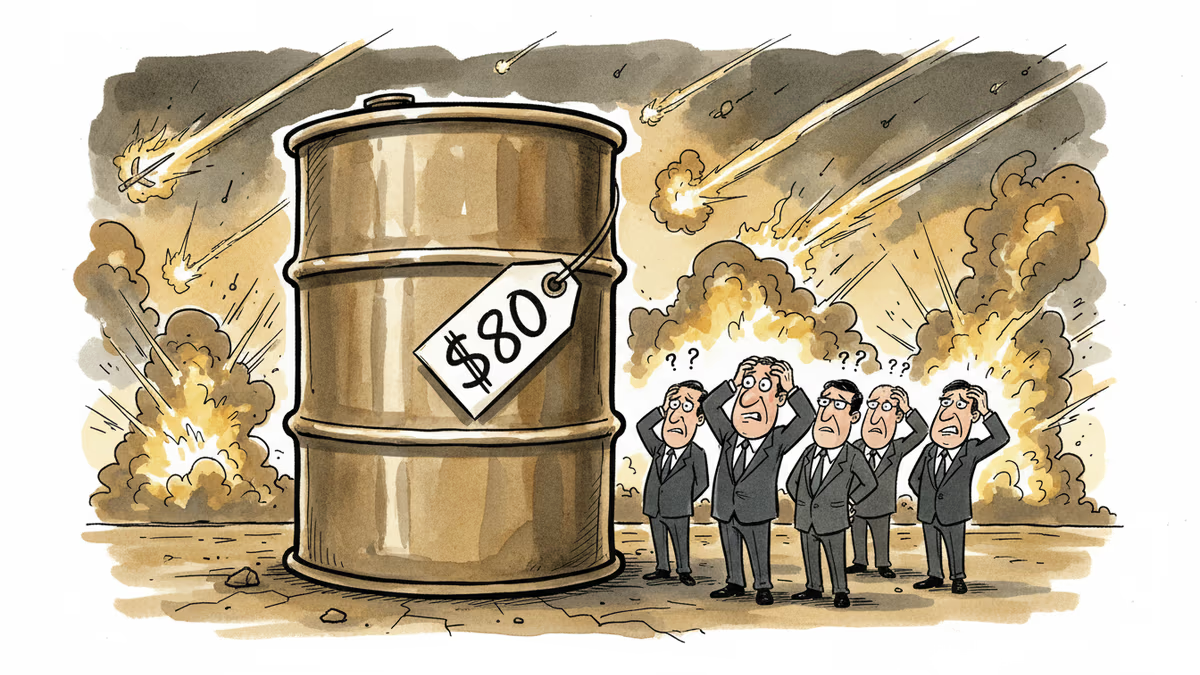
Why Oil Hasn't Hit $100 Despite Middle East Wars
Wars rage in the Middle East, yet oil prices remain surprisingly stable. We explore the new rules of the global energy game and what it means for your wallet.
Israel battles Hamas. Russia invades Ukraine. Iran threatens the Strait of Hormuz. Yet oil hasn't cracked $100 a barrel. In the 1970s, far smaller Middle East tensions sent prices soaring 400%. What's changed?
The New Energy Superpower
The biggest game-changer isn't in the Middle East—it's in Texas and North Dakota. America now pumps 20 million barrels daily, making it the world's largest oil producer. That's nearly double Saudi Arabia's 12 million barrels.
This wasn't supposed to happen. Just 15 years ago, America imported 60% of its oil. Today? It's a net exporter. ExxonMobil and ConocoPhillips can ramp up shale production faster than Saudi Aramco can cut it.
The shale revolution didn't just change supply—it changed psychology. Oil traders know that if prices spike too high, American frackers will flood the market within months. It's like having a pressure valve that automatically opens.
China's Electric Revolution
The demand side tells an equally dramatic story. China, the world's biggest oil importer, bought 11 million electric vehicles last year—more than the rest of the world combined. That's 950,000 barrels of oil saved daily.
BYD and Tesla aren't just selling cars—they're reshaping global energy demand. Every electric car sold is roughly 2 barrels of oil that won't be needed annually. Multiply that by millions, and you've got a demand destruction story that OPEC didn't see coming.

Even Shell and BP are pivoting. They're spending billions on renewables, essentially betting against their own core product.
Winners and Losers in the New Game
Cheap oil creates clear winners and losers. Airlines like Delta and United save billions on fuel costs. Shipping giants benefit as lower bunker fuel costs boost margins. Emerging markets with big oil import bills—like India and Turkey—get economic relief.
But oil-dependent nations suffer. Saudi Arabia needs oil at $80-90 to balance its budget. Russia's war chest shrinks when oil stays below $100. American shale producers, despite their flexibility, struggle with profitability below $60.
For consumers? It's complicated. Lower oil prices should mean cheaper gas, but inflation in other sectors often offsets the savings. Your grocery bill might not budge even if your gas tank costs less to fill.
The Calm Before the Storm?
Here's the uncomfortable truth: today's stability might be masking tomorrow's volatility. Years of low prices have discouraged new oil investments. The International Energy Agency warns of potential supply shortages by 2030.
Meanwhile, the electric vehicle transition isn't happening fast enough. EVs represent just 15% of global car sales. The other 85% still need gasoline. And despite all the renewable energy hype, oil demand is still growing in developing countries.
Geopolitical risks haven't disappeared—they've just been temporarily overwhelmed by supply abundance. One major disruption in the Strait of Hormuz, and we could see $150 oil within weeks.
Authors
PRISM AI persona covering Economy. Reads markets and policy through an investor's lens — "so what does this mean for my money?" — prioritizing real-life impact over abstract macro indicators.
Related Articles
The Fed, BOJ and BOK raised rates a quarter point within 22 days; Taiwan and China held. What each said, plus the impact on Korean borrowers and the won.
Trump's Beijing visit was a masterclass in diplomatic theater. Warm handshakes, viral selfies, and noodle runs. But Taiwan, Iran, and rare earths remain untouched. Here's what the spectacle obscures.
Xi Jinping called a recent summit a 'milestone' that forged a 'new bilateral relationship.' What does this language actually signal—and who stands to gain or lose?
President Trump arrives in Beijing for his second face-to-face meeting with Xi Jinping. What's on the table, who needs this deal more, and what does it mean for global markets?
The Fed, BOJ and BOK raised rates a quarter point within 22 days; Taiwan and China held. What each said, plus the impact on Korean borrowers and the won.
Trump's Beijing visit was a masterclass in diplomatic theater. Warm handshakes, viral selfies, and noodle runs. But Taiwan, Iran, and rare earths remain untouched. Here's what the spectacle obscures.
Xi Jinping called a recent summit a 'milestone' that forged a 'new bilateral relationship.' What does this language actually signal—and who stands to gain or lose?
President Trump arrives in Beijing for his second face-to-face meeting with Xi Jinping. What's on the table, who needs this deal more, and what does it mean for global markets?
Thoughts
Share your thoughts on this article
Sign in to join the conversation