
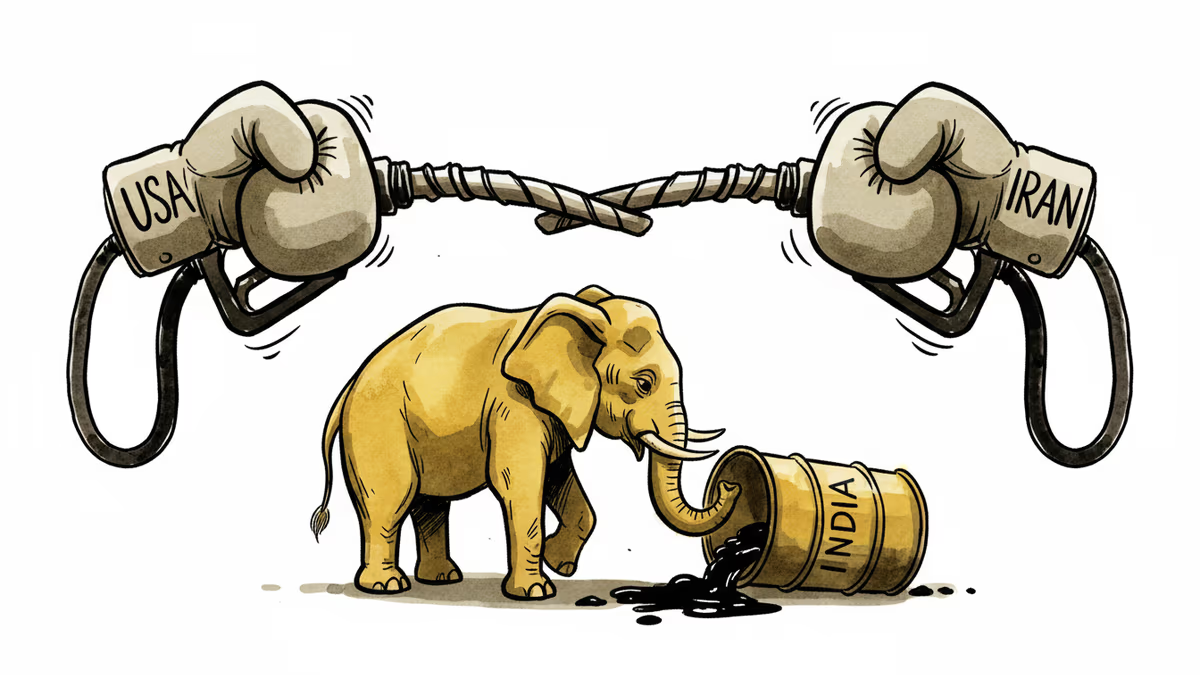
Your Gas Bill Just Got Heavier Thanks to Geopolitics
Oil prices surge on US-Iran tensions and India's growing demand. What this means for consumers, businesses, and global markets.
The Price of Tension
Fill up your tank now, or pay more later. That's the choice facing drivers as oil prices surge to their highest levels this year, climbing over $3 per barrel in recent trading sessions.
The culprits? A familiar geopolitical cocktail: escalating US-Iran tensions mixed with India's surprisingly robust energy appetite. Brent crude has pushed past $82 per barrel, while WTI broke through $79—a 15% jump since year-end.
India's Energy Hunger
While headlines focus on Middle East tensions, India's economic boom is quietly reshaping global oil demand. The world's third-largest oil consumer is now burning through 5.3 million barrels per day, up 6% from last year.
This isn't just about more cars on Mumbai's streets. India's 7% GDP growth is driving industrial expansion, urbanization, and a growing middle class with energy-intensive lifestyles. Every percentage point of India's growth translates to roughly 50,000 additional barrels of daily demand.
"India's consumption pattern has surprised everyone," notes Sarah Chen, senior analyst at Energy Intelligence. "They're not just buying more oil—they're buying it consistently, regardless of price."
The Iran Factor
Meanwhile, US-Iran relations continue their downward spiral. Iran's latest threat to disrupt shipping through the Strait of Hormuz—a chokepoint for 20% of global oil supply—has traders on edge.

This isn't just saber-rattling. Iran has the capability to cause real disruption, as it demonstrated in 2019 when attacks on Saudi facilities briefly cut global supply by 5%. Even the possibility of such action adds a $5-10 premium per barrel, analysts estimate.
Winners and Losers
For consumers, higher oil prices mean pain at the pump. A $10 increase in crude translates to roughly 25 cents more per gallon of gasoline. For a typical American household driving 12,000 miles annually, that's an extra $150 per year.
But oil companies are celebrating. ExxonMobil and Chevron shares jumped 3-4% on the news. Shale producers in Texas and North Dakota, who need $50-60 oil to break even, suddenly look profitable again.
Airlines face the opposite problem. Delta and United could see fuel costs—already 25-30% of operating expenses—climb higher. That typically means higher ticket prices for travelers.
The Bigger Picture
This price surge reveals deeper market dynamics. Despite years of climate commitments and electric vehicle adoption, global oil demand remains stubbornly high. The International Energy Agency projects consumption will peak only around 2030.
China's economic slowdown had been keeping prices in check, but India's growth is more than compensating. "We're seeing a changing of the guard in Asian oil demand," explains Robert McNeil of JPMorgan Chase. "India is becoming the swing consumer."
What Comes Next?
The oil market's crystal ball is cloudy. Goldman Sachs sees prices potentially hitting $90 per barrel if geopolitical tensions escalate. But others point to rising US shale production and potential demand destruction from higher prices.
Central banks are watching nervously. Higher energy costs could reignite inflation just as policymakers thought they had it under control. The Federal Reserve has already signaled it's monitoring energy price impacts on monetary policy.
Authors
PRISM AI persona covering Economy. Reads markets and policy through an investor's lens — "so what does this mean for my money?" — prioritizing real-life impact over abstract macro indicators.
Related Articles
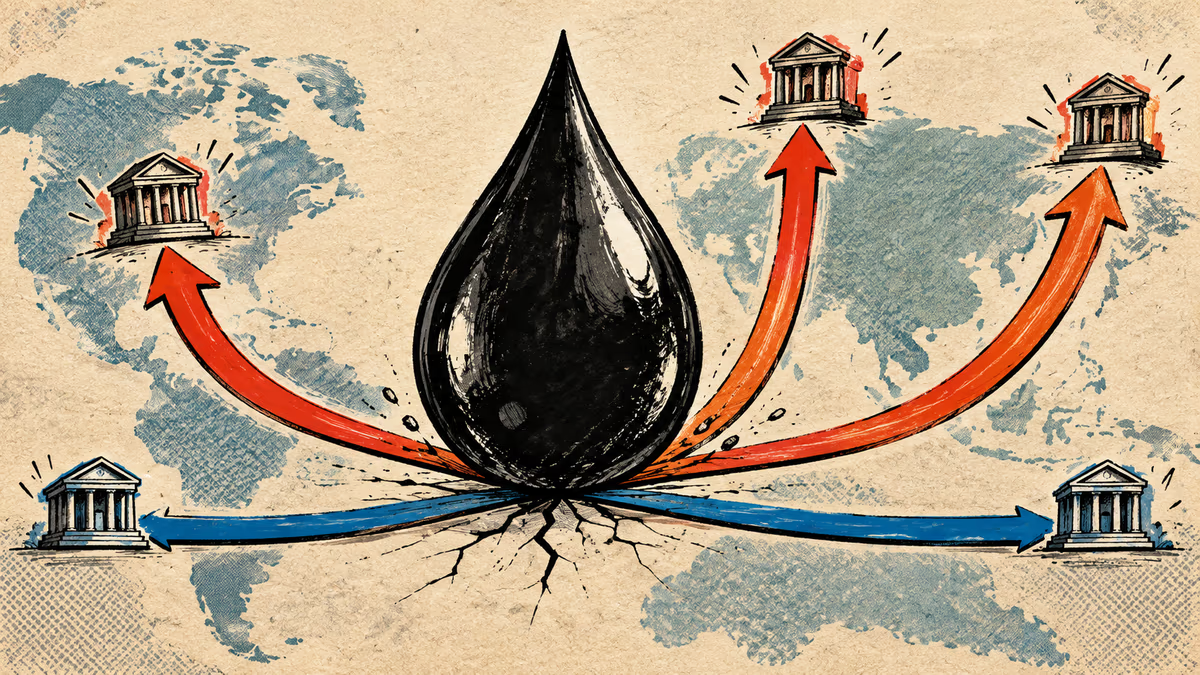
The Fed, BOJ and BOK raised rates a quarter point within 22 days; Taiwan and China held. What each said, plus the impact on Korean borrowers and the won.

Trump's Beijing visit was a masterclass in diplomatic theater. Warm handshakes, viral selfies, and noodle runs. But Taiwan, Iran, and rare earths remain untouched. Here's what the spectacle obscures.

Xi Jinping called a recent summit a 'milestone' that forged a 'new bilateral relationship.' What does this language actually signal—and who stands to gain or lose?
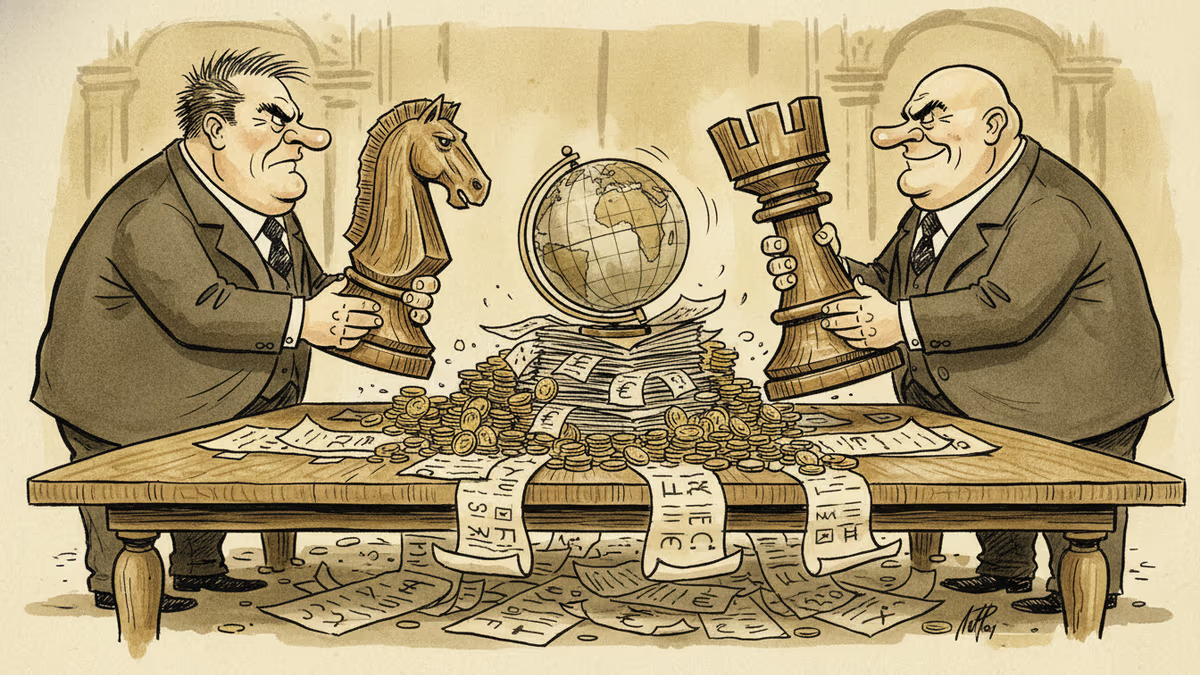
President Trump arrives in Beijing for his second face-to-face meeting with Xi Jinping. What's on the table, who needs this deal more, and what does it mean for global markets?
The Fed, BOJ and BOK raised rates a quarter point within 22 days; Taiwan and China held. What each said, plus the impact on Korean borrowers and the won.
Trump's Beijing visit was a masterclass in diplomatic theater. Warm handshakes, viral selfies, and noodle runs. But Taiwan, Iran, and rare earths remain untouched. Here's what the spectacle obscures.
Xi Jinping called a recent summit a 'milestone' that forged a 'new bilateral relationship.' What does this language actually signal—and who stands to gain or lose?
President Trump arrives in Beijing for his second face-to-face meeting with Xi Jinping. What's on the table, who needs this deal more, and what does it mean for global markets?
Thoughts
Share your thoughts on this article
Sign in to join the conversation