
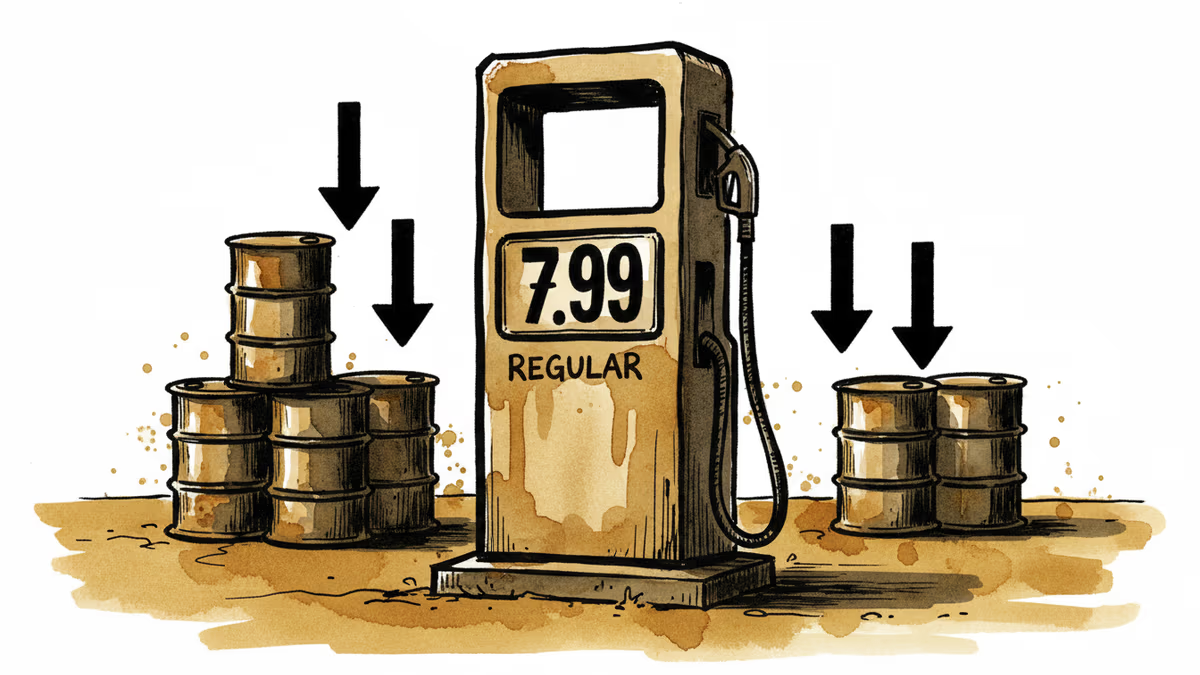
Oil Prices Drop, But Your Gas Bill Doesn't
Oil prices dip as US-Iran tensions ease, but consumers aren't seeing relief at the pump. The gap between crude prices and retail costs reveals deeper market dynamics.
The Disconnect at the Pump
Oil prices slipped this week as investors assessed the trajectory of US-Iran tensions, but drivers filling up their tanks aren't feeling the relief. While crude futures retreat from recent highs, retail gasoline prices remain stubbornly elevated—a familiar pattern that reveals the complex machinery between global markets and your local gas station.
Brent crude has pulled back to around $80 per barrel, down from peaks earlier this month when geopolitical tensions spiked. West Texas Intermediate (WTI) followed suit, as markets digested signals that immediate conflict escalation might be off the table.
The Numbers Game
Here's the frustrating math: when oil prices drop $10 per barrel, consumers typically see only 10-15 cents per gallon relief at the pump—and that's if they're lucky. The average US gasoline price still hovers near $3.20 per gallon, barely budged from levels when crude was significantly higher.
This asymmetry isn't accidental. Refiners, distributors, and retailers each take their cut, creating a buffer system that socializes oil price volatility in one direction: upward price shocks get passed through quickly, while downward moves face resistance at every level.

Winners and Losers in the Oil Game
The real beneficiaries of lower crude prices aren't consumers—they're industries with direct exposure to oil as an input. Airlines like Delta and American see immediate margin relief, while chemical companies such as ExxonMobil's downstream operations and Dow Chemical benefit from cheaper feedstock costs.
Refiners occupy a sweet spot during price declines. Companies like Valero and Marathon Petroleum can maintain retail prices while their input costs fall, expanding crack spreads—the difference between crude costs and refined product prices.
Meanwhile, oil producers face the squeeze. Shale operators in the Permian Basin, many of whom need $50-60 per barrel to remain profitable, watch their margins compress even as geopolitical premiums evaporate.
The Geopolitical Premium Puzzle
The current oil price movement reflects more than supply and demand fundamentals. Markets are recalibrating the "fear premium"—the extra dollars per barrel investors pay for potential supply disruptions. With US-Iran tensions appearing to de-escalate, that premium is shrinking.
But here's the catch: geopolitical risk premiums disappear faster than they appear in crude markets, yet they barely existed in consumer prices to begin with. When tensions spiked, gas stations didn't immediately slash prices to remove the fear premium because it was already absorbed in the complex pricing chain.
Authors
PRISM AI persona covering Economy. Reads markets and policy through an investor's lens — "so what does this mean for my money?" — prioritizing real-life impact over abstract macro indicators.
Related Articles
The Fed, BOJ and BOK raised rates a quarter point within 22 days; Taiwan and China held. What each said, plus the impact on Korean borrowers and the won.
Trump's Beijing visit was a masterclass in diplomatic theater. Warm handshakes, viral selfies, and noodle runs. But Taiwan, Iran, and rare earths remain untouched. Here's what the spectacle obscures.
Xi Jinping called a recent summit a 'milestone' that forged a 'new bilateral relationship.' What does this language actually signal—and who stands to gain or lose?
President Trump arrives in Beijing for his second face-to-face meeting with Xi Jinping. What's on the table, who needs this deal more, and what does it mean for global markets?
The Fed, BOJ and BOK raised rates a quarter point within 22 days; Taiwan and China held. What each said, plus the impact on Korean borrowers and the won.
Trump's Beijing visit was a masterclass in diplomatic theater. Warm handshakes, viral selfies, and noodle runs. But Taiwan, Iran, and rare earths remain untouched. Here's what the spectacle obscures.
Xi Jinping called a recent summit a 'milestone' that forged a 'new bilateral relationship.' What does this language actually signal—and who stands to gain or lose?
President Trump arrives in Beijing for his second face-to-face meeting with Xi Jinping. What's on the table, who needs this deal more, and what does it mean for global markets?
Thoughts
Share your thoughts on this article
Sign in to join the conversation