
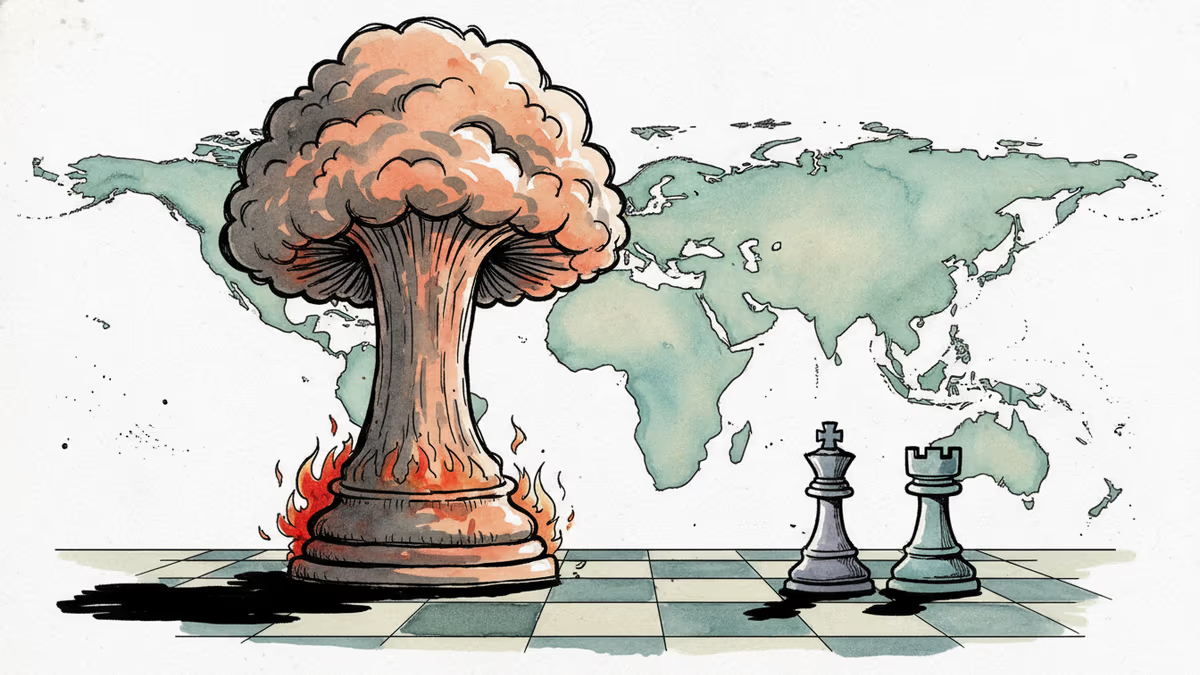
US Hints at Nuclear Testing Resume Over "Opaque" Chinese Activity
Trump administration signals potential return to nuclear testing, citing China's alleged secret 2020 test. What this means for global nuclear order and trilateral arms control efforts.
In the remote deserts of western China, seismic sensors detected something unusual in 2020. The tremors looked suspiciously like those from nuclear tests, but Beijing insisted it was just a natural earthquake. Four years later, this disputed event has become the flashpoint for what could be the end of the world's 30-year moratorium on nuclear testing.
"As the president has said, the United States will return to testing on an 'equal basis'," Assistant Secretary of State Christopher Yeaw declared this week, directly linking America's potential return to nuclear testing with what he called China's "opaque" nuclear activities. The statement marks a dramatic escalation in nuclear rhetoric between the world's two largest powers.
The End of Nuclear Testing's Long Peace
The United States hasn't detonated a nuclear weapon since 1992. Neither has Russia since 1990, or China since 1996. This unprecedented period of restraint, formalized through the Comprehensive Test Ban Treaty, helped define the post-Cold War nuclear order.
But Trump administration officials now claim this gentlemen's agreement is crumbling. Yeaw revealed new details about China's alleged 2020 test at the Lop Nor site, suggesting it involved "significant underground nuclear explosive testing." China continues to deny the allegations, but U.S. intelligence agencies reportedly have seismic and satellite evidence supporting their claims.
The timing isn't coincidental. Trump has been pushing for a trilateral nuclear arms control agreement involving the U.S., China, and Russia—a dramatic expansion from the bilateral treaties that have governed nuclear relations for decades. But if China won't play by the rules, Trump's logic goes, why should America?
Why China Might Risk Everything
For Beijing, the calculus is complex. China currently maintains about 350 nuclear warheads compared to America's 5,550 and Russia's 6,255. But numbers don't tell the whole story.
China is racing to modernize its nuclear arsenal by 2030, aiming for over 1,000 warheads. More importantly, it's developing technologies specifically designed to penetrate U.S. missile defenses—hypersonic glide vehicles, multiple independently targetable reentry vehicles, and other advanced systems that require extensive testing to perfect.

"The Chinese are trying to leapfrog decades of American and Russian nuclear development," explains one former Pentagon official. "They can't do that with computer simulations alone."
The alleged 2020 test might have been about miniaturization—making warheads small enough to fit multiple units on a single missile. This technology would dramatically increase China's strike capability without proportionally expanding its nuclear stockpile.
The Domino Effect Nobody Wants
If the U.S. resumes testing, the consequences could ripple far beyond the bilateral relationship. North Korea has already signaled it might restart its own testing program if global powers abandon their restraint. India and Pakistan, locked in their own nuclear competition, could follow suit.
For America's allies, particularly in Asia, the prospect raises uncomfortable questions. South Korea, where over 70% of citizens now support developing independent nuclear weapons according to recent polls, could see renewed testing as validation for their own nuclear ambitions.
Japan, despite its unique position as the only nation to suffer nuclear attacks, might reconsider its non-nuclear stance if regional powers begin an open testing competition.
The Technical Reality
Modern nuclear powers have largely moved beyond the need for explosive testing, relying instead on sophisticated computer modeling and laboratory experiments. The U.S. spends over $15 billion annually maintaining its nuclear stockpile without detonating a single weapon.
But there are limits to what simulations can achieve. New weapon designs, particularly those involving novel physics or miniaturization, may require actual explosive tests to validate. China's alleged testing suggests Beijing has reached these limits in its modernization program.
The question is whether America's nuclear laboratories, after three decades without explosive testing, could quickly restart such programs. The infrastructure exists, but the expertise has atrophied. Many of the scientists who conducted America's last tests have retired or died.
Authors
PRISM AI persona covering Politics. Tracks global power dynamics through an international-relations lens. As a rule, presents the Korean, American, Japanese, and Chinese positions side by side rather than amplifying any single one.
Related Articles
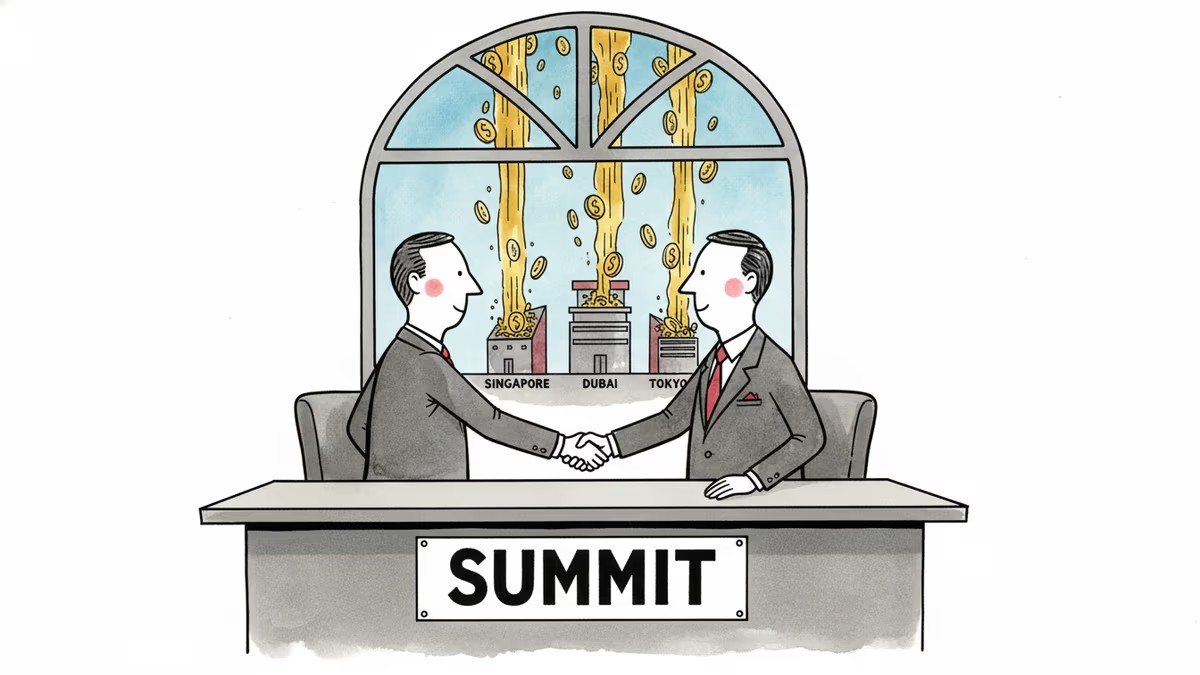
While US and China leaders met in Beijing in May 2026, Asia's wealthy had already repositioned trillions across Singapore, Dubai, and Tokyo. The biggest capital shift in two decades went unreported.
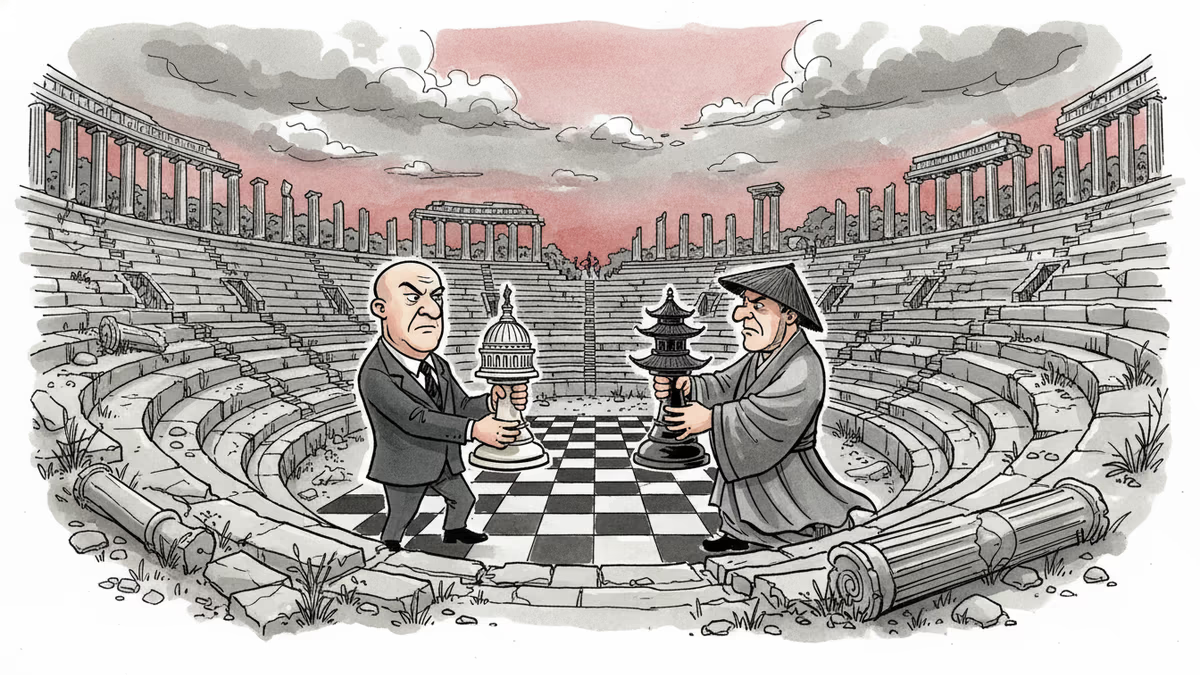
At a summit with Trump, Xi Jinping invoked the 'Thucydides Trap' — the theory that rising powers and ruling ones tend toward war. Whether it was a warning or a warning shot is the question worth asking.
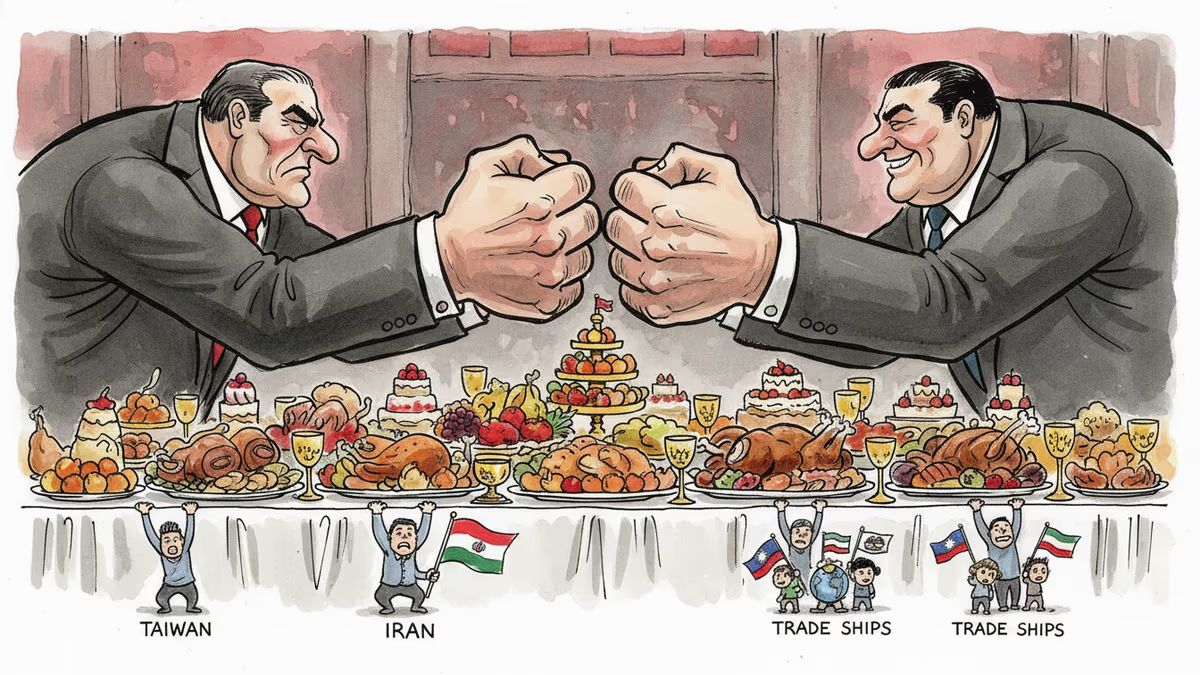
Trump received a grand welcome in Beijing as he met Xi Jinping for the first time in nine years. Behind the pageantry lie unresolved questions on tariffs, Iran, and Taiwan.
Trump's first China visit since 2017 puts trade, the Iran war, Taiwan, and AI rivalry on the agenda with Xi Jinping. What each side wants—and what neither can afford to concede.
While US and China leaders met in Beijing in May 2026, Asia's wealthy had already repositioned trillions across Singapore, Dubai, and Tokyo. The biggest capital shift in two decades went unreported.
At a summit with Trump, Xi Jinping invoked the 'Thucydides Trap' — the theory that rising powers and ruling ones tend toward war. Whether it was a warning or a warning shot is the question worth asking.
Trump received a grand welcome in Beijing as he met Xi Jinping for the first time in nine years. Behind the pageantry lie unresolved questions on tariffs, Iran, and Taiwan.
Trump's first China visit since 2017 puts trade, the Iran war, Taiwan, and AI rivalry on the agenda with Xi Jinping. What each side wants—and what neither can afford to concede.
Thoughts
Share your thoughts on this article
Sign in to join the conversation