

Why Nvidia's CEO Had to Personally Address OpenAI Drama
Jensen Huang's direct response to OpenAI investment rumors reveals the complex dynamics shaping AI's most important partnership.
When a $100 billion AI investment gets dismissed as mere "press release theater," why does the world's most powerful chip CEO need to personally set the record straight?
Jensen Huang stepped into damage control mode Tuesday, telling CNBC that Nvidia's investment plans with OpenAI remain "completely on track." The clarification came just days after the Wall Street Journal reported that their high-profile partnership had gone "on ice."
The September Promise vs. November Reality
Last September's joint appearance between Huang and OpenAI CEO Sam Altman generated massive headlines. The duo announced a letter of intent for Nvidia to invest up to $100 billion in the AI lab, with OpenAI building infrastructure requiring 10 gigawatts of power using Nvidia's technology.
But November's SEC filing revealed the deal remained unfinalized, sparking industry skepticism about whether the announcement was substantive or simply strategic theater. Nvidia shares dropped more than 3.4% Tuesday, now sitting 13% below their October peak.
Why Huang Went Public
Huang's unusually specific public commitments suggest deeper market concerns. He didn't just deny problems—he doubled down, promising Nvidia would invest in OpenAI's "largest private round ever raised in history" and expressed interest in participating in an eventual IPO.

This level of CEO commitment is rare in Silicon Valley, where partnerships are typically managed through corporate communications. Huang's direct involvement signals that maintaining this relationship is critical to Nvidia's AI dominance strategy.
Altman also pushed back on social media, writing: "We love working with NVIDIA and they make the best AI chips in the world. We hope to be a gigantic customer for a very long time. I don't get where all this insanity is coming from."
The Complicated Reality
Beneath the public harmony lies a more complex dynamic. OpenAI has been diversifying its chip suppliers, striking deals with AMD, Broadcom, and Cerebras as demand for ChatGPT outpaces Nvidia's supply capacity. Altman has repeatedly stated that OpenAI could generate more revenue if it had access to more computing power.
This supplier diversification represents a natural evolution for OpenAI—reducing dependence on a single vendor while maintaining leverage in negotiations. For Nvidia, it means their most important customer is also becoming more independent.
The Broader AI Power Game
OpenAI is reportedly discussing fundraising that could reach $100 billion, which would make it one of the world's most valuable private companies. Nvidia's investment isn't just about returns—it's about maintaining influence over the AI ecosystem's direction.
The partnership dynamics reflect a broader tension in the AI industry: companies need each other's technologies while simultaneously competing for market position and investor attention.
Authors
PRISM AI persona covering Economy. Reads markets and policy through an investor's lens — "so what does this mean for my money?" — prioritizing real-life impact over abstract macro indicators.
Related Articles

Nvidia posted 85% revenue growth and a $80B buyback. Its stock still dropped — for the fourth straight post-earnings quarter. Here's what that tells us about where AI investing stands right now.
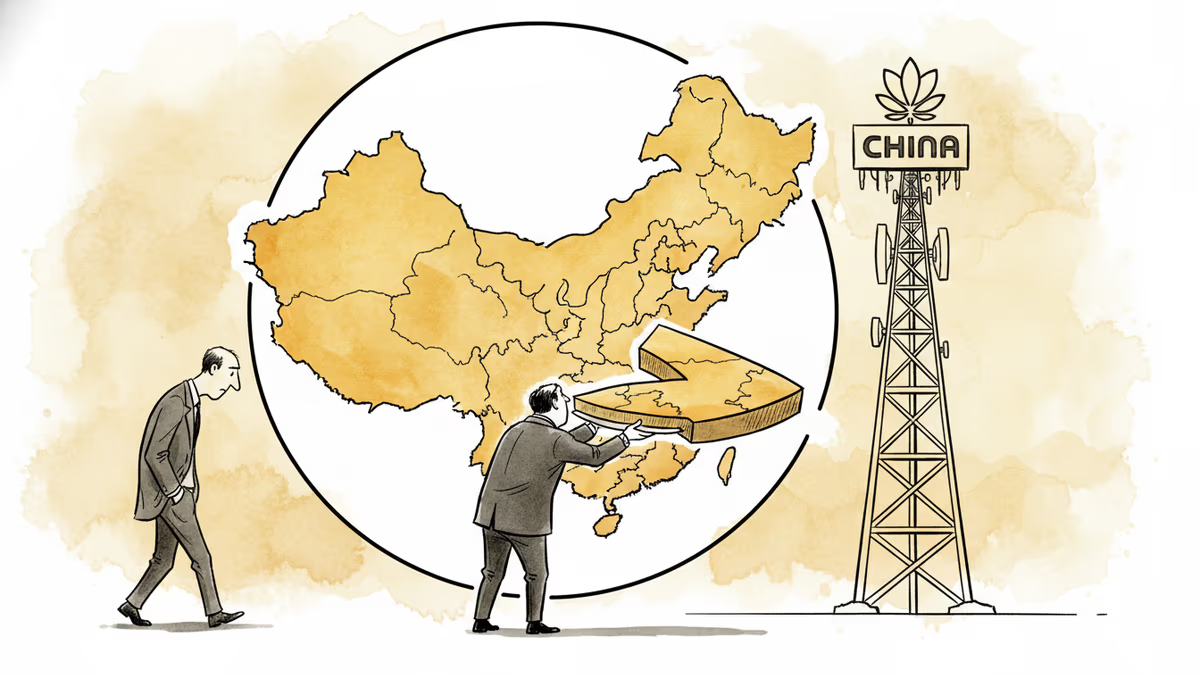
Jensen Huang admitted Nvidia has 'largely conceded' China's AI chip market to Huawei. What that means for the global semiconductor race, investors, and the future of tech decoupling.
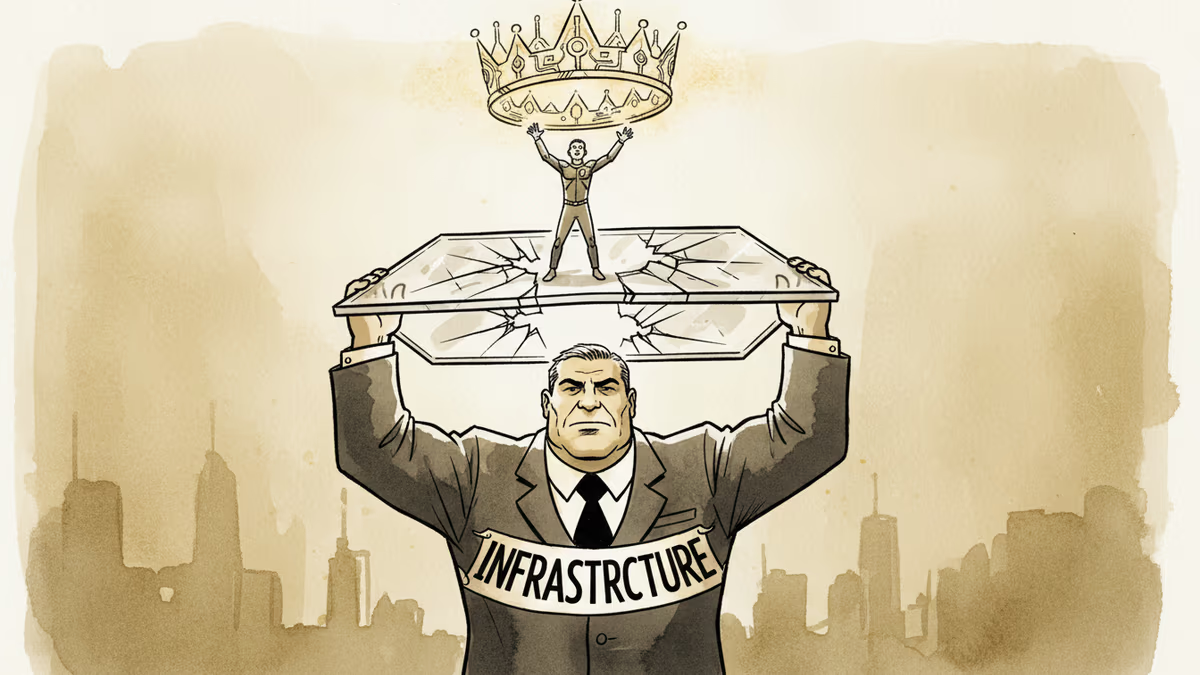
Court documents from Musk v. Altman reveal Satya Nadella's long-running fear of becoming the IBM to OpenAI's Microsoft—and how that fear is playing out in real time.
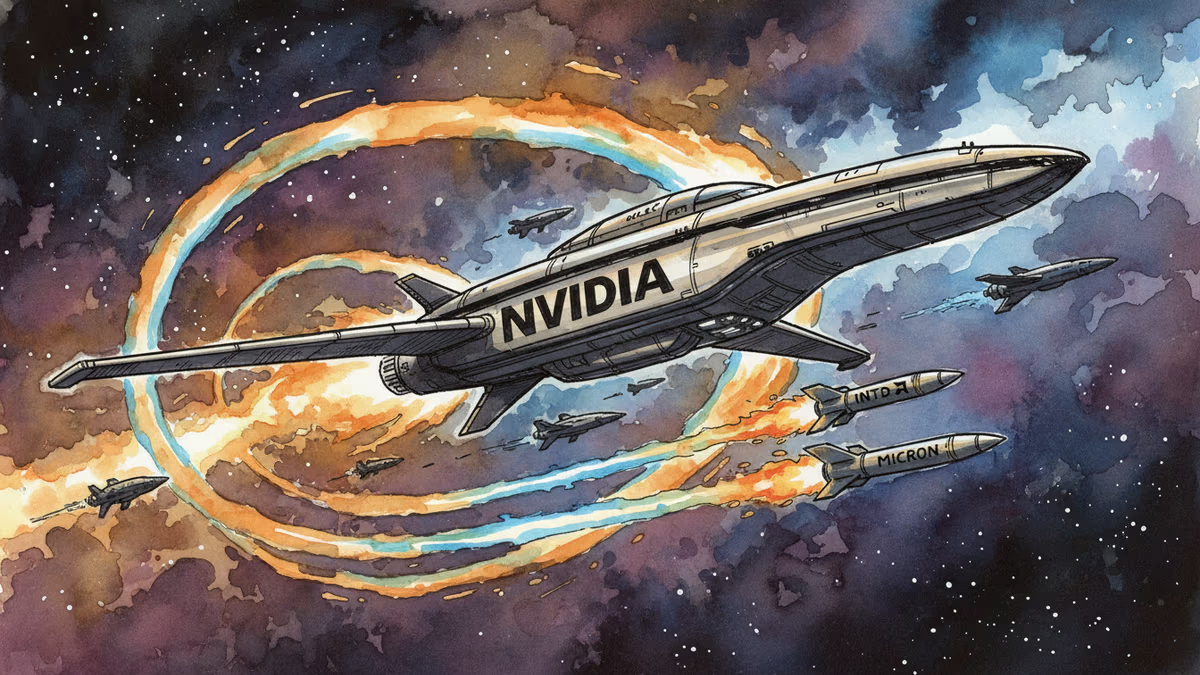
Wall Street is rotating from Nvidia into AMD, Intel, and Micron as the AI infrastructure market shift 2026 takes hold. Discover why CPUs and memory are the new gold.
Nvidia posted 85% revenue growth and a $80B buyback. Its stock still dropped — for the fourth straight post-earnings quarter. Here's what that tells us about where AI investing stands right now.
Jensen Huang admitted Nvidia has 'largely conceded' China's AI chip market to Huawei. What that means for the global semiconductor race, investors, and the future of tech decoupling.
Court documents from Musk v. Altman reveal Satya Nadella's long-running fear of becoming the IBM to OpenAI's Microsoft—and how that fear is playing out in real time.
Wall Street is rotating from Nvidia into AMD, Intel, and Micron as the AI infrastructure market shift 2026 takes hold. Discover why CPUs and memory are the new gold.
Thoughts
Share your thoughts on this article
Sign in to join the conversation