
Nvidia H200 China Upfront Payment: Offloading Geopolitical Risk
Nvidia is demanding full upfront payments from Chinese customers for its H200 AI chips to mitigate risks from US-China regulatory uncertainties.
Cash is king, especially when the chips are down. Nvidia is playing hardball with its most lucrative but volatile market, demanding full upfront payments for its latest AI powerhouse.
Strict Nvidia H200 China Payment Terms
According to Reuters, Nvidia is now requiring Chinese customers to pay in full upfront for its H200 AI chips. The new policy leaves no room for refunds or order modifications, a significant shift from previous terms that allowed for partial deposits. While some clients can use commercial insurance or collateral, the overall environment has become significantly stricter.
The chipmaker is treading carefully as regulatory approval from both Washington and Beijing remains a moving target. Memories of the Trump administration's export curbs on H20 chips, which forced a $5.5 billion inventory write-down, are still fresh. Nvidia is determined not to repeat that costly setback.

High Stakes and Surging Demand
Despite the financial hurdles, demand for the H200 remains astronomical. Reports from Bloomberg suggest that Chinese firms have placed orders for over 2 million GPUs for 2026. This surge has prompted Nvidia to ramp up production while simultaneously managing the tightrope of international relations.
| Policy Feature | Old Terms | New H200 (China) Terms |
|---|---|---|
| Payment Timing | Partial Deposit | Full Upfront Payment |
| Refundability | Negotiable | Non-refundable |
| Order Changes | Allowed (to some extent) | Strictly Prohibited |
Authors
Related Articles
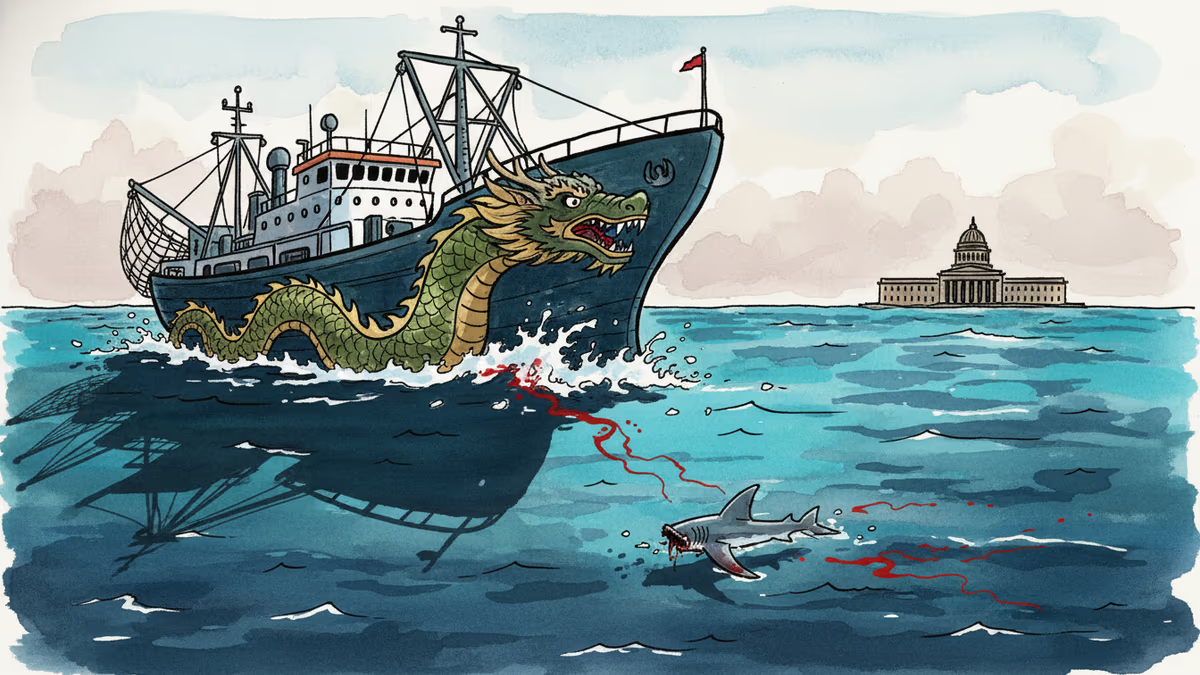
A U.S. nonprofit has petitioned the federal government to sanction China over shark finning. If upheld, it could trigger a ban on all Chinese seafood imports worth $1.5 billion annually.
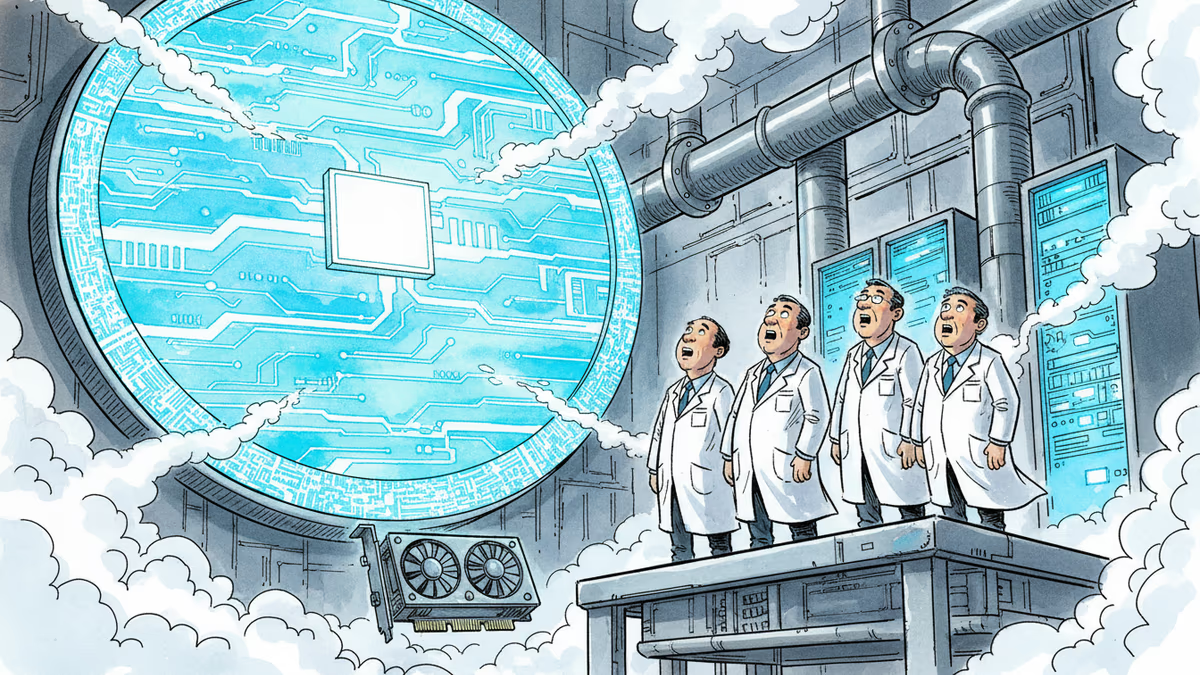
Cerebras Systems IPO yields a $5.3 billion return for Benchmark. Explore the 8.5-year journey from a reluctant first meeting to challenging Nvidia's AI dominance.
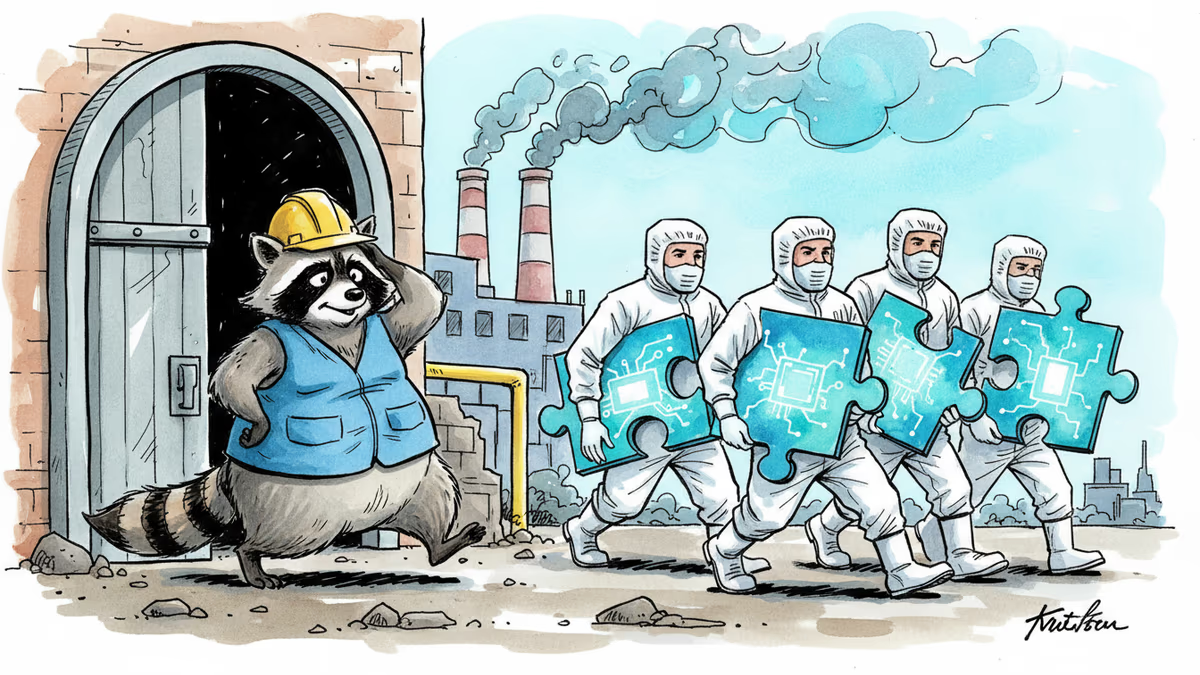
Intel's revived New Mexico fab is betting on advanced chip packaging to challenge TSMC and capture AI market share. Here's why this quiet technology could matter more than the chips themselves.
Arm's first in-house chip, the AGI CPU, breaks a 30-year licensing model. What happens when the company that powers your chip decides to sell one of its own?
A U.S. nonprofit has petitioned the federal government to sanction China over shark finning. If upheld, it could trigger a ban on all Chinese seafood imports worth $1.5 billion annually.
Cerebras Systems IPO yields a $5.3 billion return for Benchmark. Explore the 8.5-year journey from a reluctant first meeting to challenging Nvidia's AI dominance.
Intel's revived New Mexico fab is betting on advanced chip packaging to challenge TSMC and capture AI market share. Here's why this quiet technology could matter more than the chips themselves.
Arm's first in-house chip, the AGI CPU, breaks a 30-year licensing model. What happens when the company that powers your chip decides to sell one of its own?
Thoughts
Share your thoughts on this article
Sign in to join the conversation