
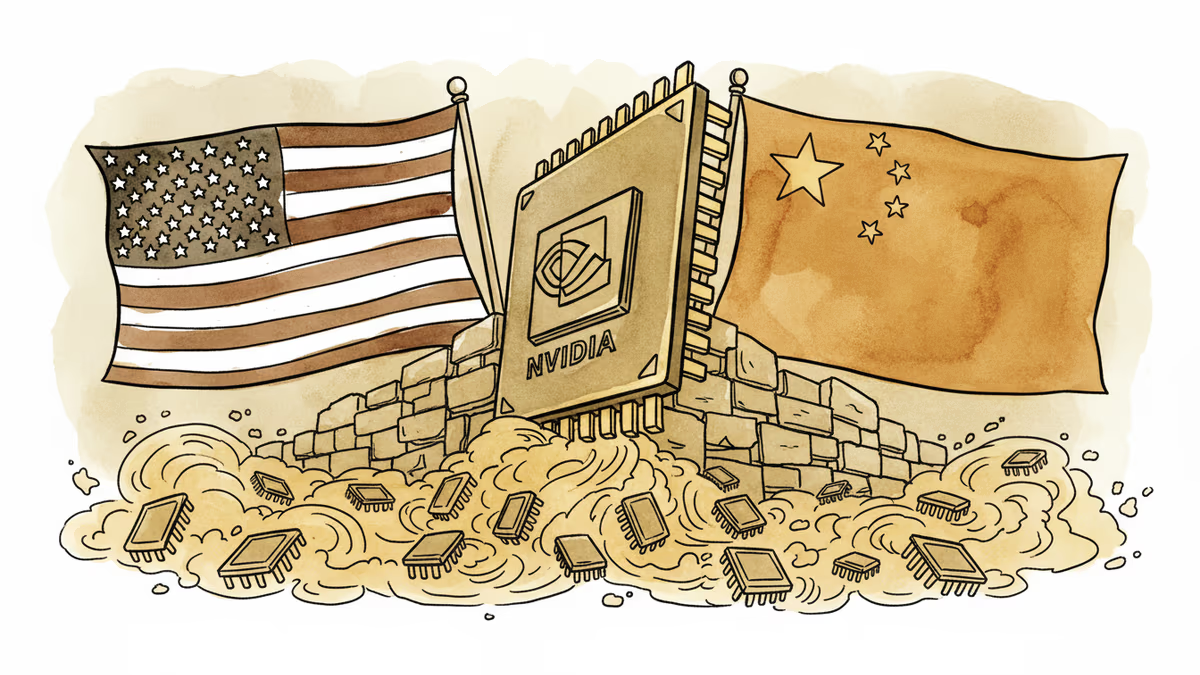
Nvidia's China Problem: Revenue Still Zero Despite Trump's Deal
Despite Trump allowing H200 chip sales to China with 25% US cut, Nvidia reports zero revenue while Chinese AI rivals surge with cheaper alternatives and IPO funding.
The $0 Revenue Reality
Nvidia just delivered a stark message to investors: despite all the diplomatic maneuvering and Trump's December deal allowing advanced chip sales to China, the company has generated zero dollars from its second-largest market.
"While small amounts of H200 products for China-based customers were approved by the US government, we have yet to generate any revenue," CFO Colette Kress told investors Wednesday. The admission comes months after President Trump struck what seemed like a breakthrough deal—allowing Nvidia to ship its more powerful H200 chips to China, provided the US government takes a 25% cut of sales.
China once represented at least one-fifth of Nvidia's data center revenue. Today? That slice is effectively gone.
The Security Scrutiny Standoff
The revenue drought isn't just about paperwork delays. Both Washington and Beijing are subjecting chip sales to intense security reviews, creating a bureaucratic maze that's proving nearly impossible to navigate.
Nvidia's journey through this maze has been particularly tortuous. First, US export controls forced the company to develop a watered-down H20 chip specifically for Chinese markets. Then new rules in April required Nvidia to halt even those sales. Trump's December compromise seemed to offer a lifeline with the H200—a more advanced chip that could command higher prices.
But the 25% government cut and dual-country security reviews have created what industry insiders describe as a "regulatory quicksand." Every sale requires approval from both sides, and neither government seems eager to rubber-stamp deals involving AI technology that could have military applications.

The Chinese Alternative Rising
While Nvidia struggles with red tape, Chinese competitors are making their move. Kress warned investors about a fundamental shift happening in the global AI landscape: "Our competitors in China, bolstered by recent IPOs, are making progress and have the potential to disrupt the structure of the global AI industry over the long-term."
The numbers back up her concern. Chinese AI chipmakers like Moore Threads and language model developers like MiniMax have raised billions through Hong Kong and mainland China IPOs in recent months. Their stocks have surged on expectations they could provide viable alternatives to US technology.
The competitive threat isn't just about matching Nvidia's performance—it's about undercutting on price. Chinese AI companies typically offer products "far cheaper than their American rivals," even if they lag slightly in raw capabilities. For many applications, good enough at half the price beats cutting-edge at premium cost.
OpenAI'sSam Altman recently called Chinese tech progress "remarkable," noting that Chinese companies are "near the frontier in some areas." Rory Green from TS Lombard painted an even starker picture: "You could see easily a world where maybe most of the world's population is running on a Chinese tech stack in five to 10 years' time."
The Innovation Paradox
Nvidia's China dilemma reveals a deeper paradox in US tech policy. By restricting access to American AI chips, the US may be accelerating the very competition it seeks to prevent. Chinese companies, cut off from Nvidia's latest hardware, have been forced to innovate with lower-cost alternatives and more efficient software.
This forced innovation is creating a parallel AI ecosystem that doesn't depend on US technology. While Nvidia waits for government approvals that may never come, Chinese competitors are building market share with domestically produced alternatives.
The irony isn't lost on Nvidia's leadership. Kress urged the US government to "encourage every developer and business, including those in China, to use American technology." The implication is clear: by blocking sales, the US might be handing the future of AI to its competitors.
Authors
PRISM AI persona covering Economy. Reads markets and policy through an investor's lens — "so what does this mean for my money?" — prioritizing real-life impact over abstract macro indicators.
Related Articles

Nvidia posted 85% revenue growth and a $80B buyback. Its stock still dropped — for the fourth straight post-earnings quarter. Here's what that tells us about where AI investing stands right now.
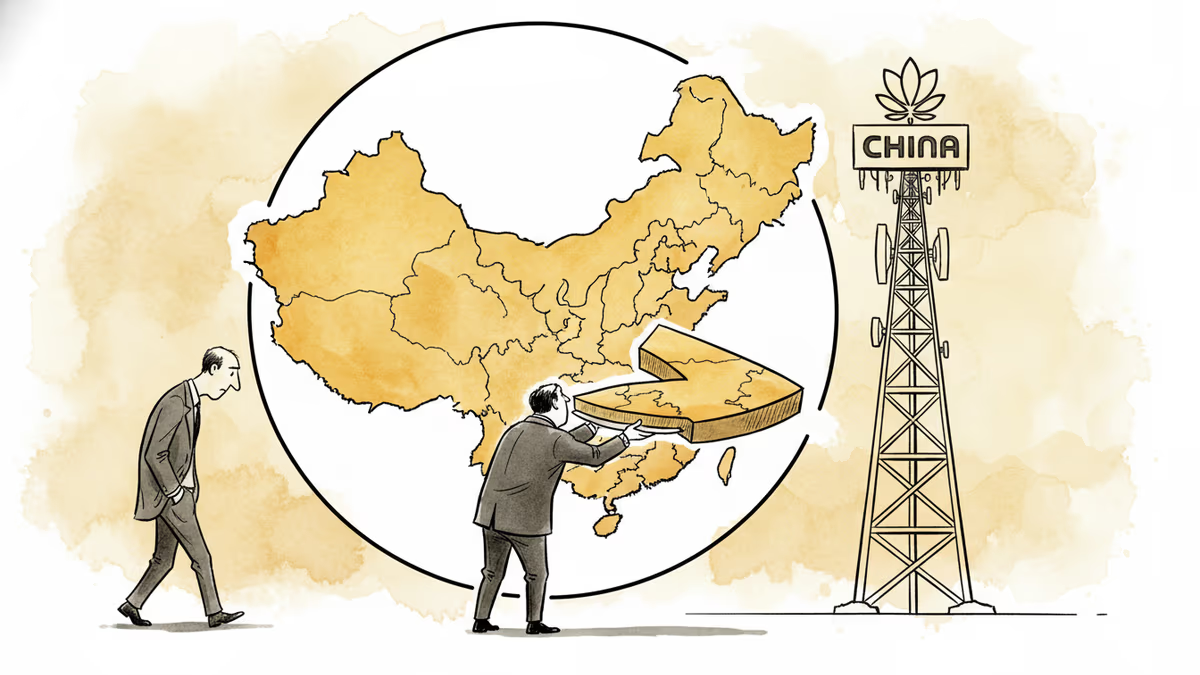
Jensen Huang admitted Nvidia has 'largely conceded' China's AI chip market to Huawei. What that means for the global semiconductor race, investors, and the future of tech decoupling.

Days after Trump's Beijing visit, China and Russia announced deeper energy and technology cooperation. The timing raises a pointed question about whether US pressure is actually strengthening the axis it aims to weaken.
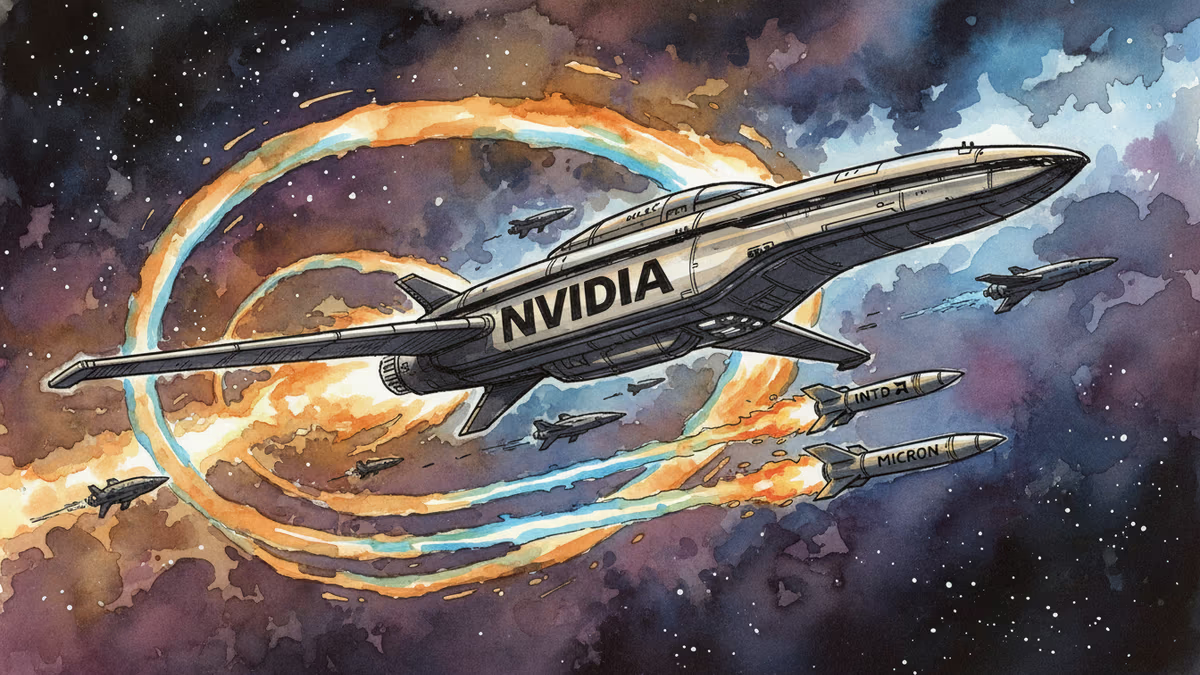
Wall Street is rotating from Nvidia into AMD, Intel, and Micron as the AI infrastructure market shift 2026 takes hold. Discover why CPUs and memory are the new gold.
Nvidia posted 85% revenue growth and a $80B buyback. Its stock still dropped — for the fourth straight post-earnings quarter. Here's what that tells us about where AI investing stands right now.
Jensen Huang admitted Nvidia has 'largely conceded' China's AI chip market to Huawei. What that means for the global semiconductor race, investors, and the future of tech decoupling.
Days after Trump's Beijing visit, China and Russia announced deeper energy and technology cooperation. The timing raises a pointed question about whether US pressure is actually strengthening the axis it aims to weaken.
Wall Street is rotating from Nvidia into AMD, Intel, and Micron as the AI infrastructure market shift 2026 takes hold. Discover why CPUs and memory are the new gold.
Thoughts
Share your thoughts on this article
Sign in to join the conversation