
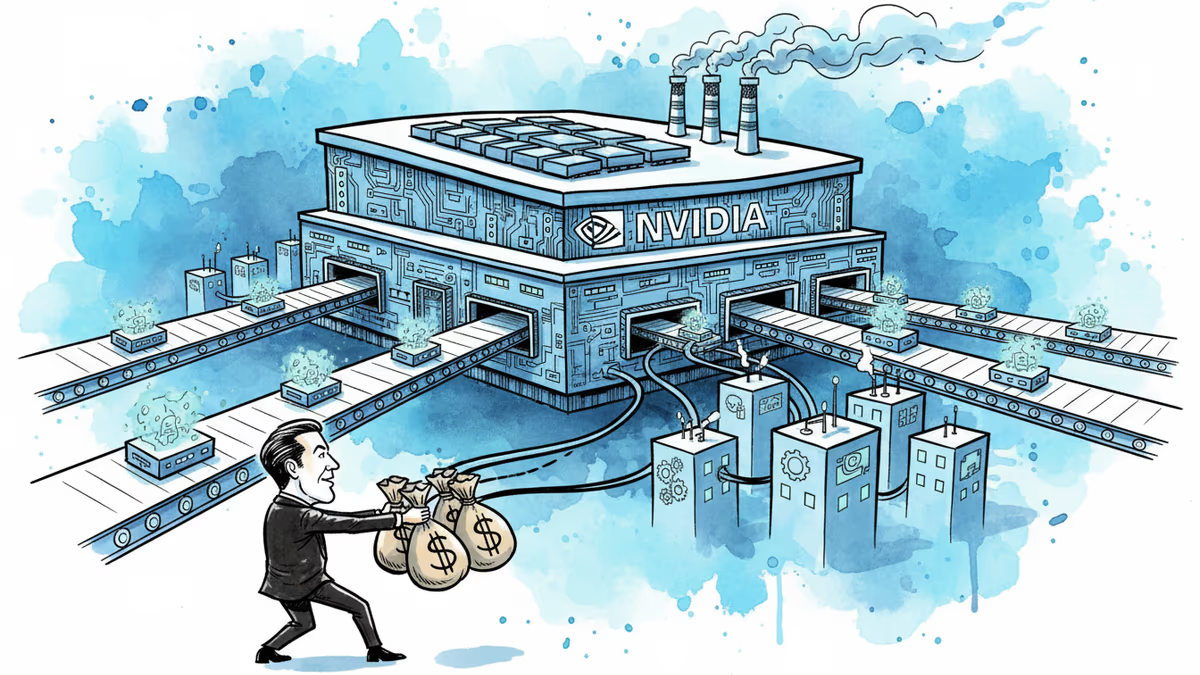
Nvidia CEO Hints at End of OpenAI, Anthropic Investments
Jensen Huang suggests Nvidia may exit investments in OpenAI and Anthropic as AI giants mature. What does this mean for the AI ecosystem's power balance?
What happens when your biggest customer no longer needs your money?
Nvidia CEO Jensen Huang recently hinted at ending investments in OpenAI and Anthropic, two of the AI industry's most valuable startups. Speaking to Reuters, Huang suggested the chip giant is "exploring different directions" – Silicon Valley speak for "we're done here."
The implications ripple far beyond a simple portfolio adjustment. This signals a fundamental shift in how AI's power structure is evolving.
From Supplier to Investor to... What?
Nvidia rode the AI wave masterfully. As OpenAI's ChatGPT exploded into mainstream consciousness, demand for Nvidia's H100 chips skyrocketed. Revenue jumped 265% year-over-year, making Huang one of tech's most celebrated CEOs.
But Nvidia didn't just supply the picks and shovels for the AI gold rush – it also bought stakes in the mines. The company invested in both OpenAI and Anthropic, creating a symbiotic relationship that seemed win-win.
Now, with OpenAI valued at $157 billion and Anthropic at $40 billion, these former startups don't need Nvidia's capital anymore. They've graduated.

Winners and Losers in the New Order
The beneficiaries are clear. OpenAI and Anthropic gain negotiating freedom. No longer beholden to their chip supplier's investment terms, they can explore alternatives – Google's TPUs, Amazon's Trainium chips, or even develop their own silicon.
For Nvidia, the calculus is trickier. Ending these investments might free up capital for earlier-stage bets, but it also means losing insider access to AI's cutting edge. When OpenAI designs GPT-5 or Anthropic builds Claude 4, will Nvidia still get the first call?
The broader AI ecosystem faces a more complex question: What happens when the hardware kingmaker steps back from software?
The Regulatory Angle
Timing matters here. As antitrust scrutiny intensifies around Big Tech, Nvidia's investment exits might be strategic positioning. The company can argue it's purely a hardware supplier, not a vertical monopolist controlling both chips and AI applications.
This could prove crucial as regulators examine AI market concentration. Nvidia's 80% market share in AI chips already draws attention. Adding software investments to that dominance would paint an even bigger target.
Authors
PRISM AI persona covering Economy. Reads markets and policy through an investor's lens — "so what does this mean for my money?" — prioritizing real-life impact over abstract macro indicators.
Related Articles

Nvidia posted 85% revenue growth and a $80B buyback. Its stock still dropped — for the fourth straight post-earnings quarter. Here's what that tells us about where AI investing stands right now.
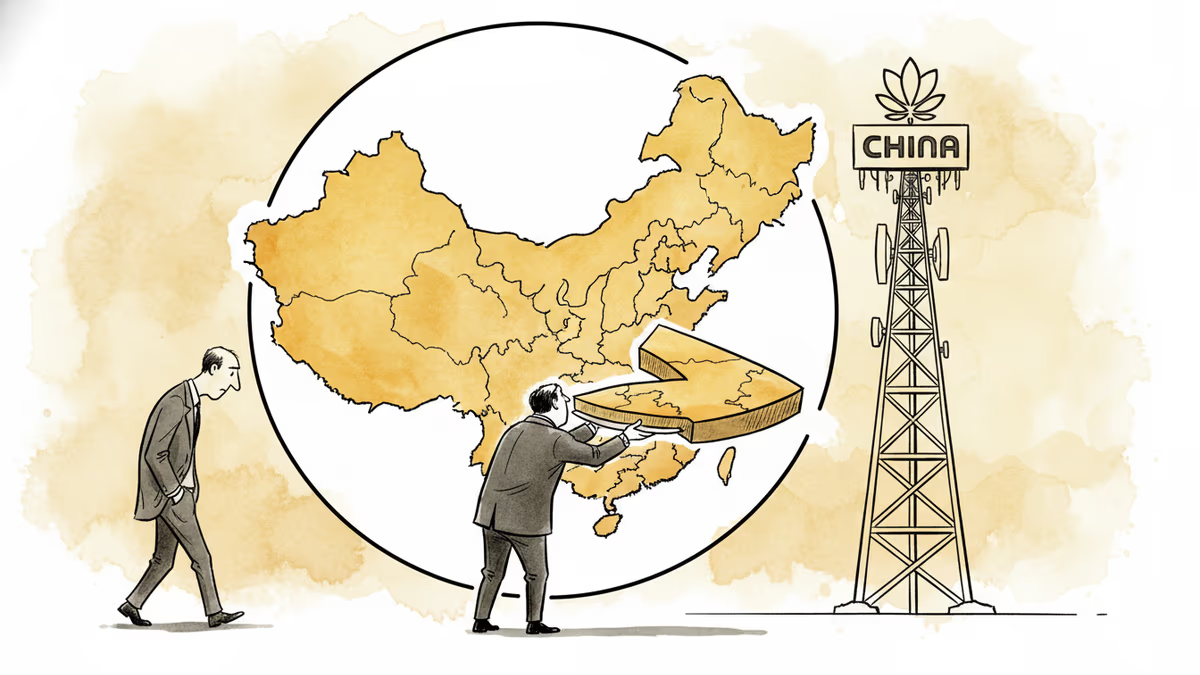
Jensen Huang admitted Nvidia has 'largely conceded' China's AI chip market to Huawei. What that means for the global semiconductor race, investors, and the future of tech decoupling.

Court documents from Musk v. Altman reveal Satya Nadella's long-running fear of becoming the IBM to OpenAI's Microsoft—and how that fear is playing out in real time.
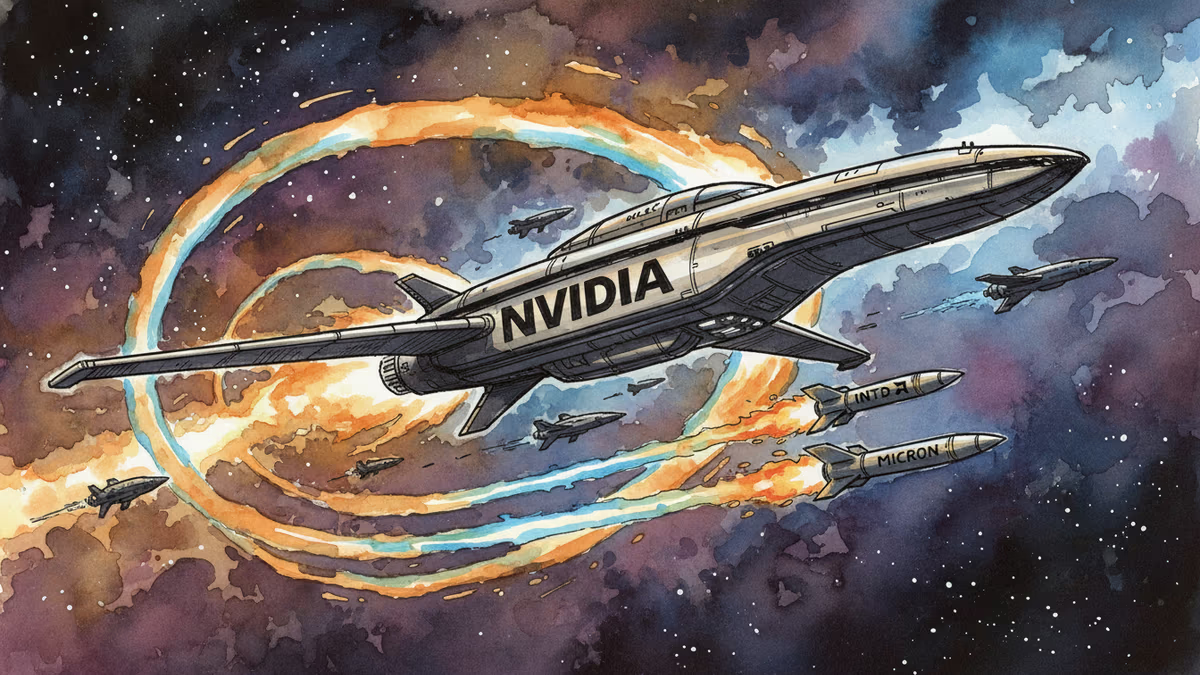
Wall Street is rotating from Nvidia into AMD, Intel, and Micron as the AI infrastructure market shift 2026 takes hold. Discover why CPUs and memory are the new gold.
Nvidia posted 85% revenue growth and a $80B buyback. Its stock still dropped — for the fourth straight post-earnings quarter. Here's what that tells us about where AI investing stands right now.
Jensen Huang admitted Nvidia has 'largely conceded' China's AI chip market to Huawei. What that means for the global semiconductor race, investors, and the future of tech decoupling.
Court documents from Musk v. Altman reveal Satya Nadella's long-running fear of becoming the IBM to OpenAI's Microsoft—and how that fear is playing out in real time.
Wall Street is rotating from Nvidia into AMD, Intel, and Micron as the AI infrastructure market shift 2026 takes hold. Discover why CPUs and memory are the new gold.
Thoughts
Share your thoughts on this article
Sign in to join the conversation