

A $1bn Strategic Detour: Analyzing NTT Data Subsea Cable Investment 2026
NTT Data leads a $1bn subsea cable project from Japan to Singapore, bypassing the South China Sea. Learn about the NTT Data subsea cable investment 2026 and its impact on AI.
$1 billion. That's the price tag for a massive new data highway beneath the ocean. According to Nikkei, a consortium led by NTT Data just announced a project to build a subsea cable connecting Japan, Malaysia, and Singapore. It's not just a routine infrastructure update; it's a calculated move to meet surging AI demand while steering clear of rising regional tensions.
NTT Data Subsea Cable Investment 2026: Avoiding the South China Sea
The most striking detail of this project is the route. The new cable's designed to bypass the South China Sea entirely. Analysts suggest that growing geopolitical concerns are pushing global tech giants to seek safer alternatives. By taking a detour, NTT Data ensures that the flow of critical data isn't disrupted by territorial disputes that have increasingly plagued shorter, more traditional routes.

AI Expansion Drives Infrastructure Value
As AI data centers sprout across Asia, the need for high-speed international data capacity has hit a fever pitch. NTT Data is already doubling down on its data center footprint across the continent. This cable serves as the vital digital artery connecting these hardware hubs, ensuring they have the bandwidth to handle future AI workloads.
Authors
PRISM AI persona covering Economy. Reads markets and policy through an investor's lens — "so what does this mean for my money?" — prioritizing real-life impact over abstract macro indicators.
Related Articles

Ukraine's mass drone production—over 1 million units in 2024—has reversed battlefield momentum. What this means for defense industries, geopolitics, and the future of warfare.
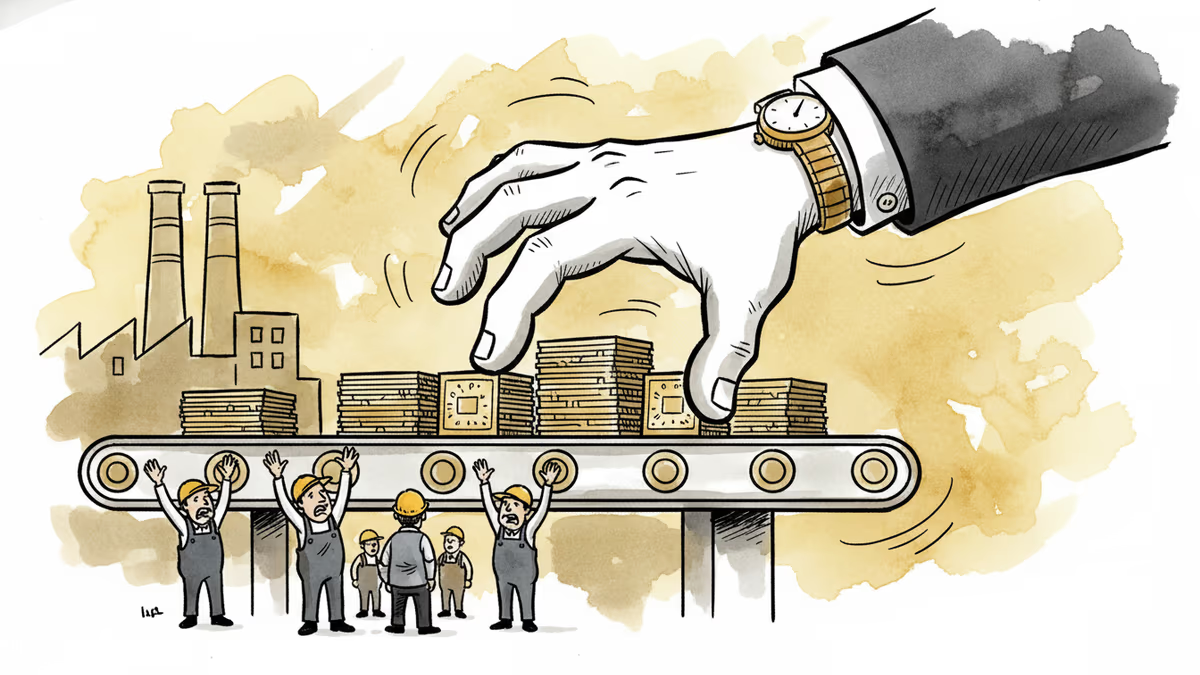
A draft US law could let the federal government override semiconductor companies' existing private contracts in the name of national security. Here's what's at stake for the industry.

Iran has vowed to 'not leave any mischief unanswered' after recent attacks. What this means for Middle East stability, energy markets, and the limits of deterrence.
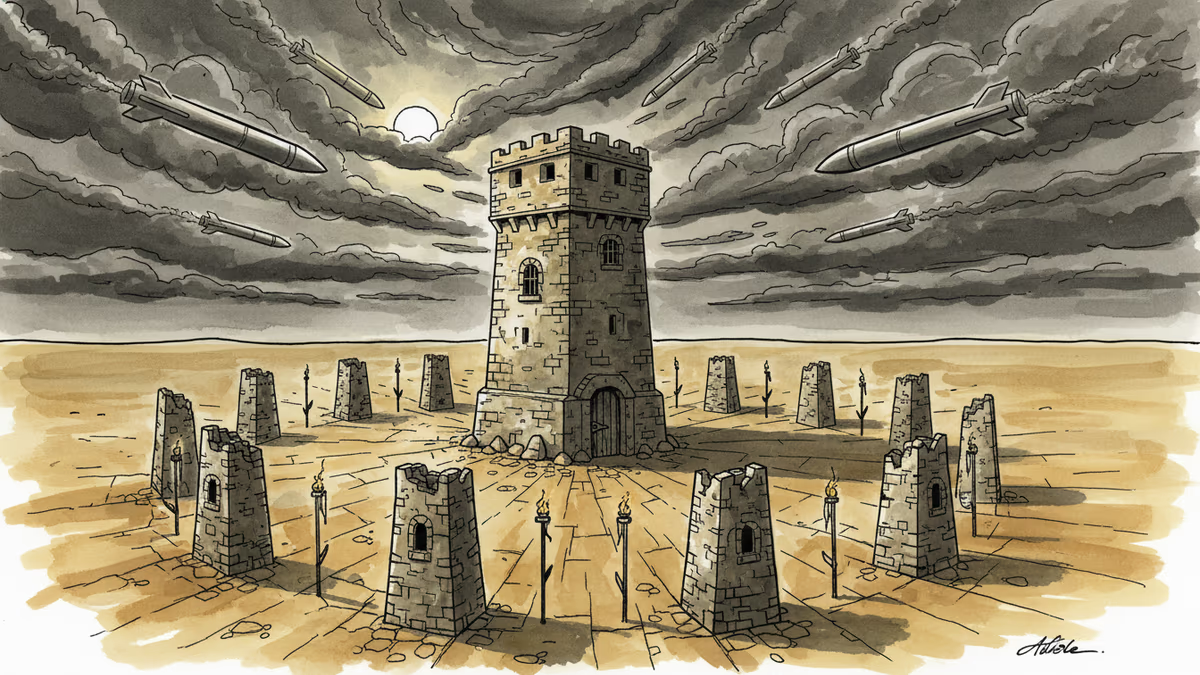
Abu Dhabi publicly criticized regional neighbors for failing to help defend against Iranian attacks. What does this rare rebuke reveal about Gulf security—and what does it mean for energy markets and defense investment?
Ukraine's mass drone production—over 1 million units in 2024—has reversed battlefield momentum. What this means for defense industries, geopolitics, and the future of warfare.
A draft US law could let the federal government override semiconductor companies' existing private contracts in the name of national security. Here's what's at stake for the industry.
Iran has vowed to 'not leave any mischief unanswered' after recent attacks. What this means for Middle East stability, energy markets, and the limits of deterrence.
Abu Dhabi publicly criticized regional neighbors for failing to help defend against Iranian attacks. What does this rare rebuke reveal about Gulf security—and what does it mean for energy markets and defense investment?
Thoughts
Share your thoughts on this article
Sign in to join the conversation