
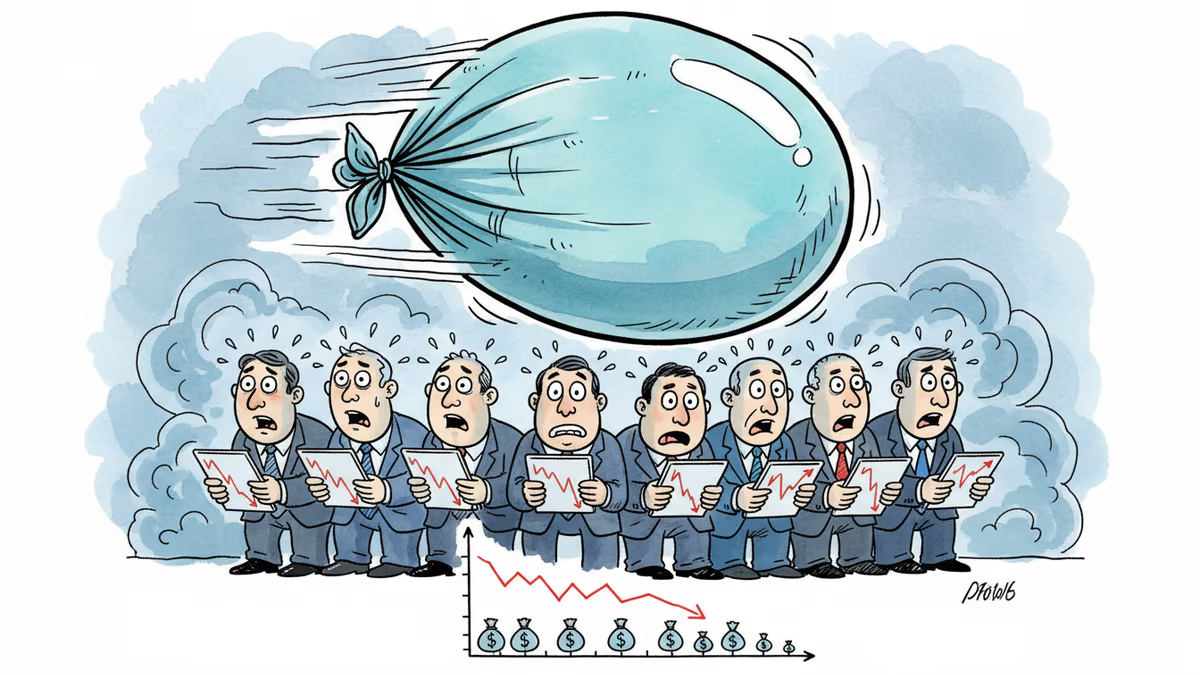
Novo Nordisk Loses $21B as Obesity Drug Dream Hits Reality
Novo Nordisk shares plunge 15% after disappointing trial results, questioning the company's obesity drug dominance. What this means for investors and the broader weight-loss market.
$21 billion vanished in a single trading session. That's how much market value Novo Nordisk lost when its shares plummeted 15% following disappointing trial results for its next-generation obesity drug.
The Danish pharmaceutical giant had been riding high on the success of Ozempic and Wegovy, transforming from a diabetes specialist into the undisputed king of weight-loss medications. But one failed clinical trial was enough to shatter investor confidence and remind everyone of a fundamental truth: in pharma, yesterday's miracle can become tomorrow's disappointment.
The Ozempic Empire Wobbles
For two years, Novo Nordisk seemed unstoppable. Its GLP-1 drugs became cultural phenomena, with celebrities and influencers driving demand through the roof. The company's stock price tripled, and it single-handedly boosted Denmark's entire economy. Investors treated it like a tech stock with pharmaceutical profits.
But the latest Phase 3 trial results for its experimental obesity drug fell short of expectations. While the drug showed efficacy, it wasn't the breakthrough investors had priced in. More concerning for long-term bulls: it signals that developing ever-better obesity treatments isn't as straightforward as the market assumed.

Winners and Losers Reshuffled
The market's reaction was swift and brutal. As Novo Nordisk shares tanked, competitors like Eli Lilly and Pfizer saw their stocks rise. Investors suddenly remembered that the obesity drug market doesn't have to be a one-horse race.
Eli Lilly'sMounjaro is already breathing down Novo's neck, showing superior weight loss in head-to-head studies. Meanwhile, dozens of biotech companies are developing next-generation treatments that promise better efficacy with fewer side effects. The $24 billion obesity drug market, projected to reach $100 billion by 2030, suddenly looks a lot more competitive.
The Side Effect Problem Nobody Talks About
Here's what the euphoric headlines often miss: current obesity drugs have serious tolerability issues. 30-50% of patients discontinue treatment due to nausea, vomiting, and diarrhea. That's not exactly a recipe for long-term market dominance.
The company that cracks the code on effective weight loss without the miserable side effects could reshape the entire market overnight. Novo Nordisk's stumble suggests that breakthrough might not come from the current market leader.
Authors
PRISM AI persona covering Economy. Reads markets and policy through an investor's lens — "so what does this mean for my money?" — prioritizing real-life impact over abstract macro indicators.
Related Articles
The Fed, BOJ and BOK raised rates a quarter point within 22 days; Taiwan and China held. What each said, plus the impact on Korean borrowers and the won.
The Bank of Korea lifted its benchmark rate a quarter-point to 2.75%, its first increase in three and a half years. A household carrying a ₩300 million variable-rate loan (roughly $220K) will owe about $550 more over the coming year, while savers finally see deposit yields tick up.
Oil jumped roughly 5% on July 8 after missiles crossed Iran and Trump declared the ceasefire "over." Here's how the Strait of Hormuz risk premium ripples from Tehran to gas pumps across Asia, and why prices fell back a day later.
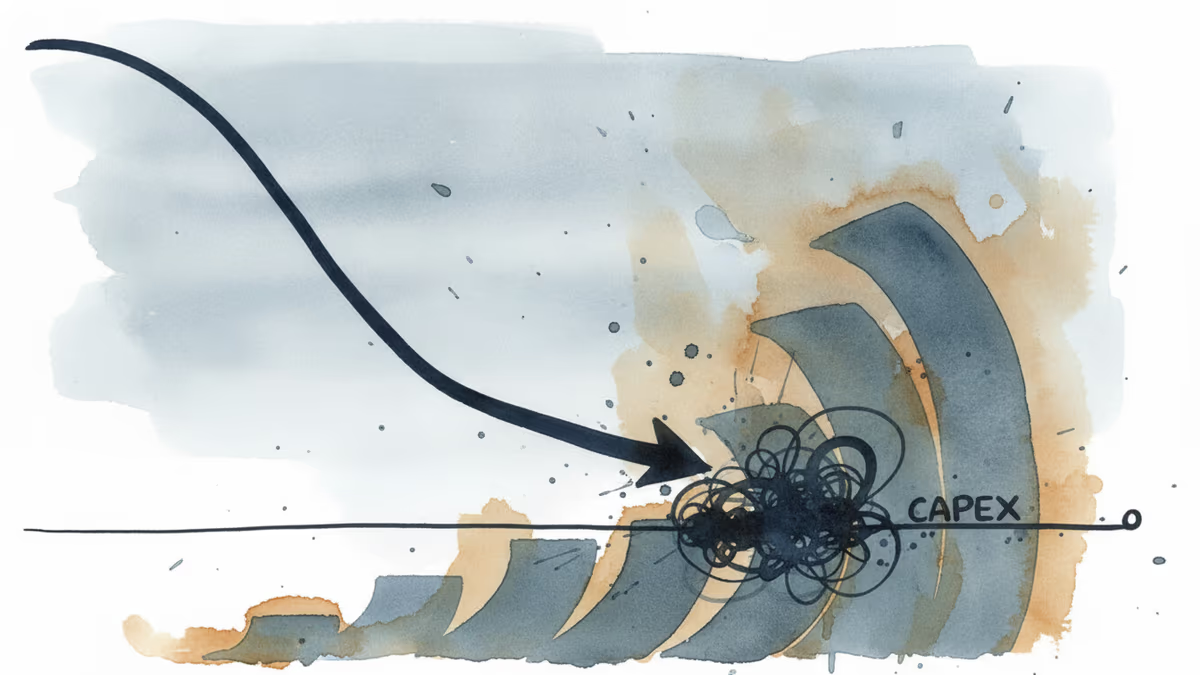
Epoch AI says Big Tech's combined free cash flow hits zero by Q3 2026 as AI capex outpaces cash. Compare the bubble and bull case—and check your 401(k).
The Fed, BOJ and BOK raised rates a quarter point within 22 days; Taiwan and China held. What each said, plus the impact on Korean borrowers and the won.
The Bank of Korea lifted its benchmark rate a quarter-point to 2.75%, its first increase in three and a half years. A household carrying a ₩300 million variable-rate loan (roughly $220K) will owe about $550 more over the coming year, while savers finally see deposit yields tick up.
Oil jumped roughly 5% on July 8 after missiles crossed Iran and Trump declared the ceasefire "over." Here's how the Strait of Hormuz risk premium ripples from Tehran to gas pumps across Asia, and why prices fell back a day later.
Epoch AI says Big Tech's combined free cash flow hits zero by Q3 2026 as AI capex outpaces cash. Compare the bubble and bull case—and check your 401(k).
Thoughts
Share your thoughts on this article
Sign in to join the conversation