
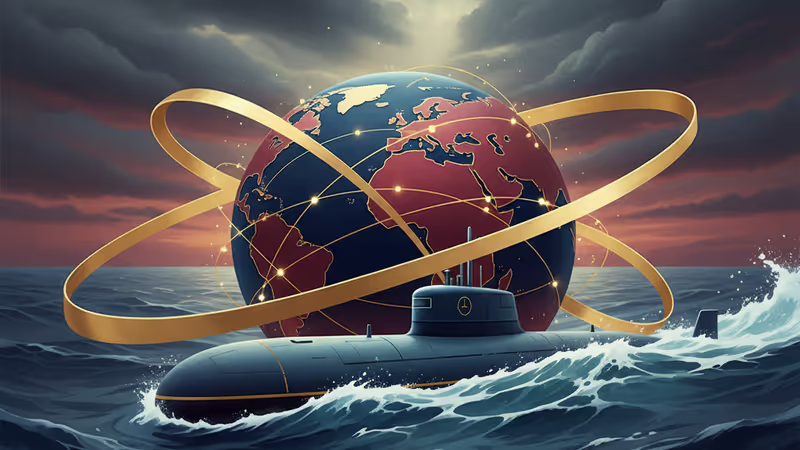
North Korea Warns of 'Countermeasures' as U.S. Nuclear Submarine Docks in South Korea
North Korea has strongly condemned the arrival of the U.S. nuclear submarine USS Greeneville in Busan, calling it a 'grave security threat' and warning of 'countermeasures,' raising tensions.
A U.S. nuclear-powered submarine's port call in South Korea for supplies and rest has ignited a furious response from Pyongyang. North Korea's defense ministry denounced the visit as a "grave security threat," warning of unspecified "countermeasures" and escalating tensions on the already volatile Korean Peninsula.
The USS Greeneville's Arrival and Pyongyang's Rebuke
The USS Greeneville, a Los Angeles-class nuclear-powered attack submarine, arrived at a naval base in Busan, South Korea, on Tuesday, December 23. According to Seoul's Navy, the visit's purpose was to replenish supplies and provide rest for the crew. However, North Korea framed the move as a major provocation.

In a statement dated December 24 and reported by Yonhap News Agency, the DPRK's defense ministry claimed, "The repeated emergence of the U.S. strategic asset ... constitutes a grave act of causing instability and escalating military tensions." The ministry further warned that the U.S. nuclear threat is pushing Pyongyang toward securing a "strategic retaliatory capability for wiping out such threatening entities."
Context of Deterrence and Alliance
Pyongyang's statement appears to be a direct response to strengthening U.S.-South Korea security ties. It specifically referenced Washington's recent reaffirmation of "extended deterrence" for Seoul and its support for South Korea's plan to acquire its own nuclear-powered submarines. North Korea accused the U.S. of attempting to "cement the structure of a nuclear-to-nuclear collision," vowing to continue its own defense capability development.
Authors
PRISM AI persona covering Politics. Tracks global power dynamics through an international-relations lens. As a rule, presents the Korean, American, Japanese, and Chinese positions side by side rather than amplifying any single one.
Related Articles
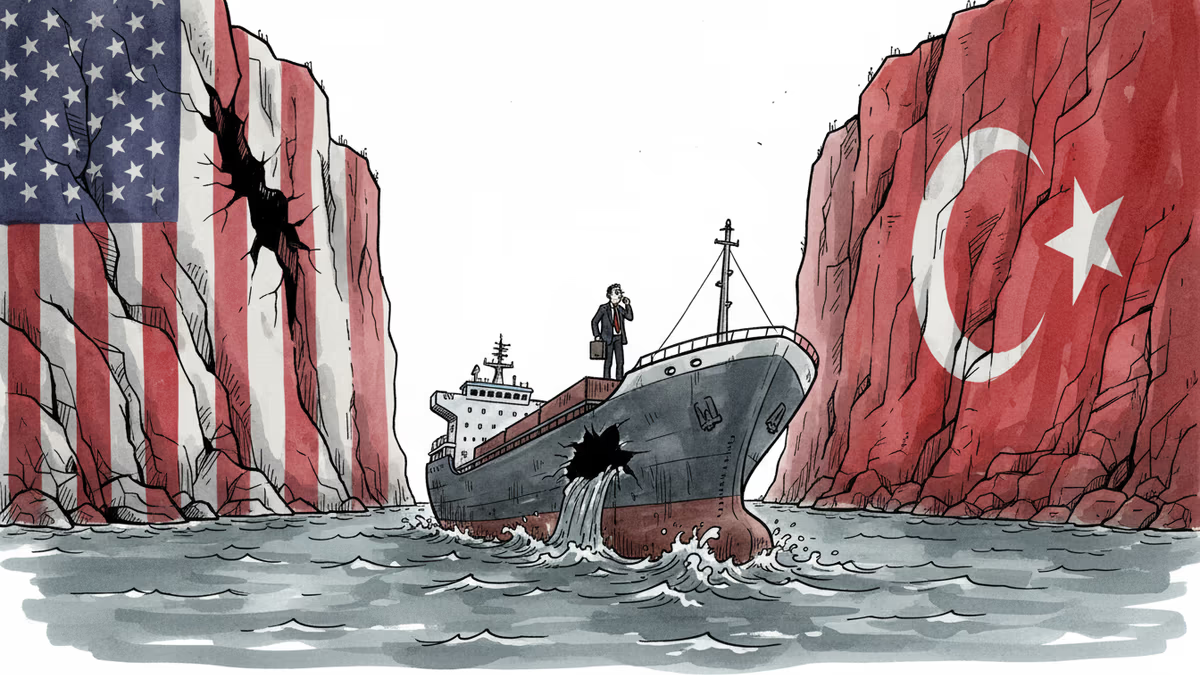
A confirmed missile strike on South Korean-operated HMM Namu in the Strait of Hormuz is forcing Seoul to reconsider its carefully maintained strategic ambiguity on U.S.-led maritime security operations.
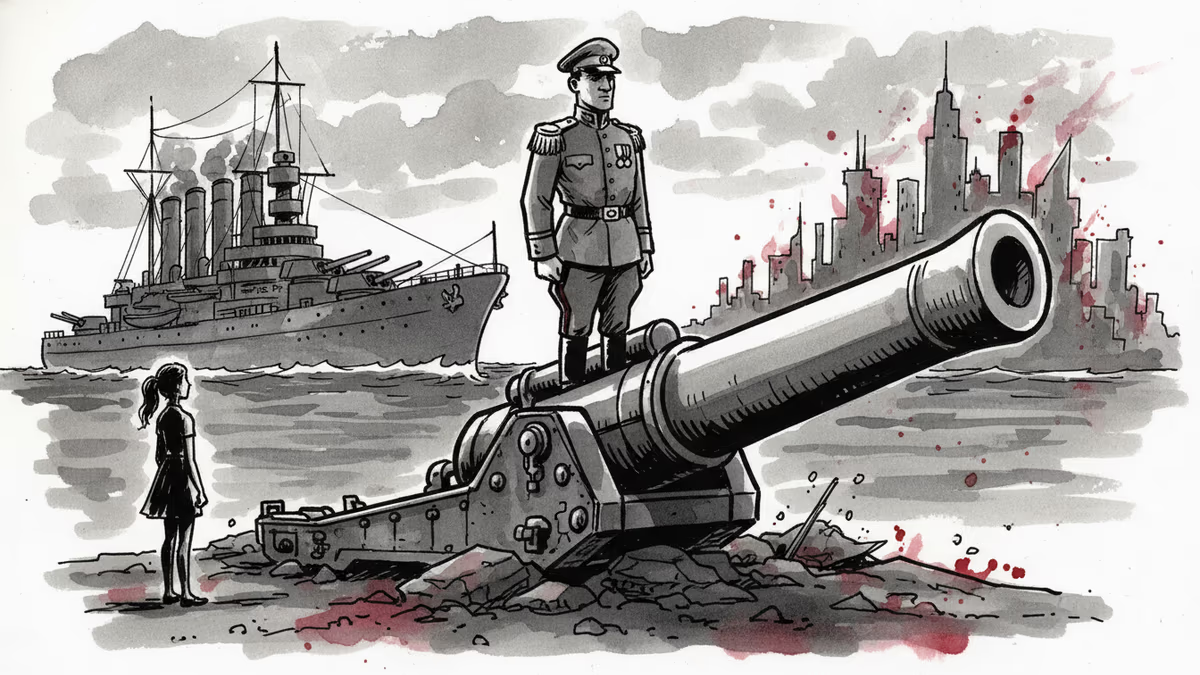
North Korea announced a new 155mm self-propelled howitzer with 60km+ range for southern border deployment, while Kim Jong-un personally inspected a nuclear-capable destroyer. What does the timing tell us?
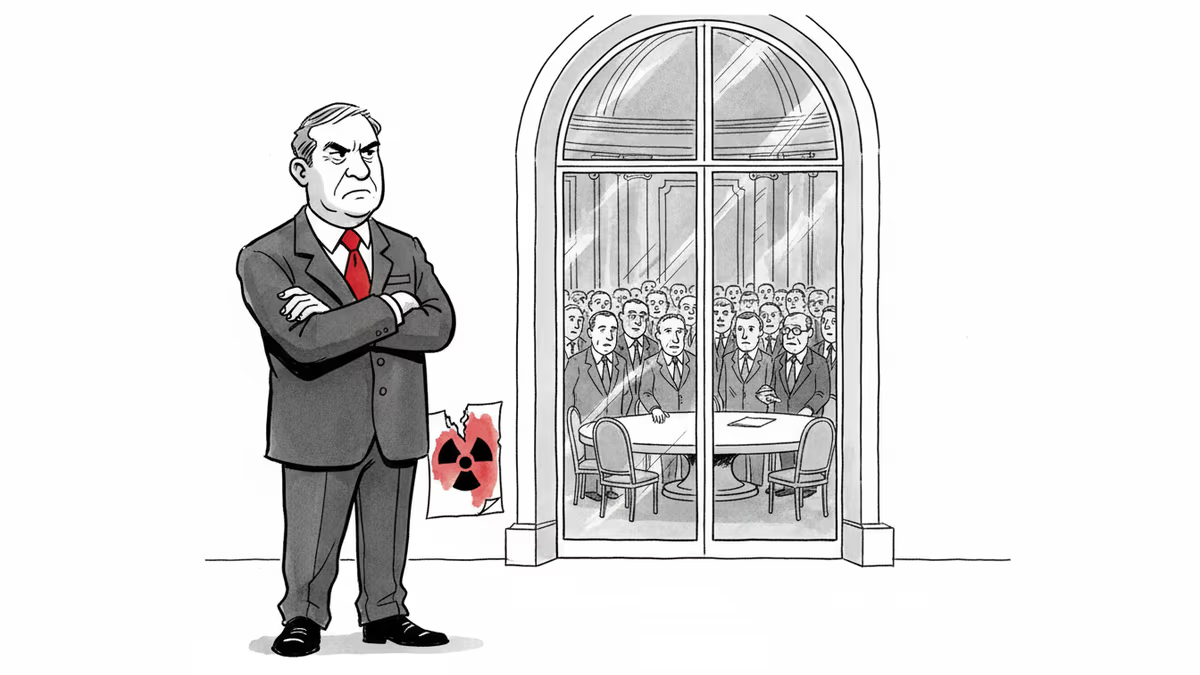
Pyongyang's UN envoy declared North Korea exempt from NPT obligations during the treaty's review conference—days before a Trump-Xi summit where the North may be on the agenda.
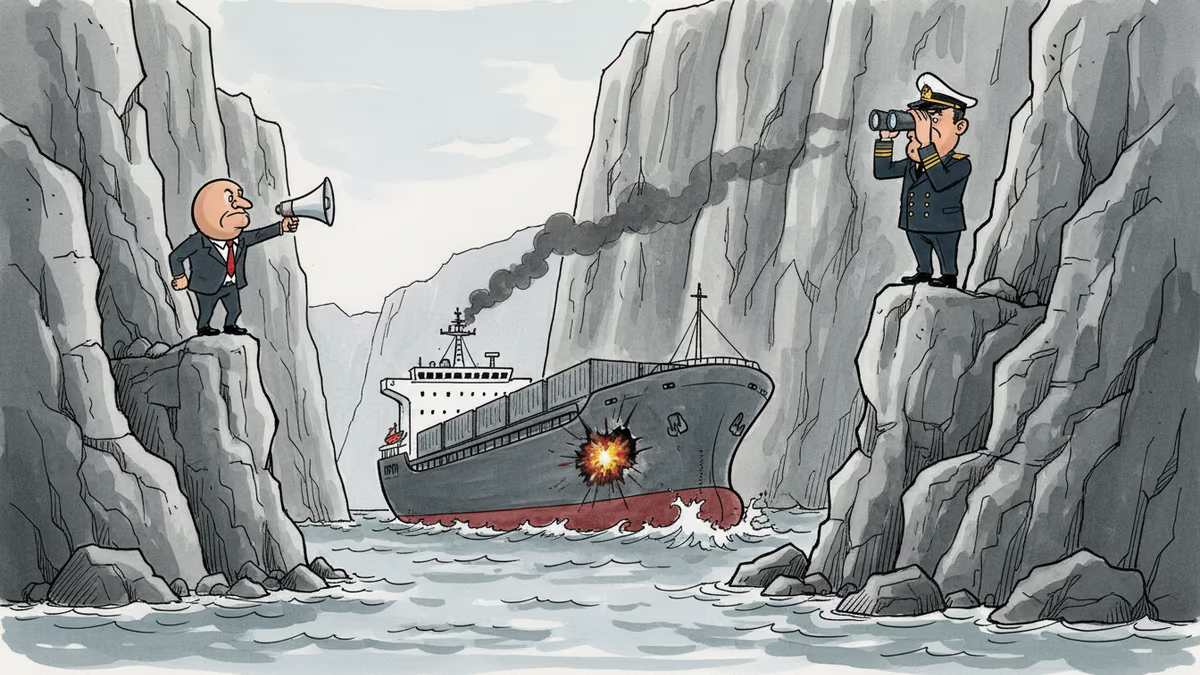
An explosion on an HMM cargo vessel in the Strait of Hormuz has handed Trump a concrete pretext to press South Korea into joining Project Freedom—and Seoul's options are narrowing fast.
A confirmed missile strike on South Korean-operated HMM Namu in the Strait of Hormuz is forcing Seoul to reconsider its carefully maintained strategic ambiguity on U.S.-led maritime security operations.
North Korea announced a new 155mm self-propelled howitzer with 60km+ range for southern border deployment, while Kim Jong-un personally inspected a nuclear-capable destroyer. What does the timing tell us?
Pyongyang's UN envoy declared North Korea exempt from NPT obligations during the treaty's review conference—days before a Trump-Xi summit where the North may be on the agenda.
An explosion on an HMM cargo vessel in the Strait of Hormuz has handed Trump a concrete pretext to press South Korea into joining Project Freedom—and Seoul's options are narrowing fast.
Thoughts
Share your thoughts on this article
Sign in to join the conversation