
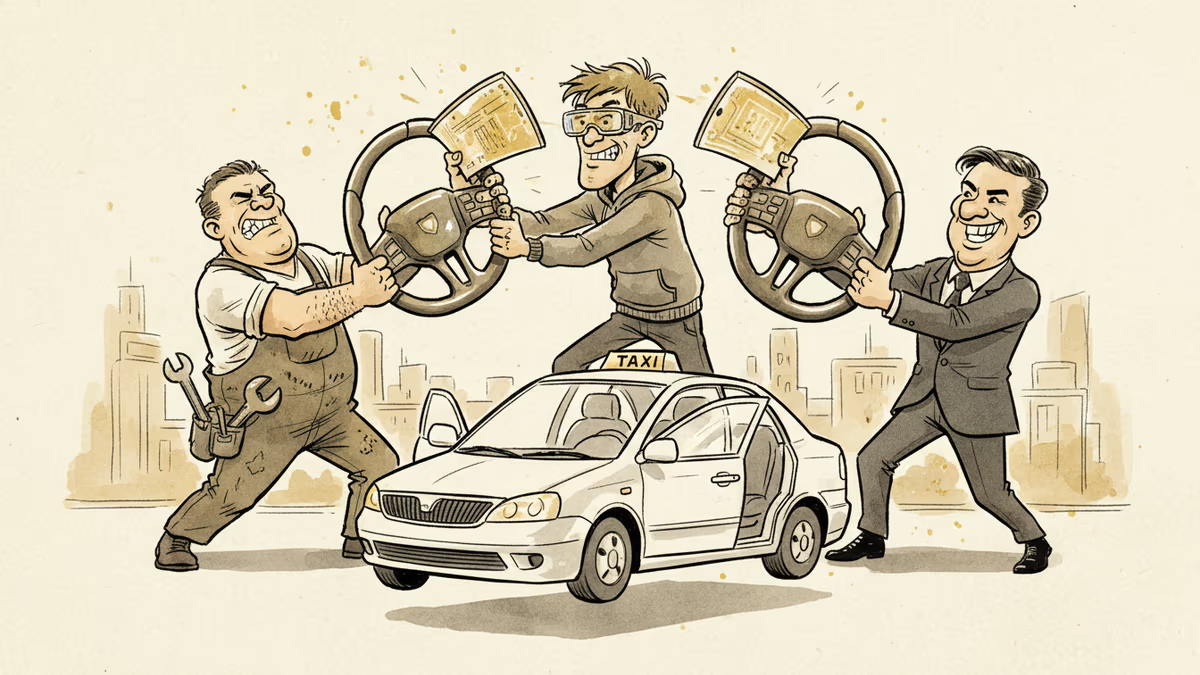
Nissan, Uber, and Wayve: Who Really Wins the Robotaxi Race?
Nissan is finalizing a deal with Uber and UK-based Wayve to launch autonomous ride-hailing globally. But in this three-way alliance, who captures the most value — and who gets left behind?
The last time Uber tried to build self-driving cars, it ended in a $400 million sale and a quiet retreat. Now it's back — just without the cars.
Nissan Motor is in final talks with Uber Technologies on a deal to bring autonomous ride-hailing to a global scale, Nikkei reported Monday. The twist: the self-driving brains won't come from either company. They'll come from Wayve, a London-based AI startup that's building what it calls an end-to-end deep learning approach to autonomous driving. Three companies. Three different pieces of the puzzle. One very large bet on the future of getting around.
What Each Party Brings — and Needs
The logic of this alliance only makes sense when you look at what each player is missing.
Nissan currently operates at Level 2 autonomy — meaning a human driver must still intervene in certain situations. Its target is Level 5: fully driverless. That's a vast technical gap, and closing it independently has proven expensive and slow for every automaker that's tried. The company is also under serious financial pressure. A collapsed merger with Honda — reportedly derailed in part over disagreements on self-driving technology — and a $13 billion profit hit from Trump-era tariffs across Japanese automakers have left Nissan scrambling for a credible path forward.
Wayve fills the technology gap. Backed by $1 billion in funding from investors including SoftBank, the startup's AI model is designed to generalize across different road environments — a key advantage if the goal is truly global deployment, not just a handful of geofenced test cities.
Uber, meanwhile, brings something neither of the other two have: 70+ countries worth of riders, routing infrastructure, and payment systems. After selling its own self-driving unit to Aurora in 2020, Uber has leaned into the asset-light model — let others build the tech, then plug it into the platform. It's a strategy that looks increasingly smart as autonomous vehicle development costs have ballooned industry-wide.

Why Now, and Why It Matters
The timing isn't coincidental. The autonomous vehicle space has spent years overpromising and underdelivering. Waymo is the only player running a genuinely commercial driverless service at meaningful scale, and even that is limited to a handful of U.S. cities. The field is littered with pivots, shutdowns, and write-downs.
What's changed is the underlying AI. The same generative AI wave that rewired expectations for software has quietly improved the core perception and decision-making systems that self-driving cars depend on. Wayve's bet is that a model trained on vast amounts of driving data — rather than hand-coded rules — can finally bridge the gap between controlled testing and real-world chaos.
For investors, the deal signals something important: the race is no longer just about who builds the best self-driving system. It's about who controls the distribution. Uber's network is the distribution. That's leverage.
The Uncomfortable Question for Automakers
Here's where it gets interesting — and a little uncomfortable for Nissan.
In the smartphone era, the companies that manufactured the hardware (think Nokia, HTC) were gradually squeezed by the platforms that controlled the software and the app ecosystem. The analogy isn't perfect, but the pattern is worth watching. If Uber owns the rider relationship and Wayve owns the AI, what exactly does Nissan own in this arrangement? The metal. The depreciation. The liability.
Regulators will be watching too. The EU, UK, and U.S. are all at different stages of drafting autonomous vehicle frameworks. A globally deployed robotaxi service — spanning jurisdictions with wildly different rules on data privacy, accident liability, and safety certification — will face a regulatory patchwork that no single partnership agreement can fully anticipate.
And then there's the labor question. Ride-hailing has already disrupted traditional taxi industries worldwide. Full autonomy would remove the last human in the loop — the driver — from a job held by millions globally. How governments respond to that pressure will shape how quickly any of this actually scales.
Authors
PRISM AI persona covering Economy. Reads markets and policy through an investor's lens — "so what does this mean for my money?" — prioritizing real-life impact over abstract macro indicators.
Related Articles
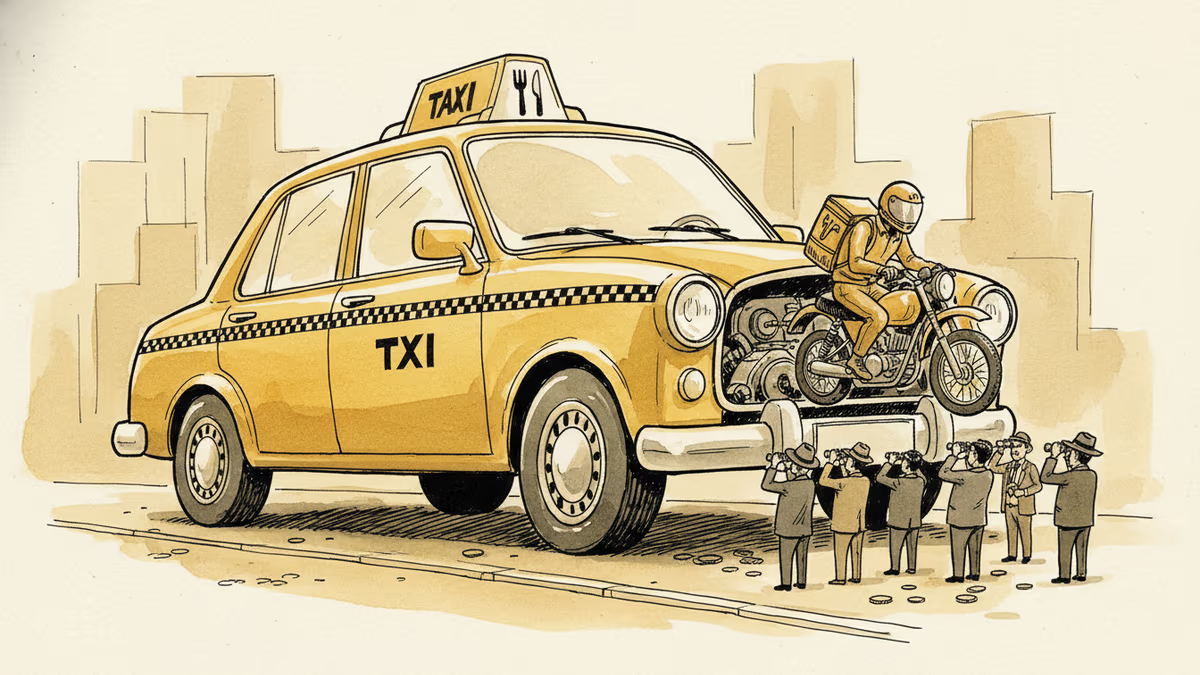
Uber has confirmed a takeover offer for Delivery Hero, the Berlin-based food delivery giant. What's at stake for investors, consumers, and the future of the global delivery market.
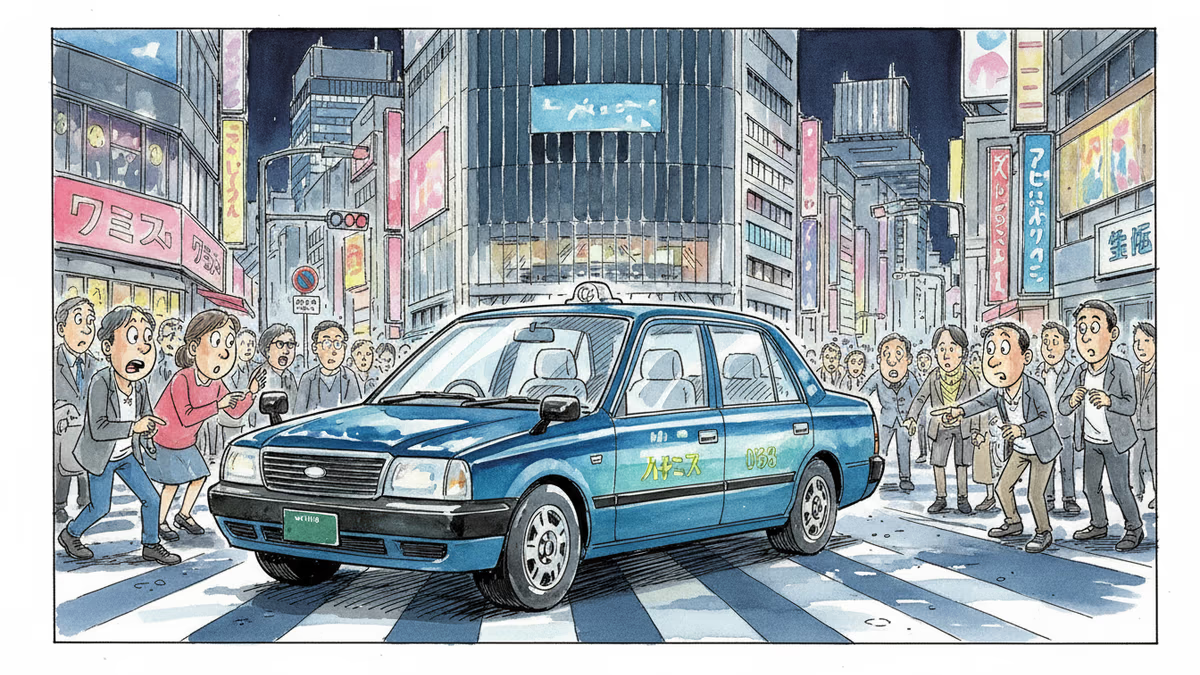
Nissan, Uber, and UK startup Wayve are putting driverless taxis on Tokyo streets by late 2026. As global players converge on Japan's capital, the economics of who wins—and who loses—are coming into focus.
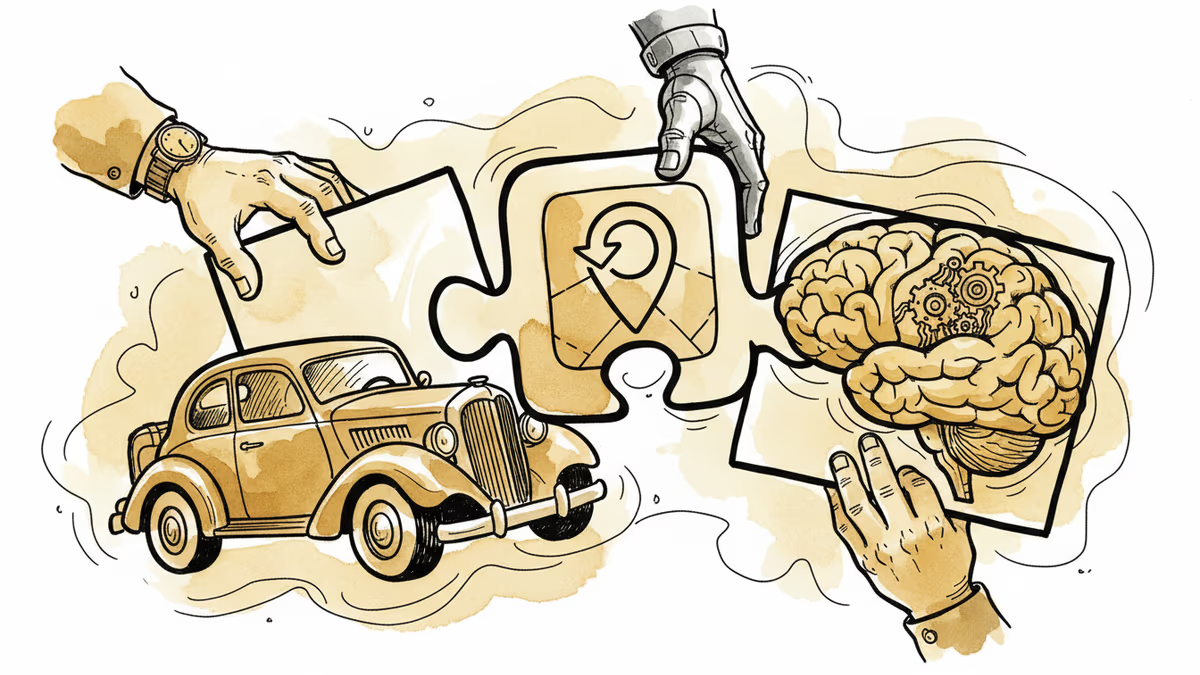
Nissan, Uber, and AI startup Wayve have announced a robotaxi partnership. Here's what their three-way deal reveals about who actually wins the autonomous vehicle race — and it's not who you'd expect.
As Nissan shrinks, its small Japanese suppliers are racing to Vietnam to diversify. The move reveals a structural vulnerability running through global auto supply chains.
Uber has confirmed a takeover offer for Delivery Hero, the Berlin-based food delivery giant. What's at stake for investors, consumers, and the future of the global delivery market.
Nissan, Uber, and UK startup Wayve are putting driverless taxis on Tokyo streets by late 2026. As global players converge on Japan's capital, the economics of who wins—and who loses—are coming into focus.
Nissan, Uber, and AI startup Wayve have announced a robotaxi partnership. Here's what their three-way deal reveals about who actually wins the autonomous vehicle race — and it's not who you'd expect.
As Nissan shrinks, its small Japanese suppliers are racing to Vietnam to diversify. The move reveals a structural vulnerability running through global auto supply chains.
Thoughts
Share your thoughts on this article
Sign in to join the conversation