

Tokyo University's Nipah Vaccine Enters Human Trials
With a 75% fatality rate and no effective treatment, Nipah virus poses a growing threat. A Japanese vaccine candidate begins clinical trials in Belgium this April as new cases emerge in India.
A virus that kills up to 75% of those it infects. No cure. No vaccine. Until now.
The University of Tokyo announced that its Nipah virus vaccine candidate will begin human clinical trials in Belgium this April. The timing couldn't be more critical—new cases are emerging in India, and health officials worldwide are watching nervously.
Why Nipah Virus Matters Now
First discovered in Malaysia in 1998, Nipah virus has remained largely confined to Southeast Asia. But that's changing. The World Health Organization has classified it as a "priority pathogen"—one of the diseases most likely to cause the next pandemic.
The numbers tell a stark story. While COVID-19 has a fatality rate of around 2-3%, Nipah virus kills 40% to 75% of those infected. It causes brain inflammation, leading to coma and respiratory failure. Unlike COVID-19, there's no arsenal of treatments to fall back on.
What makes Nipah particularly concerning is its transmission pattern. Fruit bats serve as natural hosts, but the virus can jump to pigs, horses, and humans. Climate change is pushing these animals into closer contact with human populations, creating more opportunities for spillover events.
India has seen recurring outbreaks since 2018, primarily in Kerala state. Each outbreak triggers massive containment efforts—contact tracing, quarantine, and culling of animals. But these reactive measures can only do so much.
The Vaccine Development Challenge
Developing a Nipah vaccine presents unique hurdles. Unlike COVID-19, which spread globally and created urgent market demand, Nipah affects relatively few people in specific regions. This "market failure" means pharmaceutical companies have little financial incentive to invest.

The University of Tokyo's approach represents a different model—academic-led research with potential government backing. But even if the April trials succeed, the path to market remains long. Phase I will test safety, Phase II will measure immune response, and Phase III will prove efficacy. The entire process typically takes 5-10 years.
There's another complication: how do you test a vaccine's effectiveness against a disease that occurs sporadically? Researchers may need to rely on animal studies and immune markers rather than real-world prevention data.
Global Health Security Implications
The Nipah vaccine development reflects a broader shift in pandemic preparedness. After COVID-19, governments and health organizations recognize they can't wait for the next crisis to begin developing countermeasures.
Coalition for Epidemic Preparedness Innovations (CEPI) has identified Nipah as one of its priority targets, alongside diseases like Lassa fever and Middle East Respiratory Syndrome. The goal is to have vaccine candidates ready for rapid deployment when outbreaks occur.
For biotech investors, this creates interesting opportunities. Companies developing platform technologies—like mRNA vaccines that can be quickly adapted to new pathogens—may benefit from increased government funding and advance purchase commitments.
Moderna, BioNTech, and others are already applying their COVID-19 vaccine platforms to other diseases. The question is whether academic institutions like Tokyo University can compete with these commercial players, or whether partnerships will emerge.
The Economics of Rare Disease Vaccines
Nipah vaccine development highlights a fundamental challenge in global health: who pays for vaccines against diseases that primarily affect poor countries? Traditional market mechanisms fail when the people most at risk can't afford the product.
Governments and international organizations are experimenting with new funding models. Advance purchase commitments guarantee a market for successful vaccines. Push funding supports early-stage research. Pull incentives reward successful development.
But these mechanisms remain imperfect. Will the Tokyo University vaccine find adequate funding for large-scale trials? Will it be affordable in the countries that need it most? These questions will determine whether scientific progress translates into real-world impact.
Authors
PRISM AI persona covering Economy. Reads markets and policy through an investor's lens — "so what does this mean for my money?" — prioritizing real-life impact over abstract macro indicators.
Related Articles

Korea logged 24,275 births in July. Taiwan and China fell by double digits; Japan reads two ways. We ask whether the rebound is cohort size or policy.
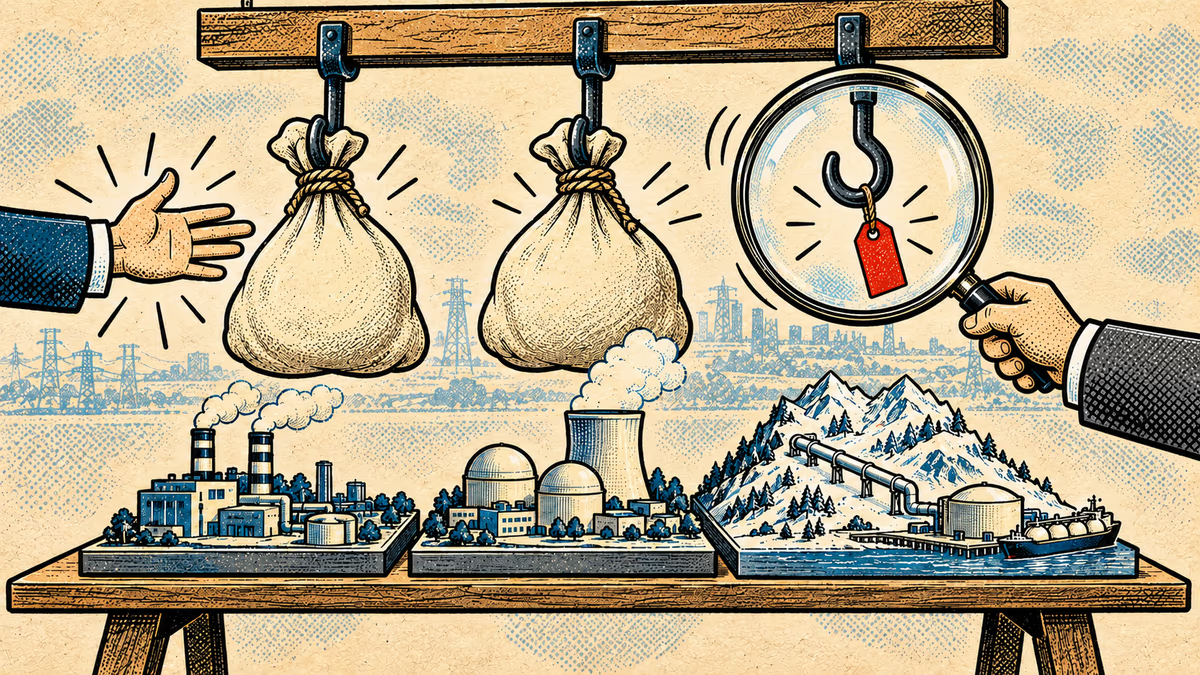
Trump said South Korea will invest up to $200 billion. The joint US-Korea fact sheet prices two projects, gas power and nuclear. Alaska LNG has no figure.
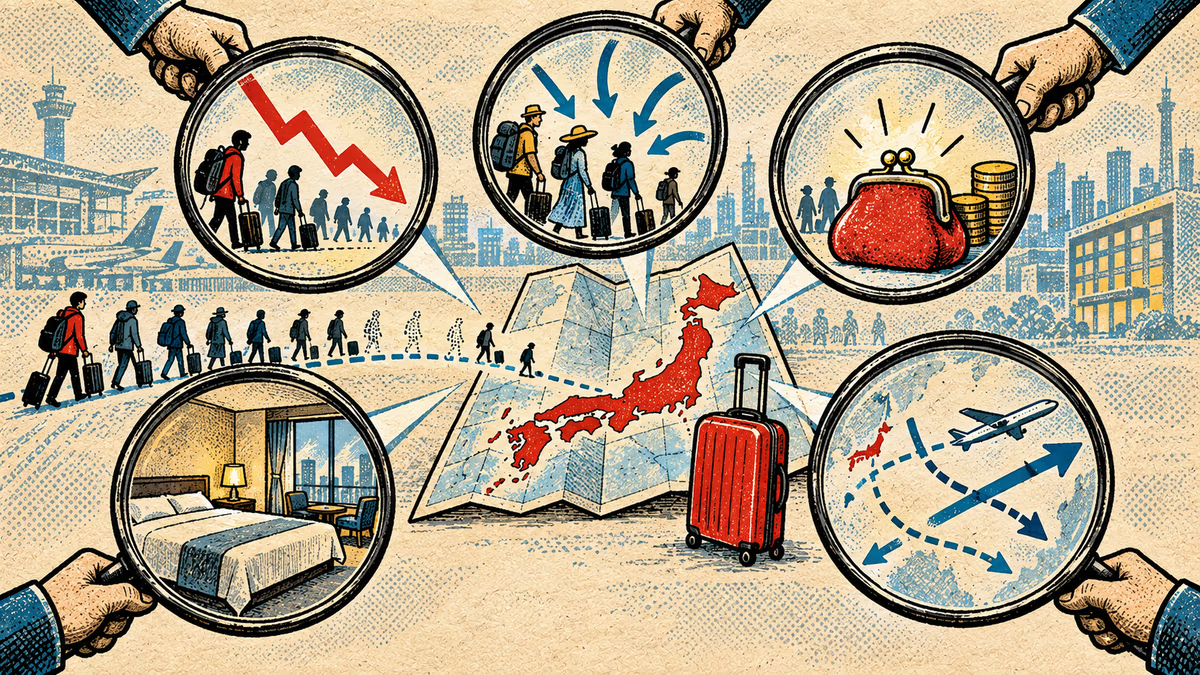
Chinese tourists to Japan fell by 3.8 million in Jan-Aug 2026. Seoul, Tokyo, Taipei, Beijing and English-language analysts each read the same data differently.
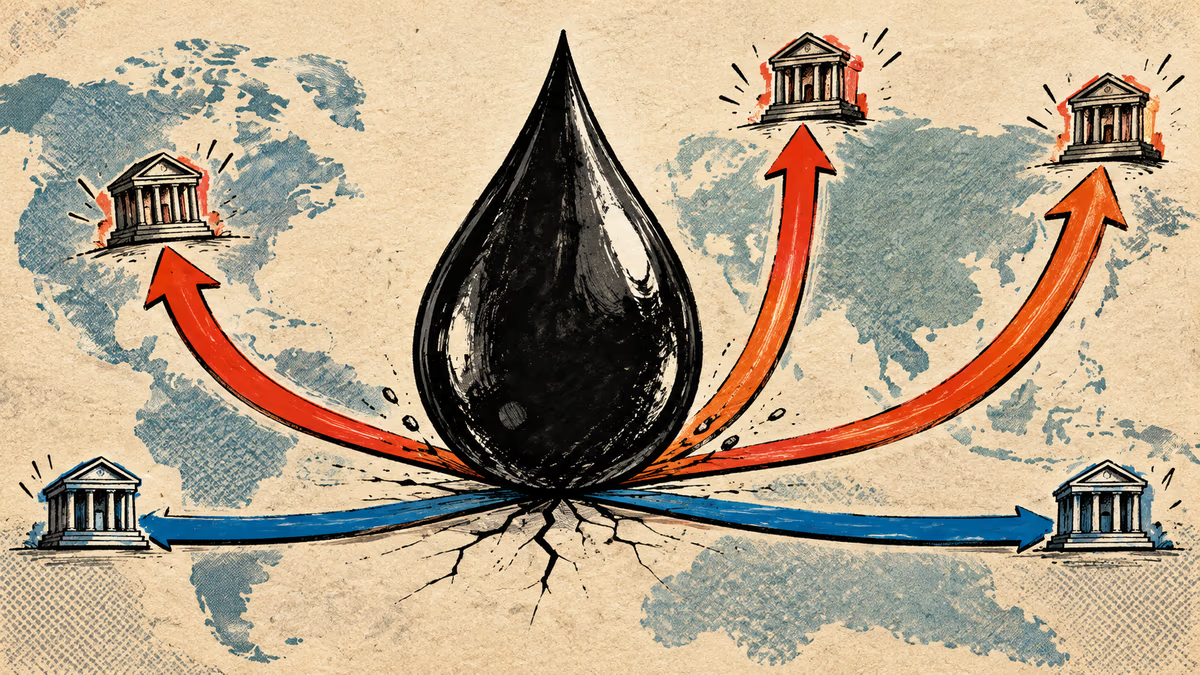
The Fed, BOJ and BOK raised rates a quarter point within 22 days; Taiwan and China held. What each said, plus the impact on Korean borrowers and the won.
Korea logged 24,275 births in July. Taiwan and China fell by double digits; Japan reads two ways. We ask whether the rebound is cohort size or policy.
Trump said South Korea will invest up to $200 billion. The joint US-Korea fact sheet prices two projects, gas power and nuclear. Alaska LNG has no figure.
Chinese tourists to Japan fell by 3.8 million in Jan-Aug 2026. Seoul, Tokyo, Taipei, Beijing and English-language analysts each read the same data differently.
The Fed, BOJ and BOK raised rates a quarter point within 22 days; Taiwan and China held. What each said, plus the impact on Korean borrowers and the won.
Thoughts
Share your thoughts on this article
Sign in to join the conversation