
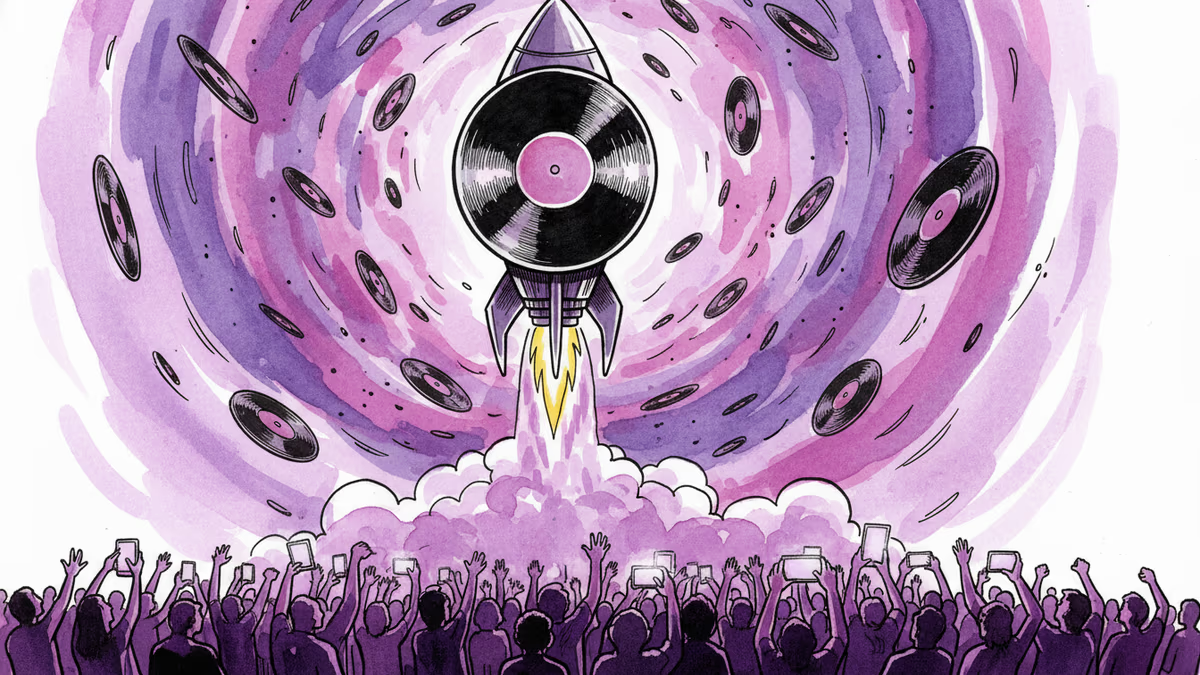
NEXZ Broke Their Own Record in 48 Hours. What Does That Actually Mean?
NEXZ sold 436,457 copies of 'Mmchk' in just two days, shattering their previous first-week record. But what does a number like that really tell us about K-Pop's commercial engine?
The album had been out for less than 48 hours. The record was already gone.
NEXZ dropped their new single album 'Mmchk' on April 27, and by the time April 28 wrapped up, Hanteo Chart data showed 436,457 copies sold. That number didn't just perform well — it erased the group's own previous first-week sales record with two days still left on the clock.
What "First-Week Sales" Actually Means in K-Pop
For readers outside the fandom ecosystem, a quick translation: in K-Pop, "first-week" or chodon (초동) sales refer to the total physical copies sold in the seven days following an album's release. It's one of the most closely watched metrics in the industry — not just because it reflects commercial performance, but because it functions as a direct thermometer of fandom mobilization.
Fans don't just buy one copy. Many buy multiple — to enter fan sign event lotteries, to collect photocards, or simply to push their artist's chart position higher. This means the number is as much a reflection of fandom culture as it is of musical reach. NEXZ clearing 436K+ in two days signals that their fanbase didn't just grow — it accelerated.
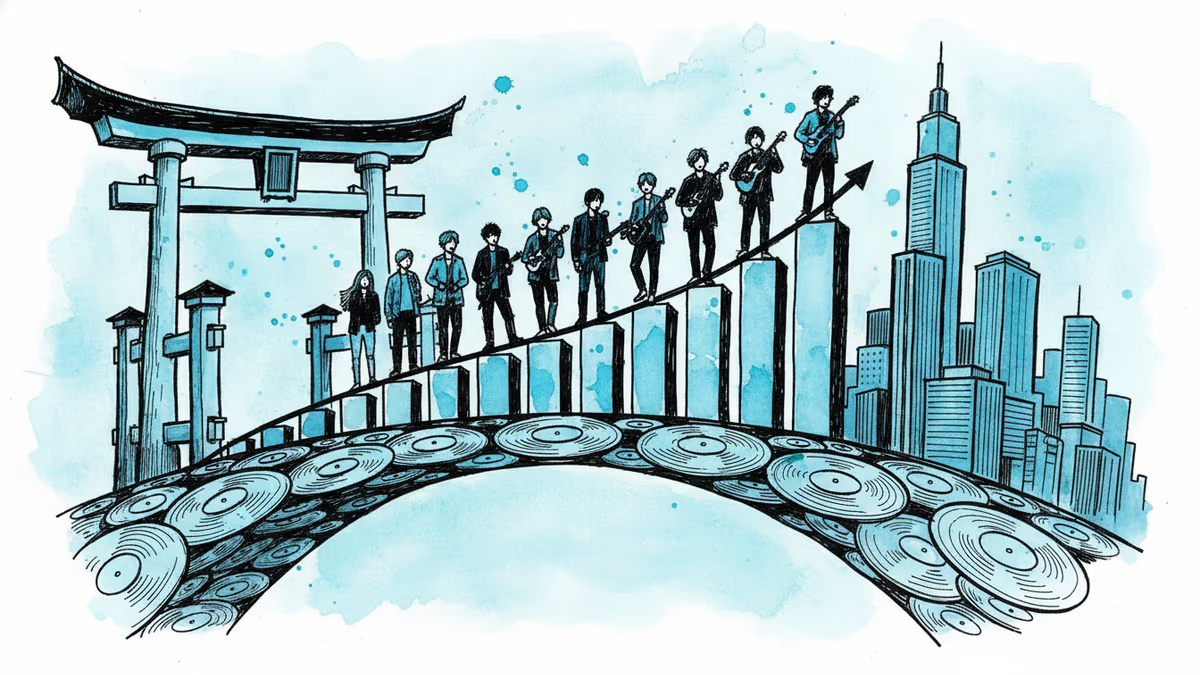
NEXZ is a group with a distinctive structure: formed through a collaboration between HYBE's Japanese operations and Sony Music Japan, the lineup includes both Korean and Japanese members. Their positioning from debut has been explicitly cross-market, targeting both Korean and Japanese fandoms simultaneously. That dual-base dynamic likely plays a meaningful role in the velocity of these numbers.
The Bigger Picture: K-Pop's Sales Metrics Under Scrutiny

Here's where it gets more complicated. K-Pop's physical album market has faced growing questions over the past two years. Some of the genre's biggest acts saw sales peaks followed by notable declines, prompting industry observers to ask whether the numbers ever fully reflected organic demand — or whether they were partially inflated by the incentive structures built around buying.
Fan sign lotteries, photocard randomization, and multi-version packaging all create reasons to buy beyond simply wanting the music. Critics argue this has made first-week sales a metric that measures fandom spending behavior more than it measures cultural impact. Supporters counter that the financial commitment is the cultural expression — that in K-Pop, buying is a form of participation.
Against that backdrop, NEXZ breaking their own record in 48 hours carries two simultaneous readings. One: their fanbase is genuinely expanding and increasingly engaged. Two: the mechanics of K-Pop's commercial ecosystem are still very much intact, regardless of broader market cooling.
How Different Stakeholders Read This Number
For fans, it's straightforward — this is proof of growth, a collective achievement they contributed to. The emotional stakes are real.
For industry analysts, the format matters. 'Mmchk' is a single album, typically priced lower than a full-length release and with fewer versions to collect. That could mean the raw fan enthusiasm is even stronger than the number suggests — or it could mean the lower barrier to purchase contributed to higher volume. The comparison to previous records needs to account for format differences.
For investors and label watchers, the HYBE-Sony joint structure makes NEXZ an interesting case study in how K-Pop's production model exports beyond Korea. A group that charts on Hanteo while being co-produced by a Japanese major label represents a different kind of globalization than the typical Korean-label-with-global-fans model.
For the broader K-Pop market, a newer group posting these numbers while some established acts plateau is a data point worth watching — not as proof of a shift, but as a question worth asking.
This content is AI-generated based on source articles. While we strive for accuracy, errors may occur. We recommend verifying with the original source.
Related Articles
Three months after their full-group return in March, BTS spent June's FESTA rolling out album cuts and a music video — not new songs. Come Over cracked a global top 5 with zero new music behind it. Did the play work?
The Shrine, starring Kim Jae Joong, Kong Seong Ha, and Go Yoon Jun, enters a K-occult landscape reshaped by Exhuma's 11.9M ticket milestone. What does the film's Japan setting signal?
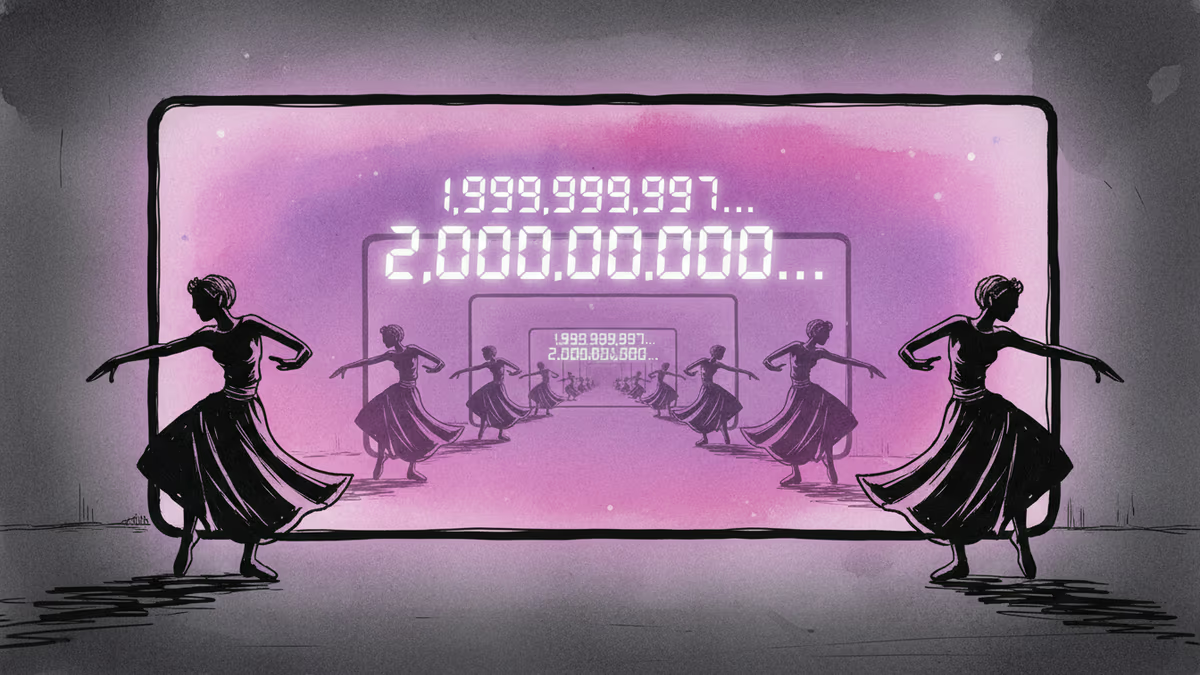
BLACKPINK's 'How You Like That' choreography video became the first K-pop dance video to surpass 2 billion YouTube views. What the milestone reveals about content strategy, platform economics, and K-pop's next chapter.
&TEAM's 'We on Fire' debuted on the Billboard 200 for the first time. Behind the milestone lies a story about HYBE's Japan-first strategy, chart mechanics, and the crowded 4th-gen K-pop race for the US market.
Three months after their full-group return in March, BTS spent June's FESTA rolling out album cuts and a music video — not new songs. Come Over cracked a global top 5 with zero new music behind it. Did the play work?
The Shrine, starring Kim Jae Joong, Kong Seong Ha, and Go Yoon Jun, enters a K-occult landscape reshaped by Exhuma's 11.9M ticket milestone. What does the film's Japan setting signal?
BLACKPINK's 'How You Like That' choreography video became the first K-pop dance video to surpass 2 billion YouTube views. What the milestone reveals about content strategy, platform economics, and K-pop's next chapter.
&TEAM's 'We on Fire' debuted on the Billboard 200 for the first time. Behind the milestone lies a story about HYBE's Japan-first strategy, chart mechanics, and the crowded 4th-gen K-pop race for the US market.
Thoughts
Share your thoughts on this article
Sign in to join the conversation