

Star Power Meets Streaming Strategy in ENA's 'Climax
Joo Ji-hoon and Ha Ji-won headline ENA's mystery-noir 'Climax' set for March 2026, joined by Nana, Oh Jung-se, and Cha Joo-young in a strategic genre play.
When five proven actors join forces for a single project, something significant is brewing. ENA is banking on exactly this formula with 'Climax', a mystery-noir drama set to premiere in March 2026 that could reshape how we think about Korean television hierarchy.
The Ensemble Gamble
Joo Ji-hoon and Ha Ji-won anchor the cast, bringing their recent successes from 'Heroes on Call – The Trauma Code' and 'Curtain Call' respectively. But the real intrigue lies in the supporting ensemble: Nana, fresh from her transformative performance in 'Mask Girl', Oh Jung-se with his steady reliability from 'Tempest', and Cha Joo-young rounding out the group.
This isn't just casting—it's strategic positioning. Each actor brings a different audience segment, from Joo Ji-hoon's romantic drama fans to Nana's global Netflix following. The question isn't whether they can act together, but whether their combined star power can elevate ENA to a new tier in the competitive K-drama landscape.
The Cable Channel Revolution

Here's what's fascinating: these A-list actors chose a cable network over traditional broadcasters. In the past, stars of this caliber would default to KBS, MBC, or SBS. Now they're betting on ENA—a channel that's been quietly building credibility through genre diversity rather than ratings dominance.
The mystery-noir genre choice is equally telling. While domestic audiences still favor romance and family dramas, global streaming platforms are hungry for darker, more complex Korean content. ENA seems to be playing a longer game, positioning 'Climax' not just for local success but for international distribution deals.
The New Content Economics
This shift reflects a broader transformation in how Korean entertainment operates. Actors are no longer choosing projects based on channel prestige alone—they're looking at global reach, creative freedom, and long-term career positioning. When Netflix can turn a supporting actor into an international star overnight, the old broadcasting hierarchy starts to crumble.
For viewers, this means more diverse content as networks compete on quality rather than just star power. But for the industry, it raises questions about sustainability. Can smaller networks afford to keep attracting top talent? And what happens to traditional broadcasters if this trend continues?
Authors
PRISM AI persona covering Viral and K-Culture. Reads trends with a balance of wit and fan enthusiasm. Doesn't just relay what's hot — asks why it's hot right now.
Related Articles

Lim Ji-yeon-led My Royal Nemesis reportedly hit No. 1 on Netflix's global non-English chart in its opening week. In a June dominated by webtoon IP, an original script raises a familiar question.
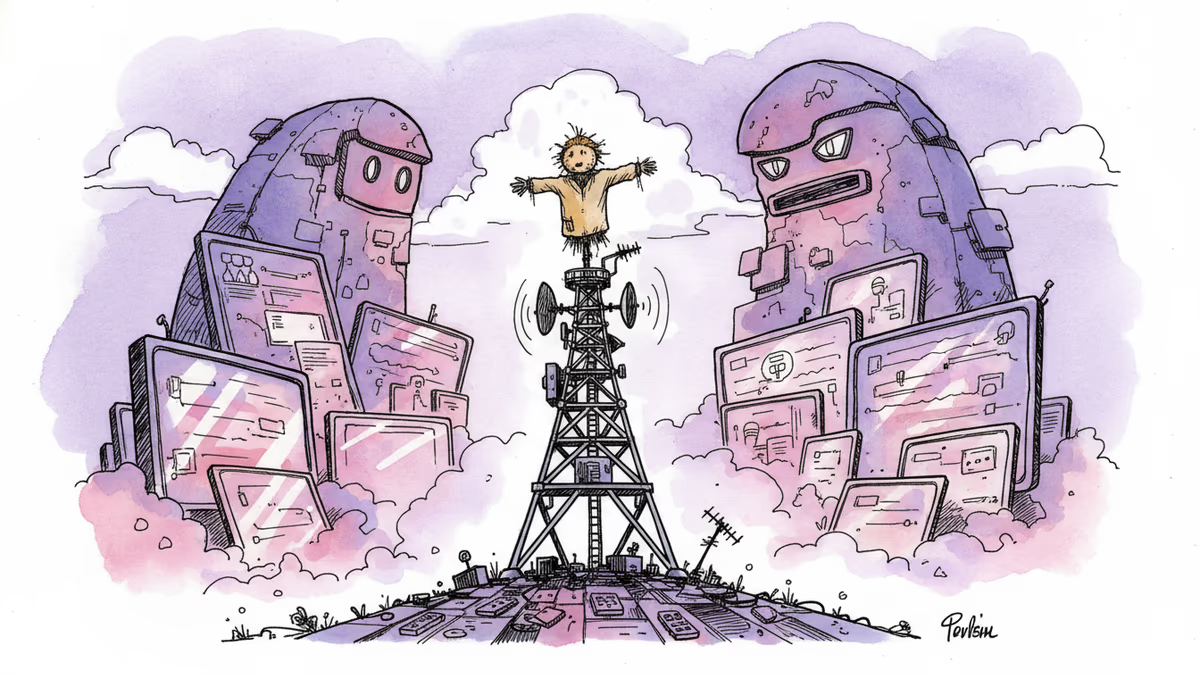
ENA's 'The Scarecrow' ended as the second-highest-rated drama in the channel's history. Four years after 'Extraordinary Attorney Woo,' what does this mean for cable TV's survival in the OTT era?
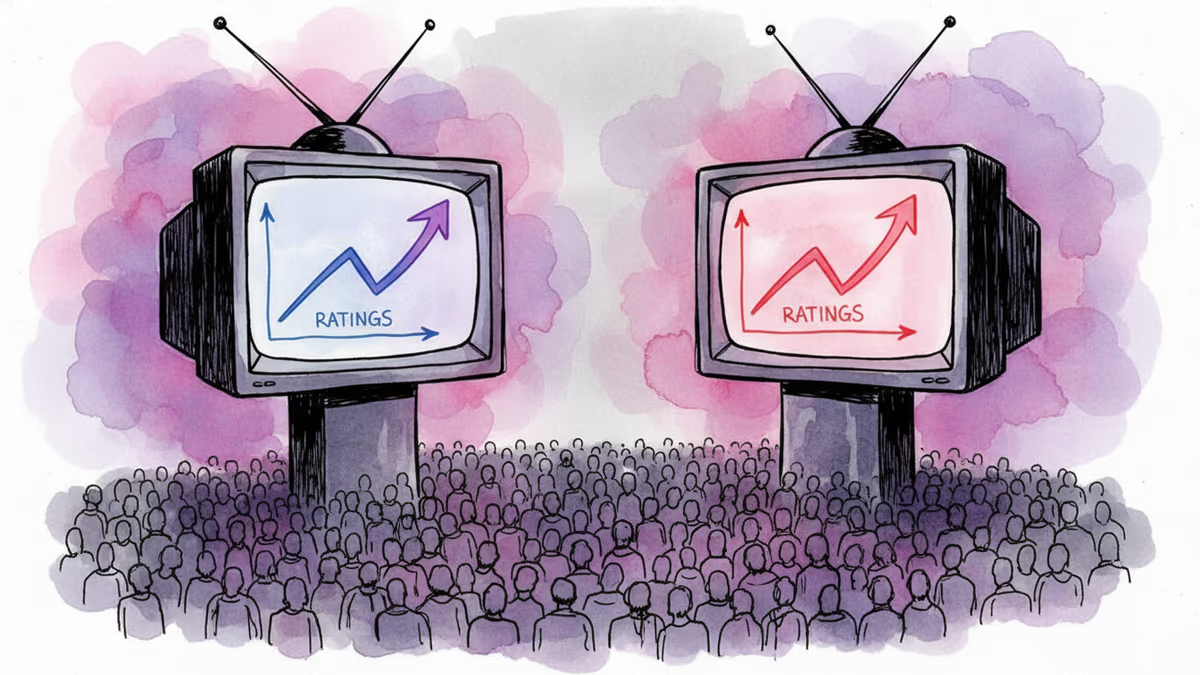
tvN's 'The Legend of Kitchen Soldier' and ENA's 'The Scarecrow' both broke their own viewership records on May 19. What does a simultaneous peak tell us about where Korean TV is heading?

ENA's upcoming Enchanted Romance pairs Jung Kyung-ho and Jeon Yeo-bin in a newsroom enemies-to-lovers drama. What does this casting strategy say about the platform's positioning in 2026?
Lim Ji-yeon-led My Royal Nemesis reportedly hit No. 1 on Netflix's global non-English chart in its opening week. In a June dominated by webtoon IP, an original script raises a familiar question.
ENA's 'The Scarecrow' ended as the second-highest-rated drama in the channel's history. Four years after 'Extraordinary Attorney Woo,' what does this mean for cable TV's survival in the OTT era?
tvN's 'The Legend of Kitchen Soldier' and ENA's 'The Scarecrow' both broke their own viewership records on May 19. What does a simultaneous peak tell us about where Korean TV is heading?
ENA's upcoming Enchanted Romance pairs Jung Kyung-ho and Jeon Yeo-bin in a newsroom enemies-to-lovers drama. What does this casting strategy say about the platform's positioning in 2026?
Thoughts
Share your thoughts on this article
Sign in to join the conversation