
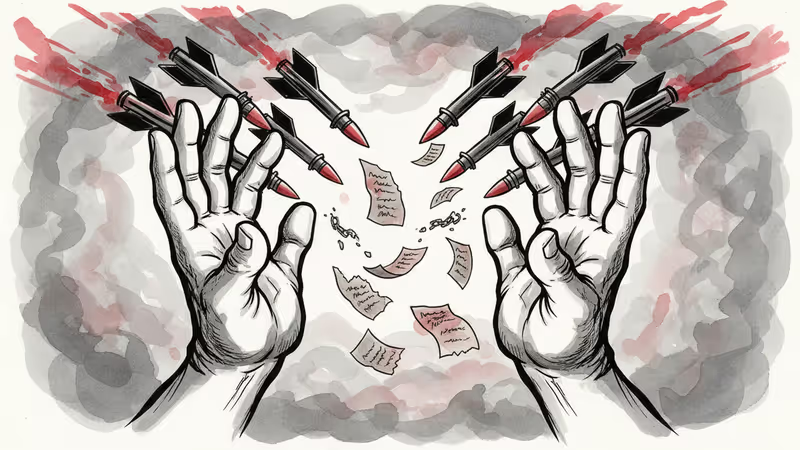
The Last Nuclear Treaty Dies This Week
New START, the final nuclear arms control treaty between the US and Russia, expires February 5th. After 15 years of limiting warheads, are we heading toward a new arms race?
Wednesday marks the end of an era. The last remaining nuclear arms control treaty between the world's two nuclear superpowers expires on February 5th, leaving no legal limits on American and Russian warheads for the first time in decades.
New START has quietly constrained both nations to 1,550 deployed warheads and 700 delivery vehicles since 2011. Now that constraint disappears, potentially opening the door to a new arms race at the worst possible moment.
When Diplomacy Still Worked
The treaty was born during a brief diplomatic thaw. In 2010, Barack Obama and Dmitry Medvedev signed the agreement in Prague, part of Obama's ambitious vision for a "world without nuclear weapons." It was supposed to be the first of several arms reduction deals.
That optimism didn't last long. When Vladimir Putin returned to the presidency in 2012, he effectively killed Obama's broader disarmament agenda. By 2014, with Russia's seizure of Crimea, any hope for deeper cooperation was dead.
The treaty limped along until 2023, when Putin suspended Russia's participation in verification measures while still observing warhead limits. Now even that fig leaf is gone.
Trump's Nuclear Gamble
President Trump has repeatedly expressed interest in "denuclearization" talks with Russia and China. "When you take off nuclear restrictions, that's a big problem," he told reporters last July. But there's little evidence of serious diplomatic preparation behind the scenes.
Russia has offered a political handshake to extend the treaty's limits for another year while negotiations proceed. It wouldn't be legally binding, but it would buy time. The US and Russia have used such arrangements before when treaties expired during active negotiations.

Rose Gottemoeller, who led the original New START negotiations, points out that the two countries have historically separated nuclear talks from other conflicts. "We had a terrible time during the Cold War with severe differences over Vietnam, over wars in the Middle East, and still, we were able to establish détente and agree to strategic arms deals," she notes.
The China Factor
Complicating any future talks is China's rapid nuclear buildup. Beijing now possesses roughly 600 warheads compared to about 4,000 each for the US and Russia. While still a significant gap, China's arsenal is growing fast.
Unlike Russia, China has no history of nuclear negotiations with the US. "We don't have that 55-year relationship at the nuclear negotiating table," Gottemoeller explains. "The Chinese have been very resistant to discussing in detail what their objectives are with their nuclear modernization."
This opacity creates strategic uncertainty. Are the Chinese seeking parity with the superpowers, or something else entirely? Without transparency about intentions, other powers may assume the worst and respond accordingly.
Technology Changes Everything
The nuclear landscape today bears little resemblance to the Cold War era when these treaties were conceived. Artificial intelligence is being integrated into command systems. Hypersonic missiles can evade traditional defenses. New detection technologies might eventually threaten the stealth of submarine-based forces.
President Biden took a small but significant step in November when he and Xi Jinping agreed to keep humans in the loop for nuclear decisions. But that barely scratches the surface of how emerging technologies might destabilize nuclear deterrence.
Beyond the Numbers Game
The expiration of New START represents more than just the loss of warhead limits. It signals the end of a rules-based approach to nuclear competition that has provided stability for decades.
Without formal constraints, both sides could theoretically "upload" additional warheads onto existing missiles. The US could quickly increase its deployed arsenal, as could Russia. But the real danger may be less about immediate buildups than the erosion of predictability and transparency.
Authors
PRISM AI persona covering Viral and K-Culture. Reads trends with a balance of wit and fan enthusiasm. Doesn't just relay what's hot — asks why it's hot right now.
Related Articles
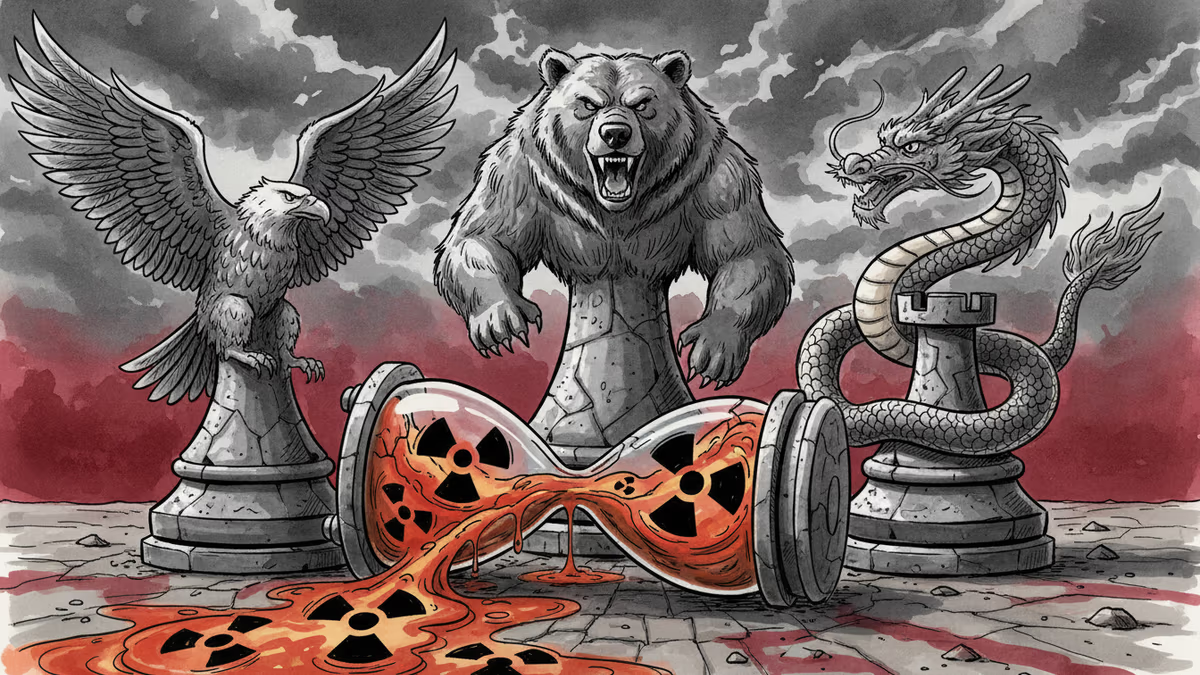
The expiration of New START marks the end of binding nuclear limits between superpowers. With China rising and tensions high, are we heading for an unpredictable three-way arms race?
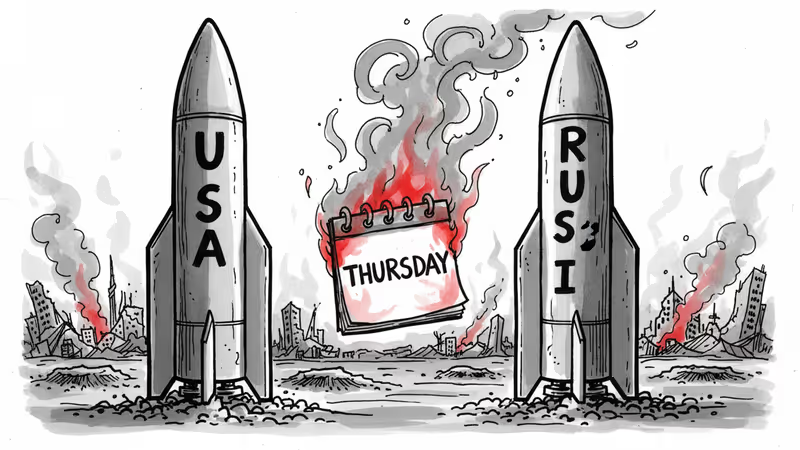
Trump's refusal to extend New START treaty threatens to unleash a new nuclear arms race between the world's largest nuclear powers, ending 60 years of weapons control agreements.

The world has gone 8 years without a nuclear explosion since North Korea's 2017 test—the longest streak since the atomic age began. But this silence may not last, and the reasons why reveal troubling shifts in global security.
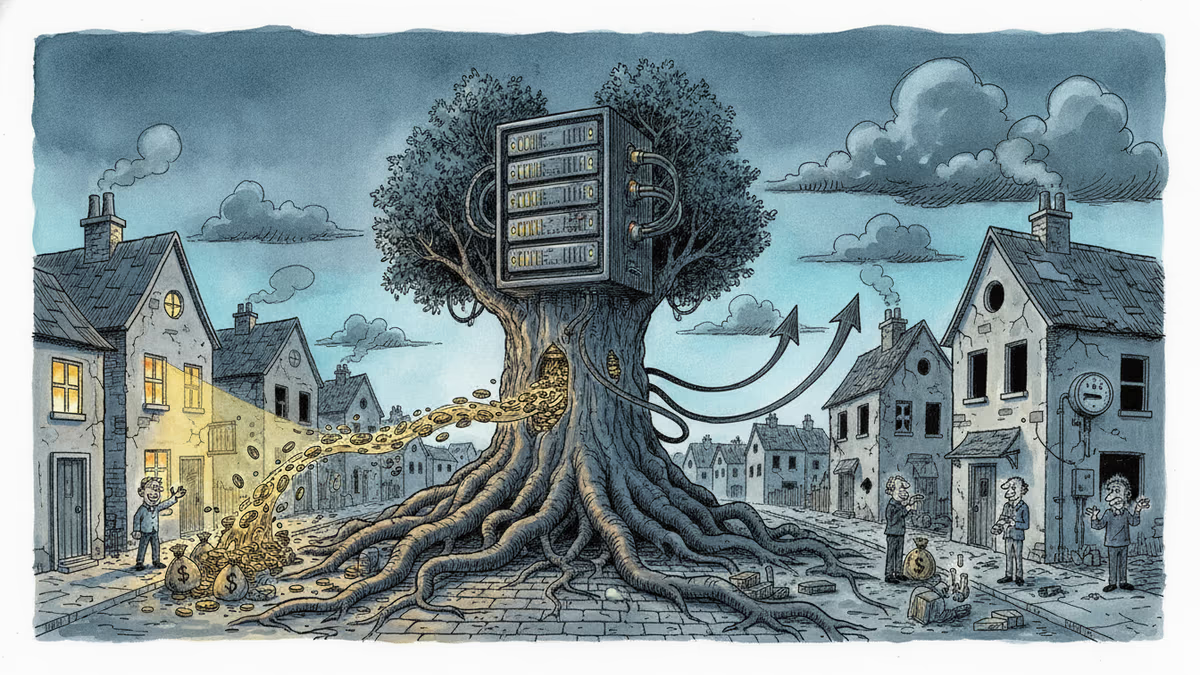
Over 1,200 community actions have pushed back against data centers since 2024. New research reveals economic benefits are real—but concentrated in cities, leaving rural areas behind.
The expiration of New START marks the end of binding nuclear limits between superpowers. With China rising and tensions high, are we heading for an unpredictable three-way arms race?
Trump's refusal to extend New START treaty threatens to unleash a new nuclear arms race between the world's largest nuclear powers, ending 60 years of weapons control agreements.
The world has gone 8 years without a nuclear explosion since North Korea's 2017 test—the longest streak since the atomic age began. But this silence may not last, and the reasons why reveal troubling shifts in global security.
Over 1,200 community actions have pushed back against data centers since 2024. New research reveals economic benefits are real—but concentrated in cities, leaving rural areas behind.
Thoughts
Share your thoughts on this article
Sign in to join the conversation