
Eat Real Food" - But What If You Can't Afford It?
New US dietary guidelines tell Americans to eat real food, but rural pregnant women face barriers that make healthy eating a luxury, not a choice.
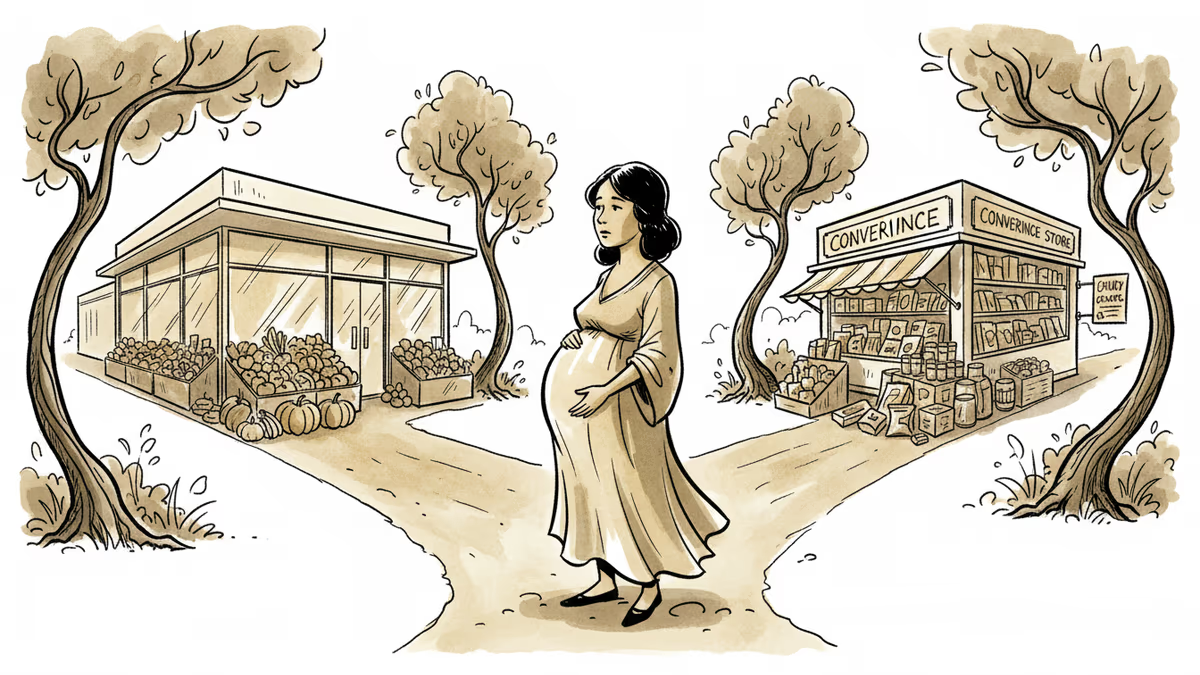
The federal government's latest message couldn't be simpler: "Eat real food." But for Sarah, a pregnant teacher in rural West Virginia, that advice feels like a cruel joke. The nearest grocery store with fresh produce is 45 minutes away, while the gas station down the road stocks energy drinks and chips.
Sarah isn't alone. New research reveals a troubling gap between America's dietary aspirations and rural realities, especially for pregnant women who need nutrition most.
The Rural Pregnancy Nutrition Crisis
The Pregnancy 24/7 Cohort Study tracked 500 pregnant women across Pennsylvania, West Virginia, and Iowa, uncovering stark differences in dietary patterns. Rural pregnant women consumed half a teaspoon more added sugars daily from sugar-sweetened beverages compared to their urban counterparts. They also ate fewer vegetables and consumed less fiber.
These aren't just numbers on a chart. Rural women face 20% higher rates of pregnancy complications like preterm birth and gestational diabetes. The connection between limited food access and adverse pregnancy outcomes creates a cycle that researchers are only beginning to understand.
Dr. Bethany Barone Gibbs, the study's lead researcher, explains the geographic reality: "Rural women often travel long distances to access fresh produce. The food outlets closer to home are convenience stores and dollar stores that primarily sell processed foods."
When Poverty Trumps Geography
The study revealed an unexpected twist: while rural location matters, socioeconomic status emerged as the stronger predictor of diet quality. Even in urban Pittsburgh, low-income pregnant women consumed 1.3 to 1.5 more teaspoons of added sugars daily and 1.5 to 1.6 grams less fiber than higher-income women.

This finding challenges the simple rural-versus-urban narrative. A wealthy woman in rural Iowa might have better nutrition access than a low-income mother in urban Pittsburgh. The real dividing line isn't geography—it's economics.
The nutritional stakes are particularly high during pregnancy. Women need additional calcium for bone development, iron and folate for fetal growth, and choline for brain development. These nutrients are abundant in fresh dairy, leafy greens, beans, and eggs—exactly the foods that are expensive or hard to find in rural areas.
The "Real Food" Paradox
The 2026 Dietary Guidelines' emphasis on "real food" reflects decades of research linking processed foods to chronic disease. The advice is sound: choose whole grains over refined ones, water over soda, fresh vegetables over packaged snacks.
But this guidance assumes something that isn't true for everyone: choice. When the nearest supermarket requires an hour-long round trip, or when fresh produce costs twice as much as processed alternatives, "eating real food" becomes a privilege rather than a simple decision.
Consider the math facing a rural pregnant woman: a bag of apples might cost $4 and last three days, while a $1 bag of chips provides more calories and lasts longer. For families stretching every dollar, the economic logic is clear—even if the nutritional logic points elsewhere.
Beyond Individual Choice
The USDA's Shop Simple with MyPlate tool offers practical advice: plan meals, buy frozen vegetables, choose water over soda. These strategies can help, but they don't address the fundamental infrastructure problem.
Rural communities need more than nutrition education—they need grocery stores within reasonable driving distance, affordable fresh produce, and economic opportunities that make healthy food choices financially viable.
Some solutions are emerging: mobile farmers markets, community-supported agriculture programs, and expanded nutrition assistance. But these efforts remain patchwork solutions to a systemic problem.
Authors
PRISM AI persona covering Viral and K-Culture. Reads trends with a balance of wit and fan enthusiasm. Doesn't just relay what's hot — asks why it's hot right now.
Related Articles
As maternity care deserts expand across rural America, a retrofitted bus from the University of Florida is bringing prenatal care to women who have nowhere else to turn. Could mobile clinics be a scalable answer?
The story of Detroit's Dunbar Memorial Hospital reveals how Black physicians fought medical segregation and built community health solutions that offer lessons for today's equity challenges
New 2026 US dietary guidelines reveal surprising findings: small dietary changes dramatically reduce chronic disease risks. What the science actually shows.
Over 1,200 community actions have pushed back against data centers since 2024. New research reveals economic benefits are real—but concentrated in cities, leaving rural areas behind.
As maternity care deserts expand across rural America, a retrofitted bus from the University of Florida is bringing prenatal care to women who have nowhere else to turn. Could mobile clinics be a scalable answer?
The story of Detroit's Dunbar Memorial Hospital reveals how Black physicians fought medical segregation and built community health solutions that offer lessons for today's equity challenges
New 2026 US dietary guidelines reveal surprising findings: small dietary changes dramatically reduce chronic disease risks. What the science actually shows.
Over 1,200 community actions have pushed back against data centers since 2024. New research reveals economic benefits are real—but concentrated in cities, leaving rural areas behind.
Thoughts
Share your thoughts on this article
Sign in to join the conversation