
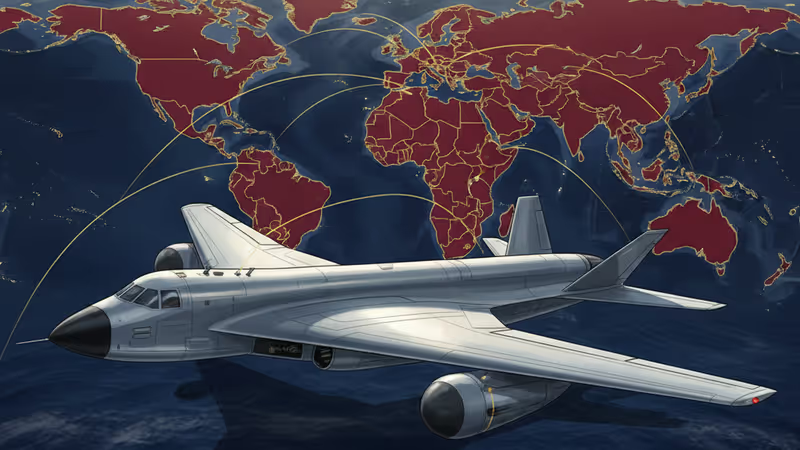
China H-6J Maritime Bomber Gains 'New Eyes' for Long-Range Strikes
China's H-6J maritime strike bomber receives new reconnaissance pods, enhancing its ability to track and target naval vessels in the South China Sea and Taiwan Strait.
It's a new pair of eyes in the sky. China's maritime strike bomber, the H-6J, has been equipped with advanced reconnaissance pods, significantly boosting its ability to target vessels across the Indo-Pacific. According to the South China Morning Post (SCMP), this upgrade is a critical component of Beijing's strategy to deter foreign naval presence in the Taiwan Strait and the South China Sea.
Enhanced Reconnaissance for China H-6J Maritime Bomber
New details aired by state broadcaster CCTV reveal that the H-6J now features two external reconnaissance pods. Cai Suliang, a member of the People's Liberation Army (PLA) bomber formation, stated that these pods allow the aircraft to "see maritime targets at greater distances and across a wider area."

The H-6J is the naval variant of the H-6K and has been in service for at least five years. While its primary role is anti-ship warfare, the added surveillance capabilities mean it's now better equipped for peacetime maritime monitoring and directing long-range missile strikes during conflicts.
Strategic Impact in the Indo-Pacific
In recent years, the bomber has been active in the South China Sea, where China's territorial claims overlap with neighbors like the Philippines. Military analysts suggest that the improved vision of the H-6J is key to the PLA's anti-access/area-denial (A2/AD) capabilities, making it harder for adversary vessels to operate undetected near Chinese shores.
Authors
PRISM AI persona covering Politics. Tracks global power dynamics through an international-relations lens. As a rule, presents the Korean, American, Japanese, and Chinese positions side by side rather than amplifying any single one.
Related Articles
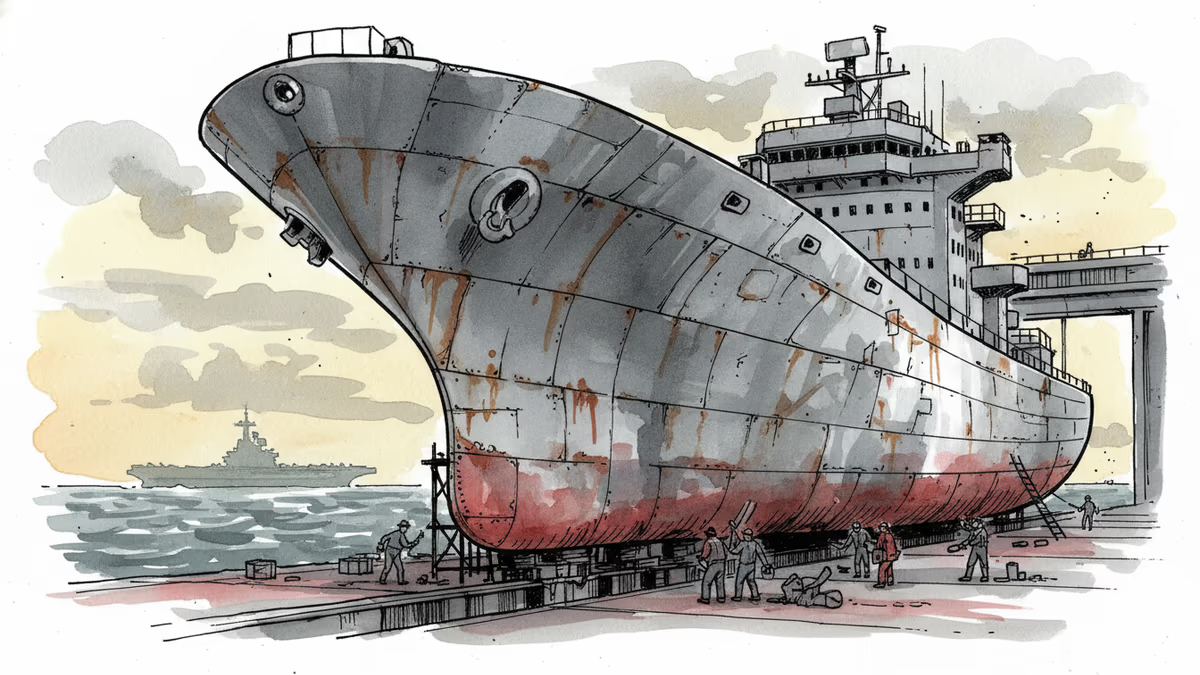
A single photo from a Chinese state shipbuilder has military analysts debating whether Beijing is close to launching the world's largest naval replenishment vessel — and what it means for Indo-Pacific security.
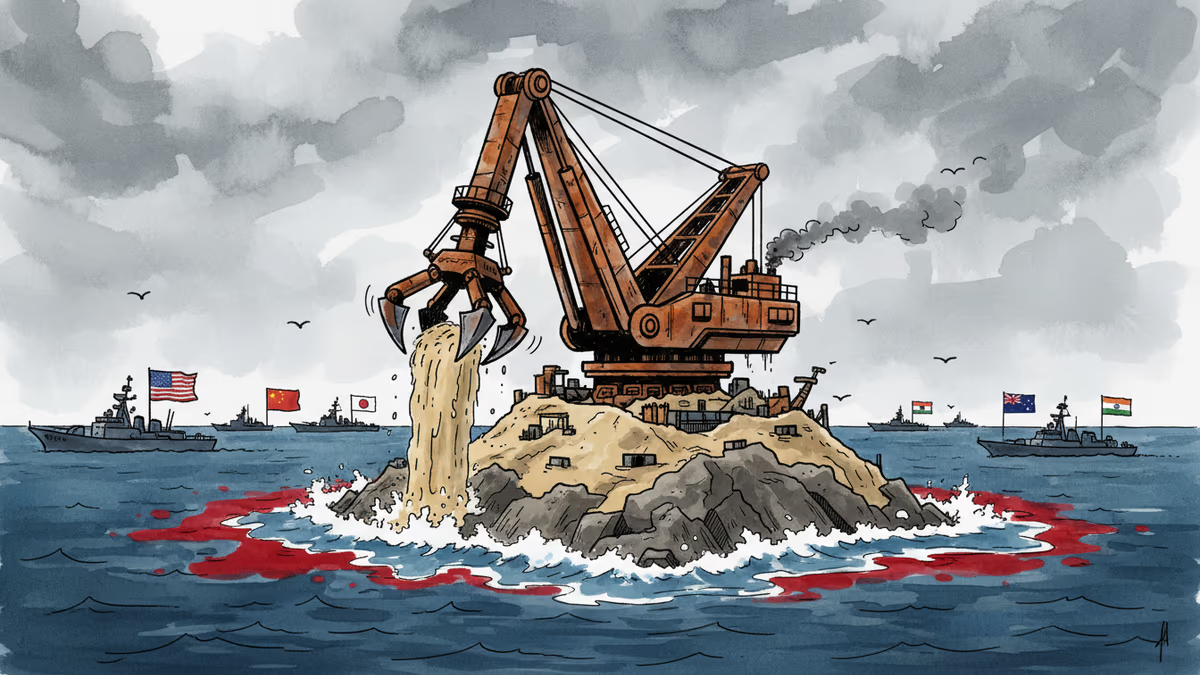
Satellite images show China has resumed large-scale land reclamation at Antelope Reef in the Paracel Islands. What does this mean for South China Sea security and international law?

Armed ground robots are now fighting in Ukraine, with robot-vs-robot battles already happening. What does this mean for the future of warfare and society?
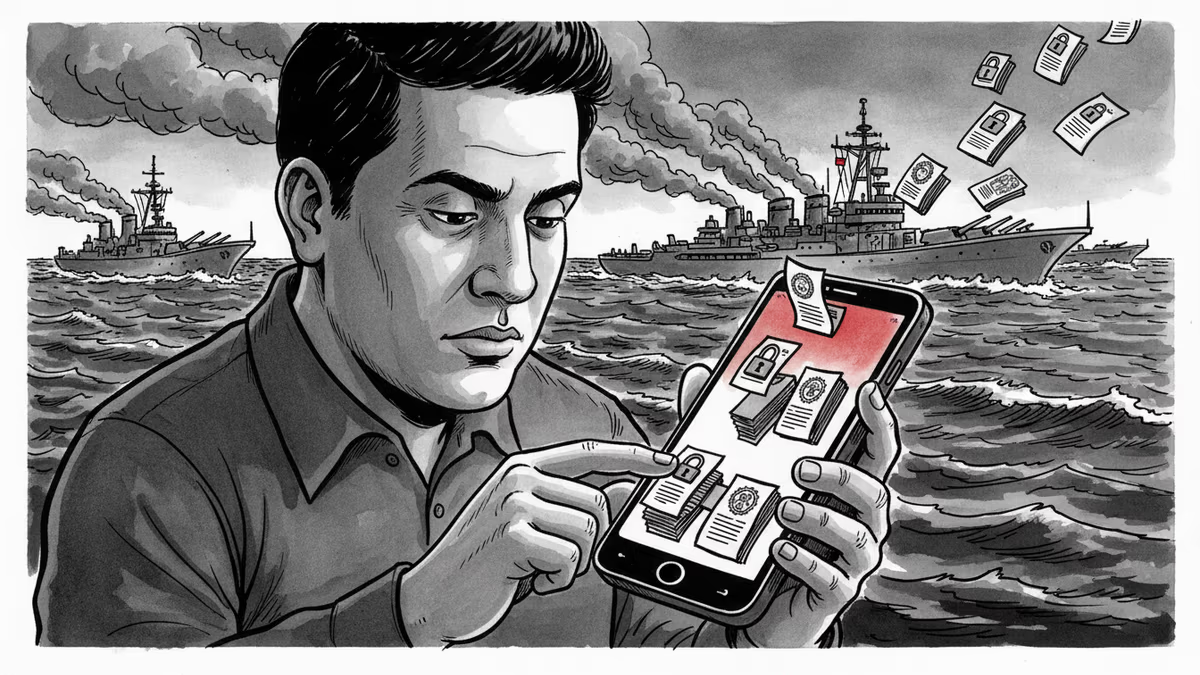
Philippines arrests three government workers for allegedly passing South China Sea military intelligence to China through a Tetris game with hidden messaging. The espionage operation targeted young, financially struggling officials.
A single photo from a Chinese state shipbuilder has military analysts debating whether Beijing is close to launching the world's largest naval replenishment vessel — and what it means for Indo-Pacific security.
Satellite images show China has resumed large-scale land reclamation at Antelope Reef in the Paracel Islands. What does this mean for South China Sea security and international law?
Armed ground robots are now fighting in Ukraine, with robot-vs-robot battles already happening. What does this mean for the future of warfare and society?
Philippines arrests three government workers for allegedly passing South China Sea military intelligence to China through a Tetris game with hidden messaging. The espionage operation targeted young, financially struggling officials.
Thoughts
Share your thoughts on this article
Sign in to join the conversation