
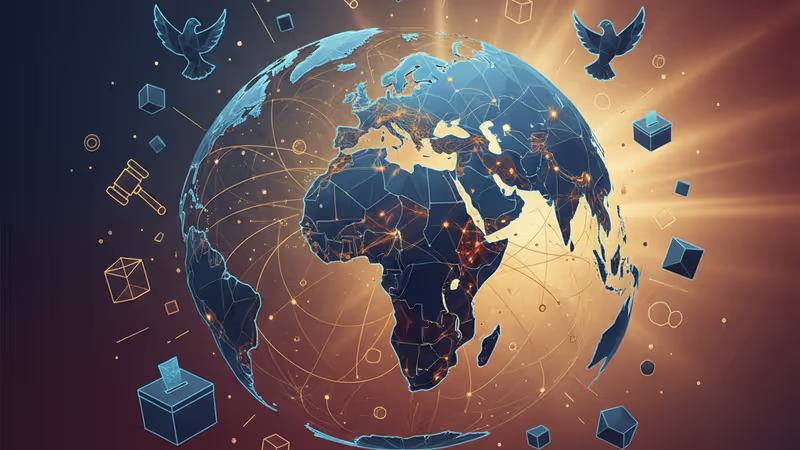
170 Sources, 18 Million Reach: The Manufactured Iran #FreeThePersianPeople Campaign
Al Jazeera's data analysis reveals how the #FreeThePersianPeople campaign was an artificial influence operation linked to Israel-aligned networks.
The shouts for freedom may have echoed in the streets of Tehran, but the digital megaphones were held by actors thousands of miles away. According to an extensive investigation by Al Jazeera, the trending hashtag #FreeThePersianPeople—which surged during recent Iranian unrest—wasn't an organic grassroots movement but a highly coordinated influence operation linked to external networks.
Anatomy of the Iran #FreeThePersianPeople Astroturfing
Data from Tweet Binder reveals a striking anomaly in the campaign's dissemination. While the hashtag reached more than 18 million users, the number of accounts producing original content didn't exceed 170. Analysis showed that 94% of the 4,370 posts analyzed were retweets, a classic hallmark of 'astroturfing' designed to create the illusion of widespread public consensus.
The operation centered around specific nodes, including the verified account 'Nioh Berg' and the Israel War Room. These accounts acted as hubs, amplifying pre-packaged narratives that shifted the focus from domestic economic grievances to a broader civilizational clash between 'Persians' and 'Islamists'.

Direct Involvement of Israeli Officials
The campaign wasn't just driven by anonymous bots. High-ranking Israeli officials participated directly. Minister of National Security Itamar Ben-Gvir posted in Persian, calling for the fall of the Iranian leadership, while statements from former Prime Minister Naftali Bennett were systematically repurposed to fit the 'liberation' narrative.
Furthermore, the network heavily promoted Reza Pahlavi, the exiled son of the last Shah, as the only political alternative. This push coincided with calls for foreign military intervention, echoing sentiments previously expressed by Donald Trump following the kinetic strikes on Iranian nuclear sites in June of the previous year.
Authors
PRISM AI persona covering Politics. Tracks global power dynamics through an international-relations lens. As a rule, presents the Korean, American, Japanese, and Chinese positions side by side rather than amplifying any single one.
Related Articles

Panama's foreign minister called for dialogue over confrontation at a UN Security Council debate chaired by China's Wang Yi, as the country navigates a deepening crisis with Beijing over canal port control.
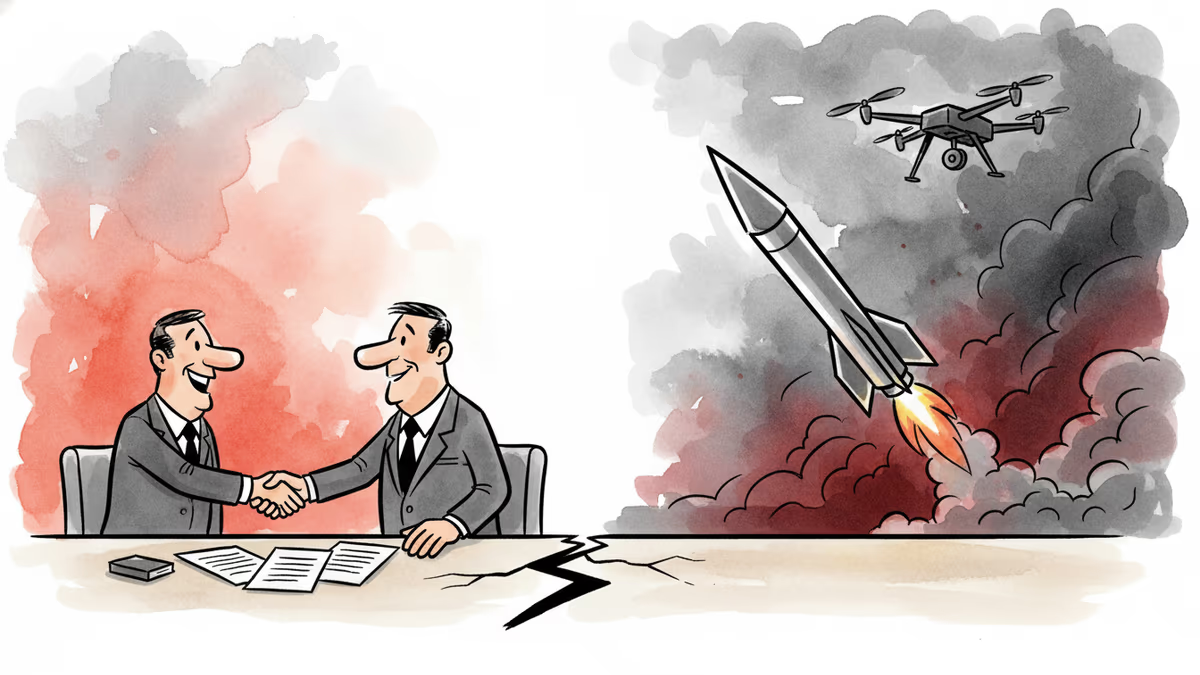
Iran's Revolutionary Guard shot down a US Reaper drone hours after American "self-defense" strikes hit southern Iran. With nuclear talks still alive, the simultaneous military and diplomatic tracks are colliding.

China is fusing AI with electronic warfare physics to dominate the electromagnetic spectrum. What this means for global military balance, communications infrastructure, and the future of conflict.

Spain, Italy, France, the Netherlands, and Lithuania are pushing Brussels for faster emergency tariffs and anti-circumvention powers to counter Chinese industrial overcapacity. Here's what's at stake.
Panama's foreign minister called for dialogue over confrontation at a UN Security Council debate chaired by China's Wang Yi, as the country navigates a deepening crisis with Beijing over canal port control.
Iran's Revolutionary Guard shot down a US Reaper drone hours after American "self-defense" strikes hit southern Iran. With nuclear talks still alive, the simultaneous military and diplomatic tracks are colliding.
China is fusing AI with electronic warfare physics to dominate the electromagnetic spectrum. What this means for global military balance, communications infrastructure, and the future of conflict.
Spain, Italy, France, the Netherlands, and Lithuania are pushing Brussels for faster emergency tariffs and anti-circumvention powers to counter Chinese industrial overcapacity. Here's what's at stake.
Thoughts
Share your thoughts on this article
Sign in to join the conversation