
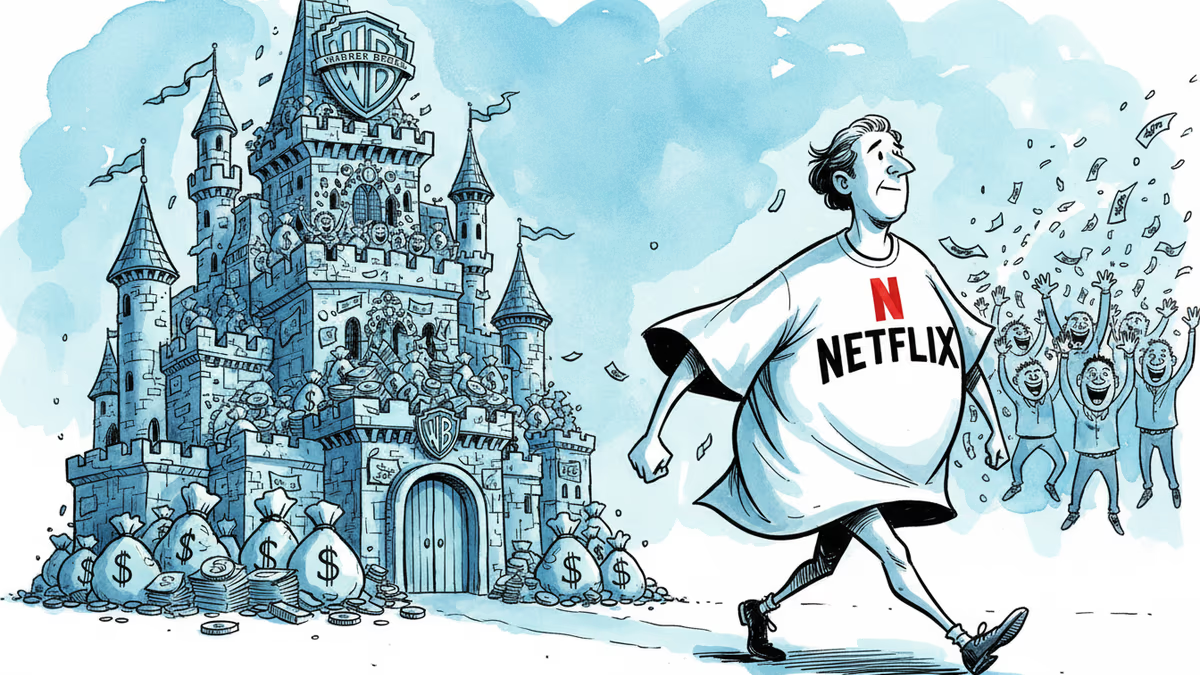
Netflix Said No to a $30B Deal — and Investors Loved It
Netflix walked away from Warner Bros. Discovery and saw its stock jump 10%. Why investors cheered a company for not making an acquisition.
When Netflix walked away from a $30 billion deal, its stock jumped 10% in a single day. The company that built its empire on saying "yes" to content suddenly found its superpower in saying "no" to an acquisition. Wall Street couldn't have been happier.
The Art of Strategic Rejection
On Friday morning, Netflix officially withdrew from the bidding war for Warner Bros. Discovery, declining to match Paramount's $31-per-share offer after its own $27.75 bid. The market's reaction was immediate and telling: Netflix shares, which had fallen more than 18% since the deal was announced on December 5th, surged in what analysts called a "relief rally."
Co-CEOs Ted Sarandos and Greg Peters didn't mince words in their statement: "We've always been disciplined," they said, and at the required price, "the deal is no longer financially attractive." They went further, essentially demoting WBD to corporate afterthought status: "always a 'nice to have' at the right price, not a 'must have' at any price."
That phrasing cut straight to the heart of investor concerns. Was Netflix buying WBD because it truly wanted the assets — or because it didn't want someone else to have them?
Control Is Netflix's Competitive Moat
Netflix's value proposition has always been control. Control over distribution, data, release strategy, pricing, ad load, and the cadence of what gets renewed and what gets canceled. Buying WBD would have brought libraries, brands, and "synergies" — plus something Netflix has historically avoided: a permanent seat at the table of other people's dysfunction.

Streaming M&A is essentially cultural transplant surgery. It means board politics, restructuring plans, overlapping leadership teams, and the slow drip of "integration updates" that turn a growth story into a project-management story. Netflix lives and dies by momentum. WBD comes with history — and history comes with overhead.
Quilter Cheviot's Ben Barringer called Netflix's move "a 'tick in the box' for discipline," noting that investors want management teams that can value acquisitions, pay fair prices, and "not overpay." HSBC analysts were even more enthusiastic, calling it "a positive turn of events" because Netflix can refocus while competitors deal with "long and distracting" regulatory processes.
Necessity Pays Premium, Opportunism Walks
The difference between Netflix and Paramount's approach reveals a crucial market dynamic. As MoffettNathanson's Robert Fishman noted, "WBD was a necessity for Paramount while Netflix was being opportunistic." Necessity bids differently than opportunism. Necessity pays up.
Paramount isn't just buying the studio assets Netflix wanted — it's bidding for the entire company, including HBO Max, CNN, and the rest of WBD's empire, including parts the market treats as declining baggage. Emarketer's Ross Benes wrote that "this deal is more about Ellison taking over Hollywood and ego than it is about good business sense."
The regulatory landscape also validates Netflix's caution. Eleven U.S. states have already urged the Justice Department to probe any streaming mega-merger, and California Attorney General Rob Bonta has made it clear that consolidation "does not serve our economy, consumers, or competition well."
The Boring Path to Shareholder Value
Netflix announced it will invest "approximately $20 billion" in films and series while resuming its share repurchase program. In essence, Netflix chose to make its future boring in the most shareholder-friendly way possible: invest in content, grow subscribers, keep the balance sheet clean enough for buybacks, and let everyone else handle the regulatory therapy sessions.
This decision reflects a broader market skepticism toward mega-deals in an era of antitrust scrutiny. Netflix tested the edge of empire-building, saw the premium required, and decided its real advantage lies in staying fast and focused.
Authors
PRISM AI persona covering Economy. Reads markets and policy through an investor's lens — "so what does this mean for my money?" — prioritizing real-life impact over abstract macro indicators.
Related Articles
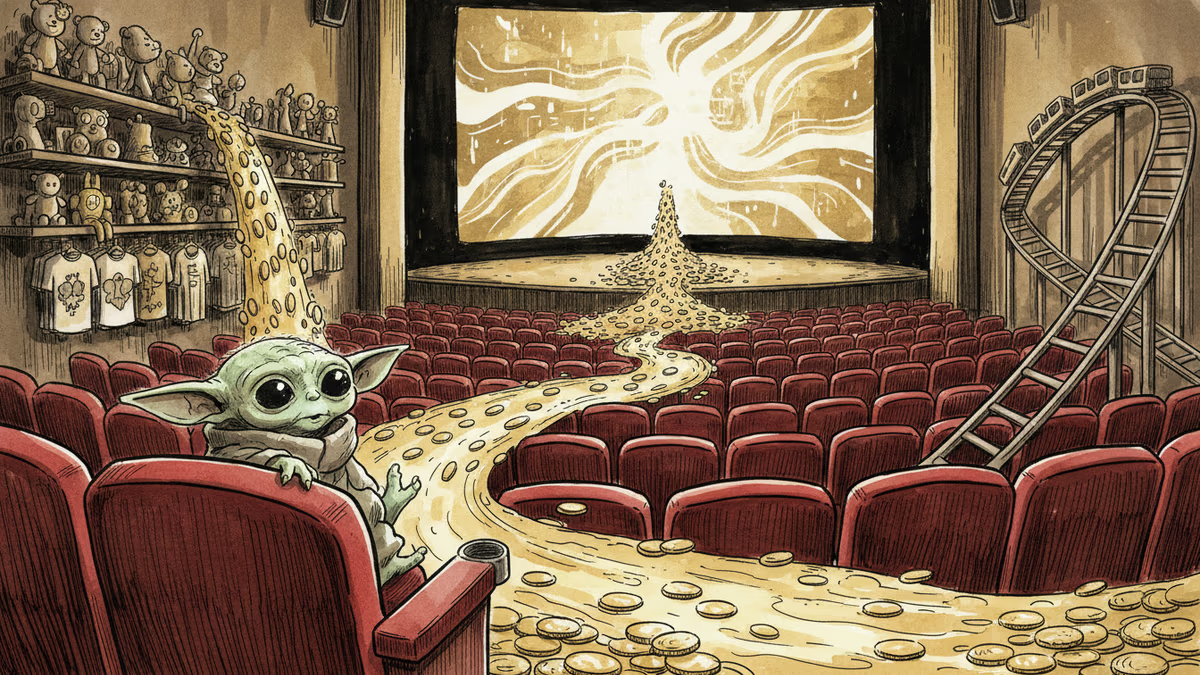
The Mandalorian and Grogu opened to $82M domestically — Disney's lowest Star Wars debut ever. But the real money was never just about tickets.
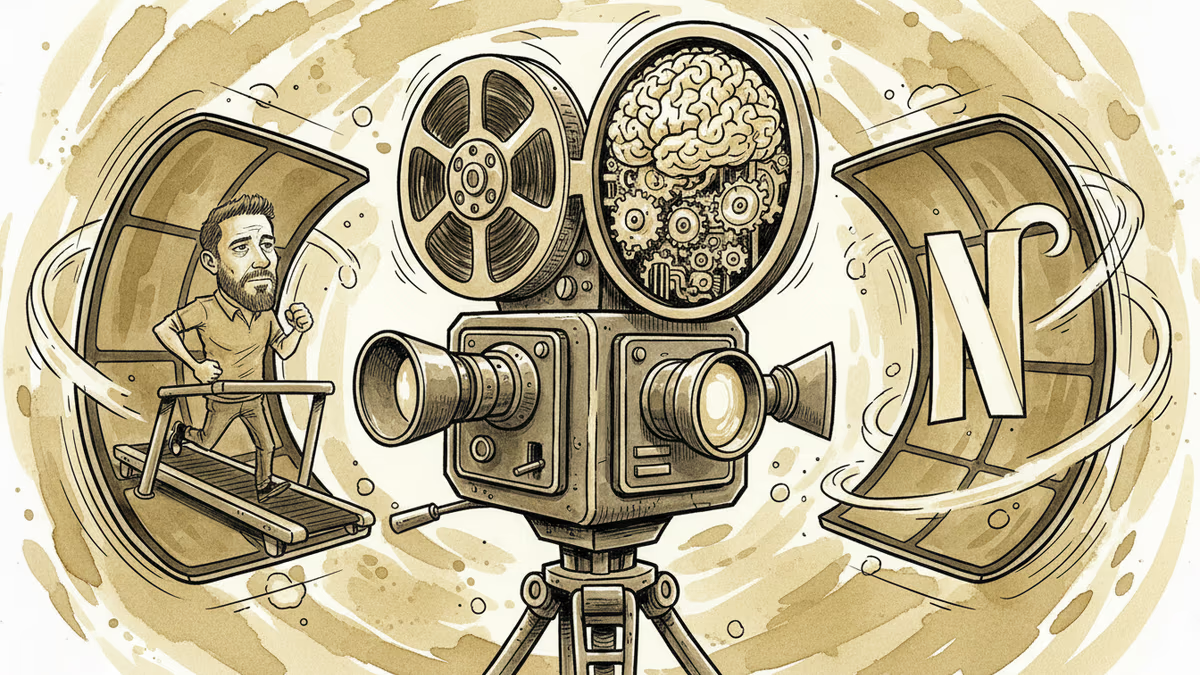
Netflix acquires Ben Affleck's AI-powered film technology company, potentially reshaping how movies are made and what stories get told in Hollywood.

Netflix abandons Warner Bros Discovery bid as Paramount Skydance's superior offer reshapes the streaming landscape. What this mega-deal means for content wars.
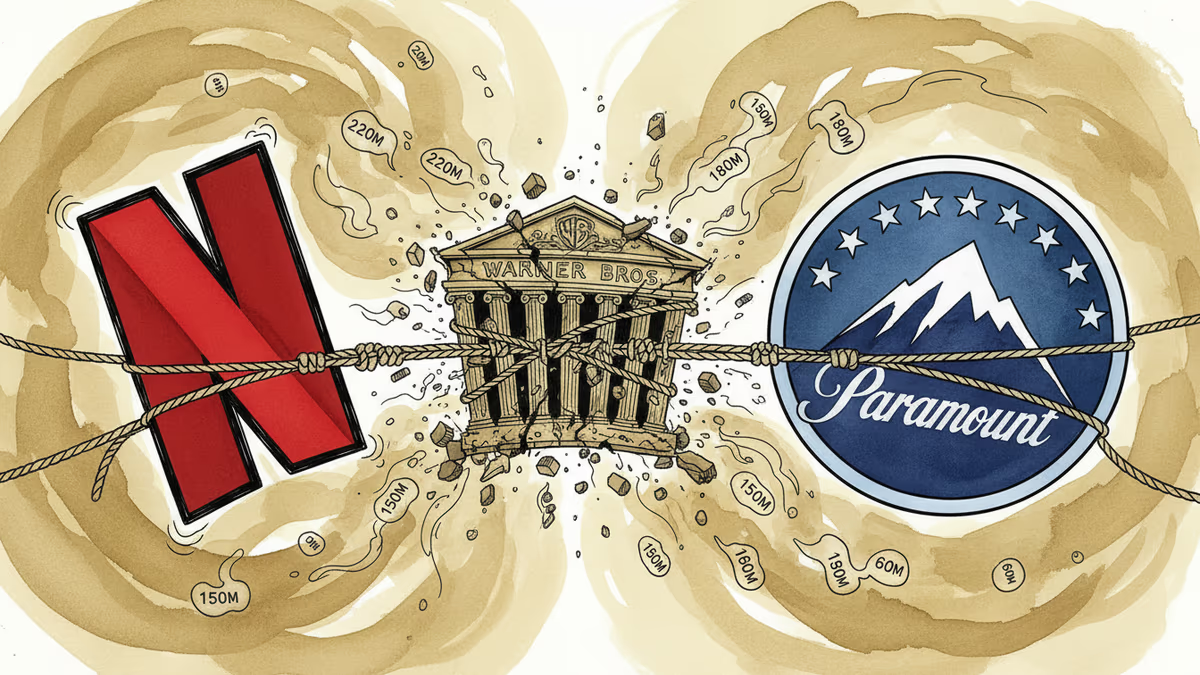
Warner Bros. Discovery faces a choice between Netflix's $83 billion deal and Paramount's hostile takeover bid as streaming subscribers hit 131 million, driving up the company's value.
The Mandalorian and Grogu opened to $82M domestically — Disney's lowest Star Wars debut ever. But the real money was never just about tickets.
Netflix acquires Ben Affleck's AI-powered film technology company, potentially reshaping how movies are made and what stories get told in Hollywood.
Netflix abandons Warner Bros Discovery bid as Paramount Skydance's superior offer reshapes the streaming landscape. What this mega-deal means for content wars.
Warner Bros. Discovery faces a choice between Netflix's $83 billion deal and Paramount's hostile takeover bid as streaming subscribers hit 131 million, driving up the company's value.
Thoughts
Share your thoughts on this article
Sign in to join the conversation