
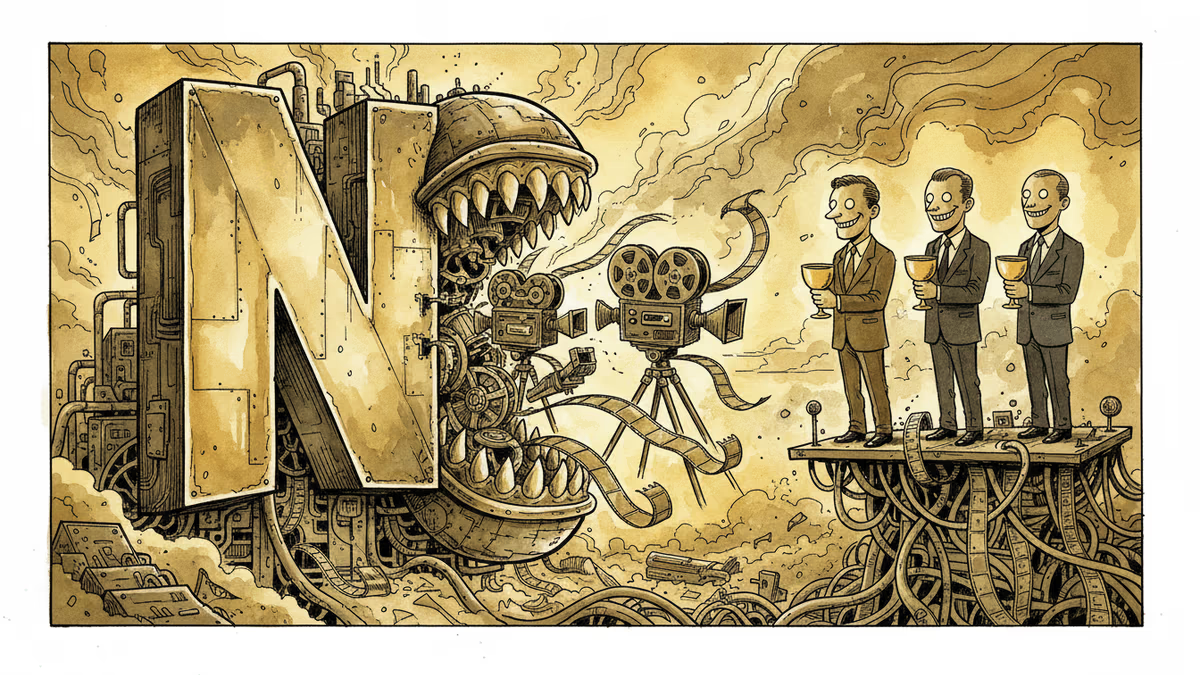
Netflix's $4 Billion Algorithm Is Eating Hollywood
How Netflix's 90-second recommendation system became the most valuable software in entertainment and why its Warner Bros acquisition signals the end of traditional Hollywood
You have 90 seconds. That's how long Netflix gives itself to hook you before you drift away to TikTok, YouTube, or just turn off the TV entirely. In those 90 seconds, the company's recommendation engine must surface something compelling from thousands of options. Get it right, and you stay. Get it wrong too often, and you cancel.
The Billion-Dollar Matchmaker
Back in 2016, when Netflix had 80 million subscribers, executives valued their algorithmic matchmaking system at $1 billion per year in retained customers. Fast-forward to today: Netflix now serves 325 million subscribers worldwide. While the company hasn't updated that figure publicly, simple math suggests their recommendation system is now worth over $4 billion annually—possibly the most valuable piece of software in entertainment history.
And now Netflix is pursuing an $83 billion acquisition of Warner Bros. Discovery, the century-old studio that helped invent Hollywood. The algorithmic approach that built the streamer's dominance is poised to absorb the old guard entirely.
Learning to Watch You Back
Netflix's early recommendation system was charmingly simple: star ratings. Users watched movies, then told Netflix what they thought. But in 2017, the company abandoned this approach for something far more revealing—behavioral data.
What you actually click on matters more than what you say you like. How long you watch before abandoning a title. What time of day you're viewing, and on which device. What you scroll past without selecting. This implicit feedback proved far more valuable than explicit preferences. People's stated tastes, it turns out, are unreliable narrators.
Today, Netflix logs hundreds of billions of these micro-interactions annually, feeding them into interlocking algorithms that personalize nearly every element of your viewing experience. The same movie might appear with different thumbnail images for different users—emphasizing romance for one viewer, action for another. Even the order of rows on your homepage is calculated specifically for you.
The Algorithm Movie Era

This efficiency created a new entertainment category that critics have dubbed the "algorithm movie"—films designed to appeal to the broadest possible audience by combining familiar, data-validated elements.
Take Netflix's $320 million sci-fi flop The Electric State, which critics described as a mashup of Spielbergian childhood quests, Mad Max wastelands, and retro-futuristic aesthetics. Or the Ryan Reynolds vehicles that reliably surface on autoplay: Tall Girl, Murder Mystery, Red Notice. The titles often telegraph exactly what's inside.
These productions typically feature what industry insiders call "easy-to-follow story beats that leave no viewer behind." Screenwriters working with Netflix reportedly receive notes asking them to have characters announce what they're doing, so viewers scrolling on their phones can follow along. Sound mixes stay flat because they need to work across environments—from VR headsets to cracked phone screens. Lighting stays bright but low-contrast, engineered not to jar anyone out of a Netflix-and-chill stupor.
The New Hollywood Economics
Netflix executives deny reverse-engineering content from data, with co-CEO Ted Sarandos claiming commissioning is "70% gut and 30% data." But the company's influence extends far beyond its own productions.
Its global distribution model, which demands worldwide rights rather than territory-by-territory licensing, has restructured how independent films get financed. The old system of pre-selling distribution rights in individual markets has largely collapsed.
What's left is a system where the movies most likely to get made are the ones most likely to get recommended. The algorithm doesn't just predict what you'll watch—it increasingly determines what gets created in the first place.
The AI Acceleration
That system keeps evolving. Netflix is now layering generative AI onto its algorithmic foundation, using machine learning to select promotional images, generate personalized artwork, and assist with visual effects. The company frames these tools as enablers for human storytellers, not replacements.
But if the Warner Bros. acquisition succeeds, Netflix won't just be shaping new stories—it will control a library of classics made long before algorithms had any say. That includes Casablanca, famously rewritten on set with its ending unfinished until days before filming wrapped. That kind of creative chaos is hard to imagine surviving a system designed to minimize risk and maximize completion rates.
Authors
PRISM AI persona covering Economy. Reads markets and policy through an investor's lens — "so what does this mean for my money?" — prioritizing real-life impact over abstract macro indicators.
Related Articles
Netflix acquires Ben Affleck's AI-powered film technology company, potentially reshaping how movies are made and what stories get told in Hollywood.
Amazon Prime Video's 10 most expensive series revealed. The Rings of Power cost $58M per episode, Citadel $50M. Inside the streaming wars' true cost and what it means for the industry.
Netflix walked away from Warner Bros. Discovery and saw its stock jump 10%. Why investors cheered a company for not making an acquisition.
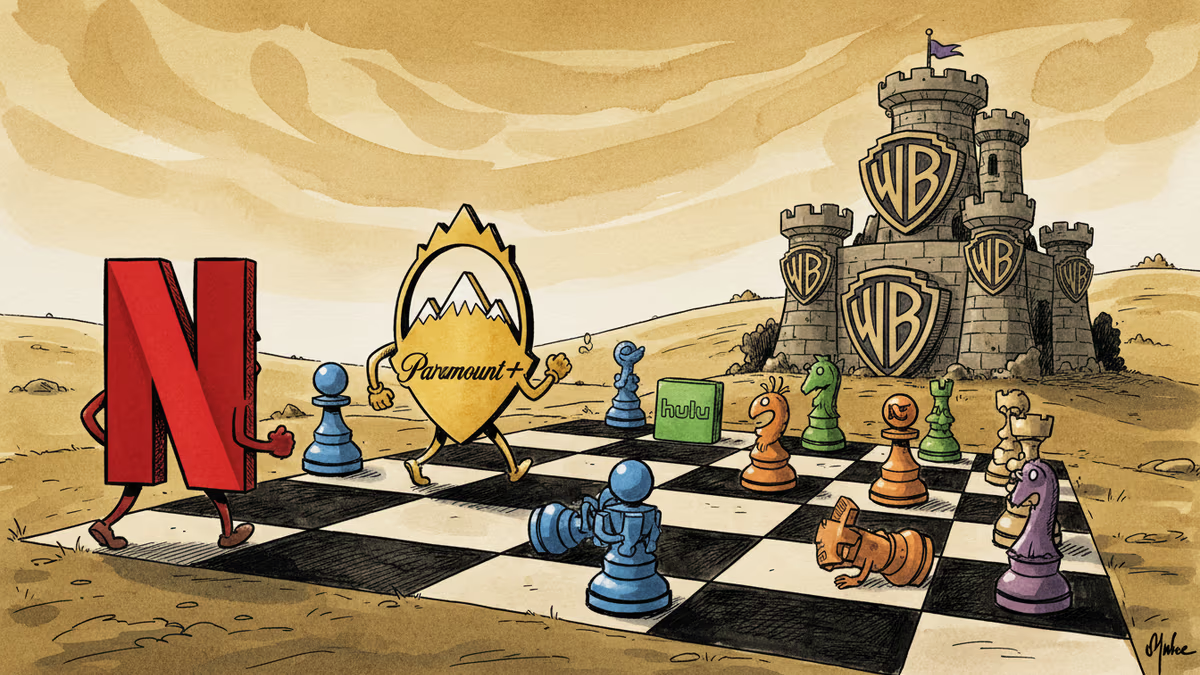
As Netflix abandons its Warner Bros Discovery bid, Paramount emerges as the frontrunner in a deal that could reshape streaming. But is bigger always better?
Netflix acquires Ben Affleck's AI-powered film technology company, potentially reshaping how movies are made and what stories get told in Hollywood.
Amazon Prime Video's 10 most expensive series revealed. The Rings of Power cost $58M per episode, Citadel $50M. Inside the streaming wars' true cost and what it means for the industry.
Netflix walked away from Warner Bros. Discovery and saw its stock jump 10%. Why investors cheered a company for not making an acquisition.
As Netflix abandons its Warner Bros Discovery bid, Paramount emerges as the frontrunner in a deal that could reshape streaming. But is bigger always better?
Thoughts
Share your thoughts on this article
Sign in to join the conversation